Most players who fade in a deep bracket did not get worse at pickleball. They never settled what to eat during a pickleball tournament, so by the third or fourth match they have been on their feet for hours, sweating, and sometimes eating nothing since breakfast. Legs get heavy, the third shot drop starts floating, and decisions at the kitchen line slow down. Those are the usual signs of an empty tank, and they tend to show up right when the semifinal starts.
Knowing what to eat during a pickleball tournament comes down to one fact: you do not control the schedule. A gap can be 15 minutes or two hours, and a court call can arrive while you are halfway through a snack. This guide gives you a timeline for the day and a rule for matching food to the gap, so you are not guessing each time.
Why players fade in the third match and what it has to do with fuel
Your muscles run mainly on stored carbohydrate during repeated bursts of movement, and those stores are limited. A single match may not drain them. Five or six matches spread over eight or ten hours, with only a light breakfast in between, can.
Fluid works the same way. Sweat loss builds up across the day, and mild dehydration can make effort feel harder and concentration slip. You will not feel dramatic symptoms. You will feel slightly slower, slightly more irritable, and a little less willing to run down a lob.
Two mistakes cause most of the fade:
- Waiting until you feel hungry or thirsty. By then you are already behind, and catching up mid-bracket is hard.
- Eating one big meal because there is a long gap, then being called to court 25 minutes later with a heavy stomach.
Both are fixed by steady, small, planned intake instead of reactions.
The night before and the morning of: setting up the day without overdoing it
The night before, eat a normal dinner built around familiar carbohydrates: pasta, rice, potatoes, or bread, with some protein and vegetables you already tolerate. Tournament night is the wrong time to try a new restaurant or a very spicy dish. Drink water through the evening so you start the next day in good shape, but do not force down large amounts right before bed.
In the morning, eat breakfast two to three hours before your first scheduled match if you can. Choose something carbohydrate-based and low in fat and fiber, such as oatmeal with a banana, toast with jam and eggs, or a bagel with a little peanut butter. If your first match is early and you get nervous, a smaller option like a banana and a slice of toast still counts.
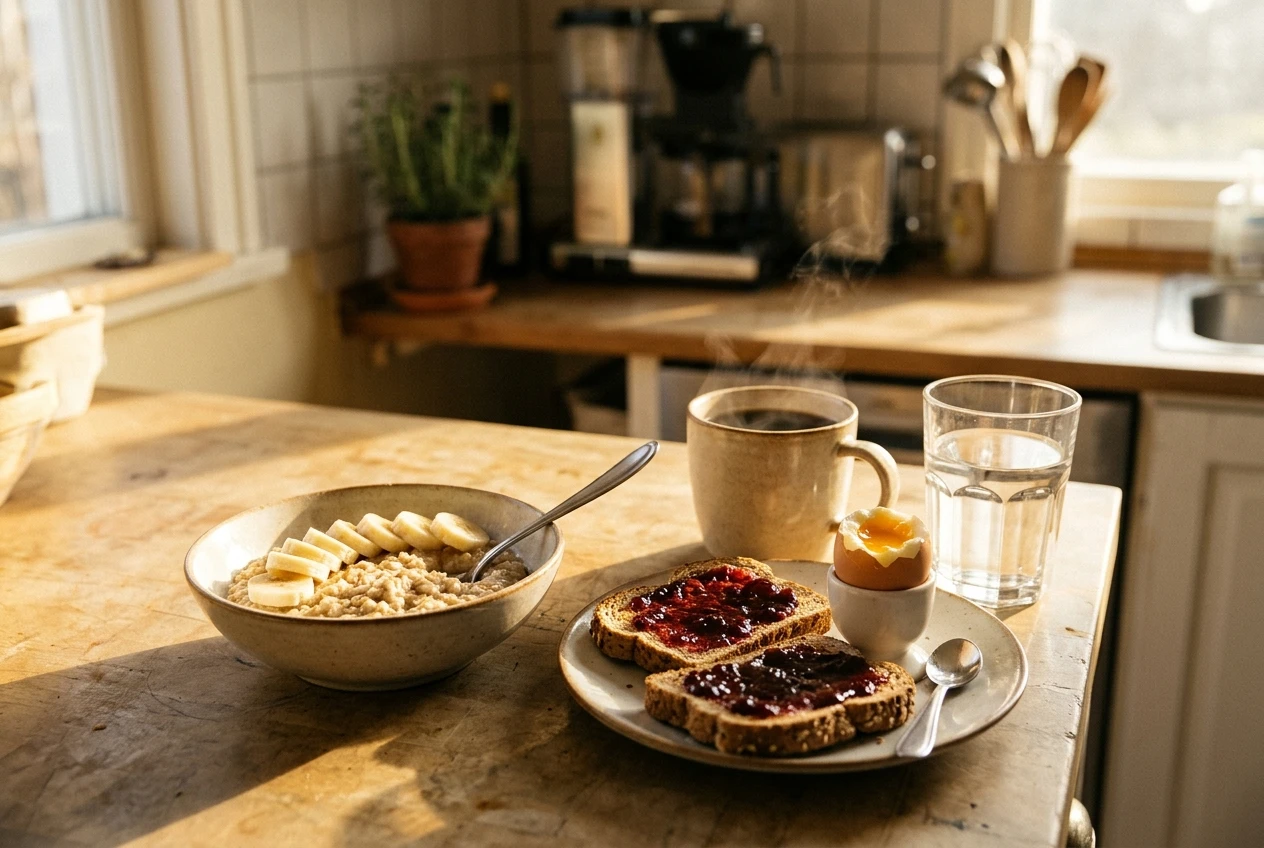
A few points about the morning:
- Eat what you have eaten before a hard practice. Familiar food is the safest food.
- Drink a glass or two of water with breakfast, then sip steadily until warm-up.
- If you drink coffee, have your usual amount. A bigger cup than normal can bring jitters and stomach trouble.
Bring your food with you. Tournament venues often have limited concession options with long lines, and you do not want your fuel plan to depend on a snack bar.
Hydration on court: how to sip, what to watch for, and when plain water stops being enough
Sip instead of gulping. A few mouthfuls at each changeover and between games is easier on the stomach than draining half a bottle at once. During a long gap, drink at a relaxed pace so you are not sloshing when you walk back out.
Your urine color is a useful check. Pale yellow, like light lemonade, is a good sign. Dark yellow means you need more fluid. If you have not needed the bathroom for several hours on a long day, that is a signal to drink more.
Plain water is fine early and in cool, short days. It stops being enough when you sweat heavily, play in warm conditions, or play many matches. Sweat carries sodium, and replacing only water over a long day can leave you feeling flat or bloated. At that point, add something with electrolytes: a sports drink, an electrolyte tablet in your water, or salty foods like pretzels alongside your fluids.
Warning signs to take seriously:
- Headache, dizziness, or nausea that does not ease with rest and fluids
- Muscle cramps that return repeatedly
- Chills or goosebumps in the heat
- Confusion or unusual fatigue
If these appear, stop playing, get out of the sun or heat, and get help from the event staff. Players with medical conditions or on medications that affect fluid balance should check their hydration plan with a doctor before the event.
The gap rule: what to eat with 20 minutes, an hour, or two hours until your next match
Tournament schedules slip. Courts run late, brackets move faster than expected, and a match scheduled for noon may start at 11:15. The safest approach is to plan for the shorter end of the gap. If the estimate is “about an hour,” eat as if you have 40 minutes.
Under 20 minutes, or unsure: Keep it small and simple. Fluids plus fast carbohydrate that digests easily: a banana, a few dates, an applesauce pouch, sports chews, or a few mouthfuls of sports drink. Avoid anything that needs lots of chewing or sits heavy. If you have under 10 minutes, sip fluids and skip solid food.
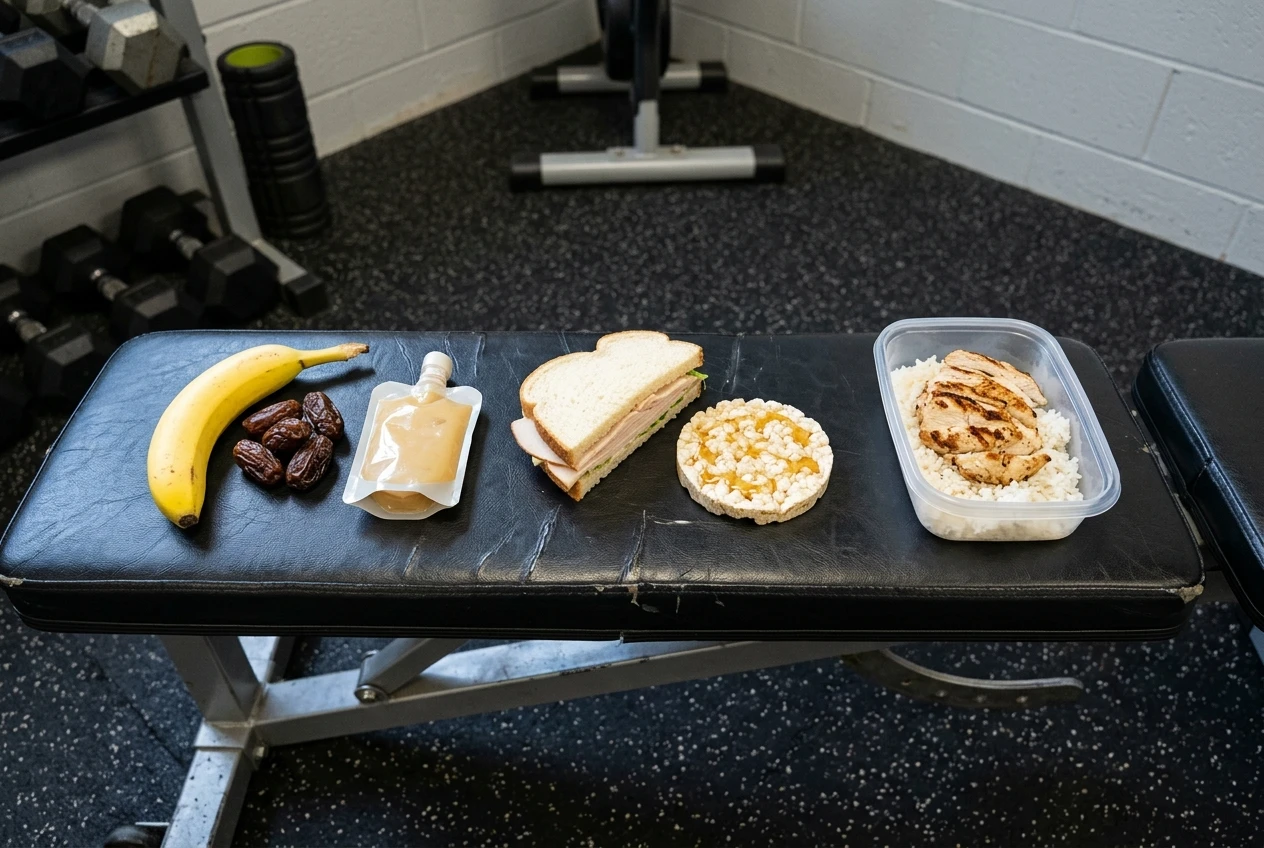
About an hour: You have room for a real snack. Aim for carbohydrate with a little protein and very little fat, such as half a turkey sandwich on white bread, a rice cake with honey, a small bowl of oatmeal, or yogurt with a banana. Keep the portion modest. You want to feel fueled, not full.
Two hours or more: This is your chance for a mini meal. Rice with chicken, a plain pasta dish, a bagel sandwich, or a baked potato with a little salt all work. Keep fat and fiber low, skip anything greasy, and finish eating at least 60 to 90 minutes before you expect to play. After that, switch to the one-hour snack approach as the match gets closer.
The principle behind all three: the closer you are to playing, the smaller and simpler the food. Fat, fiber, and large portions slow digestion, which is useful at home and a problem on court.
Foods that sit well and foods that backfire in the middle of a bracket
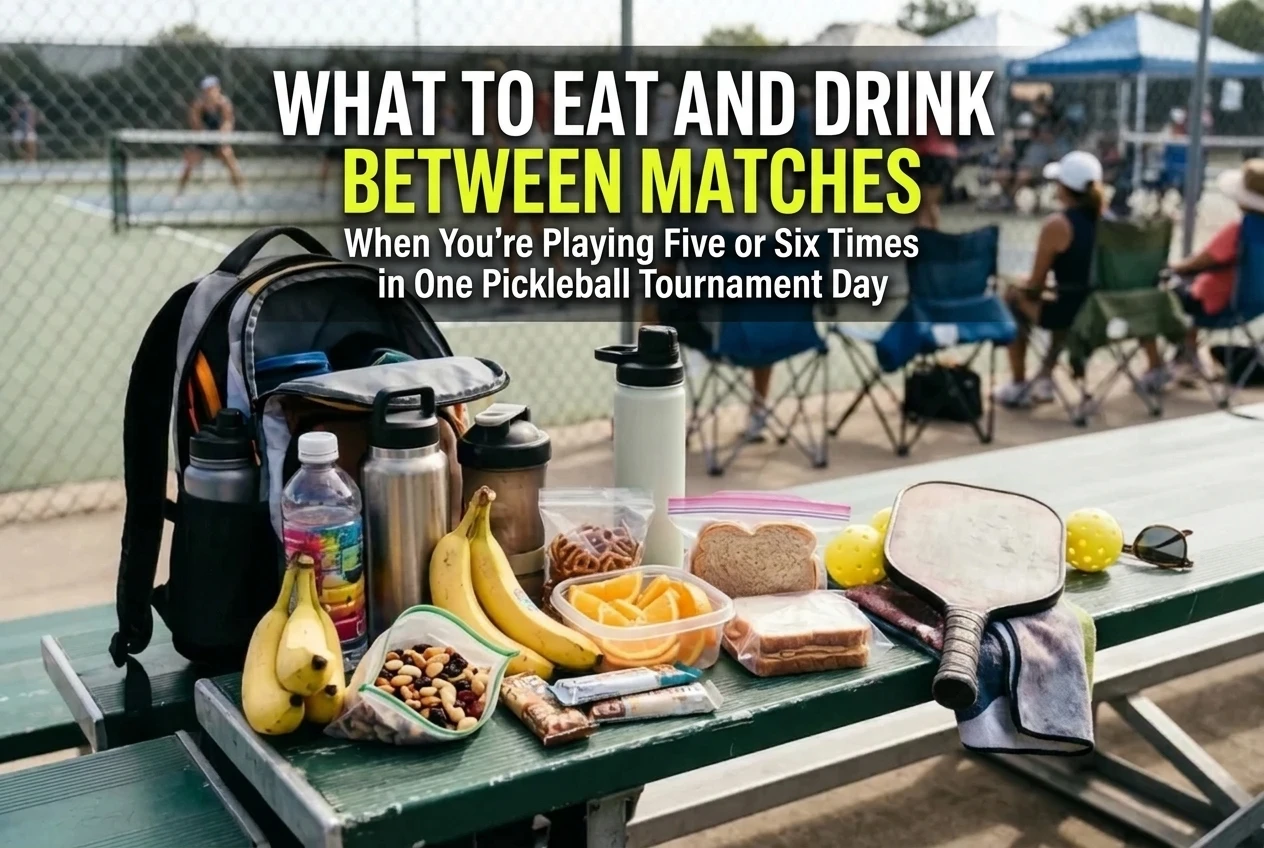
Foods that usually sit well:
- Bananas, oranges, grapes, and applesauce pouches
- Plain bagels, white bread sandwiches, rice cakes, and pretzels
- Oatmeal, rice, and boiled or baked potatoes
- Low-fat yogurt or a small portion of lean turkey or chicken
- Dates, honey, and fruit-based chews
- Sports drinks and diluted juice
Foods that often backfire:
- Fried food, burgers, and pizza with heavy toppings, which digest slowly
- High-fiber bars and large salads, which can cause stomach cramps during movement
- Very sugary candy or soda in large amounts, which can lead to a quick rise and dip in energy
- Large portions of nuts, cheese, or full-fat dairy
- Anything new or unusual to your stomach
Individual tolerance varies a lot. Some players do well with a peanut butter sandwich between matches, while others feel it for hours. That is why the plan should be tested before tournament day, not discovered during it.
Protein matters, but it plays a supporting role during the day. A little with a snack is fine. Save the bigger protein meal for after your last match, when recovery is the goal.
Heat, indoor gyms and long days: adjusting when conditions push back
Outdoor heat raises fluid and sodium needs, and the first adjustment is simply drinking more often. Keep your bottles cold if you can, since cool fluids are usually easier to drink in volume. Use shade between matches, and eat lighter foods like fruit and chews, since heavy food is harder to stomach when you are overheated.
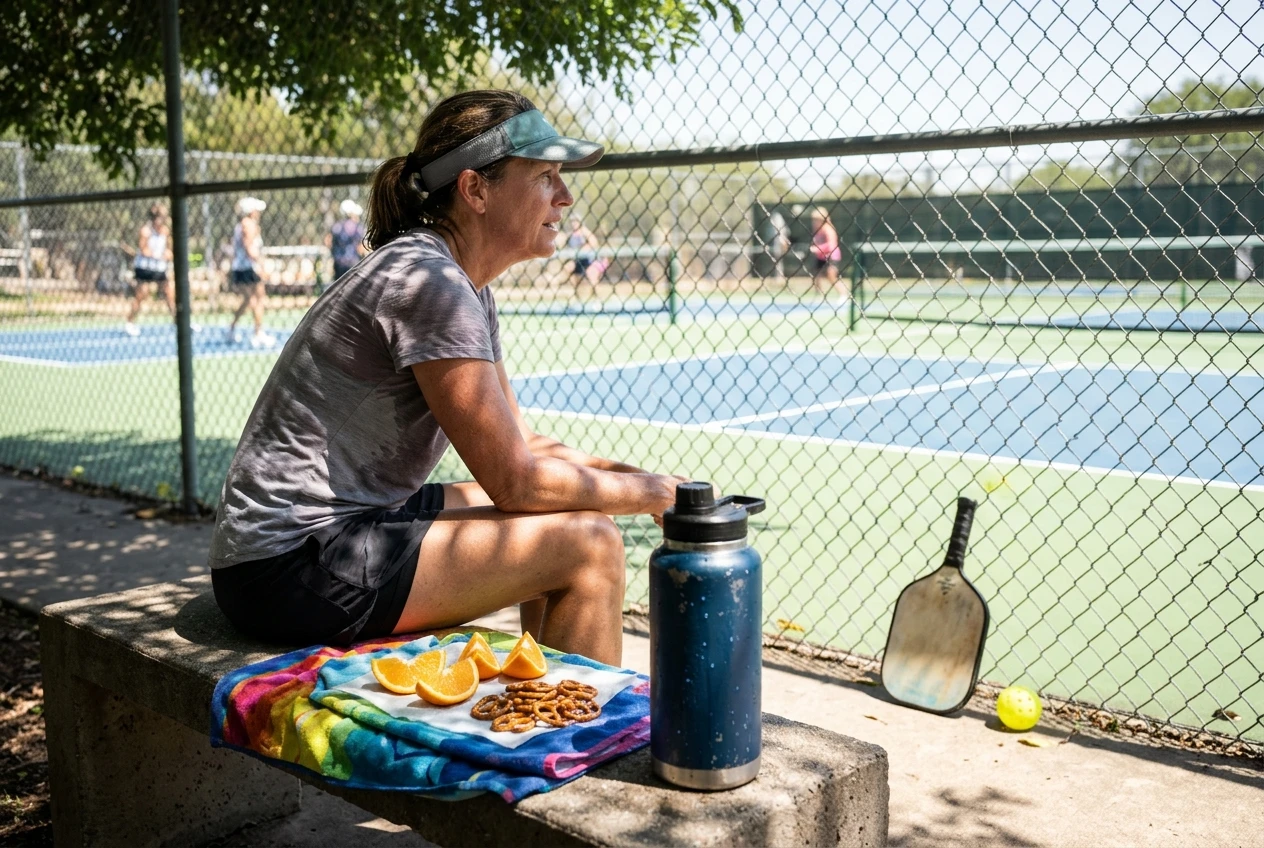
Indoor gyms can fool you. The air feels dry and the temperature seems mild, so players skip fluids. Yet sweat still happens, and poor ventilation in a crowded gym can make the environment feel stuffy and tiring. Sip on a schedule instead of waiting for thirst, and watch for the same signs of dehydration you would watch for outdoors. Indoor events also tend to run long, with many courts and many matches, so plan for a full day of fueling.
On very long days, split your intake into smaller, more frequent portions. A few bites every 45 to 60 minutes of waiting keeps energy steadier than two large meals. If your sweat leaves white salt marks on your clothes or hat, or you sweat heavily in general, lean harder on electrolytes and salty foods.
Your final-rounds plan: keeping energy and focus when the matches matter most
By the semifinal, you may have played several matches and eaten several snacks. Fatigue and nerves can both suppress appetite, which makes this the point where players quietly stop fueling. Do not skip it. A small amount of easy carbohydrate before the semifinal and the final matters more than it did at 9 a.m.
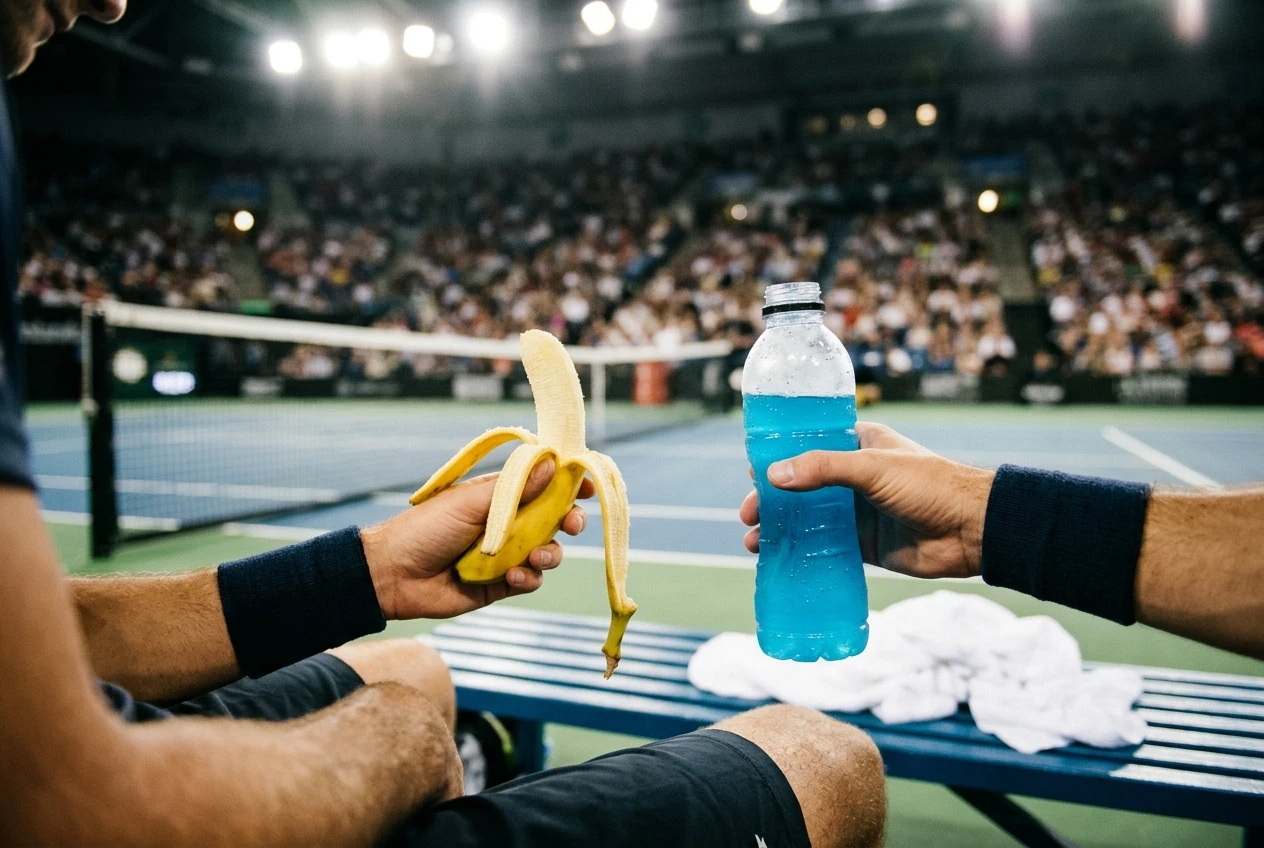
Practical habits for the final rounds:
- Treat the gap before a semifinal as a mini fuel stop even if you feel fine. Have a banana, a few chews, or half a sandwich, depending on the gap rule.
- Use sports drink or an electrolyte mix for your final matches if your stomach tolerates it, since it gives you fluid, sodium, and a little carbohydrate in one bottle.
- Take a few mouthfuls at every changeover and between games, even when the score is tight.
- Keep your routine the same. The final is not the time to try a new gel or energy drink.
Focus follows fuel. When you are down in a match, a clear head matters, and the mental side of staying steady when you are behind is easier when you are not also running on empty. Do not overlook the basics: if the late-match errors feel strange, ask yourself when you last drank and ate.
A simple tournament-day fuel sheet you can copy and adapt
Copy this into your notes, then change the foods to match what your stomach already handles well.
Night before
- Familiar carbohydrate dinner with some protein
- Water through the evening
- Nothing new
Morning (2 to 3 hours before first match)
- Low-fat, low-fiber breakfast: oatmeal and banana, or toast, jam, and eggs
- 1 to 2 glasses of water
- Usual coffee amount only
Warm-up and every match
- Small sips at each changeover and between games
- Add electrolytes if it is hot, humid, or you are sweating heavily
Between matches (plan for the shorter gap)
- Under 20 minutes or unsure: fluids plus a banana, dates, applesauce pouch, or chews
- About 1 hour: half a sandwich, rice cake with honey, oatmeal, or yogurt with fruit
- 2 hours or more: mini meal of rice, pasta, or potato with lean protein, low fat and fiber, finished 60 to 90 minutes before play
Semifinal and final
- Eat something small even if you are not hungry
- Sports drink or electrolyte mix in your bottle
- Same foods as earlier, nothing new
After the last match
- A full meal with carbohydrate and protein
- Keep drinking fluids through the evening
Build your plan and test it
Take the sheet above, swap in the foods you already like, and write down the version that fits your stomach and your usual tournament schedule. Then try it at your next local event or a long practice session with several games back to back. Note when you felt sharp, when you felt heavy, and what you would change.
Once the plan works, you need the right food and bottles on hand to carry it out. The tournament bag guide covers how to pack them so your fuel plan is ready when the bracket runs long.