The pickleball split step for advanced players is all about timing, balance, and explosive movement. At higher levels, the split step becomes a precise rhythm tool that helps you react instantly to speed‑ups, disguise, and fast kitchen exchanges. This guide breaks down how advanced players use the split step to stay ready, stay grounded, and stay in control.
Understanding the Pickleball Split Step for Advanced Players
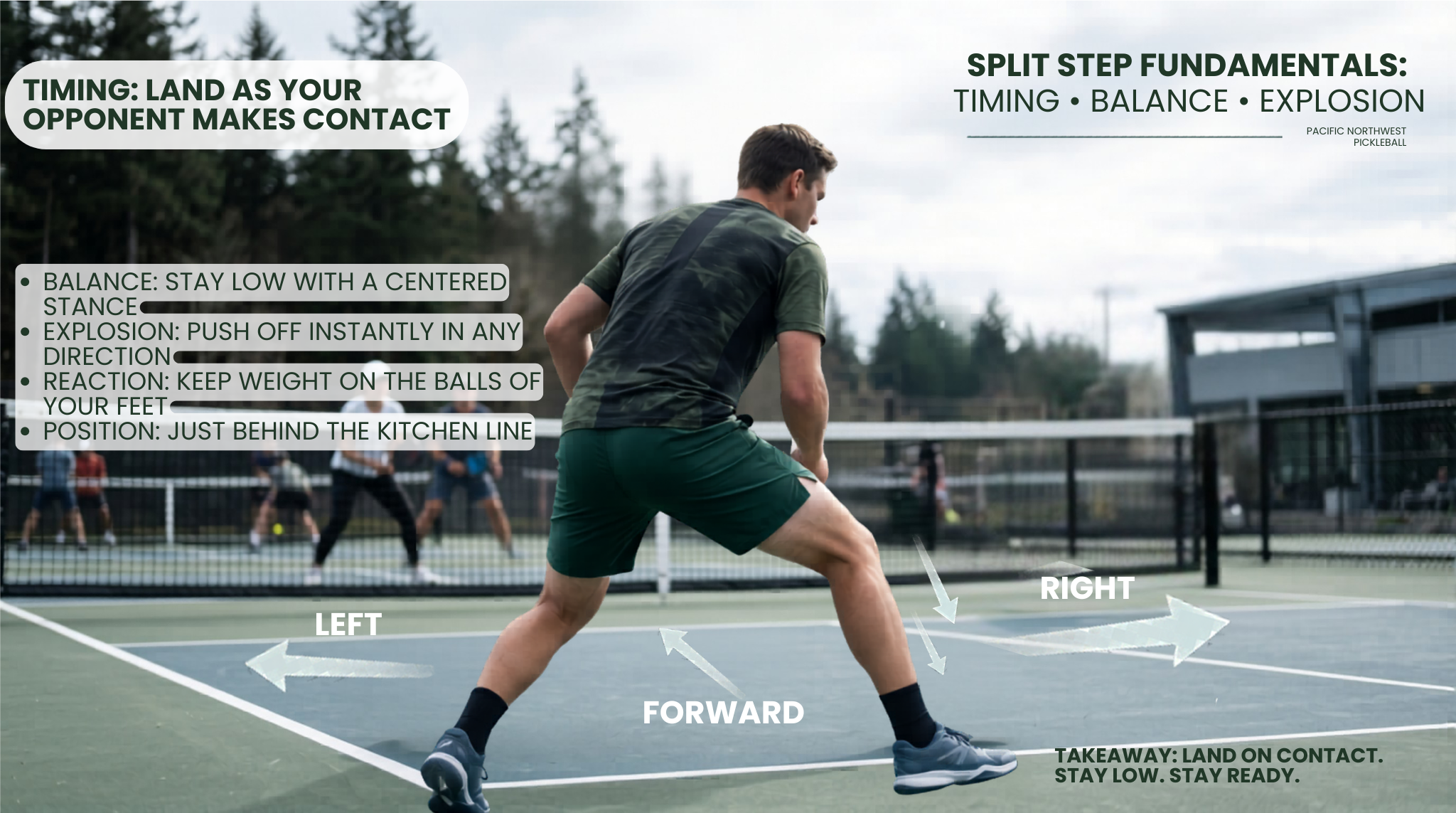
The split step is a small but powerful move that boosts my speed and balance. It looks simple at first. I land lightly on the balls of my feet as my opponent hits the ball. That timing puts my body in the perfect position to move in any direction. I can drive forward or slide sideways for a fast volley with control.
The difference at the advanced level comes down to timing, posture, and control. If my split step is mistimed or my weight is off, I lose the quick push-off I need to reach tough balls. This move is the foundation that keeps my defense strong and helps me transition seamlessly between shots.
Split stepping comes from other racket sports like tennis and badminton. But pickleball’s smaller court and faster exchanges make tiny improvements matter. Experienced players work on their split step every session. Research shows that elite players use smaller hops and land exactly as the opponent makes contact. This timing gives them a bigger reaction window and sharper movement.
Looking for the best pickleball books? Start with our top picks below.
Best Pickleball Books On Amazon
Key Split Step Techniques for Experienced Pickleball Players
Moving beyond the basics, I focus on the finer details to get more out of my split step. Here’s what I pay attention to:
- Minimal Vertical Lift: I keep my jump small, just high enough to unweight my feet without losing time in the air. Overjumping slows down recovery.
- Land on the Balls of My Feet: Landing firmly but lightly keeps my muscles engaged to explode in any direction.
- Knees and Hips Flexed: When I bend my knees and stay low in my hips, my center of gravity stays stable, and I avoid awkward lunges.
- Visual Cues: I start my split step the moment my opponent begins their swing, not after the ball has left their paddle. This habit reduces reaction lag and makes me feel ready for aggressive play.
- Staying Relaxed: Tension in my upper body or shoulders slows me down. I remind myself to shake out my arms and keep my core engaged without locking up.
Combining these techniques allows me to stay “on my toes” in an active, responsive stance, rather than flat-footed or caught with my weight too far back or forward.
Quick Steps to Refine Your Advanced Split Step
Sharpening my split step has involved a series of tweaks and deliberate practice. Below are actionable steps that help advanced players like me make real progress:
- Film and Review: I use my phone to record practice games, slow things down, and check if my split step landing happens before or after my opponent strikes the ball.
- Drill with a Partner: We alternate predicting and hitting to either side, forcing me to time my split step and move quickly each rally.
- Use Shadow Drills: Without a ball or opponent, I mimic the split step and push off to train my body mechanics without pressure.
- Work on Recovery Time: I time how fast I can split step and then shift to a drive or dink position, pushing myself to reset quickly for the next shot.
- Incorporate Into Every Rally: During matches, I mentally check that I’m not skipping the split step, especially after serving, returning, or third-shot drops.
Consistently practicing these steps turns the pickleball split step into a habit. I no longer have to remind myself during matches. Using simple self‑talk cues like “stay quick on your feet” helps reinforce the movement. These cues build muscle memory and make the split step feel automatic under pressure.
To see more high‑end gear, check out our full Luxury Pickleball Collections.
Challenges Advanced Players Face with the Split Step
Even with experience, I sometimes hit plateaus or run into common issues when trying to perfect the split step. Recognizing and working through these problems is important for staying sharp:
- Poor Timing: Jumping too early or too late affects my ability to push off efficiently. If I land before my opponent hits, I’m basically guessing their direction. Watching the paddle swing more closely helps fine-tune my reflexes.
- Flat-footed Landings: When I catch myself landing on my heels, my first step feels heavy. Staying aware of my balance keeps me quicker off the mark.
- Tiring Out Quickly: Advanced split stepping can be taxing if my footwork isn’t energy efficient. Focusing on smaller, controlled movements rather than big hops conserves energy over long matches.
- Telling My Movement: Sometimes I show my intent too early with body language. Practicing neutral positioning keeps my opponent guessing and prevents them from reading my shots.
- Transition Struggles: The split step often needs to blend seamlessly with dinks, volleys, and overheads. If I break the rhythm, I can get caught flat or off-balance between shots.
Energy Management and Fatigue
The advanced split step relies on efficiency, not effort. In tournaments, when my legs feel heavy, keeping the hop low saves energy. Short, springy landings reduce fatigue and keep my movement sharp. Footwork fitness is a big part of my off‑court training. Agility ladders, jump rope, and quick change‑of‑direction drills build the endurance I need for long matches. Adding plyometric work, like quick jump squats and controlled lateral bounds, helps me regain explosiveness after tough rallies. Staying sharp through a multi‑game session means keeping my split step tight, efficient, and automatic from the first point to the last.
Common Split Step Mistakes and How I Fix Them
Some of my friends and training partners struggle with split steps sticking to old habits. To address this, I give feedback on these recurring mistakes:
- Waiting to Move: If I hesitate and step late, I use a metronome like cue to initiate the split step at the same beat as my opponent’s strike.
- Watching the Ball, Not the Paddle: By focusing on the opponent’s wrist and paddle, I trigger my split step more accurately than following the ball’s path.
- Recovering Slowly: After a split step, I actively remind myself to push off explosively in the right direction, maintaining active feet at all times.
Benefits of a Strong Pickleball Split Step in Competitive Pickleball
As an advanced player, I notice that a great split step transforms my entire game. Here’s why:
- Better Court Coverage: I don’t get caught out of position, even after sharp volleys or surprise drop shots.
- Faster Reaction Time: I reach the ball earlier, giving myself more shot options and higher control.
- Increased Consistency: The split step acts as a mental cue that reminds me to stay alert and focused every rally.
- Opponent Pressure: When I move proactively, my opponent feels more pressure and is more likely to make unforced errors.
Building this skill into my game makes high‑level rallies less stressful. My movements become automatic instead of guesses or overreaches. This boosts my confidence and even shapes my opponent’s shot choices. They rethink aggressive angles when they know I can reach most balls. Over a full match, these small mental wins stack up. They give me a psychological edge and keep opponents off balance.
Practical Equipment and Setup Considerations
Wearing the right shoes makes a huge difference in my split step performance. I choose shoes with good grip and lateral support, as sliding or rolling an ankle mid-step can cost points and sideline me. Also, court surface matters: outdoor concrete versus indoor wood might affect how springy my split step feels, so I adjust the depth of my knee bend and foot placement depending on where I play.
- Appropriate Shoes: Lightweight shoes with solid traction and cushioning support my split step and reduce injury risk.
- Grip Maintenance: I clean my outsole and check for wear so I get consistent push off with every split step.
When traveling for tournaments, I also pack insoles for extra support and always test different court surfaces during warmups to get a feel for how my feet respond. Ensuring my equipment supports, rather than hinders, split stepping performance saves me from lastminute surprises in high-pressure matches.
Split Step Training Drills for Advanced Improvement
Here are my favorite drills that target the split step and make my footwork tighter:
- Reactive Cone Drills: With a partner pointing in random directions, I split step and drive toward colored cones as soon as they give the signal.
- Serve and Volley Challenge: I serve, immediately split step as my partner returns fast serves, and aim to volley from a ready position.
- Mirror Drill: Shadowing a partner’s shuffle steps across the no volley zone teaches me to reset my split step every time they make a directional change.
- Basketball Defensive Slides: Adapting lateral slides keeps me low, quick, and encourages small, balanced split steps during rapid exchanges near the net.
- Agility Ladder Routines: Running through simple in and out or side shuffle patterns with an agility ladder, emphasizing quick, soft landings, adds variation and keeps the training engaging.
Doing these drills regularly sharpens my anticipation and ensures that split stepping becomes a seamless part of all my footwork—not just a move I save for key points.
If you want a clear Pickleball Paddle Breakdown, this section walks through every key feature.
Frequently Asked Questions
Here are some questions I get from other advanced pickleball players looking to upgrade their split step:
Question: When exactly should I perform the split step?
Answer: I time my landing so my feet touch the ground just as my opponent hits the ball. This is when I’m able to react instantly, whether the shot is fast or a soft dink.
Question: How can I make split stepping feel more natural during matches?
Answer: Repetition in drills, awareness during practice games, and engaging my core and lower body consistently make the movement feel automatic and less forced.
Question: Does the split step work the same for singles and doubles?
Answer: The mechanics are similar, but I adjust how aggressively I split step based on how much ground I need to cover and my partner’s position in doubles. Communication and court awareness are also important.
Adding the Split Step Into Your Advanced Routine
I’ve learned that building the split step into my routines gives me a real edge. Regular practice helps advanced players sharpen their footwork and court coverage. Pickleball matches can change tempo fast, so small movements matter. The split step is one of those details that separates skilled players from the rest. With steady work, honest self‑analysis, and consistency, any advanced player can turn the split step into a true weapon.
For official guidance on rules and standards, you can always check the USA Pickleball Official Rules