Essential Warm-up Exercises For Pickleball Players

Warming up might seem like a no-brainer, but its role in a pickleball game is crucial. Pickleball’s a fast-paced sport that demands quick reflexes and agility, so getting your body ready to move is key. By warming up, you’re prepping your muscles and joints, which can help bolster performance and reduce injury risk.

A good warm-up is not one-size-fits-all. It should include exercises that elevate your heart rate, increase blood flow, and perhaps most importantly, make you feel limber and ready to play. Think dynamic stretches over static holds; you want your body in motion to mimic on-court activities.

These exercises aren’t just about preventing sprains or strains. They also kickstart your nervous system, so you’re mentally sharp and ready to make those snap decisions in the game. The benefits extend beyond physical prep; a good warm-up can set the tone for a focused and determined mindset throughout your match.

5 Essential Warm-up Exercises for Pickleball Players

Let’s break down some of the must-do warm-up exercises that’ll get you game-ready. Whether you’re a seasoned player or a newbie, these exercises can make a world of difference in how you play.

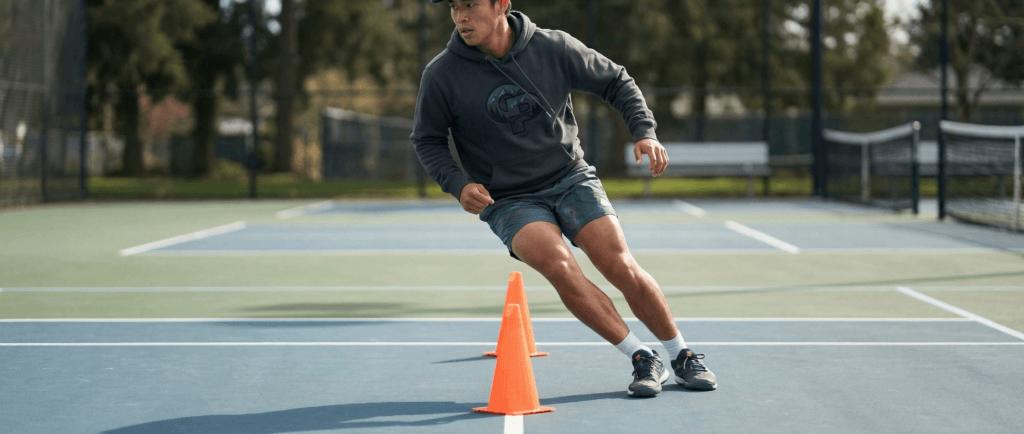
  1. First on the list is dynamic stretching. Unlike static holds, dynamic stretches are all about movement—and they’re just what you need to get those muscles flexible and ready for action. Try leg swings or arm circles to get the blood flowing.
  2. Lateral lunges are another fantastic warm-up choice. They prep your legs for the side-to-side actions that are so common in pickleball. Plus, they help improve balance and coordination—vital skills when you’re darting across the court.
  3. Wrist rotations might seem like a small thing, but they’re essential. Your wrists endure a lot while playing, so keeping them supple can prevent overuse injuries. Imagine giving your wrists a good stretch while making circular motions.
  4. Jumping jacks aren’t just kid’s stuff; they’re awesome for elevating your heart rate quickly. Just a minute or two can rev up your cardiovascular system, getting you pumped and ready for the fast pace of pickleball.
  5. Finally, don’t skip those arm swings and shoulder circles. They’re a simple way to warm up your upper body, ensuring your shoulders and arms are ready to rally.

Beyond the Basics: The 5 P’s of Pickleball

The core concepts of pickleball go beyond just skill and physical fitness. That’s where the 5 P’s come into play: Preparation, Practice, Presence, Patience, and Positivity. Each P plays a crucial role in not just how you approach the game, but how you warm up as well.

  1. Preparation is about setting yourself up for success, both mentally and physically. Whether it’s a well-thought-out warm-up routine or strategizing your game plan, being prepared keeps you a step ahead.
  2. Practice isn’t just for perfecting technique—it’s also about refining your warm-up rituals. Repeated practice helps automate your pre-game routine, so once you’re about to play, everything’s second nature.
  3. Presence means being in the moment. When warming up, focusing on each movement and feeling how your body responds keeps you anchored and enhances both agility and reaction time.
  4. Sometimes matches don’t go as planned. That’s where Patience comes in. A little patience during warm-ups can help you understand your own body better, recognizing when to push and when to ease off.
  5. Positivity ties it all together. A positive mindset amplifies the benefits of your warm-ups, turning them into a time to mentally prepare and set a confident tone for the match. By embracing positivity, you’ll find even more motivation to give each warm-up your all.

What to Avoid: The Top 5 Prohibited Actions in Pickleball

Pickleball rules are simple, but there are a few common missteps that can trip you up. Knowing these can not only save the game but keep you in good standing with your fellow players.

  1. First off, avoid volleying in the kitchen. That space near the net—the non-volley zone—demands respect. Making contact with the ball there without letting it bounce first is a surefire way to lose a point.
  2. Watch out for double hits. If your paddle hits the ball twice during a shot, it’s a fault. Keep it clean with one smooth motion for each play.
  3. Foot faults are another blunder to watch out for. When serving, your feet need to stay behind the baseline until after you’ve made your serve. Crossing the line too early gives your opponent an advantage.
  4. Don’t forget about the serve rules. Hitting the ball above your waist on a serve is a no-go. It needs to be an underhand motion for it to count.
  5. Finally, stay away from distractions or delays of game. Stalling tactics or unnecessary interruptions aren’t just poor sportsmanship; they’re against the rules and can cost you in more ways than one.

Note: Avoiding these common mistakes keeps the game fair and fun for everyone while helping you stay focused and in the right headspace to perform your best.

Crafting Your Personalized Warm-Up Routine

Putting together a personalized warm-up routine is all about tailoring exercises to fit your unique needs. By combining the essential exercises discussed, you’ve got the framework for a solid routine that gears you up for the game ahead.

Start with dynamic stretches to loosen up those tight muscles. From there, integrate some lateral lunges along with wrist rotations, making sure your body’s flexible and your joints are ready to move. This combo lays the groundwork for your agility and quick responses on the court.

Add a blast of energy with jumping jacks to elevate your heart rate, and finish strong with arm swings and shoulder circles. This mix not only prepares your body but also sharpens your focus, getting your mind in sync with your physical readiness.

But remember, your routine should evolve alongside your skills. As you become more experienced, adjust the intensity and variety of your exercises to match your level of play. The goal is to keep your body challenged and ready in new ways.

Lastly, don’t underestimate the power of a cool-down. After an intense game, some light stretching can help your body recover and reduce muscle soreness. This perfectly rounds out your commitment to being prepared, safe, and at the top of your pickleball game.

Pickleball Made Simple: Everything You Need To Know To Play Today

       Pickleball is catching on fast these days, and it’s super fun to get started with, especially if you’re looking for a sport that blends elements of tennis, badminton, and ping pong. When I first picked up a paddle, I was surprised by how quick it was to learn the basics, but some of the rules definitely took a little getting used to. So, I’m breaking everything down here so beginners won’t feel lost when they grab a paddle and step out onto the court.

A pickleball court with net, paddle, and ball placed at the center, showing the distinctive court layout

How Pickleball Works: An Easy Breakdown

      Pickleball is played on a court that’s similar in size to a badminton court, and you can play as doubles or singles. The paddles are partly like table tennis paddles, just a bit larger, and the balls are lightweight and full of holes. The basics are simple: hit the ball over the net and into the opponent’s court, trying to make it tough for them to return. The main goal is to score points by either serving or capitalizing on your opponent’s mistakes.

The game is designed to be accessible, whether you’re super athletic or just in it to have a laugh. Once you have a grip on the core rules and terms, you’ll find yourself enjoying the game a lot quicker.

3 Things You Need to Know: Pickleball Court, Paddles, and Ball

      Getting a handle on the court setup and equipment is a good first move. A regulation pickleball court is 20 feet wide by 44 feet long, which is much more compact than a standard tennis court. The net is 36 inches high at the sidelines and 34 inches at the center. You’ll see marked lines for the “kitchen” (also called the non-volley zone), service boxes, and baselines.

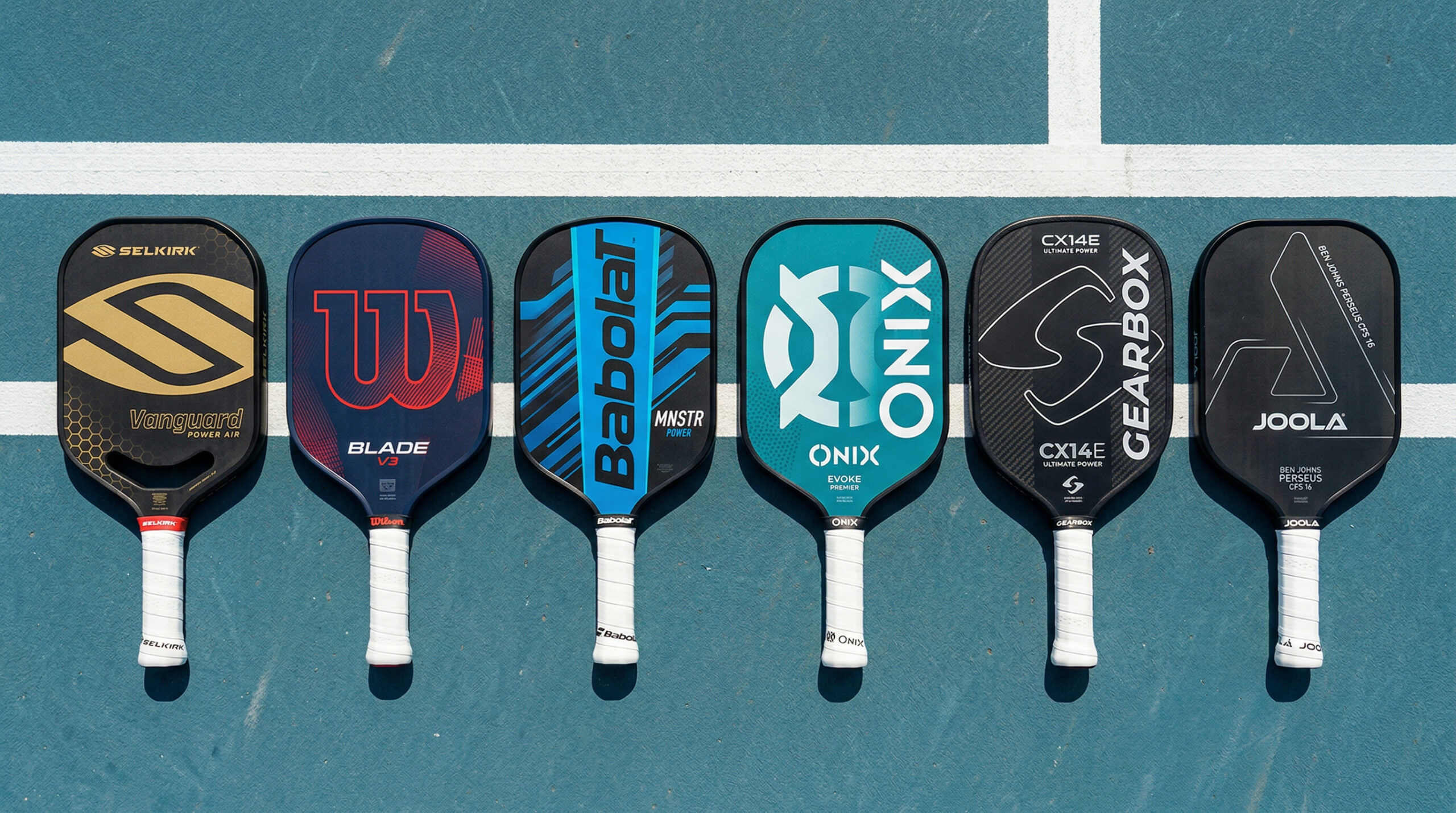
       Paddles come in a variety of materials such as wooden, composite, or graphite. If you’re new, you probably don’t need to worry too much about paddle technology; just make sure it’s the right weight for you. Lighter paddles are easy to swing but might have less power, whereas heavier ones can give your shots a bit more punch. As you play more, you might want to try out different paddle materials to track down the feel that works best for your style.

  • The Ball: Pickleball is played with a hollow plastic ball that’s got round holes in it, a lot like a wiffle ball.
  • The Net: A little lower than a tennis net, which makes rallies easier.
  • The Kitchen: This is the non-volley zone (7 feet from the net on both sides). There are special rules for this area that keep the game fair and under control.

      Another thing worth mentioning for beginners is racket grip size. Make sure you have a grip that feels comfortable and allows you to swing easily without slipping, particularly as your hands get sweaty. Court shoes are also helpful because they offer the best traction for those quick side steps and pivots pickleball demands, especially on outdoor courts.

4 Easy Rules Every Pickleball Beginner Should Understand

      Once you’re comfortable with the setup, the main rules are pretty straightforward. Here’s what you need to know to start playing for real and not just casually batting the ball around.

  1. Serving: Every point starts with a serve that’s made underhand and struck below the waist. The serve has to land in the opposite diagonal service court and must clear the kitchen. You only get one serve attempt (unless the ball touches the net but lands correctly, which is called a let serve and gets replayed).
  2. Double Bounce Rule: After the serve, each side has to let the ball bounce once before hitting it. So, the receiving team lets it bounce, returns it, and then the serving team must let it bounce again before returning. After this, volleys (hitting before the bounce) are allowed, except in the kitchen.
  3. No-Volley Zone (Kitchen): You can’t step into the kitchen and volley (hit out of the air). This prevents people from just hanging out at the net and smashing balls, which helps keep rallies going. You can go into the kitchen to play a ball that bounces first, though.
  4. Faults: Common faults include hitting the ball out of bounds, hitting into the net, volleying from the kitchen, or not letting the ball bounce (breaking the double bounce rule).

      Singles and doubles games follow the same rules, with a bit of a twist in serving order and scoring, which I’ll explain next. Remember to double-check your foot placement on serves and volleys, and pay close attention to the kitchen line at all times, since that’s where many beginners slip up.

How Pickleball Scoring Really Works

       Scoring can throw off new players because it doesn’t work like traditional tennis. Only the serving team can score points. In doubles, each player on a side gets a turn at serving until a fault is made, and then the serve switches to the other team. Games are usually played to 11 points, and you need to win by 2. For more competitive games, people often play to 15 or 21 points.

  • Calling the Score: When calling out the score in doubles, say the serving team’s score first, then the receiving team’s score, and then which server is serving (1 or 2).
  • Serving Rotation: In doubles, Player A on the right starts, serves till they fault, then their partner serves from the left. After both players have served and faulted, the serve moves to the other team.
  • Switch Sides: In tournament play, teams swap sides after every six points to balance out potential advantages such as sun or wind.

      Staying sharp with your scoring is key, as it’s easy to lose track during fast-paced matches. A quick tip is to consistently announce the score before each serve, so everyone stays on the same page and you avoid disputes over points.

5 Simple Step to Starting Your First Game

  1. Get Set: Stand behind the baseline, and keep both feet behind it to serve.
  2. Serve Diagonally: Use an underhand motion and send the ball over the net into the opposite diagonal box.
  3. Move Forward Cautiously: After the double bounce rule finishes, move up and try to control the game near the kitchen line, but don’t step over unless the ball bounces first.
  4. Communicate: In doubles, always talk with your partner about who will take shots in the middle or call balls close to the lines.
  5. Keep Score: It’s helpful to announce the score before serving each time so no one loses track.

       If you’re jumping into a local group for your first game, don’t be shy about asking questions or getting advice between points. Most pickleball players are happy to share tips and help you get comfortable faster.

Common Beginner Mistakes and How to Avoid Them

  • Standing in the Kitchen: Accidentally volleying from the kitchen is a frequent beginner mistake. Get used to where the lines are as you play.
  • Not Letting Ball Bounce: The double bounce rule can be easy to forget in the excitement, so slow down for those first couple returns each rally.
  • Forgetting Serving Rules: Making sure your serve is underhand and below waist height, and keeping both feet behind the baseline, helps you avoid unnecessary faults.
  • Poor Court Positioning: Drifting too far back or hugging the kitchen line too early can make you easy to beat. Try to stay balanced and alert.

     Getting some regular practice in, even just hitting casually with a friend, will help you spot these mistakes before they become habits. Watching experienced players can also give you a sense for court movement and smart strategies.

The Kitchen: Common Questions

     The kitchen (non-volley zone) is a massive part of what keeps pickleball fun. Here are a few fast things I keep in mind:

  • You can’t volley (hit out of the air) while standing in the kitchen or even touching the kitchen line.
  • You can enter the kitchen after the ball bounces there—this is actually where a lot of “dinks” (soft shots) are played.
  • If your momentum carries you into the kitchen after volleying, it still counts as a fault, even if you hit the ball before stepping in.

      The key is learning the lines and adjusting your footwork so you play legal, controlled shots. Take a minute before each game to walk the lines and get a feel for the court’s layout if you’re new to a location.

Get Game Ready: Quick Equipment Picks for Beginners

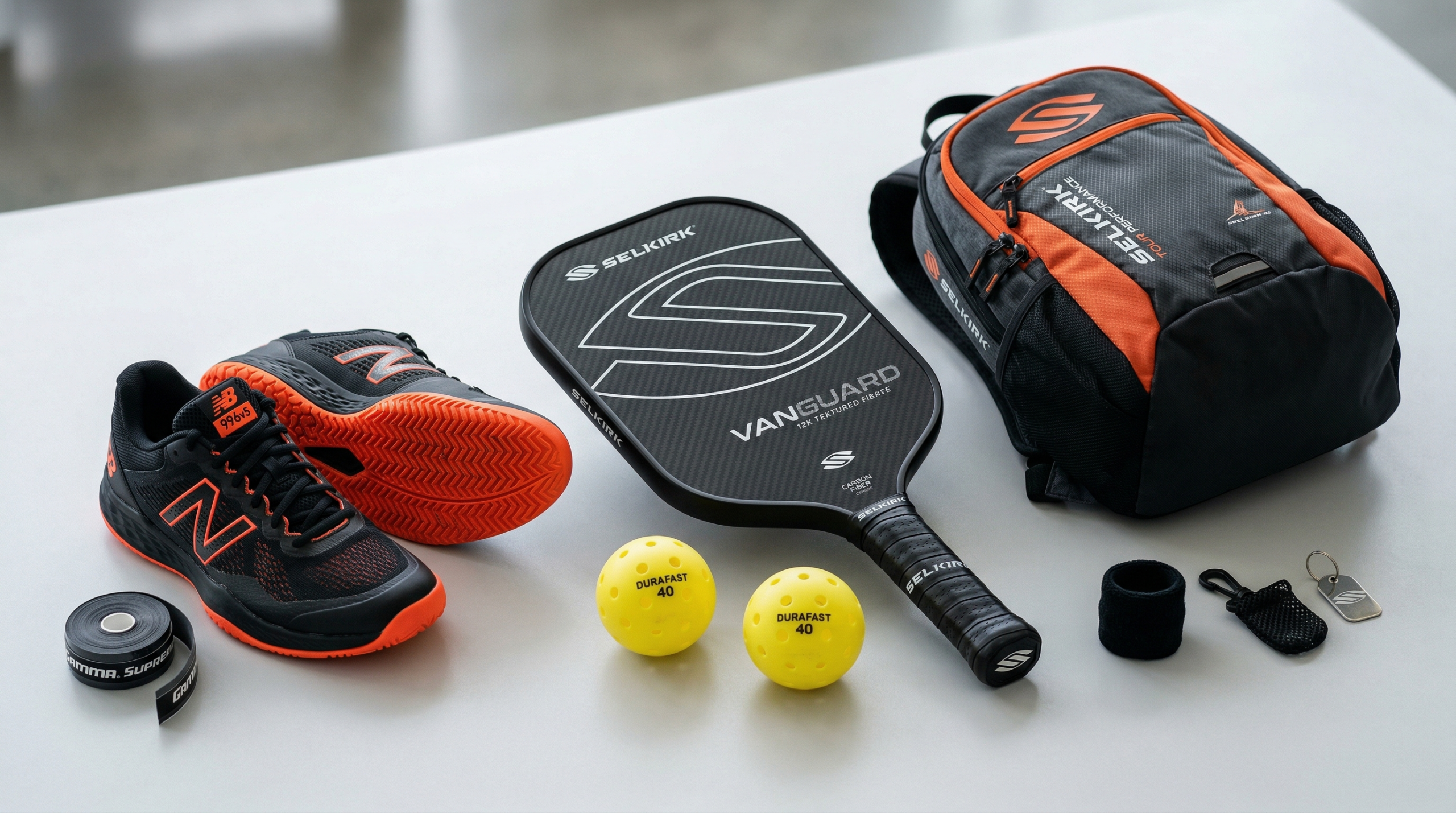
       There are starter paddle sets available for under $50 USD, which come with balls, too. Comfortable court shoes (like for tennis) help prevent slips, and it’s smart to bring water and a hat if you’re playing outdoors. Proper gear doesn’t need to be fancy at first; comfort and control go a long way. If you’re unsure which paddle to pick, try borrowing a friend’s to get a sense for grip and weight. Over time, as you play more, you may want to upgrade your equipment to find the perfect match for your playing style.

  • Paddle: Look for something in the 7-8 ounce range with a cushioned grip.
  • Balls: Pick up a few indoor and outdoor balls—the indoor ones have smaller holes and the outdoor ones are a little harder with bigger holes.
  • Shoes: Any shoes with good grip and lateral support are solid picks.

      Other useful gear for beginners includes a sweatband to keep sweat out of your eyes and a small bag to carry your gear. Sunblock and sunglasses are also helpful for outdoor play. The less distracted or uncomfortable you are, the easier it is to focus during matches.

Frequently Asked Questions about Pickleball Rules

Question: Can I serve overhand in pickleball?
Answer: Nope, all serves are underhand. The paddle must strike the ball below your waist, and the serve must be made with an upward motion.


Question: What’s a let serve?
Answer: If the serve hits the net but lands correctly on the other side, it’s a let and gets replayed. There’s no limit to let serves; you just keep trying until you get a legal one.


Question: Am I allowed to hit the ball before it bounces?
Answer: After the double bounce rule is satisfied at the start of each rally, you can volley the ball, just not from the kitchen!


Question: Can I play pickleball on a tennis court?
Answer: Absolutely. Many parks just tape out smaller pickleball courts on existing tennis courts. You can track down resources online with measurements and diagrams for lining your own court if you want to get creative at a local facility or even at home.


Final Tips for Pickleball Beginners

        Pickleball is easy to start but has layers you’ll keep picking up with experience. The rules are designed for fast, friendly rallies and a great mix of strategy and athleticism. Grabbing a starter set, spending time learning the court, and focusing on understanding the kitchen rules make it way easier to hop into games with confidence. Once you’re familiar with the basics and know how to keep score, you’ll be playing back-to-back matches and enjoying every minute of it. Most of all, don’t forget to have fun—Pickleball is as much about connecting and laughing with friends as it is about scoring points. Happy playing!


      What’s the most confusing pickleball rule you’ve encountered? Let me know in the comments!.