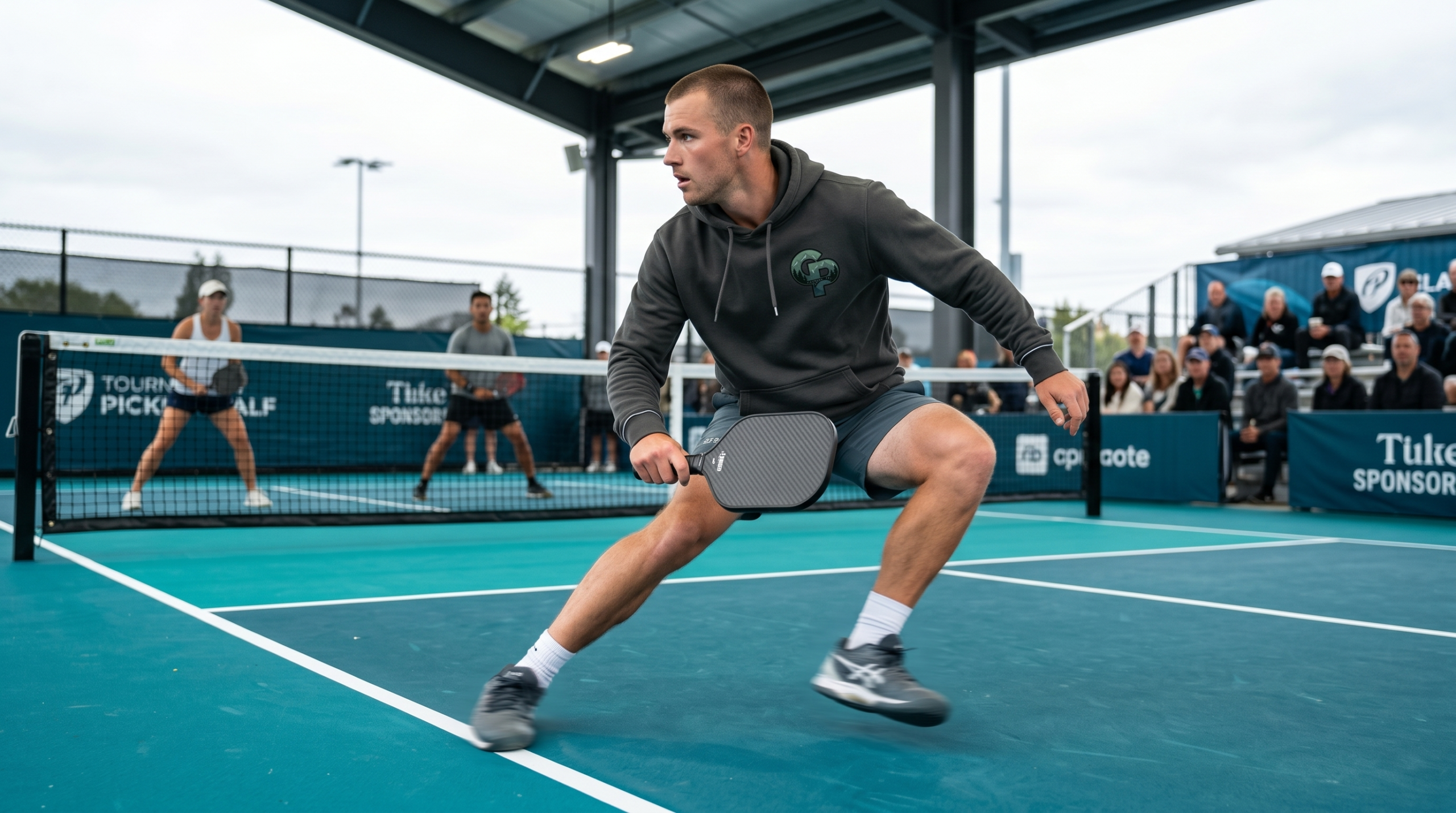
Advanced Footwork Drills for Competitive Players are what separate strong athletes from those who only know the basics. As a result, mastering movement, balance, and quick stance adjustments gives you more tactical options. Additionally, these skills help you stay composed under pressure, which means you can react smarter and recover faster during intense points.
Why Advanced Footwork Drills Matter for Competitive Players
Solid footwork drills go far beyond just running or shuffling back and forth. Once you’ve nailed the basics, advanced drills bring greater speed, balance, and control to your movements. These challenges boost my coordination, stamina, and adaptability under pressure. In sports like tennis, badminton, basketball, or soccer, quick foot changes often tip the scale at tight moments. In martial arts, well-timed footwork gives you an edge on both attack and defense—sometimes being the difference-maker in a close match.
Advanced drills also help squash the habit of moving the same way every time. They force my brain and body to adapt to new patterns, making my movements less predictable for opponents. When I add directional changes, fakes, and rhythm shifts to my routine, opportunities open up during tough matches that simply weren’t there before. This shook me out of autopilot and stoked my problem‑solving skills during play — and it’s exactly why Advanced Footwork Drills for Competitive Players are so effective at building adaptability and smarter movement under pressure.
Before you pick your next paddle, visit the Top Joola Pickleball Paddles 2026 guide for the newest tech and player‑favorite options.
Core Elements of Advanced Footwork for Competitive Players
Before jumping into advanced drills, I make sure to focus on four main skills. Effective footwork in any competitive setting is built on:
- Speed: How quickly I can shift from one spot to another.
- Agility: How fast I can switch direction based on the game or opponent’s move.
- Balance: How steady I stay while moving or after landing from a jump or pivot.
- Coordination: How smoothly my feet and upper body sync up for fluid action.
Blending these elements into every session helps build all-in-one movement habits that pay off in any situation on the court or field.
Foundation Drills to Build On
These Advanced Footwork Drills for Competitive Players create the foundation you need before adding speed and complexity.
- Ladder Drills: These are great for developing quick, light feet. Standard moves like “in-in-out-out” or “side shuffle” get muscle memory going and teach control.
- Cone Drills: Set cones in a line or zigzag, then mix up sprints, sidesteps, and backpedals between them.
- Shadow Footwork: Move as if you’re reacting in a real match, picturing where you’d go to return shots or defend space.
Once these basics feel smooth, I start mixing in tougher drills that push my pace and demand real mental focus. Trust me, working on movement foundations first leads to much cleaner technique once things get fast and unpredictable.
Top Advanced Footwork Drills to Try
Competitive players aiming to sharpen their skills can get a lot from these next-level drills. I keep these in rotation, and they never fail to push my limits. Here are some drills you should try if you want to really step up your game:
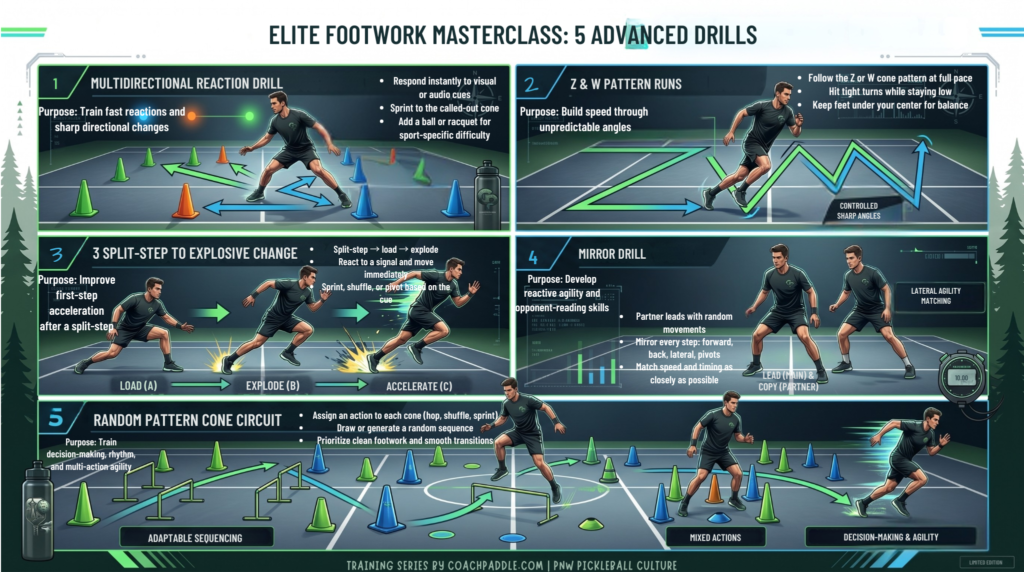
- Multidirectional Reaction Drill: Put cones around your starting position. Have a partner or use an app to call out random directions. React quickly and get to the correct cone, cutting your reaction time with each round. Adding a ball or racquet takes the challenge up for sport-specific practice.
- “Z” and “W” Pattern Runs: Set cones in Z or W patterns on the court. Run along the shapes at full pace, hitting sharp stops and tight turns. Stay low and keep your feet under your shoulders, which mirrors real game movement with unpredictability built in.
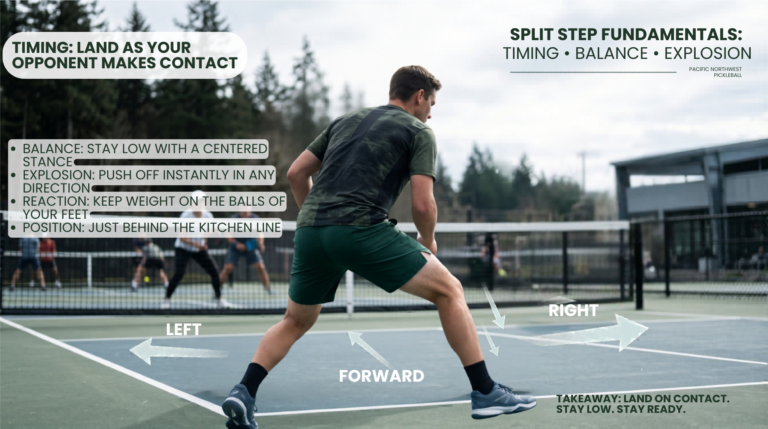
- Split Step and Direction Change: Do a split-step jump, then explode into a sprint, side shuffle, or pivot based on a signal. This is especially realistic for tennis or volleyball, where reacting quickly after a split-step is crucial.
- Mirror Drill: Work in pairs. One player leads with random footwork moves (forward, back, side shuffle, pivots) while the other mirrors every action as closely as possible. This builds lightning-fast reactions and helps train your eye to read opponents better.
- Random Pattern Circuit: Use multiple cones placed randomly inside a set area. Assign a footwork action (hop, shuffle, sprint) to each cone. Draw a sequence—from a hat or an app—and move through them quickly, aiming for precision and clean rhythm over speed alone.
Common Mistakes and How to Fix Them
Advanced drills can bring out flaws in technique or fitness that basic drills might hide. Here are the issues I see most often, along with the fixes I’ve found effective:
- Dragging Feet: Not lifting your feet enough slows you down and burns you out faster. I focus hard on keeping each step light and intentional, especially in ladder work.
- Going Too Far on Direction Changes: Overshooting wastes energy and loses time. Using visual markers trains me to stop and pivot efficiently.
- Standing Too Tall: Tall posture kills quick movement. Staying low boosts both power and speed. I use reminders to bend my knees throughout practice until it’s automatic.
- Sloppy Technique When Tired: Fatigue is a real test. Keeping drills shorter and more intense helps maintain good form, building not just fitness but focus under stress.
Checking for and correcting these mistakes consistently makes every sprint, cut, or shuffle count—plus it helps keep injuries at bay.
Practical Tips for Maximizing Footwork Sessions
Making the most of advanced footwork is about a smart approach, not just sweating more. Here’s how I get the best results from my sessions:
- Warm Up Properly: Dynamic warmups, like high knees and skips, prep joints and muscles for explosive moves.
- Use Markers or Visuals: Cones, tape, or even chalk lines help lock in movement paths and aim. They keep drills honest and precise.
- Partner Up or Ask a Coach for Feedback: Partners make drills less predictable and give instant pointers, speeding up progress and boosting motivation.
- Take Short Breaks Between Rounds: Recovery lets you keep up top speed and tight form through every set.
- Film Your Drills: Watching my own video reveals habits—good and bad—that I might miss otherwise. Reviewing footage helps pick up on what needs fixing next.
Little changes like these can transform an average session into a real breakthrough.
How Advanced Footwork Translates to Real Play
All the drilling in the world only matters if it works in matches. Here’s how I see advanced footwork pay off when the whistle blows:
- Faster Positioning: I can reach more shots or balls with time to spare for decision-making.
- Smoother Transitions: Stronger recovery after tough rallies means less scrambling and fewer forced errors.
- Better Balance in Action: Shooting or hitting on balance raises both accuracy and power, not to mention confidence under pressure.
- More Convincing Fakes: Movement tricks that throw off an opponent help me claim open space or create a scoring chance.
Even tiny improvements in agility allow me to keep my options open and maintain composure—even mid-sprint. The confidence boost that comes from being able to chase down almost any play is huge in crunch time.
Frequently Asked Questions About Advanced Footwork Training
Here are some common questions from players jumping into advanced footwork drills for the first time:
What’s the best way to add advanced footwork drills into a routine?
Start by plugging in one or two advanced drills at the end of your usual practice, then ramp up as you get comfortable. Focus on quality—sharp, clean movement—over packing in as many reps as you can.
How often should I train advanced footwork?
Two to three focused sessions a week usually bring noticeable improvement without burnout or high risk of injury.
Do I need any special equipment?
Most drills use basic gear like cones, ladders, or even tape. Having good court shoes with solid grip is key for safety and performance, but you don’t need fancy tech to get results.
For official guidance on rules and standards, you can always check the USA Pickleball Official Rules
How to Keep Progressing
Once I master certain drills, improvement can stall out. That’s when I switch up patterns, kick up the speed, or layer in more complex moves. Blending two drills into a circuit or adding specific sport skills—like volleying, shooting, or catching—increases both difficulty and fun. Checking in with a coach or keen-eyed teammate helps reveal blind spots or offers fresh drills to try out next.
Advanced footwork won’t just make you quicker—it’ll level up your mental game and boost your tactical awareness on the field or court. Among the competitive folks I train with, the biggest game-changer isn’t top speed, but the steadiness and smart movement choices that stick even under major pressure. Footwork done right can break stale patterns, open up new options, and help seal the win in tight matches. So get out there, shake up those routines, and let your feet do the talking.