A tournament day can run from an early warm-up to a final match many hours later, with gaps between matches that you cannot predict. Knowing what to pack in a pickleball tournament bag comes down to one question: if this item fails or runs out at 2 p.m., can I fix it in the time between matches? Anything that answers yes belongs in the bag. Anything that only helps in theory stays in the car.
Why a tournament day breaks the bag you use for rec play
A rec session ends when you are tired. A tournament does not. You play on a schedule set by the bracket, you may wait an hour or more for your next court assignment, and you can’t leave to fetch something from home. You also play on courts you have not chosen, in conditions you cannot change.
A rec bag usually holds one paddle, a water bottle, and whatever has collected in the side pockets since last month. That works when a problem costs you ten minutes. At a tournament, a cracked paddle or a soaked grip can cost you a match, so the bag has to be built around the failures that are most likely to happen and cheapest to prevent.
Sort what you carry into two groups. The first is gear that can fail mid-match: paddle, shoes, grip, balls. The second is what keeps your body working for the whole day: food, fluids, sun protection, dry clothes. Most players over-pack the first group with premium items and under-pack the second.
The paddle question: one frontline paddle, one true backup
Bring two paddles, and make the second one a real backup. A true backup is a paddle you have played with enough that swapping to it mid-match does not change your timing. A new paddle pulled from its packaging that morning is a gamble.
If your frontline paddle has a particular weight, balance and surface texture, the backup should be close to it. Players who switch from a head-heavy paddle to a light, quick one in the middle of a match often find their volleys and resets change immediately. If you are still choosing a frontline paddle, how to choose Selkirk pickleball paddles covers the decision in detail, so this article does not repeat it.
Before the event, check the tournament’s equipment rules and confirm both paddles meet them. Events differ in what they require, and finding out at the check-in table is too late. Keep both paddles in a padded sleeve or a separate bag compartment so they do not knock against each other, and keep them out of a hot car.
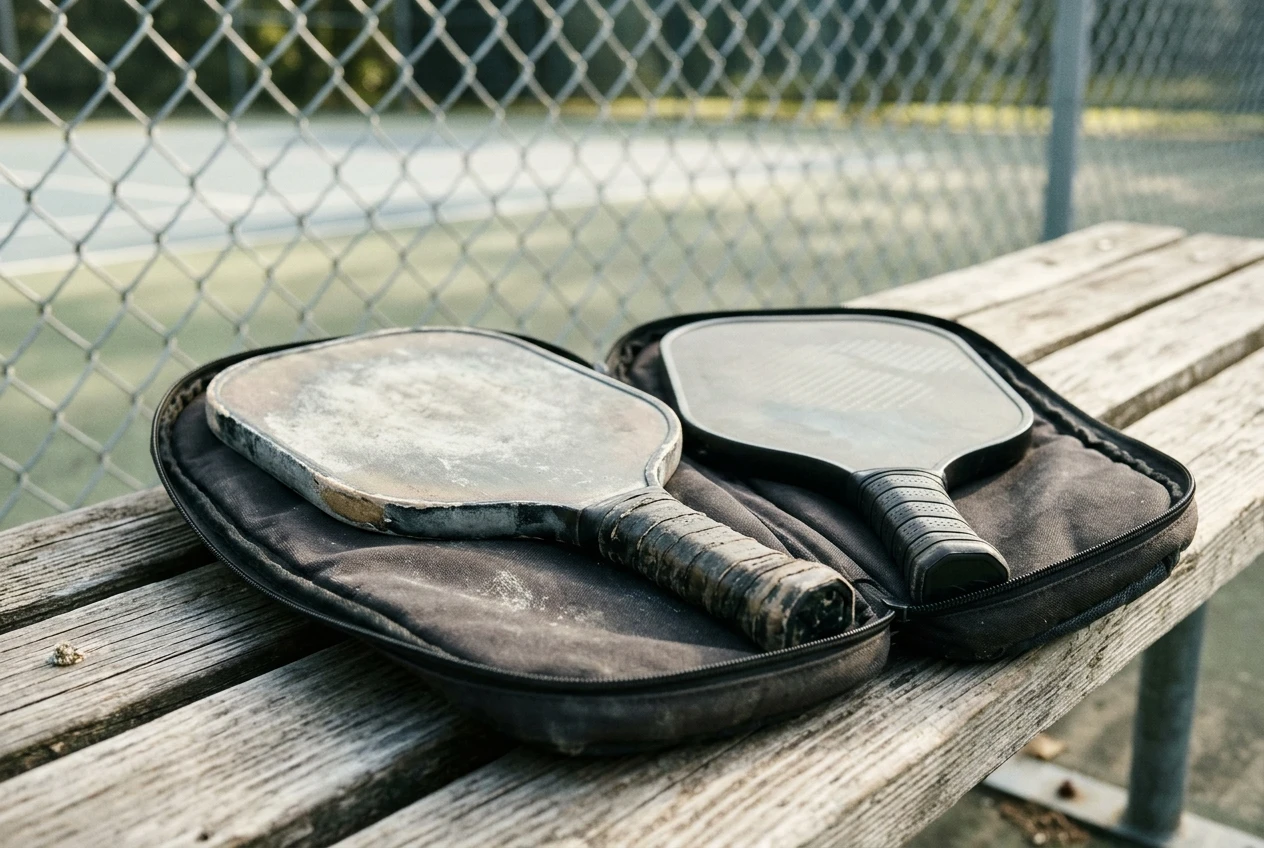
Where spending matters: the frontline paddle, since you handle it on every shot. Where it is wasted: a second premium paddle. A backup that you know and trust is worth more than an expensive one you have barely hit with.
Shoes, socks and the spare pair most players forget
Shoes take more punishment than any other item you own for this sport, and a long tournament day strains them in a particular way: sweat soaks the insole, the lateral edges wear on the court, and by the third match your feet may feel different from how they did in warm-up. Footwear is where spending more tends to pay off, because grip, lateral support and cushioning affect how you move for hours. How to choose pickleball shoes goes through what to look for.
The item most players forget is the spare pair. That can be a second pair of court shoes if you own them, or at least a dry pair of shoes to change into between matches. Wet or sweat-heavy shoes get heavy and slick inside, and a dry pair gives your feet a real reset.
Socks are cheap and worth packing in quantity. Bring at least one fresh pair for every two matches you expect to play, and keep them in a sealed bag so they stay dry. Blisters are a small problem that gets large over ten hours, so add blister pads or athletic tape to the kit.
- Court shoes you have already broken in (new shoes on tournament day invite blisters)
- A dry second pair of shoes or sandals for downtime
- Extra socks, sealed in a bag
- Blister pads or athletic tape
Grip, overgrips and the small fixes that save a match
Grip failures are common because sweat builds up over a day. A grip that felt fine in warm-up can turn slick after two matches, and a slipping paddle hand affects every shot. Overgrips cost very little and take under a minute to replace, so this is the least expensive insurance in the bag.
Pack at least three overgrips, since you may change grips between matches rather than waiting for a failure. Wrap one on before the event so you know your preferred tension and overlap, and carry the rest unopened.
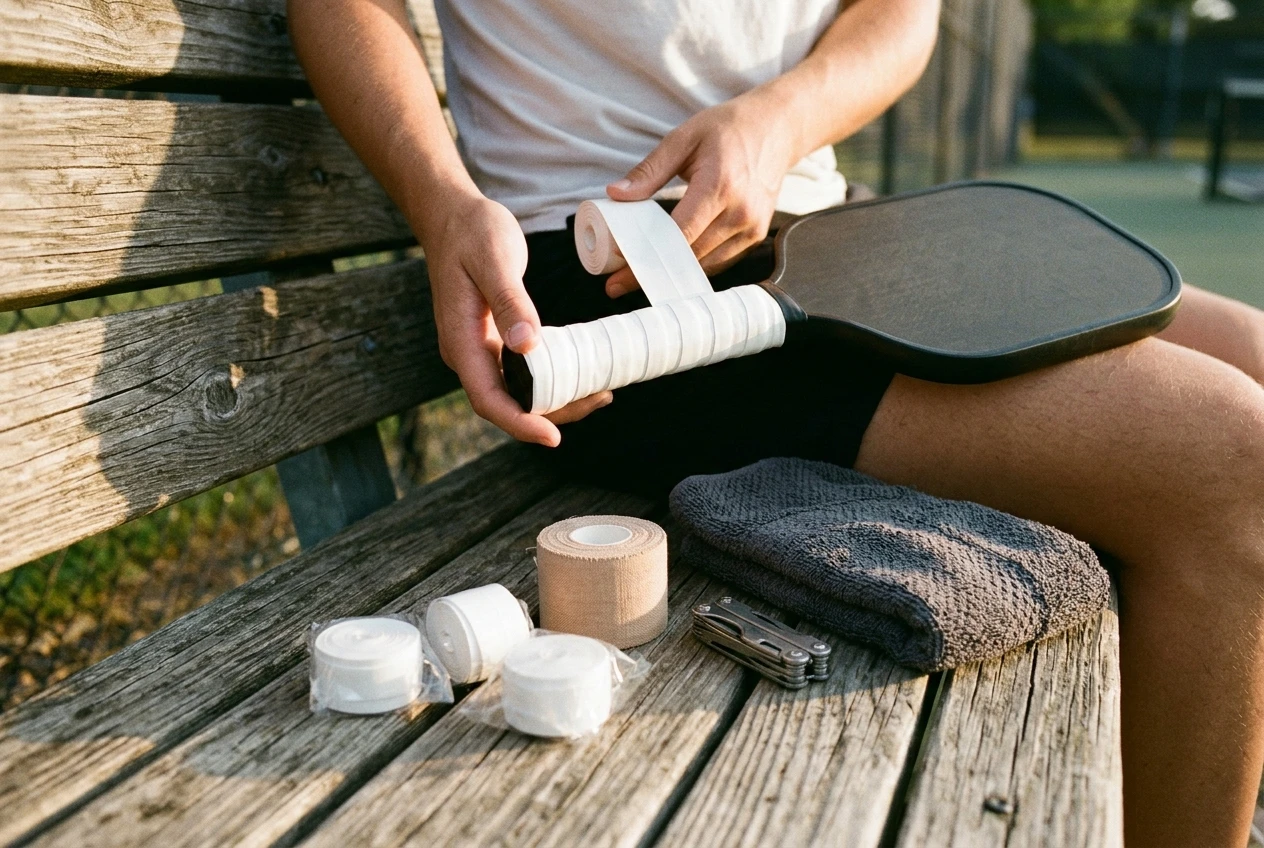
A few small items fix most minor problems:
- A towel or two, kept dry in a sealed bag, for wiping your hands and the handle
- Grip powder or a drying aid, if you use one and are used to how it feels
- A small roll of athletic tape for the grip’s end cap or a loose edge
- Wristbands or a headband to keep sweat off your hands and out of your eyes
- A multi-tool or small screwdriver, if your paddle or accessories have parts that loosen
Edge guard tape is also worth having if your paddle uses it, because a chipped edge can become a larger crack if you ignore it. None of these items are expensive, and none of them need to be premium.
Balls for the event: checking what the tournament uses before you pack
Tournament organizers usually specify which ball the event uses, and that information is often in the registration details or on the event page. Look it up before you pack. If the event uses a ball different from the one you train with, you can adjust by practicing with it ahead of time, because balls vary in bounce, hardness and how they respond to spin.
Even when the event supplies match balls, bring a few of your own for warm-up. A fresh ball you know is fine for hitting between matches, but check the rules before you use your own in play, since officials generally control the match balls. Indoor and outdoor balls differ in design, and the difference affects how the ball flies and how it bounces off the court surface, as explained in pickleball balls indoor vs outdoor.
Spending more on balls rarely pays off. A small supply of the event’s ball for warm-up is enough, and a large tube of your usual brand stays at home.
Fuel, hydration and recovery gear for a ten-hour day
This is the part of the bag where tournament players most often lose focus without realizing why. Energy and concentration drop when you go too long without eating or drinking, and a mistake late in a close game can come from a body running low.
Pack more water than you think you need, and add an electrolyte drink or powder if you sweat heavily or play in warm conditions. Check whether the venue has water refill stations so you can plan your container sizes. Food should be easy to eat quickly and easy on your stomach between matches:
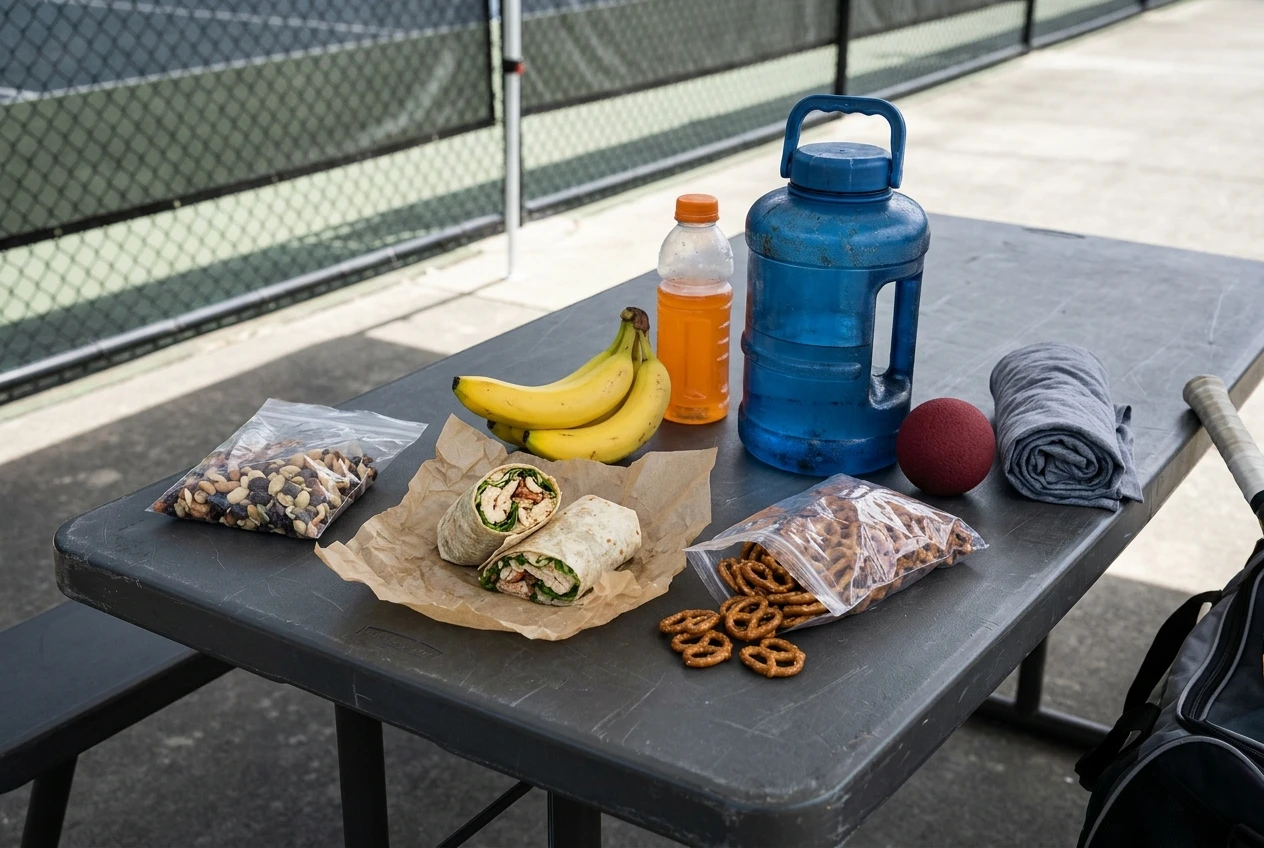
- Bananas, fruit or dried fruit
- Sandwiches or wraps you can eat in a few minutes
- Nuts, trail mix or bars you already know you tolerate
- Salty snacks to help replace what you sweat out
Try the foods in practice first, because a tournament is not the day to discover that a particular bar upsets your stomach. Time your eating to the schedule: a small snack soon after one match ends is better than a large meal right before the next one starts.
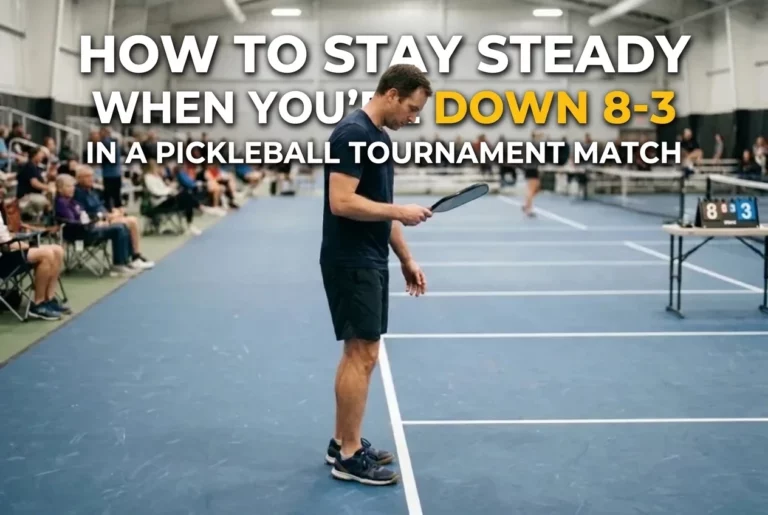
For recovery, a few light items go a long way: a small foam roller or massage ball, a resistance band for loosening up, and a change of dry shirt so you do not sit in sweat. If you have a long gap, a light walk and some stretching can help more than sitting still. Staying composed through a long day also depends on your mental approach, and staying steady when you’re down 8-3 covers that side of tournament play.
Sun, heat and rain: the weather layer of your bag
Outdoor tournaments give you hours of exposure, and weather changes over a day. Check the forecast the night before and add to the bag accordingly.
For sun and heat:
- Sunscreen that is sweat-resistant, with a stick version for your face
- A hat or visor, and sunglasses if you are comfortable playing in them
- A cooling towel or a small cooler pack
- A portable shade option if the venue has little cover, such as a small folding chair with a canopy or an umbrella
For cooler or wet conditions:
- A light jacket or warm layer for between matches, since muscles cool quickly when you stop
- A poncho or rain jacket
- A towel dedicated to drying your paddle and hands
- A sealed bag for wet clothes
Rain affects more than comfort. Wet courts change how your shoes grip and how the ball bounces, and you may need to adjust your footwork. Tournament officials make the call on whether to play or delay, so stay close to the schedule and keep your gear dry while you wait.
Spending more here is mostly unnecessary. A basic hat, sunscreen and a rain layer cover nearly every situation.
Choosing the bag itself: capacity, ventilation and how it carries
The bag should hold everything above without forcing you to pack it tightly. A bag that is too small leads to items left behind, and one that is too large gets heavy and awkward to move between courts.
Features that matter for a full tournament day:
- Separate compartments. A padded paddle compartment, a ventilated shoe pocket and a dry pocket for towels and spare clothes keep sweaty items away from clean ones.
- Ventilation. Damp shoes and clothes in a sealed bag will smell and degrade. Look for mesh panels or vents so moisture can escape.
- Carrying comfort. You may walk a fair distance from the parking lot to the courts. Padded straps and a backpack-style carry spread the weight better than a single shoulder strap for many players.
- Quick access. Pockets for a water bottle, snacks and your phone save you from digging through the bag between matches.
- Durability. Zippers and seams carry the load of a full bag, so check them.
This is a place where a modest budget can serve you well. A bag with good organization and ventilation does more for you than a premium brand name. Pay for the features you will use, such as a ventilated shoe compartment and a padded paddle sleeve, and skip any that you will not.
A pre-event packing check you can run the night before
Lay everything out the night before and check it against this list. Packing the evening before gives you time to replace anything missing, instead of finding the gap in the parking lot.
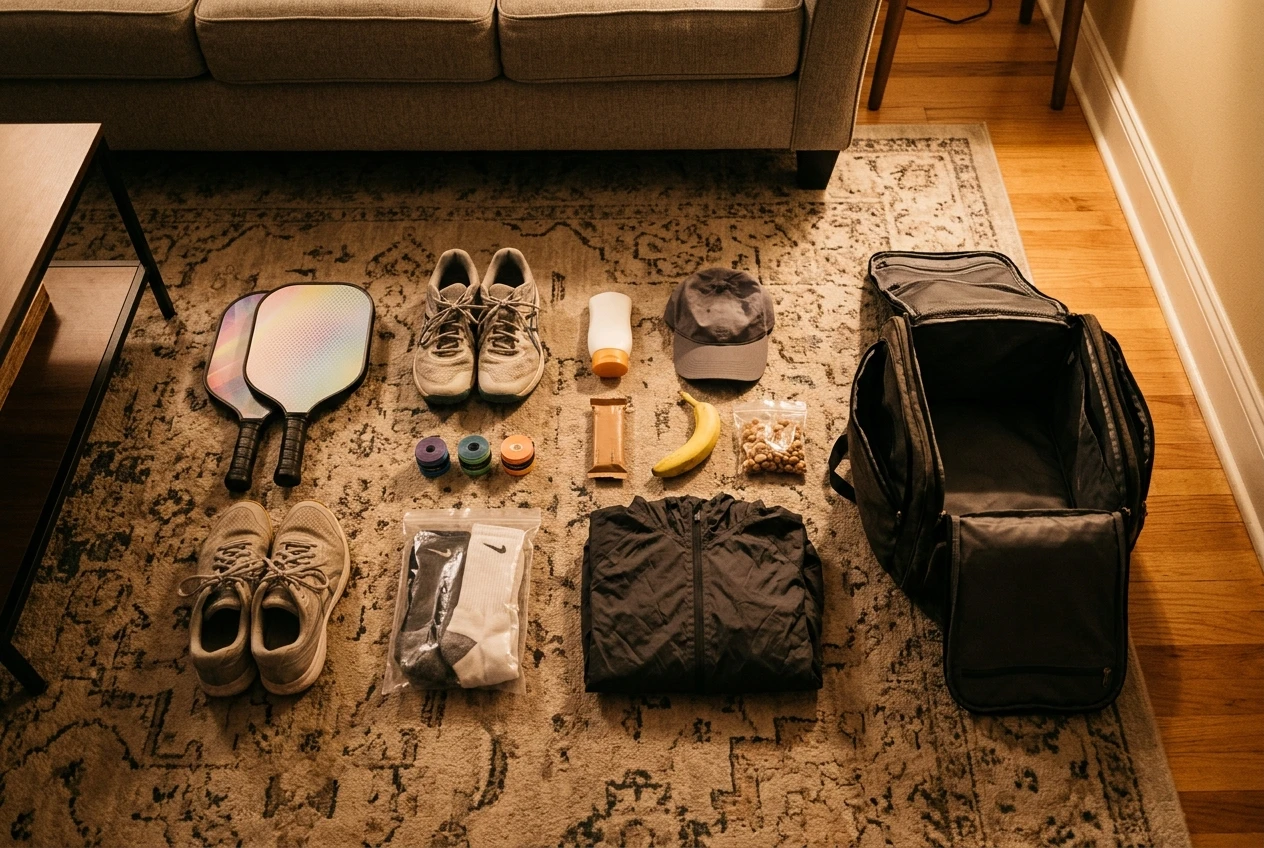
Playing gear
- Frontline paddle and backup paddle, both confirmed legal for the event
- Court shoes, plus a dry second pair
- Socks, one fresh pair for every two matches
- Three or more overgrips, one already tried on your paddle
- Warm-up balls and a note of which ball the event uses
- Tape, a small multi-tool and edge guard if you use it
Body care
- Water and an electrolyte drink
- Snacks you have tried before, sized for the full day
- Towels, dry shirts and a sealed bag for wet clothes
- Blister pads and any personal medication or supplements
- A foam roller, massage ball or resistance band
Weather and logistics
- Sunscreen, hat or visor, sunglasses
- Rain layer and a warm layer
- Registration confirmation, schedule and the venue address
- Cash or card for food and parking
- A folding chair if the venue has limited seating
Once the bag is packed, charge your phone, check the forecast one last time, and set out your match clothes. Gear problems solved the night before cannot take your attention on the day, and that attention belongs on the match.