Searching for the best pickleball paddles for tournament play usually ends in the same place: a dozen paddles that all look excellent in a pro’s hands, with no clear way to pick between them. A better approach is a short process you can run again every time a new model appears. Confirm the paddle is legal, decide which traits your game needs, and test it under conditions that resemble a match.
This article walks through that process, then points you to the paddle lines already covered on this site so you can build a shortlist.
Why the paddle a pro swings may not be the right one for you
Professional players hit with a speed, consistency and timing that most tournament players don’t have. A paddle that suits their swing may reward a technique you don’t use. A pro’s paddle choice also reflects sponsorship, and the player has had time to adapt their game to that paddle.
Watching a pro tells you what the paddle can do in expert hands. It tells you nothing about what it will do on your third-shot drop at the end of a long day. Your own shot patterns, your arm, and your usual opponents are the evidence that matters.
Treat a pro’s paddle as one candidate among several, and let the rest of the process decide.
Check the approved list before you fall for any paddle
Before comparing feel or performance, confirm the paddle is allowed. Sanctioned events generally require paddles to appear on an approved list kept by the sanctioning body, such as USA Pickleball’s approved paddle list. A paddle that plays beautifully but isn’t on that list can be refused at your first match.
Do three things before you buy:
- Look up the exact model name on the current approved list, since similar-looking paddles in the same line can differ.
- Read the specific tournament’s rules. Some events add their own requirements or run their own paddle checks.
- Re-check the list shortly before the event, because lists are updated and paddles can be added or removed.
If you already own a paddle you like, run the same check. Legality is the first filter, and it removes options before preferences come into it. The pickleball gameplay rules summary covers the rest of the rules side if you want a refresher.
The four traits that matter in a tournament paddle: power, control, spin and forgiveness
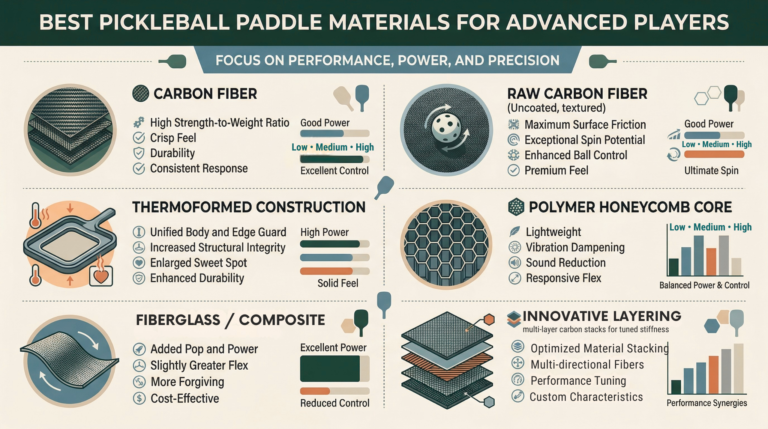
Every paddle is a set of trade-offs among four traits. Knowing which ones you need keeps you from buying on a marketing description.
Power. How much pace the paddle returns for a given swing. Higher power helps on drives, put-aways and serve returns, but it can make soft shots harder to keep short.
Control. How predictably the ball leaves the face on dinks, resets and blocks. As a general tendency, paddles that feel softer and more muted at contact give you more control, while stiffer, livelier paddles give up some of it for pace.
Spin. How well the face grips the ball when you brush up or across it. Surface texture matters here, and so does your own technique. If spin is part of your game, the guide on how to add spin to pickleball covers the swing mechanics a paddle can only partly supply.
Forgiveness. How well the paddle handles contact away from the center. A larger effective hitting area usually helps, and so does a paddle that stays stable when the ball arrives late or off-center. Fatigue makes forgiveness more valuable as the day goes on.
You can’t maximize all four at once. Decide which one you’d give up last, and which one you can live with less of.
Match the paddle to how you win points
Your style of play tells you which traits to put first. Most competitive players fall near one of three profiles.
Power baseliner
You win by driving the ball, attacking from deep, and finishing rallies with pace. Prioritize power and stability. A paddle that holds steady on hard contact helps you keep drives deep, and you’ll want enough control that your resets from the baseline still land in the kitchen. Check that the extra pace doesn’t cost you at the net, where short, quick exchanges expose a paddle that’s too lively.
Soft-game specialist
You win in the kitchen, with patient dinks, resets and well-timed speed-ups. Control and spin come first. You want a paddle that lets you place the ball precisely and absorbs pace without sending it long. If this is your game, the drill pages on dinking and topspin dinks are worth running with any paddle you’re considering, since dinks reveal control problems quickly.
All-court player
You switch between attack and defense depending on the rally. Balance matters most here, and forgiveness becomes the tiebreaker. A paddle with no extreme trait tends to suit you, because you can’t afford a weak spot in any area. The risk is choosing a paddle that is merely average at everything, so decide which one or two traits you lean on in tight games and favor those.
Be honest about which profile your match results support, not the one you’d like to be. Your last few tournaments, or your own match notes, are better evidence than your self-image.
How to demo a paddle so it holds up over a full tournament day
Ten minutes of rallying in a warm-up tells you about feel. It doesn’t tell you how the paddle performs in the fifth match. Test it in a way that mimics what the event will ask of it.
- Test shot by shot. Hit third-shot drops, dinks, resets, blocks, volleys, serves, returns and overheads. If your third shot is a weak point, the guide on why your third shot drop keeps popping up will help you separate a paddle problem from a technique problem.
- Change one variable at a time. Compare two paddles back to back in the same drill, same ball, same partner. Switching paddle, ball and court at once makes the results meaningless.
- Play points, not just drills. Play games with score pressure. A paddle that feels fine in a cooperative rally can feel different when you’re serving at game point.
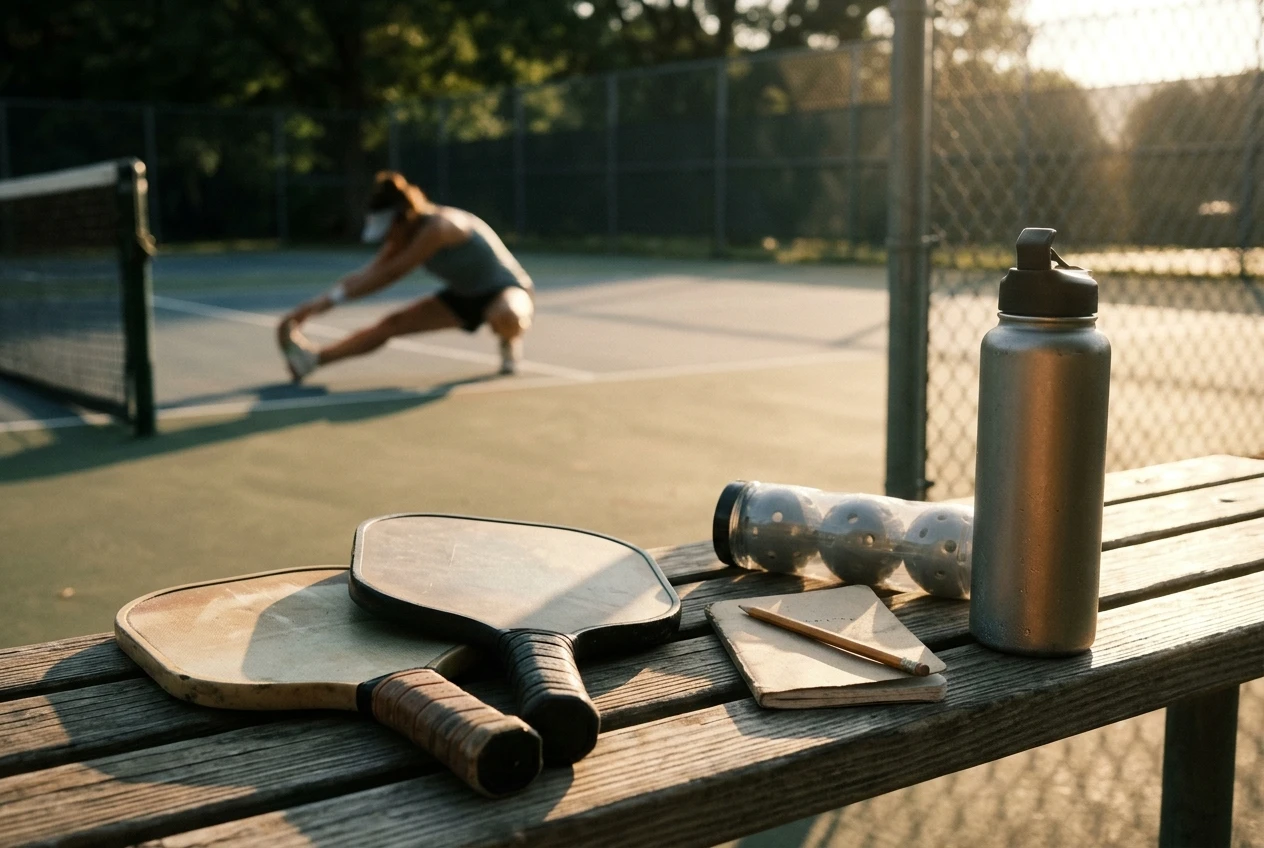
- Test when you’re tired. Play with the paddle late in a long session. Heavier or head-heavy paddles often feel fine at first and tiring later. Note whether your timing and accuracy hold.
- Use the right ball and conditions. If your event is indoors or outdoors, test with that kind of ball. The page on indoor versus outdoor pickleball balls explains why that changes how a paddle plays.
- Write it down. After each session, record what felt good and what didn’t. Impressions fade fast, and notes keep a flashy first session from deciding the purchase.
A paddle that earns a place in your bag feels reliable at the end of the session, not only at the start.
Where to start with Selkirk and CRBN
A shortlist works best when it starts with a small number of paddle lines you can compare properly. Two lines already covered on this site are a sensible place to begin.
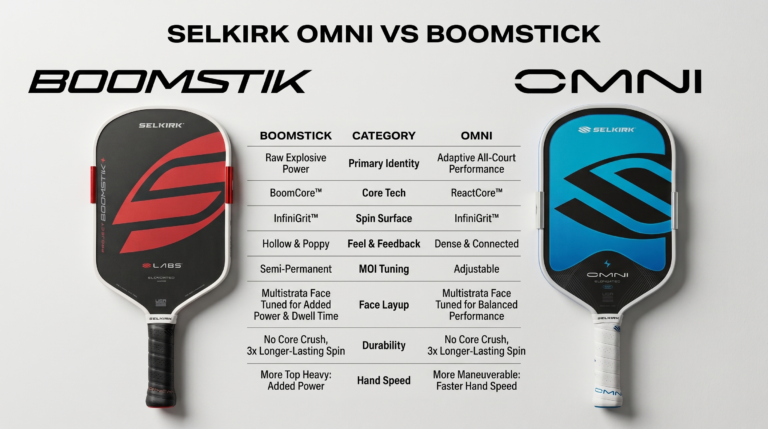
For Selkirk, how to choose Selkirk pickleball paddles explains how to work through that range using the same trait-based thinking as above. If you’re torn between two specific models, Selkirk Omni vs Boomstick is a direct comparison to read before you demo either one.
For CRBN, the best CRBN pickleball paddle for 2026 page is the place to start narrowing that line.
To build the shortlist:
- Choose two or three candidates in total, not ten.
- Make sure each one is on the approved list.
- Pick each for a reason tied to your profile, such as extra control for a soft-game player or more stability for a baseliner.
- Demo them using the process above and keep the notes.
Then let the demo results choose between them.
Backups, grip changes and pre-event checks
Once you’ve chosen, protect the choice. Paddles can crack, lose their feel, or fail an inspection, and a tournament is a bad time to find out.
Carry a backup. The best backup is a second copy of your main paddle, so you don’t have to adjust mid-event. If you can’t have a duplicate, bring a paddle you’ve actually played with, not one you’ve never hit.
Settle your grip early. If you use an overgrip, put on a fresh one before the event and play with it at least once. A new grip changes handle size and feel, and you don’t want that surprise in match one. Keep a spare overgrip with you.
Inspect the paddle. Look over the face and edge for chips, cracks or lifting. Tap the face and listen for dull spots or a change in sound compared with when it was new. Damage can affect both performance and whether the paddle passes a check.
Recheck legality. Look at the approved list again close to the event, and read the tournament rules for anything about paddle checks or surface condition.
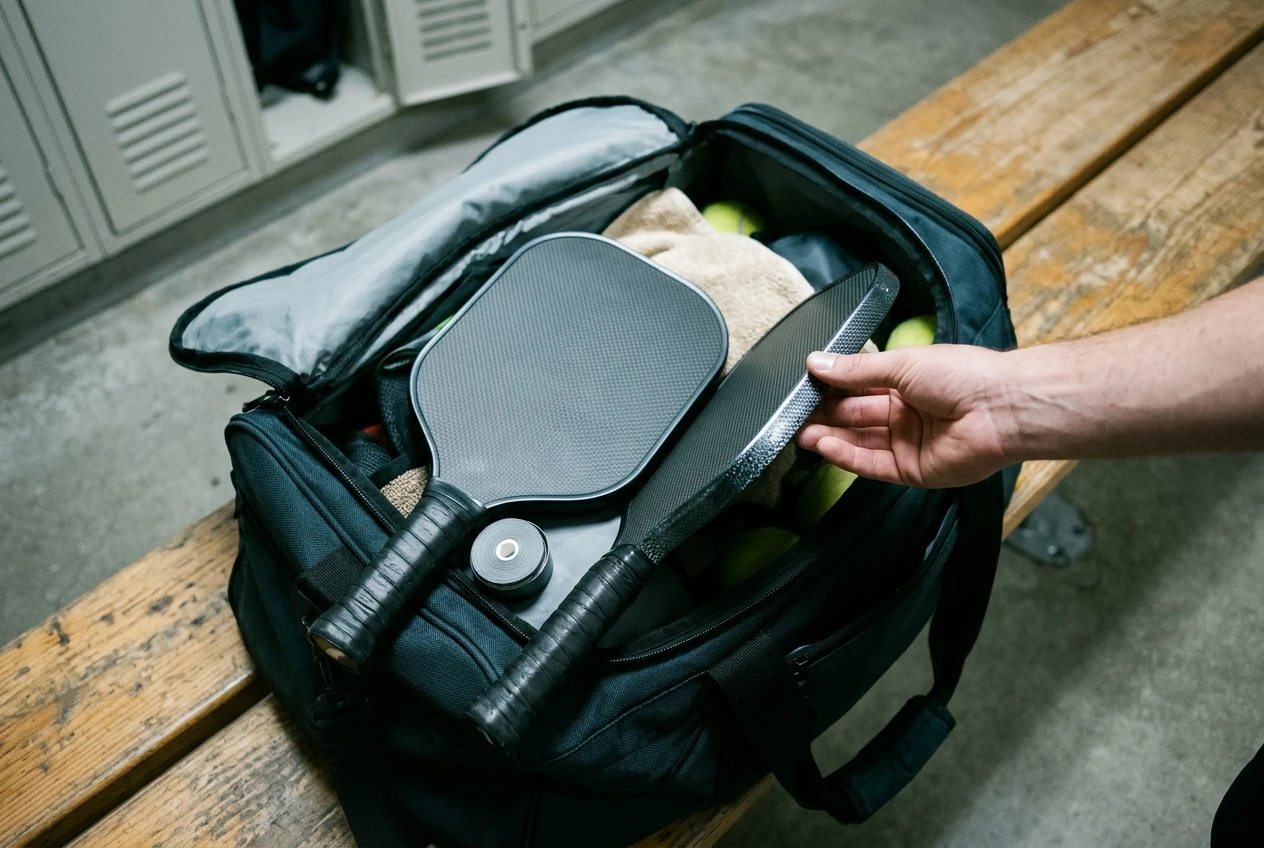
Pack it in a bag that stays organized. Your paddle, backup, grips and spares should be easy to reach between matches. The article on what to pack in a pickleball tournament bag lists what’s worth carrying and what can stay in the car.
Do these checks a few days before the event instead of on the morning of play, so any problem leaves you time to fix it.