Finding the Best Pickleball Paddle for Beginners can feel overwhelming, especially with so many options and features to compare. This guide breaks everything down so new players can choose a paddle that feels comfortable, improves control, and builds confidence from day one.
Why Choosing the Right Pickleball Paddle Is Really Important for Beginners
A good first pickleball paddle makes learning way easier. The right one helps you control the ball, stay relaxed, and enjoy the game instead of fighting with your gear. With so many beginner‑friendly options out there, you don’t need anything fancy to start strong.
If you want to build consistency, try these Beginner Pickleball Drills
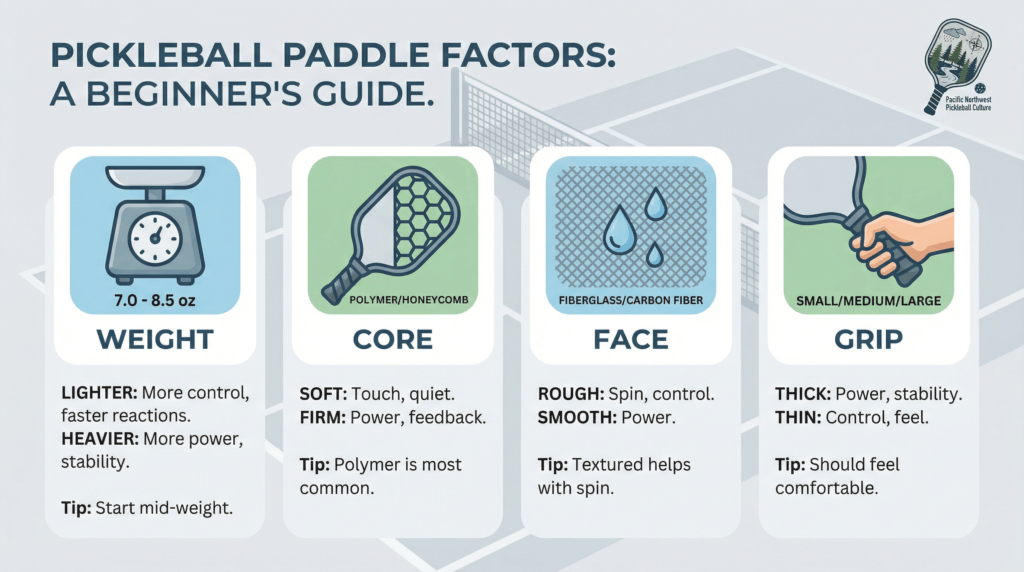
“How Paddle Weight Impacts the Best Pickleball Paddle for Beginners
Modern paddles are lightweight, comfortable, and built with materials that feel good in the hand. Compared to the old wooden styles, today’s designs are more forgiving and easier for kids, adults, and total beginners to handle. Choosing something that feels natural and manageable keeps the game fun.
Why the Best Pickleball Paddle for Beginners Improves Your Game
A beginner‑friendly paddle can also help reduce common wrist and elbow discomfort when you’re practicing a lot. Having gear that supports your technique from day one makes it easier to stick with the sport and enjoy steady progress..
When choosing the Best Pickleball Paddle for Beginners, weight and control matter most.
Best Pickleball Paddle for Beginners: What to Look For
If you’re just getting started, there are a few features you should pay attention to; these will keep you comfortable and learning quickly instead of getting stuck with gear that doesn’t match your style.
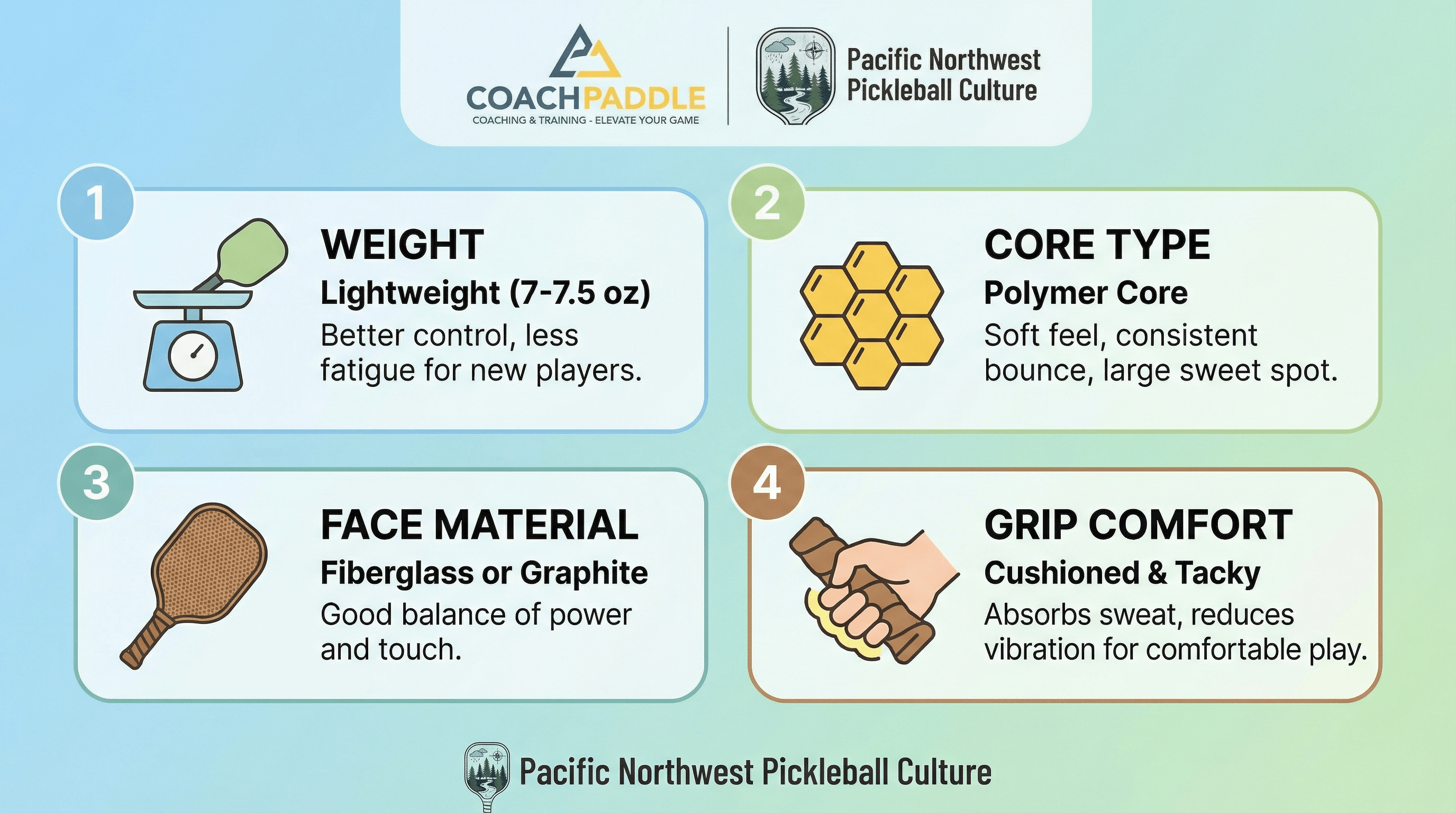
- Weight: Lighter paddles (usually 7.0–7.8 oz) are easier to maneuver and put less strain on your arm, making them great for longer play sessions or anybody prone to elbow or wrist soreness.
- Grip Size: The right grip size keeps the paddle from slipping and helps avoid unnecessary strain. Most beginners do best with a standard “medium” grip, around 4.25 inches. You can always add tape if you need a custom fit.
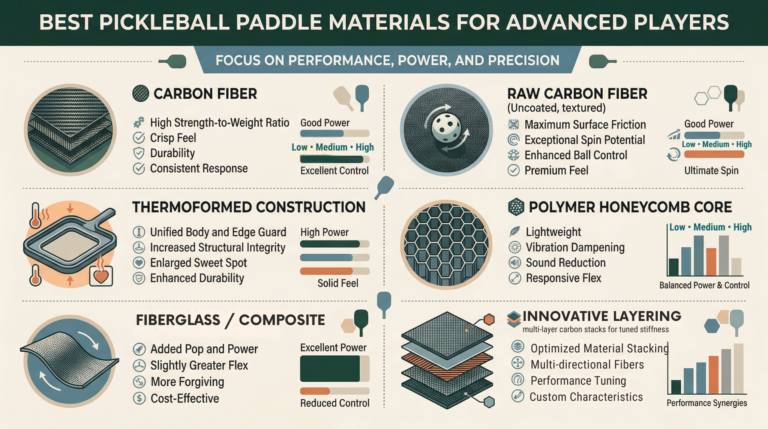
- Core Material: Most starter paddles come with a polymer core, which offers decent power but keeps things quiet and comfortable. This combo is ideal for casual games and learning proper technique.
- Face Material Fiberglass faces tend to be more forgiving for new players, while graphite offers a bit more control. Either works, but starting with what feels best in your hand is often the way to go.
Some beginner paddles come with helpful extras like edge-guard protection to keep them from wearing out too fast. A slightly thicker core can also make the paddle feel more stable, which boosts confidence when you’re still getting the hang of things. If you can try a few paddles in person, even a couple of practice swings will quickly show you which one feels right.
Top Starter Paddles for New Players
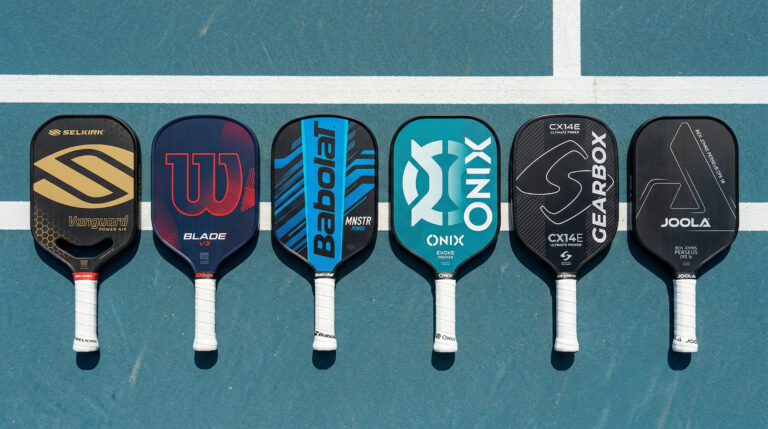
I’ve rounded up some beginner friendly paddles that are consistently praised for their comfort, value, and playability. Here are the features I think you’ll really like in each option:
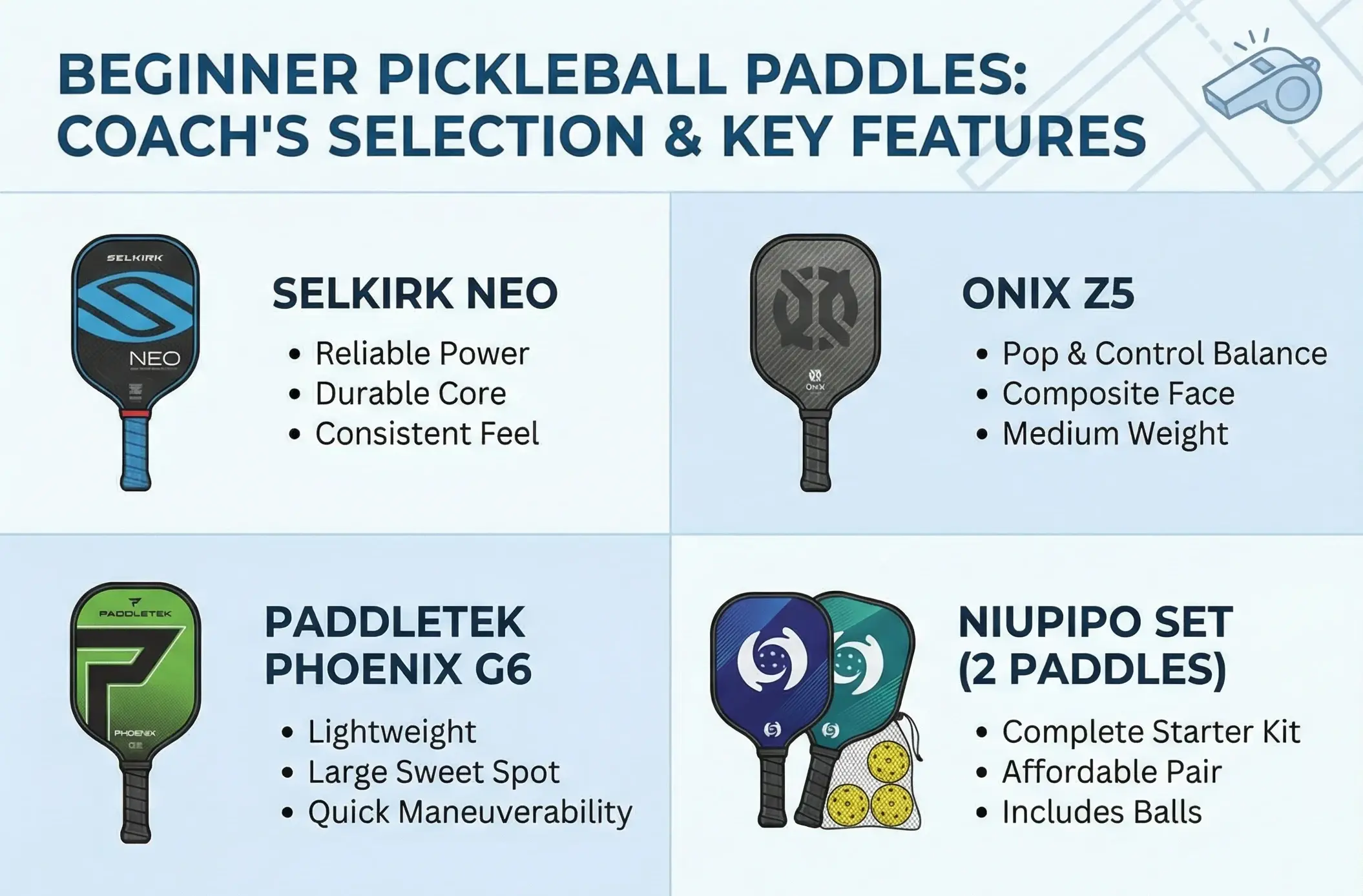
This list highlights the Best Pickleball Paddle for Beginners based on comfort and value.
Selkirk Neo Composite Paddle
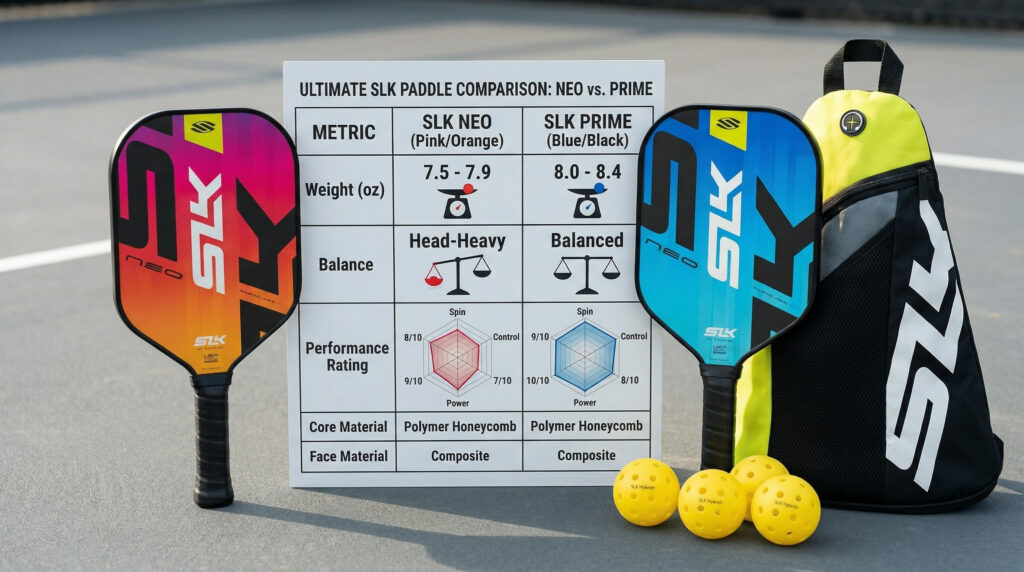
You can check the latest price and details for this paddle here if you’re considering an upgrade Selkirk Neo Composite Paddle
This paddle is a favorite for a lot of newcomers. It’s got a lightweight build that helps with quick swings, and the wide body adds extra forgiveness on off-center hits. I found the grip to be comfy right out of the packaging. The polymer core makes the ball pop without being too loud or hard on your arm. It’s also budget friendly and a great choice if you’re not sure how deep you want to get into pickleball yet.
Onix Z5 Graphite Paddle
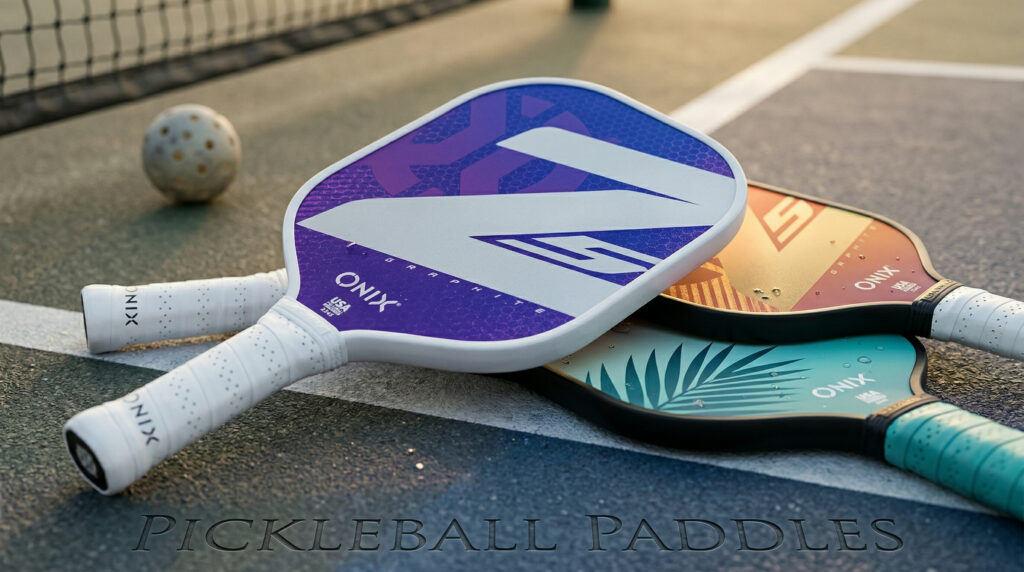
Here’s the direct Amazon page in case you want to check specs, ratings, and current availability Onix Z5 Graphite Paddle
Onix’s Z5 is basically a legend for beginners and intermediate players. At around 8.0–8.2 oz, it’s slightly heavier, but the graphite face gives you more control and a nice crisp feel on the ball. The Z5’s wide shape means you’ll hit fewer dead zones, putting your shots right where you want more often.
Paddletek Phoenix G6
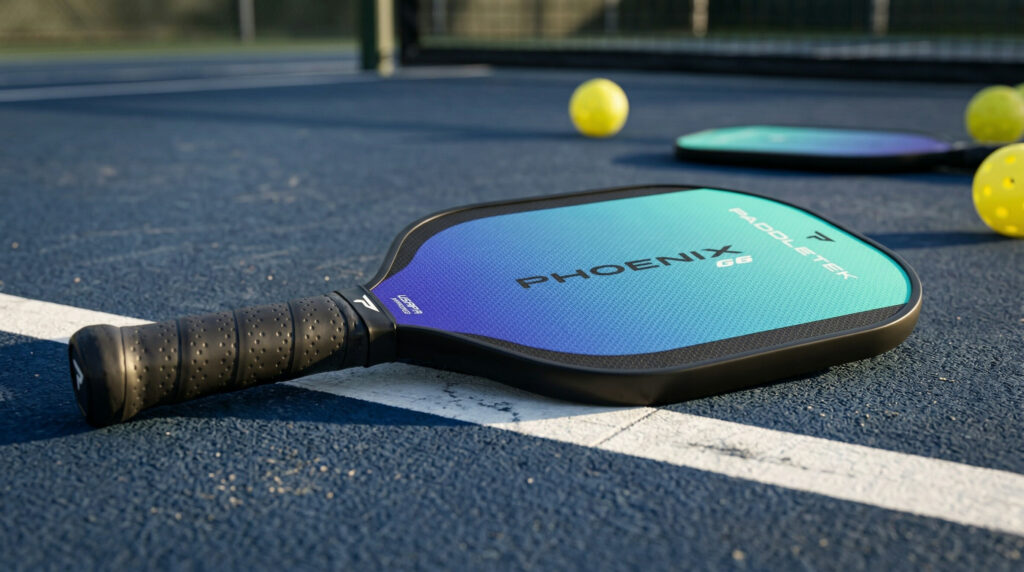
You can view the paddle on Amazon here if you want to see the latest reviews and updated pricing Paddletek Phoenix G6
This paddle brings together durability, lightweight comfort, and a solid amount of added power. I’ve always liked the mix of forgiveness, thanks to the polymer core, and precision (the graphite face is quick to respond). The Phoenix G6 is great for anyone who’s not super precise yet, since it helps keep your shots in play even if your swing isn’t perfect every time. The grip comes in several sizes, so you can dial in what’s most comfortable for you without fuss.
Niupipo Fiberglass Paddle Set
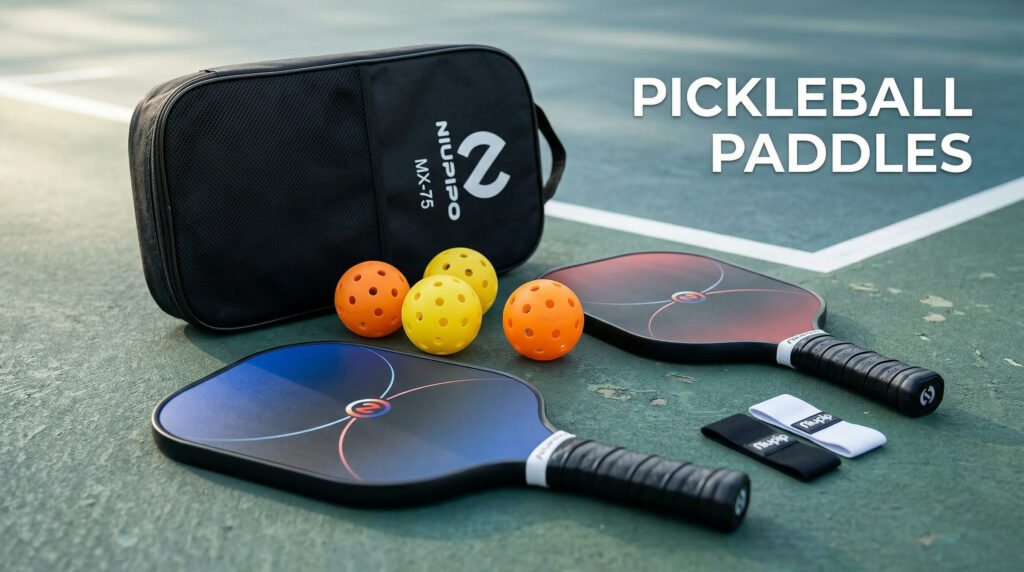
Here’s the Amazon listing if you want to take a quick look at the specs, reviews, and current pricing Niupipo Fiberglass Paddle Set
If you just want something affordable and easy to get started, Niupipo’s paddle sets come up often in beginner guides. They’re lightweight, come in twin packs (great for couples or families), and make it easy to try out the sport right away. The soft core reduces vibration, which is gentle on your arm, although advanced players may want to upgrade as skills develop. For first time players, though, it’s a fantastic entry point.
New players should review the basics in Essential Pickleball Paddle Grip Techniques for Beginners
How to Pick the Paddle That Fits You
Picking the right paddle isn’t about spending the most you can, especially as a beginner. Think about your hand size, the type of sports you’ve played (if any), and whether you value speed or power more. Here’s a quick checklist for testing paddles, even if you’re just holding them in a sporting goods store:
- Swing the paddle a few times. Does it feel balanced or tip heavy?
- Squeeze the grip. Your fingers should almost touch your palm with the grip wrapped around.
- Look at the overall weight. Can you hold it easily for a few minutes without getting tired?
- Consider the sound. Some paddles are noticeably quieter, which is worth checking out if you’re playing indoors or at community centers with noise restrictions.
Don’t be afraid to ask other players for their opinions or see if your local court has demo paddles you can try. Community input can help track down the best fit for your budget and play style and can give you ideas for future upgrades as you improve.
Common Challenges and How to Tackle Them
Every beginner pickleball player hits a few speed bumps, but paddle choice can solve a bunch of these issues early on:
- Tennis Elbow & Soreness: Lighter paddles with a softer core help reduce arm fatigue, preventing unnecessary aches after matches.
- Losing Grip During Sweaty Games: Look for cushioned or perforated grips, and grab an over grip if your hands tend to get sweaty during play. Some players even keep a towel handy courtside for quick grip fixes midgame.
- Splashing Out on Gear too Soon: Start with a midrange or entry set; upgrade once you know what you like and your play style takes shape. There’s no harm in holding off on pricy gear while learning.
- Finding the Sweet Spot: Widebody paddles with solid edge guard protection are super useful for beginners, giving you more contact area and standing up to a few accidental bumps on the court.
When choosing the Best Pickleball Paddle for Beginners, weight and control matter most.
Beginner Pickleball Paddle FAQ
I get asked about beginner paddles all the time, so here are a few of the most common questions and my answers:
Question: Does paddle weight really make a difference for beginners?
Answer: Absolutely. A heavier paddle can wear your arm out quickly if you’re just starting, but something light makes it much easier to learn proper swing technique and avoid fatigue.
Question: Should I buy a paddle set or just one paddle?
Answer: If you’re playing with a friend or family member, sets are a really convenient and often affordable option. If you’re the only one getting into the sport, just buy a single paddle that fits your hand best. Either way, you can always upgrade later.
Question: How often should I upgrade my paddle?
Answer: Most beginners will be fine with their first paddle for 6 to 12 months. If the paddle starts to feel dead, gets slick, or you’re improving and want more control, that’s your cue to think about upgrading.
Question: Do pickleball paddles need to be approved for tournaments?
Answer: If you’re playing for fun, don’t worry about approval. If you want to play in official events, look for USAPA approved paddles—this will be listed in the product description, making it easy to spot the right model.
For official equipment standards, you can check the USA Pickleball Equipment Guidelines
Tips for Learning Pickleball Faster as a Beginner
Small practice habits make a big difference when you’re starting out. Spend a few minutes before each game working on gentle dinks to build control, then practice simple volleys with a partner to improve consistency and feel. Skip the fancy spins for now—steady, clean contact helps you improve much faster.
Pay attention to how your paddle feels as you progress. If you start facing tougher opponents or want to add new skills like spin, switching to a different paddle can support your growth. Borrowing or testing a few options is an easy way to find what fits your style.
Beginner clinics are also a great boost. Instructors help you build good habits early, and focused sessions built around fun, repetition, and consistency make learning the sport feel smooth and enjoyable rather than overwhelming.
What to Avoid When Shopping for Your First Paddle
Some beginner mistakes make the game harder than it has to be; here’s what you should steer clear of:
- Don’t chase what’s trending just because you saw it on YouTube. What works for a pro might not feel great for beginners learning the basics.
- Avoid super cheap wooden paddles, which tend to be heavy and not forgiving for new players.
- Be careful with paddles with weird or slick grips, unless you know you like that style.
- Skip fancy high-powered paddles for now. They’re harder to control and can make developing good habits tougher when starting out.
Wrapping Up
Picking your first pickleball paddle is a personal process, but going with a comfortable, lightweight, and forgiving option helps keep the game enjoyable and accessible. There’s no need to spend a lot or analyze every technical detail; just pick what feels right in your hand, matches your goals, and helps you enjoy jumping into this fast-growing sport. Try out a few if possible, pay attention to what other beginners are using, and remember—your first paddle is only the starting point for your pickleball adventure. Have fun on the court, and let me know your favorite beginner paddle once you find it!