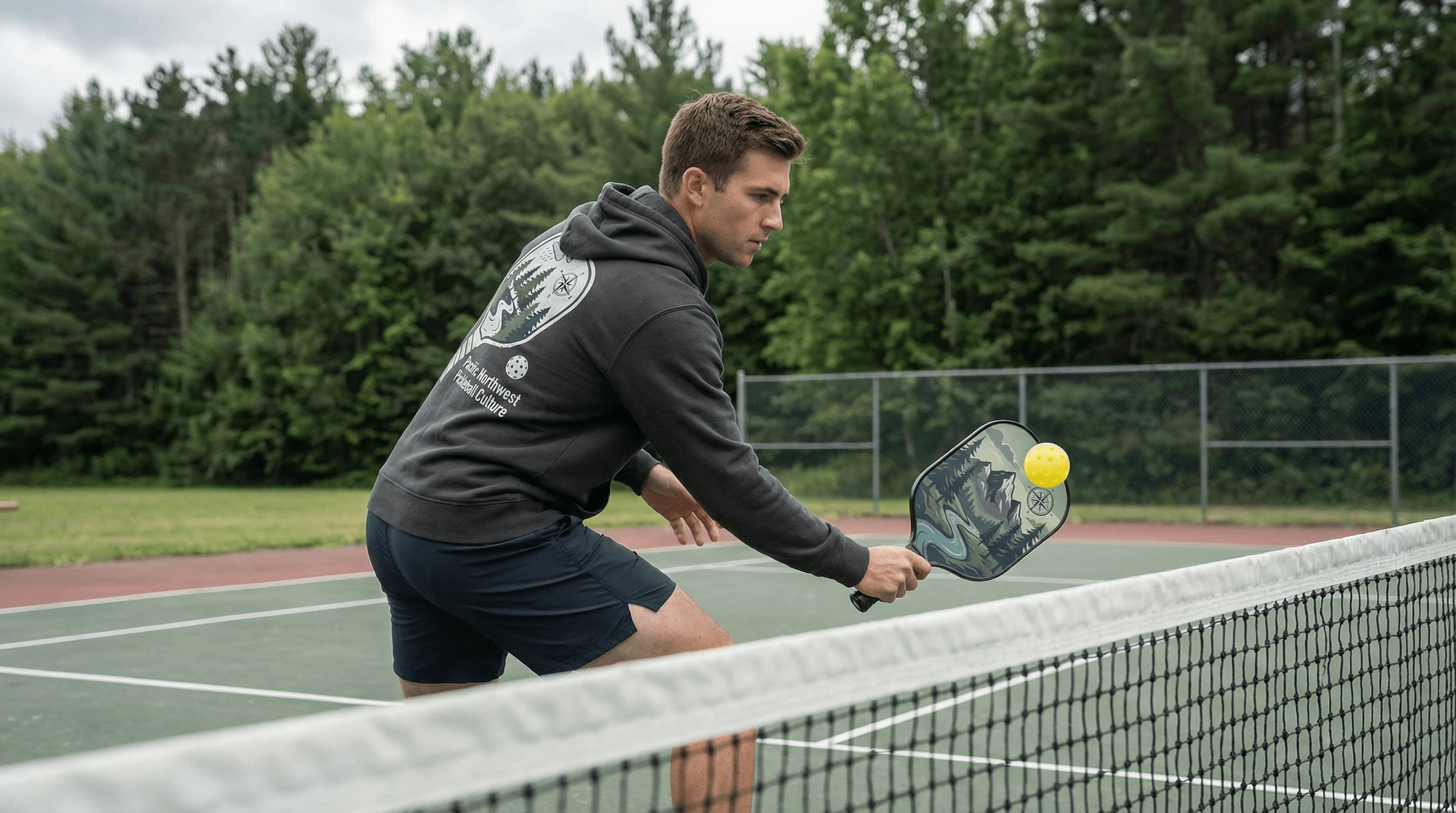
Mastering the dink shot is one of the most important skills in the sport, and these dink shot pickleball tips will help you control rallies, force errors, and win more points. A well‑placed dink isn’t just soft—it’s strategic, precise, and capable of shifting momentum in your favor.
Pickleball Dink Shot Tips: Essential Techniques for Better Control at the Kitchen Line
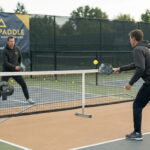
These pickleball dink tips help you stay consistent during long kitchen rallies.
Neutralize Aggression
A low pickleball dink tips forces opponents to hit upward, taking away their ability to attack.
Control the Pace
Dinking slows down “bangers” and resets the rally on your terms.
Open the Court
Consistent dinking creates frustration, leading to pop‑ups you can finish.
If you’re building your soft‑game skills, check out our guide on Third Shot Drop Techniques.
Essential Dink Shot Pickleball Tips for Better Control
Strong dink shot techniques help you stay calm and consistent during long kitchen rallies.
- Grip: Most players use a continental grip, which gives more control over the paddle face and helps keep the ball low.
- Stance: Bent knees and weight forward means good balance and fast movement—you’re not just hitting and standing around.
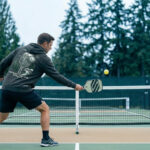
- Contact Point: Meet the ball in front of your body, around knee height. If you wait for the ball to come to you or stand up straight, you’ll lose control.
- Follow-Through: Use a short, gentle follow-through toward your target. Swinging too hard leads to errors.
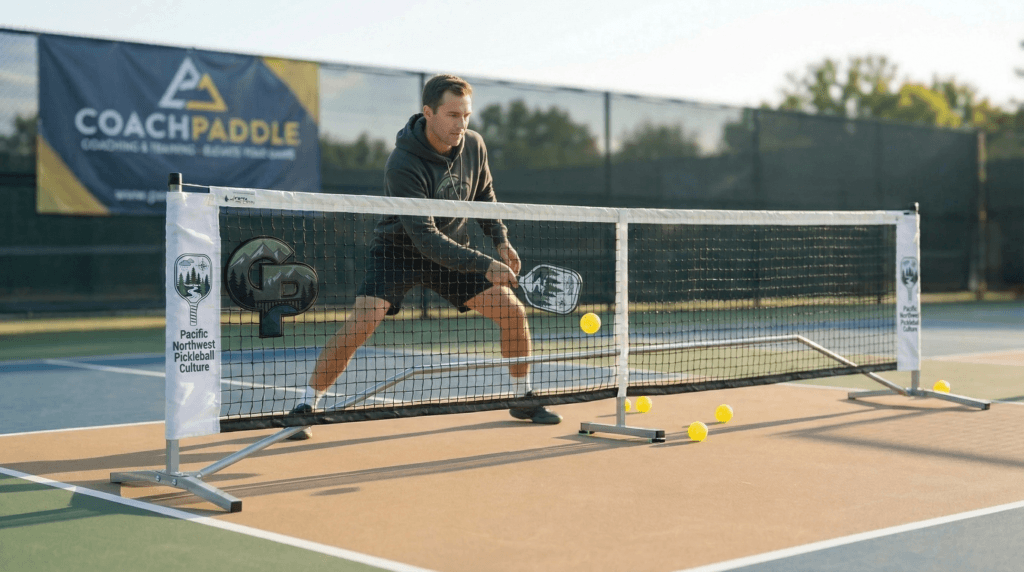
Check out our Pickleball Beginner Guide, along with tips on serving, footwork, and kitchen strategy, to build a smoother, more confident game.
Dink Shot Pickleball Tips to Improve Accuracy and Consistency
Mastering dink shot techniques improves your control and patience at the net.
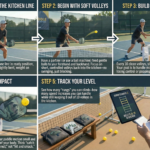
- Get into Ready Position: Stand a step or two behind the no volley zone, with knees bent and paddle up by your chest.
- Watch the Ball: Pay close attention as it comes your way. Dinks happen quickly and stay low.
- Move Forward: Step up with your lead foot so you’re right at the kitchen line.
- Controlled Swing: Push the ball over the net with a soft, compact motion. Your shoulder and arm should move together instead of snapping your wrist.
- Reset: After hitting, bring your paddle back up fast and get ready for the next shot. Sometimes the ball pops up or comes right back at you.
Repeating this routine keeps my errors down and builds consistency. On days when I’m struggling, doing this step-by-step helps me refocus and find a better rhythm.
Common Dink Shot Mistakes and How to Fix Them
Strong soft‑game pickleball tips help you win more dink exchanges.
- Hitting Too Hard: Over-hitting is common. The goal is just to clear the net and have the ball land soft—smashing it ruins the purpose.
- Standing Too Tall: If you don’t bend your knees, it’s hard to control the ball. Lowering your center of gravity leads to better shots and more solid balance.
- Taking the Ball Too Late: Waiting for the ball to fall under the net will likely pop it up or send it into the net. Meet the ball early and out in front.
- Getting Predictable: Hitting the same spot every time makes you easy to read. Mixing up where you send your dinks keeps your opponent on their toes.
It’s easy to fall into these traps. After a bad play, I do a quick check—was I upright? Did I over-swing? Spotting these habits helps correct them faster, especially during tense matches.
For a deeper breakdown of paddle materials and performance, explore our Best Pickleball Paddle For Beginners
Advanced Dink Shot Pickleball Tips for Competitive Play
These dink shot techniques improve your touch, control, and patience at the net.
Crosscourt Dink — Essential Pickleball Tips
Aim diagonally to create a longer path and more net clearance. This makes it trickier for opponents to reach and gives you extra margin for error.
Inside‑Out Dink — Dinking Technique for Better Control
Use a subtle paddle angle to send the ball the other way from your hips. This move surprises your opponent and can open up space on the court.
Backspin Dink — Soft Game Pickleball Tips
A soft undercut makes the dink bounce lower and closer to the net, which can flag aggressive players into mistakes.
Changing Pace — Strategic Shot Pickleball Tips
Altering the speed and depth of dinks disrupts your opponent’s timing and may force weaker returns or errors.
Practicing these in drills with a partner—or against a wall—improves your confidence for real games. I like to tune up on crosscourt and inside out dinks in warm-ups so I can pull them out when it matters most.
Paddle and Equipment Tips to Improve Your Dink Shot Technique
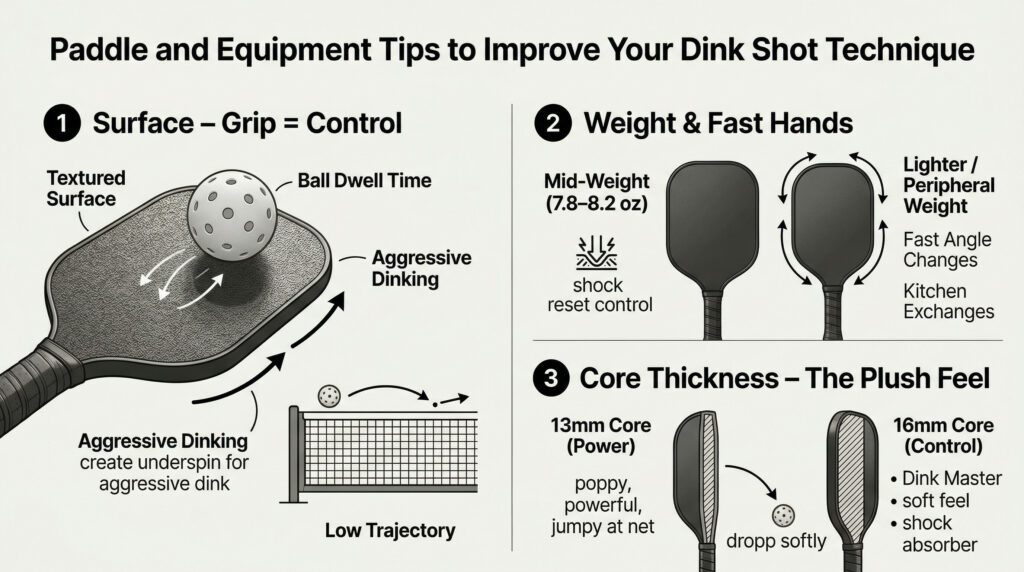
1. The Surface: Grip = Control
- Enhanced Dwell Time: The ball “sticks” to the paddle face longer. This split-second increase gives your brain more time to feel the shot and guide it precisely over the net.
- Aggressive Dinking: Rougher surfaces allow you to “brush” the ball. Adding a slight underspin (slice) makes your dink stay even lower after it bounces, forcing your opponent to reach and lift.
2. Weight & “Fast Hands”
- he Sweet Spot (Mid-Weight): Most players find their dink control improves with a mid-weight paddle (7.8 – 8.2 oz). It provides enough mass to absorb the shock of an incoming fast ball (a “reset”) without needing a large swing.
- Maneuverability: A lighter paddle—or one with a “peripheral” weight distribution—allows you to adjust your paddle angle instantly during a fast kitchen exchange. This is the difference between a “pop-up” and a perfect reset.
3. Core Thickness: The “Plush” Feel
- 13mm Cores (Power): These are thin and “poppy.” Great for drives, but they can be “jumpy” at the net, making dinks fly too far.
- 16mm Cores (Control): This is the “Dink Master” thickness. It acts like a shock absorber, deadening the ball’s energy so you can drop it softly into the kitchen with confidence.
“For a deeper look at how paddle materials affect control, visit our Pickleball Paddle Materials Guide.
3-Shot Test
Developing reliable soft‑game pickleball strategies helps you win more points at the kitchen line.
- The Dead Dink: Can you drop the ball over the net with zero spin?
- The Push Dink: Can you push the ball deep into the corner of the kitchen?
- The Reset: Can you take a hard “smash” from your friend and drop it softly into the net?
“Try Before You Buy” Strategy
As you mentioned, borrowing paddles is the best way to learn. When testing, pay attention to:
- The “Pop” Sound: A higher-pitched “ping” usually means a thinner, power-focused core. A deeper “thud” usually indicates a thicker, control-focused core (better for dinking).
- Vibration: If the paddle stings your wrist on a dink, it likely has a smaller sweet spot or a lower-quality core material.
Situations Where Smart Dink Shot Strategy Wins Points
- Neutralizing Power Hitters: When opponents love to blast the ball, a smartly placed dink slows things down and forces them to rethink their strategy.
- Moving Opponents Off Court: Dinks send players wide or bring them forward, which in turn leaves gaps elsewhere.
- Recovering on Defense: On the run and pressed back, a gentle dink can buy time to reset and get back in the point.
Personally, I love using dinks most after opponents go all-in on offense and miss. It quickly shifts momentum in my favor while setting up chances to put the point away.
Solo Drills to Practice Your Dink Shot Pickleball Skills
These drills reinforce your dink shot pickleball tips and build muscle memory.
- Target Practice with Cones: Set up cones just behind the net in the kitchen. Try to land as many balls as possible inside that zone.
- Wall Drills: Find a solid wall and mark a “net” with tape about 34 inches off the ground. Hit dink shots at the wall, aiming for a consistent height and spot.
- Footwork Patterns: Shadow dink by mimicking the exact moves you’d use in a match—moving laterally and forward as needed. This is key for developing muscle memory.
For official guidance on rules and standards, you can always check the USA Pickleball Official Rules
Frequently Asked Questions About Dink Shot Technique
Question: How do I practice dinks if I’m on my own?
Answer: Use a ball machine or hit against a practice wall, aiming for a specific target just over the net. Shadow swings and footwork drills also go a long way for paddle control and movement.
Question: What should I do if my dinks keep popping up too high?
Answer: Try softening your grip, meeting the ball out in front, and focusing on a short, gentle follow-through. Staying low with your knees is a big help as well.
Question: Can you win points with dinks alone?
Answer: It happens sometimes, but their main goal is to set up shots by forcing mistakes or making space. Dinking is mostly about tactical control, not finishing points by itself.



Leave a Reply