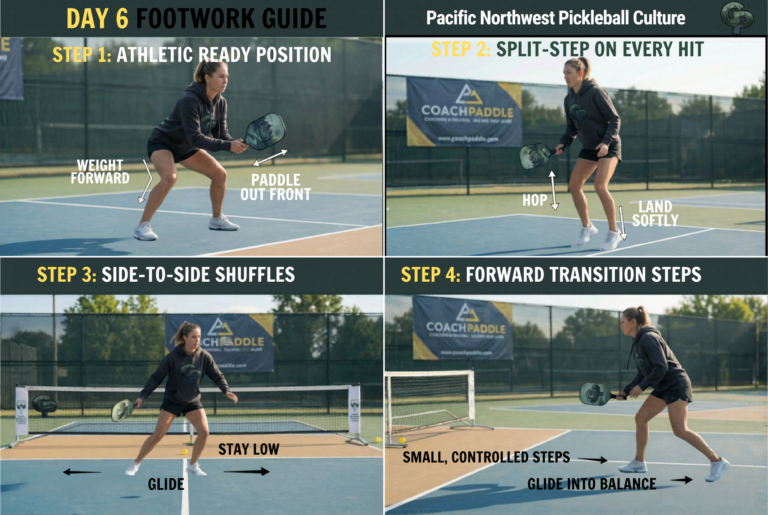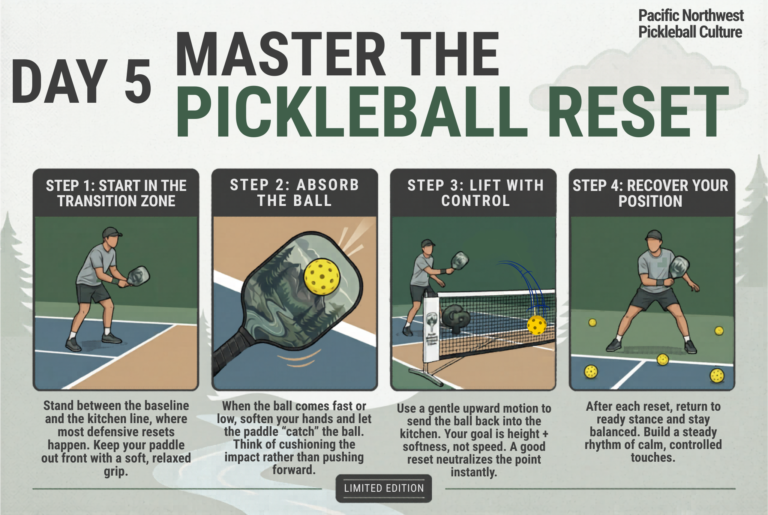
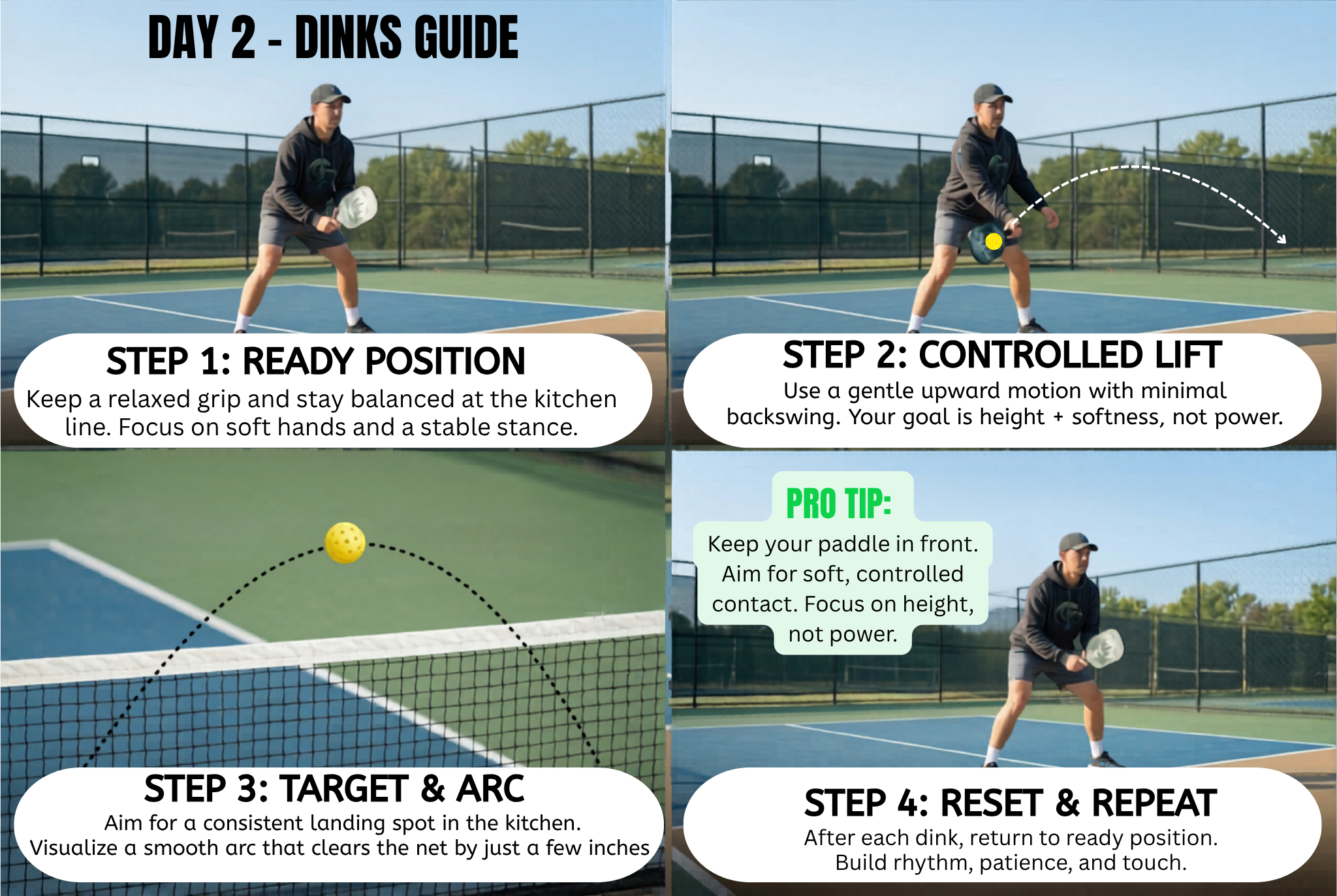
Pickleball dinking drills for beginners are one of the fastest ways to build control, confidence, and soft‑game consistency at the kitchen line. These simple, beginner‑friendly drills help new players develop touch, accuracy, and patience—skills that translate directly into better rallies and smarter gameplay. Whether you’re practicing at home, with a partner, or on a quiet Pacific Northwest court, these drills will help you improve one rep at a time.
Why Dinking Matters for New Pickleball Players
The dink shot in pickleball is a soft, controlled hit that keeps the ball low, landing it just over the net into the opponent’s kitchen. Most beginner rallies quickly turn into fast power exchanges, but as you play more, you’ll notice that skilled players rely on dinks to set up points and force mistakes. Focusing on dinking early not only helps you win more points, but it also shapes your overall strategy as you grow into the game.
Unlike big baseline rallies, most points in pickleball are won at the kitchen. Dinking helps you:
- Gain Better Control: Staying consistent with low shots keeps your opponent from attacking.
- Improve Patience: Trading dinks teaches you not to rush, waiting for the right chance to attack.
- Reduce Unforced Errors: Gentle dinks are easier to keep in bounds and avoid net faults.
- Stay Ready: Dinking keeps you alert and in the ideal position for surprise shots or pop-ups.
Building your dinking skills can even make other areas of your pickleball game easier. For example, as you get comfortable controlling the ball with these gentle shots, your overall paddle touch and on-court confidence will grow as well.
What Are Pickleball Dinking Drills for Beginners?
Pickleball is easy to start; no need for a bunch of fancy gear. Here’s what you’ll need for these dinking drills:
- A pickleball paddle you feel comfortable with. It doesn’t need to be expensive for beginner drills.
- Two or three balls so you don’t need to chase after every single miss.
- A court with a net. If you can’t get to a dedicated pickleball court, a tennis net lowered to pickleball height works too, or just set up a temporary net at home.
- (Optional) A practice partner makes most drills easier, but you can also use a wall for some drills if you’re solo.
If you’re completely new, even a driveway or garage can work for wall dinking. The key is repetition, so find any space that lets you swing freely and have fun. Don’t worry if you don’t have the perfect setup; the main goal is to just get started and put in the reps.
These pickleball dinking drills for beginners help you build soft‑game control one rep at a time.
If you’re new to the game, our Beginner Guide walks you through the essentials before you start drilling.
Core Pickleball Dinking Drills for Beginners
Start with basic drills and build up once you’re comfortable. These beginner friendly drills will help you master the touch and placement needed for successful dinking. Try each one for about 10–15 minutes per session, focusing on keeping the ball low and in play.
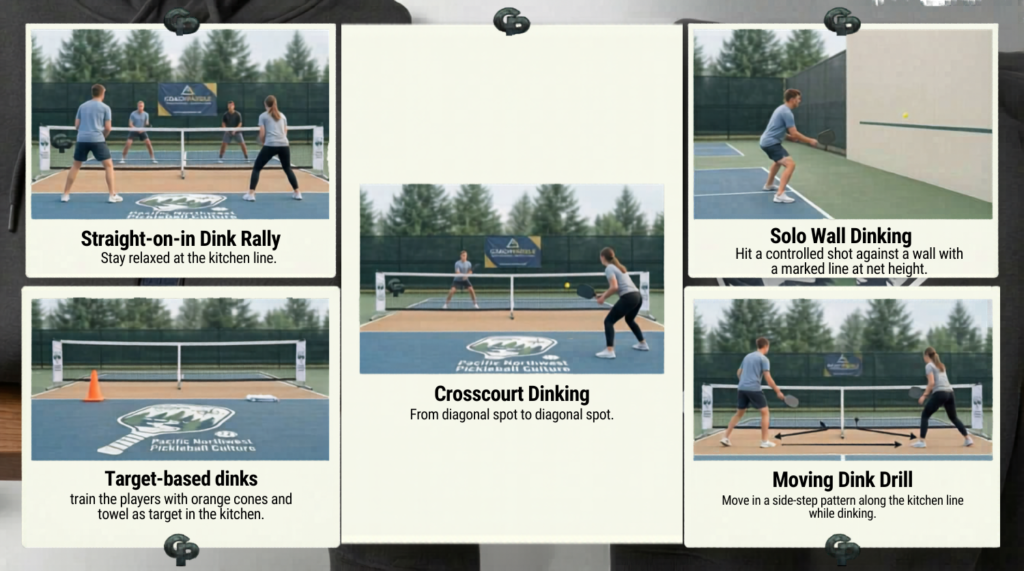
1. Straight On Dink Rally – Pickleball Dinking Drills for Beginners
If you have a partner, stand on opposite sides of the net at your respective kitchen lines. Your goal is to cooperatively hit gentle dinks back and forth, aiming to keep the ball inside the kitchen and over the net without hitting too high.
- Keep your knees slightly bent and paddle out in front for better control.
- Try to keep each dink just a few inches over the net.
- Focus on consistent, relaxed swings instead of power.
This drill helps with hand eye coordination and develops a feel for soft shots. Make it a challenge to reach 10–20 consecutive dinks without mistakes. You might even make it a friendly contest to see who can go the longest without an error.
2. Crosscourt Dink Drill for Beginners
Crosscourt dinking helps you master angles and target smaller spaces. Both players stand at diagonal corners of the kitchen. The goal is to keep a soft rally going crosscourt, still aiming for the opponent’s kitchen zone.
- This drill forces you to work on footwork and paddle angle, as crosscourt dinks often need a touch more accuracy.
- Trying to hit softly into the far corners really builds ball control.
Practicing crosscourt dinks is super important for real matches, since it pulls your opponent off the center and can open up the court for your next shot. You’ll also notice that as you get better at hitting accurately across the court, your ability to defend similar shots will improve.
If you’re upgrading gear, our Paddle Material Guide breaks down the best options for control and power.
As you practice these pickleball dinking drills for beginners, focus on smooth contact and relaxed swings
3. Kitchen Line Target Drill – Beginner Dinking Practice
Place a small target or object (like a cone or a towel) in your opponent’s kitchen for this drill. The goal is to hit your dinks as close to the target as possible without floating the ball too high or hitting the net.
- Focusing on a specific landing spot really tightens up your consistency.
- This drill teaches you to control the depth and direction of your shots.
You can do this alone by aiming for your target spot and resetting after each try, or challenge a friend to see who lands closest most often. As you improve, shrink the target or change its position to keep things interesting and challenging.
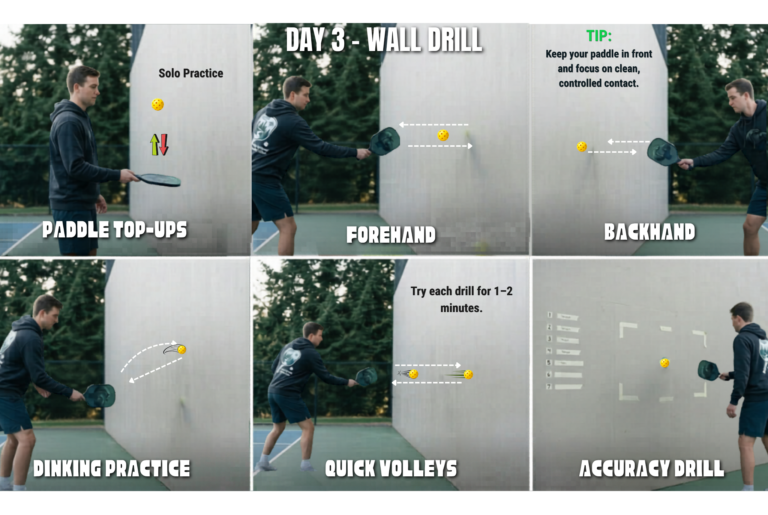
4. Wall Dinking – Solo Pickleball Dinking Drills for Beginners
Can’t find a partner? No problem. Find a smooth wall and mark a spot roughly at net height with some chalk or tape. Stand back a step or two as if you’re at the kitchen line. Gently dink the ball against the wall, aiming for your mark or just above it.
- Try to keep the ball low and close to the wall to mimic real dinks.
- Practice both forehand and backhand dinks to stay balanced.
This is pretty handy if you have limited time or can’t get court access easily. Wall drills are great for rapid-fire practice and can quickly build your muscle memory.
5. Moving Dink Drill for Beginners
This one works for solo or partner practice. Start at the middle of your side of the kitchen line, dink a few balls straight, then move to your left corner, execute a few crosscourt dinks, and then slide over to the right. Practicing movement while maintaining proper dink form is super useful in games, since rarely will you stay parked in one spot during rallies. It helps make sure you’re ready to adjust to shots that pull you off your preferred position.
How to Get the Most Out of Dinking Drills
Consistency and mindset go a long way when you’re working on your dinks. Here’s what I found helpful while learning:
- Focus on a loose grip; tight hands make it harder to get the right touch.
- Watch your paddle face so you don’t accidentally pop the ball up high (those are easy put-aways for your opponent).
- Keep your weight balanced and ready to move quickly from side to side.
- After a successful dink, try to reset your stance so you’re always in a strong, ready position.
It also helps to breathe and stay relaxed, since tension can hurt your control. Don’t rush the drills—take your time with each shot and stay aware of your paddle angle. As you improve, challenge yourself with more difficult drills, but always come back to the basics to keep your foundation strong.
For more movement work, check out our Footwork Drills section.
Common Beginner Mistakes in Dinking (And How to Fix Them)
Even with all the practice in the world, everyone stumbles over a few classic errors when learning to dink. Being aware of these makes it easier to spot and fix them as you go:
- Hitting with too much force. Dinks are soft shots, not power plays.
- Swinging from the shoulder instead of using a gentle wrist motion.
- Standing flatfooted at the kitchen line instead of staying light and ready.
- Popping the ball too high, which invites your opponent to attack.
- Letting frustration take over when you miss; staying patient pays off.
All of these pickleball dinking drills for beginners translate directly into better kitchen‑line consistency.
Tips to Make Practice More Engaging
Solo drills can get a bit repetitive, so here are some ways to keep things fresh:
- Set small goals, like a minimum number of consecutive dinks or accuracy targets.
- Track your progress week to week and celebrate when you improve your consistency.
- Mix up the drills to practice both forehand and backhand dinks.
- If you play with friends, throw in friendly challenges or minigames; the loser has to pick up the balls!
Some players like to vary their targets or set timer-based challenges for each session. Try switching up your drill order or adding new variations to stay motivated and avoid burnout.
For official guidance on rules and standards, you can always check the USA Pickleball Official Rules
Frequently Asked Questions About Pickleball Dinking Drills
Question: How close should I stand to the kitchen line for dinking?
Answer: Stands close as possible to the kitchen line, without stepping on it. This helps you reach more balls and keeps your angles sharp. Just make sure your momentum doesn’t carry you over the line (that’s a fault).
Question: Can I dink with both forehand and backhand?
Answer: Absolutely. Working on both sides helps you handle different situations during games. Practicing forehand and backhand dinks during drills keeps your options open when a ball lands farther from your dominant hand.
Question: Why do my dinks keep popping up too high?
Answer: Usually, this happens if you’re swinging too hard, gripping too tightly, or opening the paddle face too much. Try softening your grip and making smaller swings. Watching the paddle angle helps too.
Question: How often should I practice dinking as a beginner?
Answer: Practicing a few times a week, even just for 15–20 minutes per session, can make a huge difference. Consistency over time is what really helps your skills stick.
Start Building Your Pickleball Dinking Game
Dinking isn’t about tricky techniques; it’s about building great habits with practice. Whether you’re working solo or with a friend, sticking to these dinking drills gets you comfortable at the kitchen line and helps you play smarter, not harder. When you leave time for soft shot practice every session, you’ll see improvements in both your confidence and your match results. That’s what makes dinking drills so worth your while as a beginner. Remember, the more time and thought you put into this important skill, the more you’ll get out of your entire pickleball adventure!