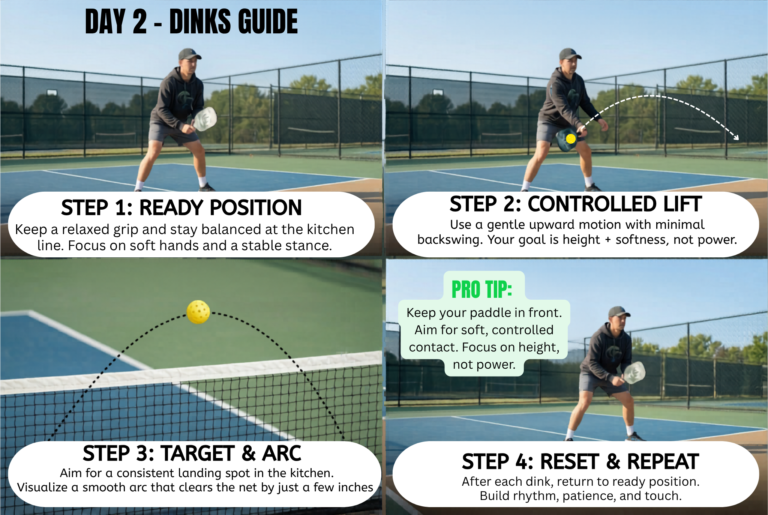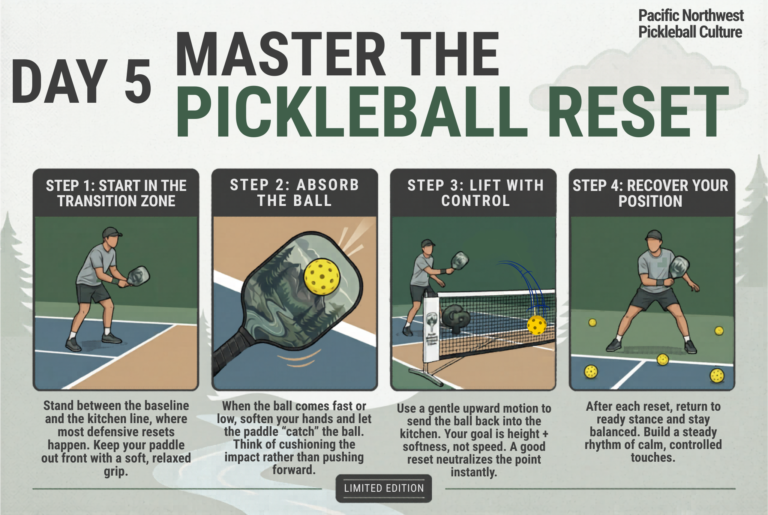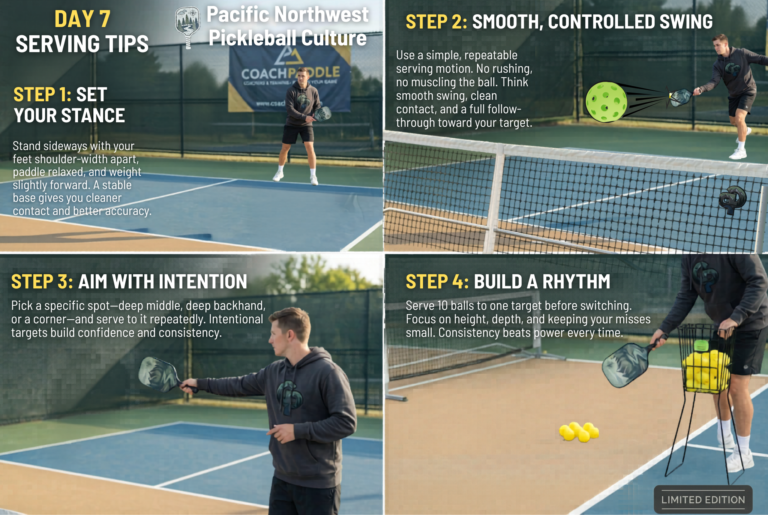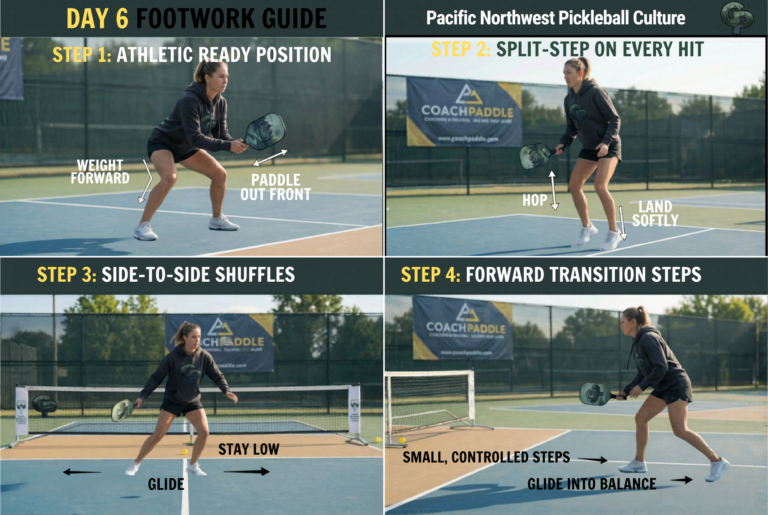
Drop shot drills for beginners are one of the fastest ways to improve your soft game and develop the touch needed to win more points at the kitchen line. These simple drills help you build control, accuracy, and confidence—whether you’re practicing alone or with a partner.
These drop shot drills for beginners help you develop soft hands and reliable touch from mid‑court.
Why Drop Shot Drills Matter for Beginners
The drop shot might seem tough at first, but it’s a super useful tool for pulling your opponent forward, creating space, and controlling the pace. It’s not just a flashy trick; it can open up the court and help you win long rallies without needing pure power. While drop shots are staples in pro matches, you can add them to your own game even if you’re still locking down tennis fundamentals.
Drop shots are softer, shorter shots played gently over the net, with a goal to land the ball close up so it bounces twice before an opponent can reach it. These are especially handy on indoor or clay courts but really work on most surfaces, once you get the feel for them. Once you dig into the basics, you’ll be ready to add this clever shot to your toolkit.
If you’re comparing paddles, our Selkirk Evo Control Max Vs Other Brands guide breaks down the key differences.
Getting Set Up: Equipment and Space Tips
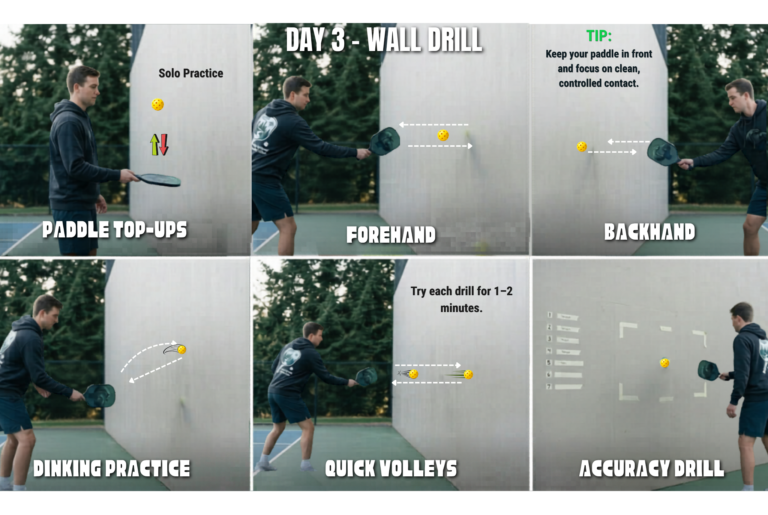
No fancy equipment is necessary for drop shot practice. Grab a Pickleball Paddle and a handful of balls. If you have court access, perfect, but you can get creative—use sidewalk chalk or cones to make a “net” if you’re in the driveway. Practicing with a friend adds to the fun, but plenty of drills can be done solo when needed.
- Regular Pickle Balls: Stick to standard balls at first to learn the true bounce, before mixing in softer beginner types.
- Flat, Comfortable Shoes: Good grip helps since you’ll be moving toward the net and back more than usual.
- Plenty of Open Space: Give yourself room behind the baseline and near the net to practice both approaching and recovering—don’t just focus on the shot itself.
Drop Shot Basics and Key Concepts
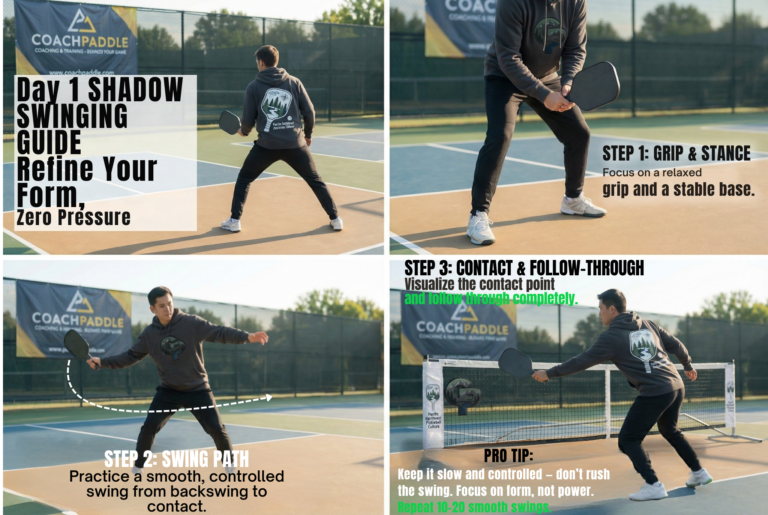
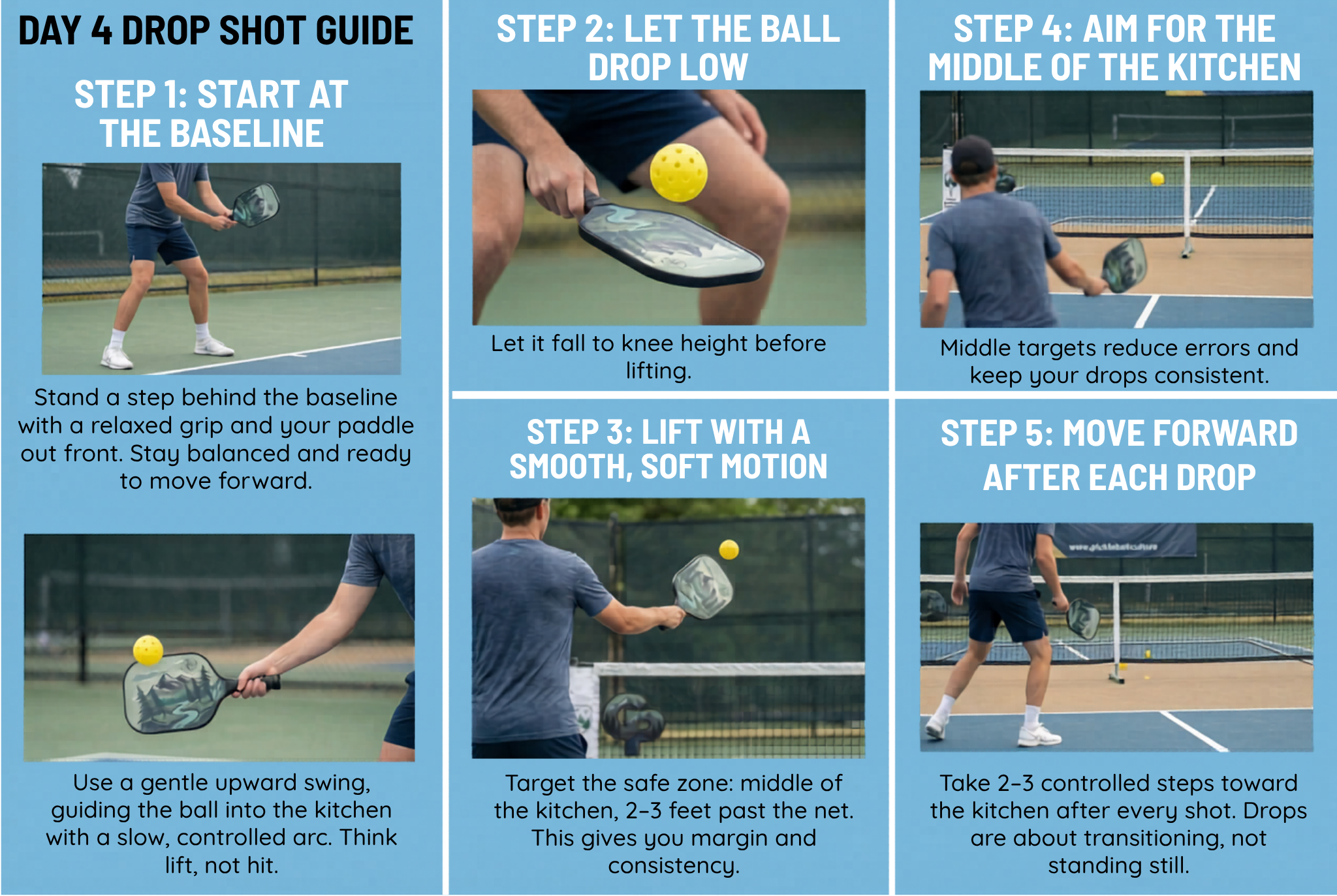
The drop shot isn’t about power—it’s about touch. Use a light, brushing under stroke to provide backspin, aiming just above the net. Focus on control, not force. Remember to relax your grip, lower the racquet head slightly, and brush under the ball at contact. The “feel” comes with dedicated practice, so it’s fine if you make mistakes at first.
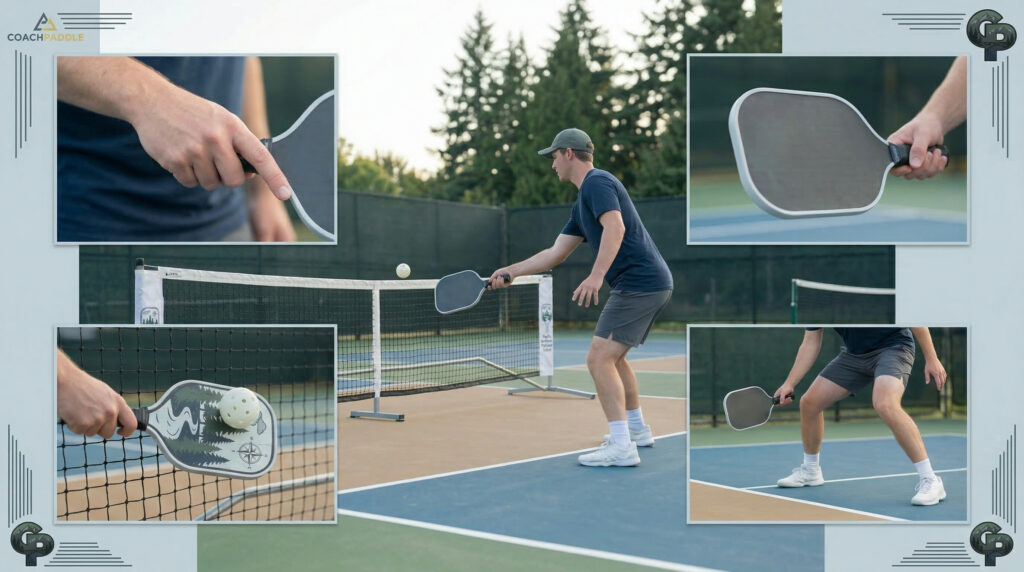
- Grip: Try a continental grip (like the one for a serve or volley) to help adjust to different spins and ball heights more easily.
- Body Position: Stay low with your weight forward as you step toward the net for maximum control and balance.
- Disguise: Use the same setup as your regular groundstrokes until the final moment to keep your drop shot less predictable.
To improve your soft‑game control alongside these swing drills, check out our The Dink Shot: Tips And Tricks breakdown.
Step-by-Step Drop Shot Drills for Beginners
Building up drop shot skills takes a bit of patience, but these drills are straightforward and low-pressure. Start slow, focus on the “feel,” and have some fun with the steps.
1. Drop Shot Self-Feed Drill
- Stand a few feet behind the service line on one side of the court.
- Toss a ball gently in front of you. Focus on brushing under it so it lands just over the net in the opposite service box.
- After each shot, check the landing. Try to make the ball bounce near the net then stop short of the baseline.
- Repeat about ten times, working on the soft, controlled swing.
This solo drill is perfect for developing the right touch. Don’t stress if the ball goes wild at first—keep working on making the shot low and gentle.
2. Service Box Drop Shots
- Position yourself at the service line.
- Practice hitting drop shots aimed close to the opposing side of the net but within the service box.
- Alternate between forehand and backhand sides for balanced confidence.
- Keep your racquet head below the ball and keep the wrist relaxed during the swing.
This drill improves your control over the shot’s depth and location. Try ten shots each side for a balanced session.
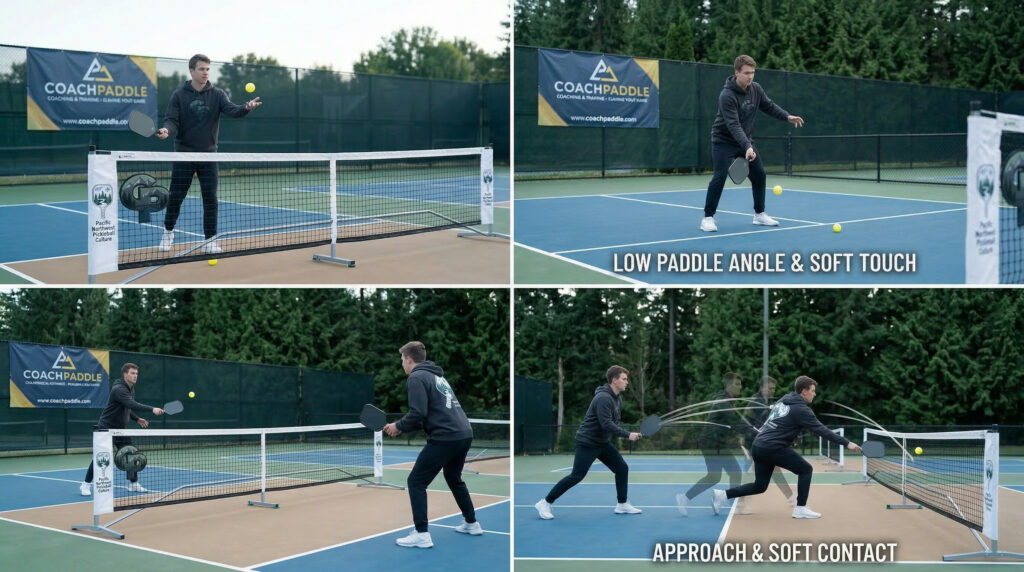
3. Partner Rally Drop Drill
- With a partner, both players stand on opposite service lines (or as close as you have space for).
- Rally drop shots back and forth, trying to land each ball as close to the net as possible.
- If you hit too deep, brush more with less force next time.
This activity is both fun and challenging. It sharpens reflexes and touch while giving you real-game drop shot experience.
4. Approach and Drop Sequence
- From the baseline, feed yourself a ball—or have a partner do it. Hit a groundstroke toward the center of the court first.
- Move forward quickly. When you reach the service line, execute a drop shot.
- Focus on proper movement to get close for the best touch, instead of dropping from too far away.
This drill teaches how to transition from baseline rallies to net play—a handy tactic for beginners during actual matches.
If you want deeper learning, our Best Pickleball Books On Amazon guide is a great place to start.
What to Watch Out For: Common Beginner Mistakes
Everyone struggles with drop shots at first. Here are frequent mistakes with simple solutions:
- Using Too Much Power: Slow your swing down; drop shots work best when soft and short.
- Hitting Too High: Swing lower and aim to clear the net just barely, so the ball drops fast.
- Missing Backspin: Brush up the back of the ball for gentle spin and a softer bounce.
- Giving Away Intentions: Stick to your regular shot setup as long as you can before swinging.
Troubleshooting and Adjusting for Different Surfaces
Drop shots act differently on various court types. On clay, your shot slows down and dies faster; on hard courts, the bounce is higher, so add more backspin and aim really close to the net. On grass, the low bounce means you can focus on softness for even more effect.
How Drop Shot Drills Build All-around Game Skills
Drop shot practice doesn’t just polish your “touch”—it also shapes better movement, court awareness, and your ability to read an opponent. Many of the drills force you to judge distances and react quickly, which makes your footwork sharper and improves your timing for approaching the net. You’ll also build a soft feel for volleys and half volleys, giving your whole game a boost.
Practical Ways to Use Drop Shots in Matches
- Mix Up the Pace: If your opponent constantly hangs back behind the baseline, dropping one short forces them to scramble up, opening space for your next shot.
- Break Patterns: After several long, deep rallies in a row, toss in a surprise drop shot to keep things unpredictable.
- Follow Up: When a drop shot works, move up and be ready for a volley. Many players stretch just to reach your drop and lob an easy return back.
There’s no need for perfection every time—even making your opponent sprint forward once in a while helps your game plan.
Improve control and consistency with our Paddle Grip Guide.
Frequently Asked Questions About Drop Shot Drills
Question: When should I use a drop shot in a beginner match?
Answer: Use a drop shot when your opponent is way behind the baseline, or after you’ve driven them back with a deep rally. It’s great for changing the pace, but don’t overuse it.
Question: How can I practice drop shots if I don’t have a partner?
Answer: Self-feed drills and aiming for the service box work great solo. If you have a wall, use it—hit for the lowest part and practice controlling the ball from a short distance.
Question: What if my drop shots always go too high or too deep?
Answer: Relax your grip more and focus on brushing up from underneath the ball instead of swinging out toward your target. Stand closer to the net if necessary until your touch improves.
USA Pickleball also emphasizes grip fundamentals in their official rules and player development resources search: USA Pickleball Official Rules
Final Thoughts: Building Confidence With Drop Shot Drills
Adding drop shot drills to your weekly routine makes your tennis game much more dynamic. You’ll not only get comfortable with fine touch shots, but you’ll also learn how to set up points cleverly and keep tennis strategic and rewarding.
Don’t worry if things don’t work out at first—every player messes up plenty of drops in the beginning! Stick with it, note what helps, and allow yourself time to master the softest shots on the court. When you see drop shots pulling off wins in real matches, you’ll realize those extra practice hours were totally worth it.