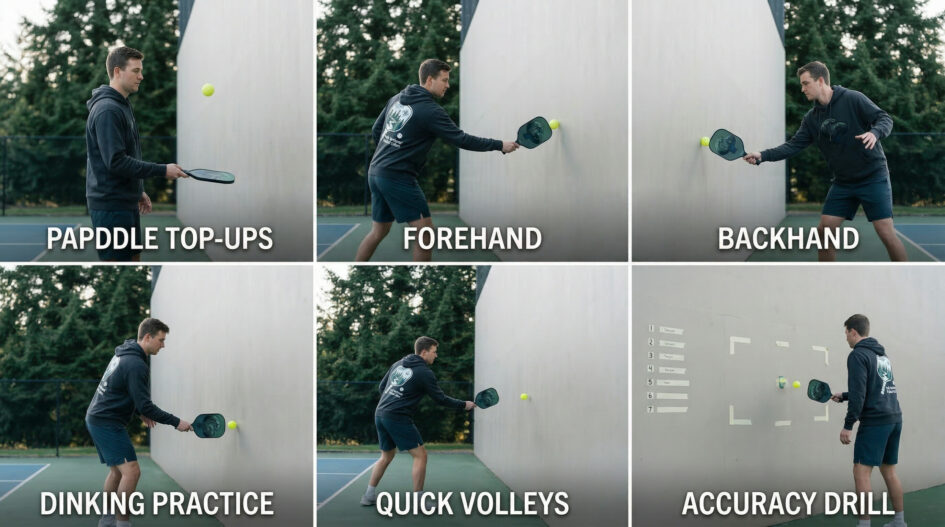
Pickleball wall drills for beginners are one of the easiest ways to build control, touch, and consistency—no partner required. With just a smooth wall and a few minutes of focused practice, you can sharpen your soft game, improve hand‑eye coordination, and develop the muscle memory needed for confident kitchen‑line play. These simple drills are perfect for new players who want fast, repeatable reps anytime
Why Use Wall Drills for Pickleball Practice?
Getting familiar with your strokes is a lot easier when you have instant feedback, and that’s exactly what wall drills give you. Repetitive hitting and quick ball returns mean you practice a bunch of shots in a shorter amount of time. Honestly, the wall is a great “partner” for both brand-new players and those looking to reinforce the basics.
Practicing with a wall is also super practical. If finding a court or a partner is tough, just head to a flat wall (indoor gyms, your garage door, or even a racquetball wall at the park) and get started. Even five to ten minutes a few times a week can make a big difference in your consistency, hand eye coordination, and muscle memory.
On top of that, wall practice is totally solo, which is awesome when you want to work at your own pace and focus on specific skills. You set your own goals, timing, and repetitions—perfect for anyone trying to improve steadily without any outside pressure.
For more soft‑game practice, check out our Dinking Drills collection.
Fundamental Wall Drills Every Beginner Should Try
Starting simple is the best strategy. These drills don’t need fancy skills or special setups, and you can make each one easier or harder as you get better. Here are some of the easiest and most effective wall drills you’ll want in your practice routine:
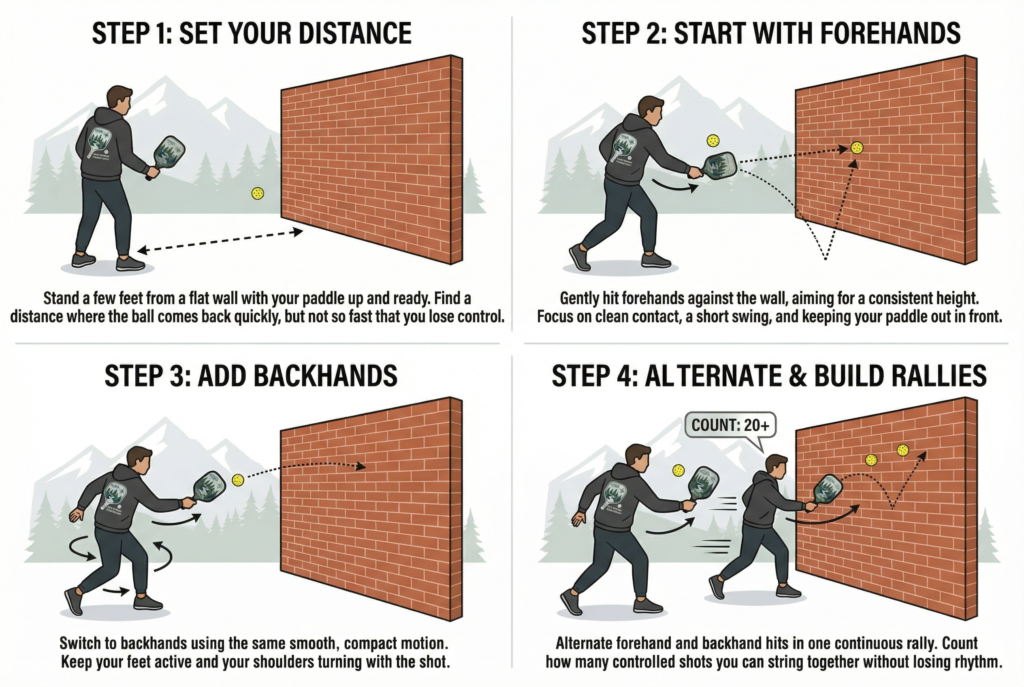
- Forehand Rally Drill: Stand a comfortable distance from the wall, and hit the ball using only your forehand. Try to keep the ball low and controlled. See how many consecutive hits you can get before you lose control. Aim for ten, then push that number higher as you improve.
- Backhand Rally Drill: This one’s just like the forehand drill, but use backhand strokes only. For beginners, the backhand can be a little awkward at first, but wall drills are perfect for smoothing it out.
- Alternating Forehand & Backhand Drill: Hit one shot forehand, then switch to backhand on the next return. Alternate back and forth, focusing on making clean contact and keeping good balance.
- Soft Dink Practice: Stand close (5-7 feet) to the wall and “dink” the ball softly, trying to keep your shots low and make them bounce very gently. This is super important for your net game, and practicing soft control now pays off in games later.
How to Set Up Your Wall Practice Session
Making the most out of wall drills doesn’t require much in the way of equipment or planning, but there are a few tips that make things easier. First, find a nice flat surface, as brick or smooth concrete works best. Draw or tape a horizontal line at net height (34 inches at the center) as a visual reference. This helps mimic an actual court and keeps you practicing shots at the right height.
Use regular outdoor pickleballs on rough surfaces to avoid them getting chewed up too quickly, and indoor “red” or “orange” balls for smoother walls. Bring a couple of balls, so if one bounces off in a weird direction, you don’t have to stop your momentum.
If you can practice in an area with good lighting, you’ll spot the ball better and play safer. Some players even mark zones on the ground to help with footwork and simulate where the kitchen line would be on a real court.
Step-by-Step Guide: Wall Drills That Build Core Pickleball Skills
As you repeat these pickleball wall drills for beginners, focus on smooth contact and relaxed swings.
- Single Stroke Focus: Warm up by bouncing the ball gently on your paddle (paddle top-ups) to get used to the feel, then try 10-20 easy forehand and backhand shots against the wall. Focus on getting consistent height and power.
- Consistency Challenge: Try to hit 20 shots in a row to the wall without letting the ball drop. If you miss, reset and see if you can beat your last best streak. This is a great way to track your improvement in real time.
- Target Practice: Place masking tape “targets” on the wall at different heights and spots. Challenge yourself to hit the target zones (high, low, left, right), which will help with directional control once you’re on the court.
- Dink Drill: Step close and practice tapping the ball gently so it bounces once in front of the wall before rebounding. Soft hands matter most here; the quieter your shot, the better. See if you can keep the rally going at a controlled, soft pace without the ball getting too high.
- Volley Drill: Without letting the ball bounce (volleying in the air), stand about 5-7 feet from the wall and try to keep quick volleys going. This is useful for sharpening reflexes and getting comfortable with quick paced play.
Mixing up the order and combining the drills can keep practice interesting and target different muscle groups. Don’t hesitate to challenge yourself by hitting at new angles or moving your feet with each shot for a fuller workout.
Common Beginner Mistakes, and How to Tweak Your Drills
All of these pickleball wall drills for beginners translate directly into better consistency at the kitchen line.
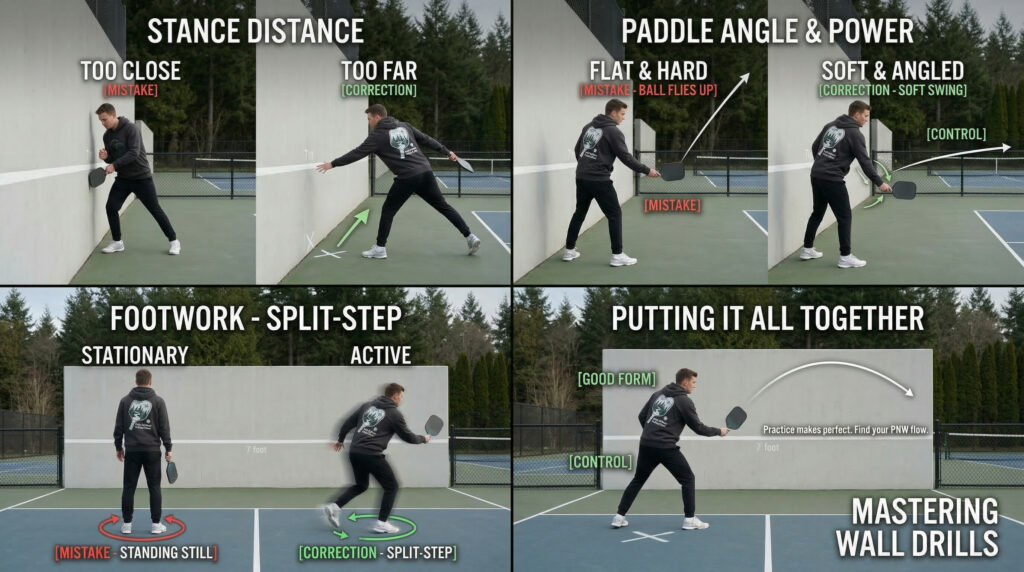
- Standing Too Close or Too Far: If you’re too close, you won’t have time to react; too far and the ball might die before it reaches you. Experiment to find the distance where you get the right amount of challenge.
- Hitting Too Hard: Beginners often smack the ball way too hard, making rallies short and uncontrolled. Start slow and smooth, then ramp up speed if you feel ready.
- Ignoring Footwork: It’s easy to stand still when doing wall drills, but moving your feet for every shot (even just an extra split step or a side shuffle) trains better habits for real matches.
- Bad Paddle Angle: Watch for shots sailing straight up or into the ground; odds are, your paddle’s tilted wrong. Adjust the angle so the ball comes back at hip or waist height, with only a slight upward or forward motion.
Troubleshooting: Things You Can Adjust When Wall Drills Feel Off
- Not Seeing Improvement? Try shorter, focused sessions daily rather than one long, tiring session each week. Fun, routine practice works wonders for muscle memory.
- Ball Keeps Flying Off to the Side? Check your wrist and paddle grip. Keep your wrist stable and use a soft, gradual swing instead of jerky motions.
- Struggling With Backhand? Focus on just the backhand for a few sessions. Your muscles will catch up, promise.
If you want to improve your movement, visit our Footwork Basics guide.
Taking It Further: How Wall Drills Fit Into Your Pickleball Training
Wall drills are awesome for skill building, but they’re not the whole story. Mix wall work with hitting on actual courts, playing with friends, or joining beginner round robins once you feel ready. Adding variety (think: practicing serves, learning court positioning, real game rallies) helps these skills click even faster.
Fitness and mobility matter, too. Quick side steps while doing wall drills, or practicing little hops and shuffles as you move, can sneak in a bit of cardio and help your balance become way better.
These pickleball wall drills for beginners are perfect for building soft‑game control on your own.
Handy Equipment and Tips for Wall Practice at Home
You don’t need a ton of gear for effective wall drills. Honestly, a decent pickleball paddle, a few balls, sturdy sneakers, and a safe wall are all it takes. For home practice, chalk or painter’s tape can mark out the net line and target spots. Make sure the area is safe and clear of anything breakable nearby. Some players even lay out cones or towels to simulate court boundaries.
- Pickleball paddle: Any reliable beginner paddle works. Heavier paddles offer more control but may tire your arm out faster, so test what feels good for your swings.
- Balls: Bring a couple for backup. Outdoor pickleballs for rough walls, indoor balls for smooth.
- Tape or chalk: Use to mark out net height and give yourself targets.
- Good shoes: Non-marking court shoes or athletic sneakers help avoid slips.
Consider adding a Bluetooth speaker for music or drills with a timer to keep practice sessions upbeat and engaging. Practicing at home makes it easy to squeeze in drills whenever you have free time, even if it’s just five minutes.
FAQs About Pickleball Wall Drills for Beginners
How long should beginners practice wall drills each session?
Short, regular sessions, about 10-20 minutes, is a solid goal for starters. Quality beats quantity, and frequent practice sticks better than just going all-out for one day a week.
Can wall drills totally replace practice with real partners?
Wall drills help with consistency and core skills but playing real games is how you learn court movement, reading opponents, and scoring. Wall work is a great supplement, not a full substitute.
What’s the ideal wall height and surface?
Look for a wall that’s at least 10 feet wide and tall enough for comfortable hitting. Brick or smooth concrete is best. Make sure to mark net height (34 inches) for realistic practice.
Are there creative ways to make wall drills more challenging?
Yes! Use tape targets, switch hands, add movement drills, or increase speed and difficulty by standing closer and hitting faster volleys.
For official guidance on rules and standards, you can always check the USA Pickleball Official Rules
Getting Started With Pickleball Wall Drills
Anyone new to pickleball can pick up a paddle and get huge value from practicing wall drills right away. Even if you’re brand new, a few regular sessions at a wall can make serving, returning, and ball control feel natural. It’s all about consistent touches, comfortable swings, and gradually challenging yourself a bit more each time. Grab a paddle, pick a wall, and try out some easy drills. You might be surprised at how much progress you see. Your future pickleball self will thank you!


Leave a Reply