Pickleball swing drills for beginners are one of the fastest ways to build clean mechanics, better timing, and more consistent contact. Whether you’re brand new or tightening up your fundamentals, these drills help you develop smooth, repeatable swings that translate directly into better shots on the court.
For more foundational skills, visit our How To Play Pickleball and learn the basics before starting these pickleball swing drills for beginners.
Why Practicing Pickleball Swing Drills Helps Beginners Improve Faster
Pickleball swings might look effortless when you watch experienced players, but the motion involves timing, control, and good habits. Drills aren’t just about getting stronger—they’re about building muscle memory, improving coordination, and helping you react quickly in real games.
Looking at how pickleball is growing—all ages and skill levels are jumping in—there’s a lot of interest in simple routines that can make your first games a lot more fun. The sport has roots in tennis, badminton, and ping pong, so a structured approach to drills is pretty common. Even a few focused sessions a week can speed up your progress faster than just “hitting around.”
So, let’s now have a look at the features I think you’ll really like about swing drills for beginners: they’re low pressure, easy to do solo or with a partner, and they set the stage for more advanced play down the road.
Getting Started: Key Points Before You Drill
Before jumping into swing drills, I always suggest making sure you have the basics down. A few pointers here make all the difference, not just for safety, but for building good habits from the start.
- Paddle Grip: The “continental grip” is your go-to. It’s not too tight, not too loose, and it gives you flexibility for both forehands and backhands.
- Stance: Keep your knees bent, feet about shoulder width apart, and stay light on your toes. This way, you can move quickly toward the ball when you need to.
- Focus on Relaxed Swings: Beginners sometimes try to “muscle” the ball. Relax your shoulder and wrist, and let the paddle do the work.
- Pick a Quiet Zone: Start in a clear space on the court. It’s easier to focus if there aren’t balls flying everywhere.
To improve your soft‑game control alongside these swing drills, check out our The Dink Shot: Tips And Tricks breakdown.
Pickleball Swing Drills for Beginners: Core Techniques
Building your swing from the ground up doesn’t take fancy equipment or lots of space. These are the beginner drills that have helped me and a ton of others feel confident swinging in a real match. Each one focuses on a specific skill, and all play into your basic forehand and backhand motions.
1.Wall Rally Drill for Pickleball Swing Beginners
This one’s great if you don’t have a hitting partner. Stand about 10 feet from a wall with your paddle and pickleball.
- Start with the forehand: Hit the ball softly against the wall, aiming for consistency instead of power.
- Try for sets of 10–20 hits before you miss. Work up to longer strings as you improve.
- Flip to backhand: Repeat the drill using only your backhand swing.
This builds control and gets you used to the “bounce” you’ll see on the court, which is super useful for beginners.
2. Drop Feed Swing Drill
This is a basic drill that helps with timing and paddle contact.
- Hold a pickleball out in front of you, drop it, and swing at it as it comes up from the bounce.
- Focus on clean, “center of the paddle” contact and good follow through.
- Once you’re comfortable, alternate between forehand and backhand swings.
It may feel repetitive, but nailing this gets your handeye coordination dialed in fast.
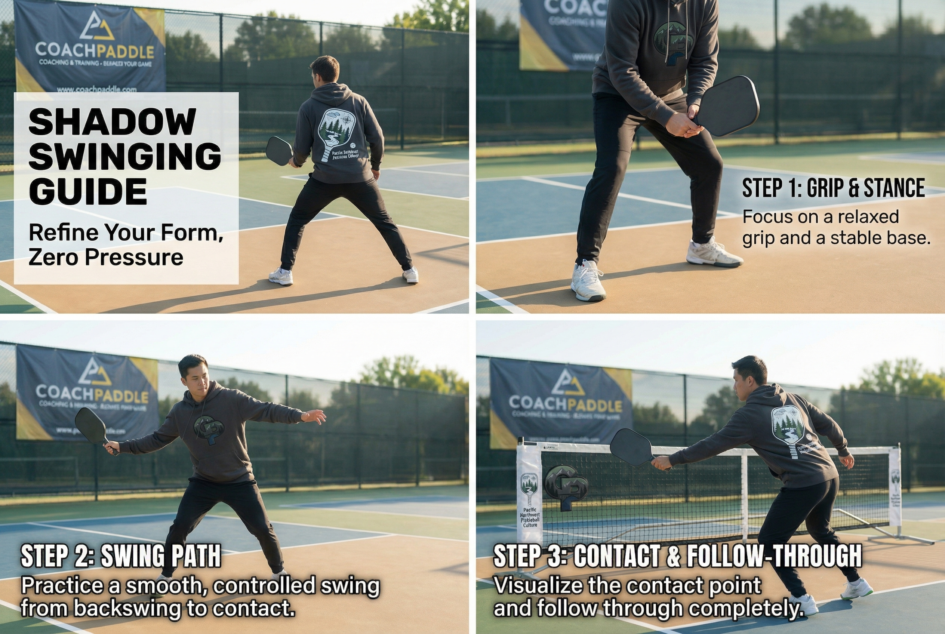
3. Shadow Swing Drill for Pickleball Beginners
This one doesn’t need a ball, but it’s pretty effective for fixing form.
- Stand in your ready position and imagine you’re swinging at an incoming ball.
- Take slow, full swings and watch that your paddle stays steady and your shoulder follows through.
- Switch between forehand and backhand imaginary shots.
Best part? You can do shadow swings in your living room before heading out to the courts.
4. The Dink Swing Drill
Dinks are those soft shots you play near the net. They take a gentle swing and a bit of touch.
- Stand close to the net (within 4–5 feet) and tap the ball with a light controlled swing, aiming to land it just over the net.
- Work on keeping your wrist loose and staying low through the shot.
- Try a set of 10 forehand dinks, then 10 backhand dinks.
This helps you win points when the rally slows down near the kitchen line.
5. Partner Swing Rally
Once you have some control, grab a partner. Stand opposite each other and rally back and forth using slow, controlled swings. The goal is consistency, not power.
Pair these swing drills with our How To Play Pickleball Kitchen to develop better control at the non‑volley zone.
Beginner Challenges With Pickleball Swing Mechanics (And How to Fix Them)
It’s normal to run into snags when you first start swinging in pickleball. Here are a few common problems and some easy fixes that worked for me and others learning the ropes:
- Tight Grip: If your hand aches or the paddle feels heavy, you might be squeezing too tightly. Loosen your fingers between points or use a grip wrap for better comfort.
- Poor Contact: Keep your eye on the ball all the way through the swing; don’t lift your head early to watch where it’s going. It’s simple advice but makes a huge difference.
- Flat Footed: Shuffling your feet in small steps makes getting into position easier. Staying light on your toes helps you reach the ball faster, especially in longer rallies.
- Inconsistent Follow Through: Think about pointing your paddle toward your target after every swing; this makes your shots more accurate and your motion smoother.
Sticking with drills is a good way to iron these things out before they get baked into your game habits.
Practical Tips to Get More Out of Your Drills
I’ve picked up a few things along the way that really help drills feel productive (and a lot less boring):
- Keep sessions short (10–20 minutes), but do them a couple of times a week instead of marathon sessions once in a while.
- Film yourself or ask someone to watch. Catching a video of your swing can show things you might not notice while playing.
- Gradually ramp up the pace or difficulty after your swing feels comfortable; add some movement, or try hitting at targets on the court.
- Switch up your drills now and then to keep it interesting and challenge yourself in different ways.
Having fun with it makes it easier to keep coming back for more, which is really important in the early stages.
How Swing Drills Show Up in Real Matches
The coolest thing about these drills is how the skills translate into actual points when you play for real. Getting comfortable with your swing means you can focus on strategy and shot selection, instead of worrying if you’ll even make contact with the ball.
- Consistent Serve Swings: Practiced swings mean you’ll serve more reliably and set up good returns.
- Return of Serve: Quick, controlled swings make handling tricky returns way less stressful.
- Volley and Net Play: Dinking and soft swings keep the rally going and help you control points at the kitchen line.
“Consistent practice with pickleball swing drills for beginners improves timing and accuracy.
Frequently Asked Questions
Here are a few questions I hear all the time from new pickleball players looking to improve their swings:
What’s the best drill for completely new players?
Answer: The wall rally drill is a great starting point. It helps you practice basic swings and build control, even if you don’t have a partner yet.
How many times a week should I practice swing drills?
Answer: Two to three sessions per week (10–20 minutes at a time) keeps your skills building and avoids burnout.
Should I focus on forehand or backhand swings first?
Answer: It’s a good idea to spend equal time on both, even though forehands feel more natural at first. Reliable backhands open up more shots and options as you improve.
According to Pickleball Canada, developing consistent swing mechanics early helps beginners build long‑term control.
Pickleball Swing Drills: Start Simple, Build Skills
Structured swing drills play a big role in faster skill development for new pickleball players. Pick a few drills that fit your practice space and skill level, and you’ll see drops, dinks, and big swings feeling easier after only a couple of weeks. Swing practice isn’t all about perfect form; it’s about making progress you can actually feel while playing. Grab a paddle, pick a drill, and have fun as you get better, one swing at a time!
A little bonus tip: try mixing in some light footwork drills for extra mobility on the court, and remember to stretch before playing to avoid injury. Keeping things relaxed and focusing on consistent improvement will bring even more confidence and make your hours on the court way more enjoyable. Enjoy the adventure, and see you on the courts!



Leave a Reply