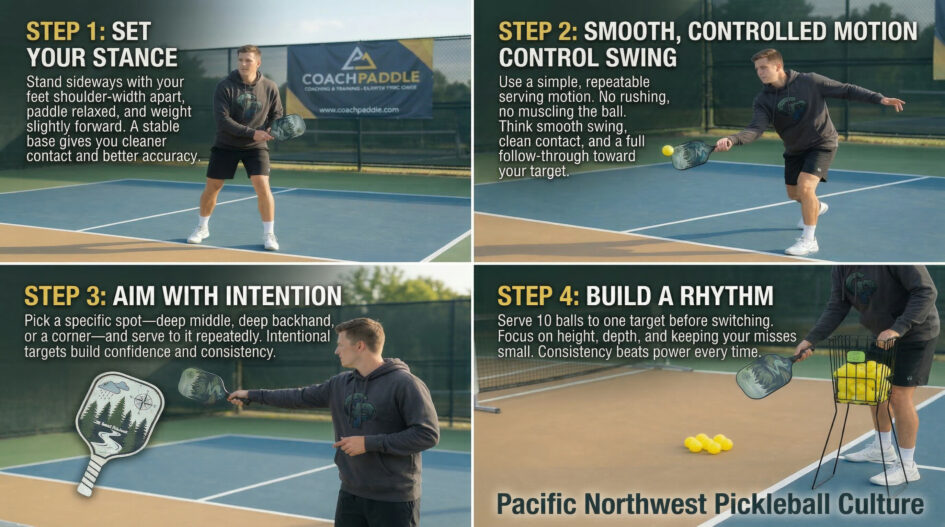
Pickleball Serving Tips for Beginners are all about building confidence, clean contact, and simple mechanics. This guide walks you through the basics so you can start every point strong.
Why Serving Matters in Pickleball for Beginners
In pickleball, the serve is more than just starting play. It gives you the first opportunity to control the pace and angle of the rally. A good serve can put pressure on your opponent and sometimes even win you free points through unforced errors. Serving also follows specific rules, so building correct habits early makes later improvement a lot easier.
The rules for serving in pickleball help keep the game fair and steady. For example, you must serve underhand and below your waist, and the ball needs to land diagonally across in the opponent’s service box. Missing these basics might cause faults, handing the serve over to the other team and potentially breaking your rhythm during play.
Learn the fundamentals in our full Pickleball Beginner Guide
Pickleball Serving Tips for Beginners: Understanding the Basics
Before you get into fancier serves or advanced strategy, it’s helpful to nail down the basic form. My first sessions practicing serve fundamentals saved a lot of frustration as I improved. For those starting out, the main steps are easy to follow with a little attention to technique and some patience.
Grip: Pickleball Serving Tips for Beginners Start With a Relaxed Hold
Hold the paddle with a relaxed handshake grip. This keeps your wrist flexible and helps guide the paddle face through the ball smoothly. A loose grip helps with control and avoids unnecessary strain.
Stance: Set Up a Stable, Balanced Base
Stand behind the baseline with your feet shoulder width apart, body turned slightly sideways so your nondominant shoulder points at the target. This gives stability and room for a smooth swing. Make sure you plant your feet solidly so you don’t lose balance in the middle of your motion.
Ball Placement: Pickleball Serving Tips for Beginners on Legal, Consistent Drops
Always drop (don’t toss) the ball into the air before hitting your serve. The rules require the ball to be struck below your navel in an upward arc. Dropping instead of tossing ensures more consistent contact.
Contact Point: Aim for Clean, Below‑Waist Contact
The actual contact with the ball should happen at or just below waist height. Focus on making contact with a flat paddle face and swinging forward and up. This helps keep the serve legal and prevents errors.
Follow‑Through: Pickleball Serving Tips for Beginners to Improve Accuracy
Try to finish with your paddle pointing toward your target. This ensures you direct the ball where you want it to go and helps with accuracy in landing within the service box. A good follow through also protects your shoulder over time.
Some beginners try to overhit, but a gentle, controlled serve often works better. Getting the ball in play with good placement is more helpful than raw power at the beginning stages. Striking too hard can lead to misfires or mistakes, especially when you are still learning control.
How Beginners Can Practice and Improve Their Pickleball Serve
These pickleball serving tips for beginners focus on simple fundamentals you can repeat every time.
Pick a Target for Better Accuracy
Choose a specific area in the service box you want to aim for. You can lay down a cone or use a towel as a target, which gives you something to focus on and helps with building accuracy. Moving your target around the service area each practice session can add some variety and prevent predictability.
Practice a Smooth, Repeatable Motion
Repeat your serve using your established grip and stance. Focus on smooth motion from drop, swing, to follow through. Try to keep your form consistent every time, which helps develop muscle memory for a repeatable routine.
Monitor Your Contact Point and Ball Height
Pay attention to keeping contact below your waist and swinging in an upwards arc. Use your phone to film yourself or have a friend check your form if possible. Sometimes spotting little habits on video can make correction much easier.
Check Your Serve Results and Adjust
Notice if your serves consistently land in. Adjust your swing or grip if you’re hitting out or into the net, and take note of what feels comfortable during successful serves.
Progress Your Placement and Court Awareness
Once you’re comfortable getting the serve in, vary your target within the service box for better accuracy and challenge yourself by hitting both deep and short serves. Practicing with different lengths and angles will help you react to different situations in real games.
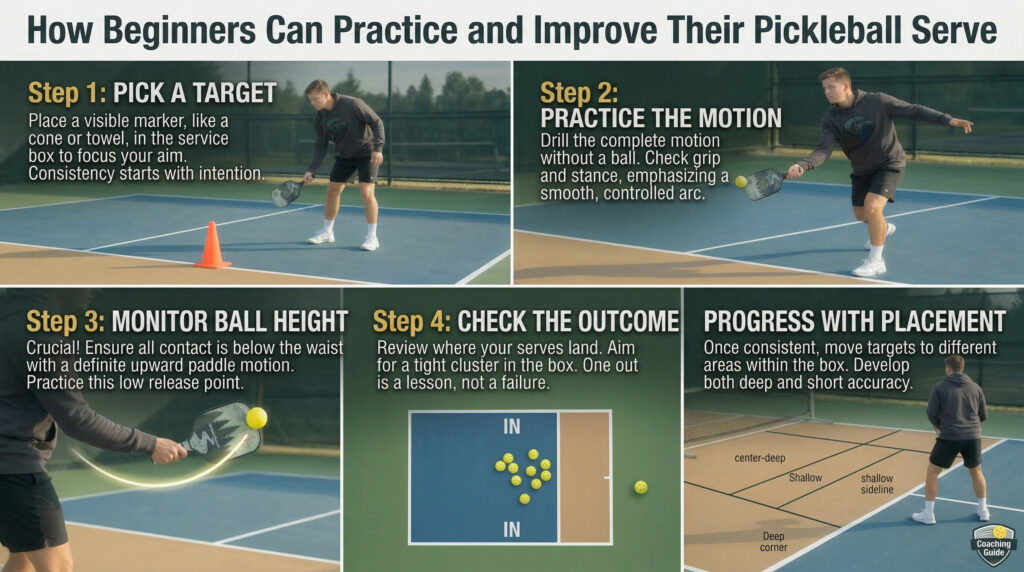
Consistent practice in these areas builds reliable, legal serves and boosts your confidence each time you step up to the baseline. Try to use the same routine each time you practice, and soon the serve will feel like second nature. Invite a friend to keep things fun and to give feedback, or play simple serving games where you alternate targets and keep score.
“If you’re ready to add height and control to your game, try these Pickleball Lob Shot Drills.”
Beginner Pickleball Serving Issues and How to Correct Them
In this pickleball serving tips for beginners, you’ll learn serving tips designed specifically for beginners.
- Serving too high: If your serves keep floating out, check that contact is below your waist, and drop the ball rather than toss it. Less backswing can also help keep the serve lower and more manageable.
- Hitting the net: If your serve keeps falling short, make sure you’re swinging up and through the ball instead of chopping down. Sometimes a smoother, more relaxed motion fixes this immediately. Don’t be afraid to slow everything down to focus on form.
- Missing the service box: Stand with your feet aimed toward your target, and avoid twisting your wrist at the last second. Keeping a steady follow through helps accuracy and should reduce missed serves. Focus your eyes on the target area as you swing.
- Lack of consistency: Try simplifying your preserve routine. Use the same setup and rhythm every time. This helps muscle memory kick in, and over time, you’ll notice more and more of your serves finding their mark.
Serving Faults to Avoid in Pickleball for Beginners
Pickleball has some strict serving rules. Some easy to make faults include:
- Stepping on or over the baseline before making contact with the ball. Always serve from behind the baseline and make sure both feet are in the correct position.
- Tossing the ball and hitting it above your waist or in a downward arc. Make your swing gentle and focus on an upward motion.
- Serving before your opponents are ready. Always check before starting the point to avoid disputes.
- Landing the serve out of bounds or into the no volley (kitchen) zone. The ball must not touch the no volley line or the area in front of it when serving.
These pickleball serving tips for beginners help you build a consistent, confident serve.
If you’re working on your soft game, these Pickleball Dinking Drills for Beginners will help you build control fast.
Beginner Pickleball Serve Variations Worth Trying
Mastering these pickleball serving tips for beginners will make your first shots more reliable.
- Deep Serve: Aim for the back line or corners of the service box. Deep serves push your opponent back, making it harder for them to return with control. Practicing deep serves can also help your own consistency and court awareness.
- Short Serve: Drop the serve just past the no volley line. This is useful if your opponent has trouble moving forward quickly. Smart placement can win you easy points with very little extra effort.
- Spin Serve: Brush the paddle slightly up and across the bottom or side of the ball. This adds sidespin or topspin, changing the bounce and making returns tricky. Work on spin in practice before trying it in games for best results.
- Power Serve (for later): Add more speed once you’re comfortable. Still keep your motion legal, but extra pace puts opponents on the defensive and opens up the rest of the court for your next shot.
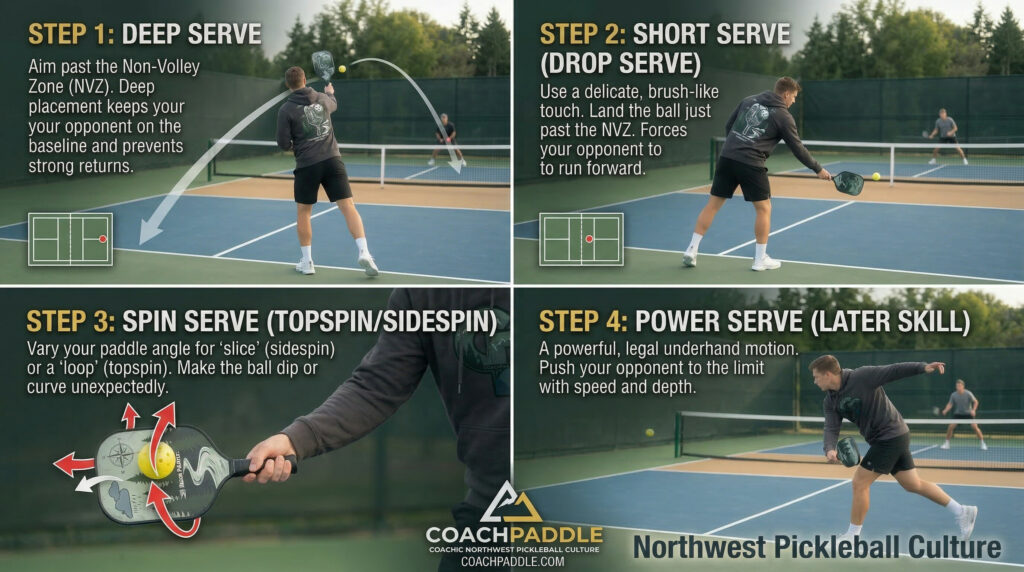
Switching up your serves can catch returners off guard and make games more interesting for you, too. Watch advanced players to pick up new serve ideas and keep things fresh on the court.
Essential Pickleball Serving Equipment for New Players
Your paddle and ball choice can make serving easier, especially as you start. I began with a lightweight graphite paddle, which made swinging through the ball smoother and less tiring. Most standard indoor or outdoor balls work fine, but check if your practice partner uses the same type for consistency. The right paddle and ball combo can be the difference in gaining confidence with your serve.
Wearing comfortable, supportive shoes helps maintain stability during your serve setup and allows for quick movement into the court after serving. A sweatband or wristband can keep your grip secure if you sweat a lot during play, making your serve routine feel more comfortable and distraction-free.
- Paddle: Go for a beginner friendly paddle that has a medium grip and balanced weight. Too heavy a paddle can slow your swing and tire your arm more quickly.
- Ball: Use regulation pickleballs suited to your court (indoor or outdoor). Practicing with the right ball gives better feedback and improves your timing—this makes the transition to actual games much easier.
- Shoes: opt for court shoes that support quick lateral and forward movement. Running shoes might slip, but shoes designed for court sports help keep your footing steady.
“To build consistency fast, try these Pickleball Wall Drills for Beginners.”
Frequently Asked Questions
Beginners usually have a few questions when learning to serve in pickleball. Here are some of the most common questions I hear from new players:
Question: How many chances do I get to make a good serve?
Answer: In pickleball, you generally get one chance to make a legal serve. If you fault, the serve moves to your partner or to the other team, depending on game type.
Question: Do I have to serve diagonally every time?
Answer: Yes, in standard pickleball games, serves must always land diagonally in the opposite service box. Serving straight ahead isn’t allowed.
Question: Can I use an overhand serve?
Answer: No, pickleball rules require all serves to be underhand, with the paddle swinging in an upward motion, and contact made below the waist.
For official guidance on rules and standards, you can always check the USA Pickleball Official Rules
Serving in Pickleball and Your Next Steps as a Beginner
Getting comfortable with serving basics makes your games smoother and helps you enjoy your early pickleball experiences. From grip and stance to dependable practice routines, every detail builds skill and confidence over time. Trying out deeper or spin serves after the basics gives your game another layer, and the right gear supports your comfort and control. Most of all, serving in pickleball becomes easier with repetition, so grab your paddle and practice regularly for steady improvement.
Each player’s adventure with the serve is a little different, but the right foundation leads to great rallies and even better games with friends.



Leave a Reply