
Pickleball is fun, fast, and social—but staying safe on the court matters just as much as improving your skills. These Pickleball Safety Tips will help you prevent common injuries, move with confidence, and enjoy every game without unnecessary risks. Whether you’re warming up, choosing the right shoes, or learning better court awareness, following these Pickleball Safety Tips will keep you playing longer and feeling stronger.
Warm Up Before You Play
A proper warm‑up is one of the key Pickleball Safety Tips for preventing strains. Use dynamic movement, paddle swings, and light footwork.
Wear Proper Court Shoes
Court shoes offer better lateral support and help prevent rolled ankles. Link court shoes to your Beginner Gear Guide.
Check Your Equipment
Inspect your paddle grip, edge guard, and balls before playing. Link paddle grip to your Paddle Grip Guide.
Stay Hydrated and Weather‑Ready
Hydration is an essential part of Pickleball Safety Tips, especially outdoors.
Be Aware of Your Surroundings
Good communication prevents collisions. Calling “Ball!” is one of the simplest Pickleball Safety Tips to apply.
Following these Pickleball Safety Tips helps you stay safe, confident, and ready for every match.
Why Pickleball Safety Matters
Pickleball offers an awesome mix of exercise and recreation, but it’s got its risks if you’re not mindful. Players move quickly across the court, usually in short, quick bursts, and there’s plenty of sudden stopping, pivoting, and reaching. A rolled ankle, a pulled muscle, or even a collision can put someone out of commission for weeks. The number of pickleball-related injuries climbs every season as more people stumble upon the game. A lot of these issues can be avoided with some smart moves and a few easy changes to your routine. Making safety a part of your pre-court habits will have you feeling confident and ready for every game. Plus, setting a good example for others encourages everyone to put safety first.
For beginners who want a full foundation, our Pickleball Beginner Guide walks you through the essentials so you can step on the court feeling prepared and confident.
Getting Ready to Play: Pre-Court Safety Steps
Most injuries in pickleball can be avoided with a little prep before you start. Here are some points I always keep in mind before I even set foot on the court:
- Proper Footwear: I only wear court shoes or tennis shoes with nonskid soles. Running shoes don’t provide the sidetoside support needed for pickleball.
- WarmUp Routine: Spending a few minutes jogging, jumping rope, or doing light dynamic stretches wakes up the muscles and gets the joints ready.
- Hydration: I pack a water bottle and sip throughout the match, especially during hot weather. Dehydration leads to muscle cramps and fatigue, which can set up a recipe for injury.
- Sun Protection: On outdoor courts, sunscreen, hats, and sunglasses keep things safe and comfortable.
Pickleball may look easy, but skipping these little things can turn a laidback game into a problem real fast.
Also, keep your bag organized so you aren’t scrambling to find your gear before a match. Making a checklist of these essentials helps establish a routine that can give a boost to both your confidence and overall game experience.
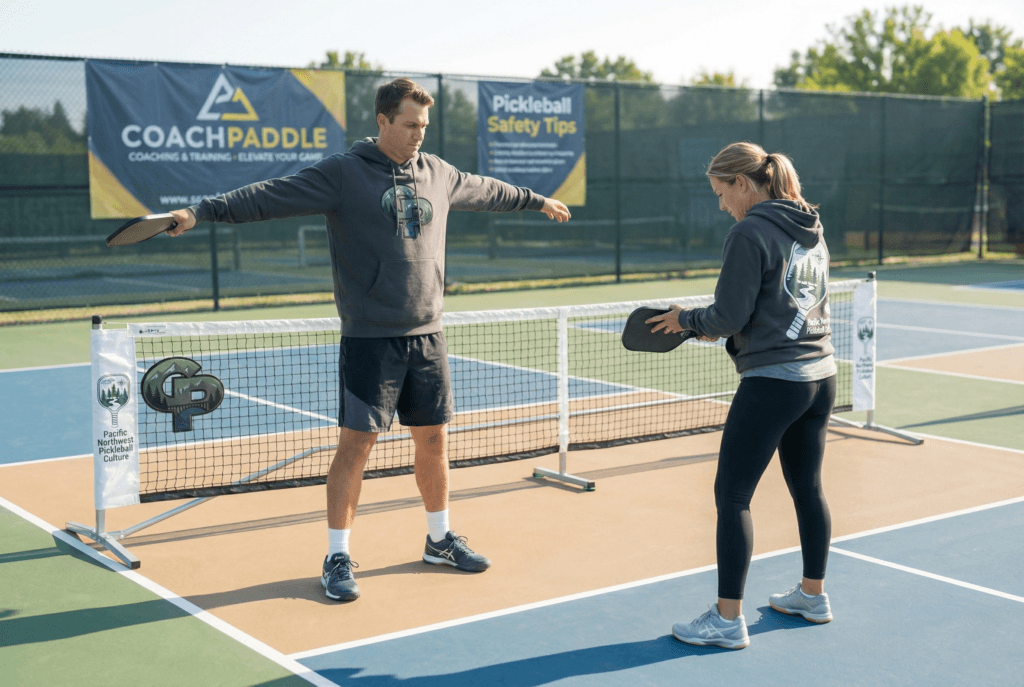
An essential warm‑up gets your body ready for the demands of pickleball. It boosts mobility, sharpens footwork, and keeps you safer during fast rallies.
Safety Gear and Equipment for Pickleball
Using the right gear is key for injury prevention. It doesn’t need to be fancy or expensive, just practical for the game. Here’s what usually makes it into my bag and how it keeps things safer:
- Supportive Shoes: Designed for lateral movement, they help guard against sprained ankles and slips.
- Knee and Ankle Braces: Anyone with past joint issues might want to wear these for extra stability.
- Protective Eyewear: Eye safety isn’t a joke, especially with hard plastic pickleballs traveling at speed. Sports goggles keep eyes safe.
- Paddles with Strong Grip: A good paddle handle keeps sweaty hands from losing control of the paddle during a swing.
Adding a sweatband or wristband can help keep your grip solid too, especially on humid days. Choosing quality items means fewer accidents and a better playing experience for everyone on the court.
Playing Smart: InGame Safety Tips
A lot can happen during play, but being alert and respectful of other players goes a long way. These are the habits I rely on whenever I’m in a game:
- Communicate With Your Partner: Loud, clear calls like “mine” and “yours” help prevent endofcourt collisions.
- Mind the NonVolley Zone: Also called the “kitchen,” this area trips up beginners and veterans. Stepping into it at the wrong moment or forgetting foot placement leads to slips and falls.
- Step, Don’t Reach: Running for a ball is safer than lunging with your arm. Overreaching ups the risk of shoulder or back strains.
- Watch for Loose Balls: Balls rolling onto your own or a nearby court are a major cause of twisted ankles. Call “ball on court!” to stop play until it’s cleared.
Playing safely is more than just following the rules. It keeps everyone moving and lowers the odds of sitting out from preventable injuries.
Another tip: be mindful of your surroundings and avoid backing up without looking. Most injuries happen when players move backward without realizing who or what is behind them.
Common Pickleball Injuries (And How to Avoid Them)
I’ve seen a few different injuries pop up in local games and tournaments. Knowing what’s most likely to happen is a good way to keep an eye out for trouble. Here’s a quick rundown of the ones I see most:
- Ankle Sprains: Usually caused by quick pivots, sudden stops, or landing sideways. Wellfitting court shoes help, and so does working on balance through basic exercises.
- Wrist Strains: Using the wrong hit technique or bracing for a fall on your hands is often the culprit. Practicing good form and breaking a fall with your forearm (not your hand) can help.
- Knee Injuries: Squatting low to return shots or abrupt movements are common triggers. A slight bend in the knees, never locking them, keeps shocks to a minimum. Kneepads come in handy if you play often or on rougher courts.
- Shoulder Soreness: Reaching overhead or twisting for tough shots can strain shoulder muscles, especially if you don’t warm up. Gentle stretching before and after a game works wonders.
Other less frequent but possible issues include falls leading to hip bruises or accidental contact causing facial injuries. Many of these are easy to dodge with a short daily routine of stretching, strengthening, and mindful court play.
What to Watch For: Court Conditions and Hazards
I’ve learned that not all pickleball courts are equal. Some spots come with hidden hazards you’ll want to spot before anyone picks up a paddle.
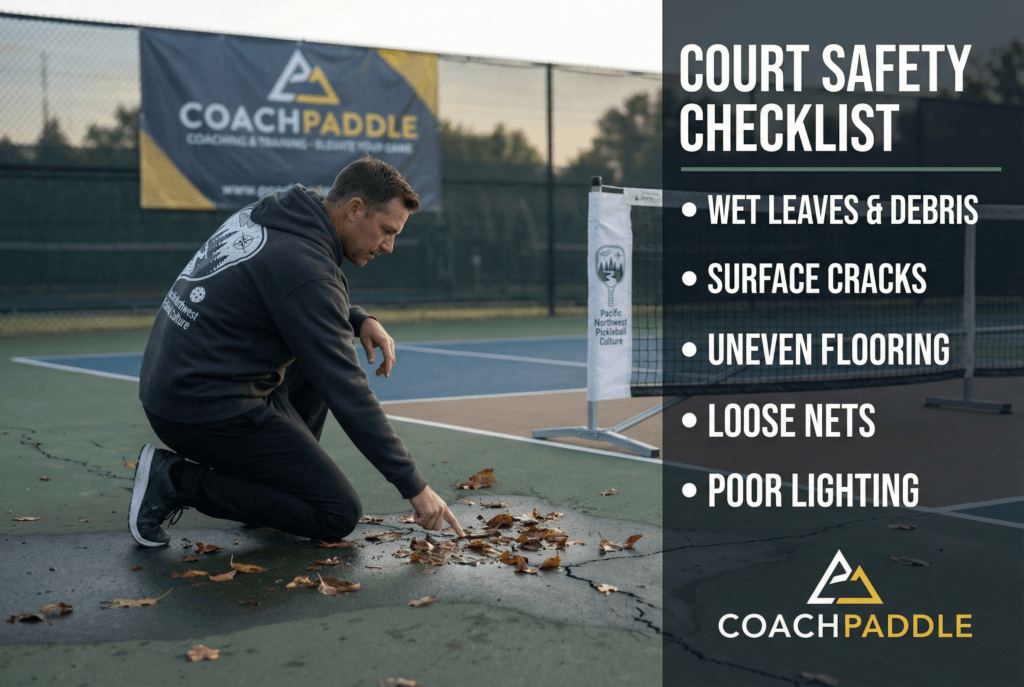
- Clean Court Surface: Wet leaves, dirt, or puddles can turn a safe spot into a slip risk. Taking a minute to sweep the surface before you play is always worth it.
- Cracked or Uneven Flooring: Older surfaces, especially on outdoor courts, might have cracks or gaps that can trip you up. I usually let others know if there’s a bad area on the court and mark it if possible.
- Net Height and Posts: Loose or low nets and poorly secured posts can get in the way during play. Double-check these before starting.
If you play at night or in poorly lit indoor spaces, watch for shadows or glare that can make it harder to see loose balls or court damage. Paying attention to these details has saved me and friends from more than a few close calls.
Staying Safe in Hot or Cold Weather
The weather you play in changes everything. Playing indoors offers some consistency, but outdoor games mean extra precautions:
- Hot Weather: I go for light clothing, wear a hat, and reapply sunscreen as needed. I make sure to drink water before I feel thirsty, and I take breaks if I’m feeling overheated.
- Cold Weather: Layered clothing keeps muscles warm and less prone to strains. Watching out for icy or wet patches on outdoor courts prevents slips.
Checking the weather report before heading out can help you pack the right gear—like extra water or hand warmers—and plan for quick shelter if conditions change suddenly. Monitoring the forecast and bringing the right gear is pretty handy if you want to avoid heat exhaustion, dehydration, or cramping in cold air.
For players who want a solid starting point, the Essential Pickleball Drills guide covers the key techniques that help you move safely and play with confidence.
Advanced Pickleball Safety: Extra Steps for Regular Players
Playing every week brings its own challenges, especially as you get older or if you’re training for competition. Here are a few more things that have really helped me stick with the game for the long haul:
- CrossTraining: Activities like swimming, biking, or even yoga can help work different muscle groups, boost flexibility, and reduce pickleball injuries.
- Listening to Your Body: Soreness and pain aren’t the same thing. Playing through pain is a fast track to an extended break from the sport. I listen and rest if something feels off.
- Smart Scheduling: Too many backtoback games leads to fatigue and bad form. Planning rest days and mixing up play times keeps things fresh for the mind and body.
- Ongoing Learning: Taking a lesson or watching videos about proper footwork and paddle technique helps fix minor mistakes before they turn into bigger issues.
- Recovery Techniques: Stretching, rolling tight muscles, and making time for recovery meals can add to your body’s ability to play more often and feel better after each session.
These habits have paid off by letting me enjoy pickleball for years and connecting with other players who care about safety too.
Frequently Asked Questions About Pickleball Safety
Here are some pretty common questions I hear from new and even experienced pickleball players about staying safe:
Question: What shoes are best for pickleball?
Answer: Court shoes or tennis shoes with good grip are best. Running shoes don’t provide the right stability for sidetoside movement.
Question: How do I deal with dehydration on hot days?
Answer: Drink water before, during, and after playing. If you’re playing longer sessions outdoors, bring an electrolyte drink or snacks to help replace what you lose in sweat.
Question: Should I use braces or supports if I’ve had joint injuries?
Answer: Braces or supports can be really helpful for anyone with a history of knee or ankle injuries. Listen to your body and talk to a medical professional for personalized advice.
Question: What do I do if I see another player looking overheated or in pain?
Answer: Always check in and suggest a break or water. If someone feels faint, encourage them to stop playing and rest in the shade. Look out for warning signs and ask if they’re okay—sometimes just giving someone the chance to rest can prevent more serious problems.
For players interested in how courts are designed or maintained in the U.S., USA Pickleball’s court construction guidelines offer general recommendations used by many facilities and communities.
Pickleball Safety: The Foundation of Every Good Game
Taking a few extra steps for safety is what allows me (and a lot of others I play with) to enjoy pickleball for years to come. Good prep, the right gear, and looking out for others aren’t just smart choices. They keep the vibe on the court friendly and fun. With these safety habits, you’ll find yourself playing stronger, longer, and with way more confidence. Here’s to healthy rallies and the good kind of sore the next day! Stay sharp, play safe, and always make time for an extra stretch at the end of your game.



Leave a Reply