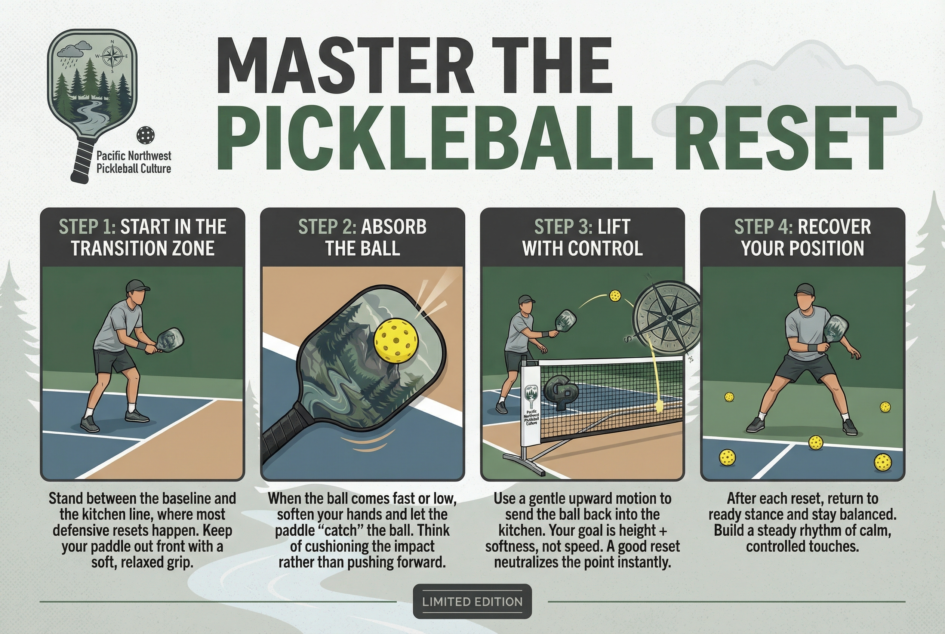
Pickleball reset drills for beginners are essential for learning how to stay calm, controlled, and confident when your opponent speeds up the ball. These drills help you soften your hands, absorb pace, and turn chaotic points into opportunities to reset and regain control at the kitchen line.
What Is a Reset in Pickleball?
A reset is a soft, controlled shot you use to slow the game down when your opponent is attacking. Instead of trying to hit back with power, you absorb their pace and drop the ball gently into the kitchen. As a result, you give yourself time to recover and get back into a neutral rally.
Why Pickleball Reset Drills Matter for Beginners
Reset drills are worth your time because fast‑paced dinks and hard volleys can catch you off guard. Additionally, if you’re only comfortable hitting hard or soft shots, you might freeze up against players who mix things up. Learning how to reset builds your touch, helps you manage tough situations, and stops your opponents from dominating the kitchen line.
Furthermore, these drills teach you paddle control and patience. If you rush every ball, you’ll make errors. By practicing resets consistently, you learn to trust your hands and stay calm even when the action gets wild. Simply put, resets keep you in the point longer and give you a real chance to turn defense into offense.
To learn more about the Non‑Volley Zone, you can explore additional rules, examples, and beginner‑friendly explanations visit Understanding the Non‑Volley Zone.
Getting Started with Pickleball Reset Drills for Beginners
First, it helps to get comfy with a basic grip and a soft touch. If you haven’t already, work on your continental grip because it’s versatile and works for resets, dinks, and volleys. For resets, you’ll want to focus on absorbing the ball rather than countering with pace, basically letting the ball “die” off your paddle into the kitchen.
- Paddle position: Keep your paddle out in front, ready for quick reactions.
- Body stance: Stay low with knees bent, weight forward, and be ready to shuffle left or right.
- Relaxed wrist: Don’t grip your paddle too tightly. A loose grip helps soften hard shots.
These pickleball reset drills for beginners teach you how to absorb pace and stay balanced under pressure.
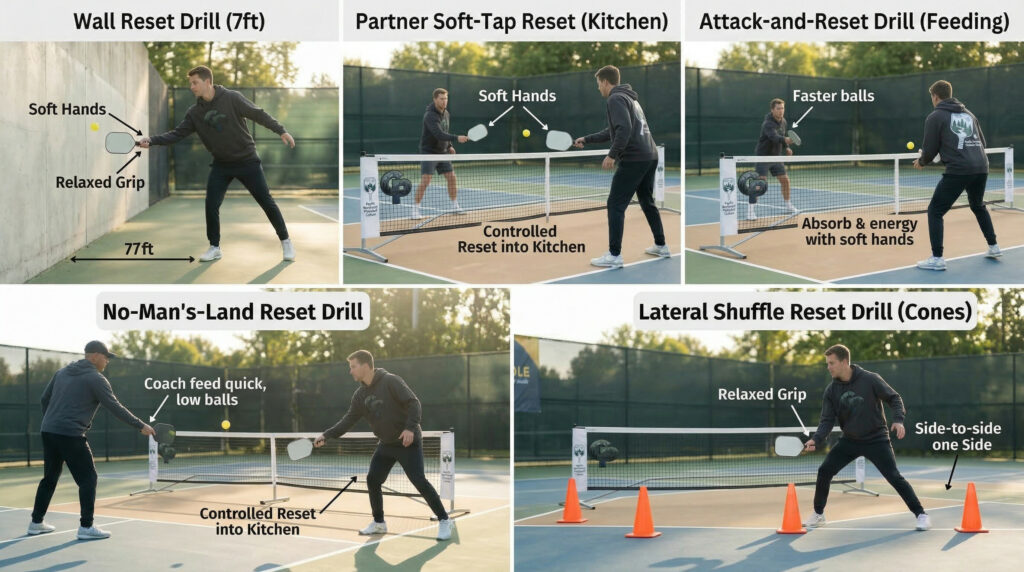
Five Pickleball Reset Drills for Beginners
I’ve rounded up some simple reset drills that work for solo practice, partner sessions, or even small groups. Additionally, mixing these into your warm‑up or skill‑building routine can help you feel much more confident at the net.
- Wall Reset Drill
All you need is a pickleball paddle, a ball, and a smooth wall. However, stand about seven feet away (simulating the kitchen line) and hit the ball gently against the wall so it bounces back below waist height. Try to keep your paddle still and “absorb” the ball’s speed, focusing on a short, soft rebound. Repeat for a minute and count how many in a row you can control. This home drill is great for muscle memory and quick touch improvement. - Partner Soft Tap Drill
Stand at the kitchen line, facing your partner across the net. One player feeds balls with medium speed, aiming for waist to chest height. The receiver practices softening the shot and dropping it gently into the kitchen, aiming for minimal bounce. Swap roles every few minutes to build control on both sides. - Attack and Reset Drill
This one is a classic for learning how to turn defense into neutral play. One partner stands at midcourt and tries to put pressure on the other with fast volleys and aggressive shots. The defending player focuses on soft hands and dropping shots into the kitchen. Change sides so both get a turn being under attack. - NoMans Land Reset
Start midway between the baseline and kitchen (the dreaded “no man’s land”). Have a partner feed balls quickly, aiming for your feet or hips. Your goal: reset each one softly into the kitchen before stepping up to join the kitchen line. This drill helps you adjust from defense to offense and manage awkward court positions. - Move and Reset Shuffle
Set up two cones or markers about six feet apart at the kitchen line. Shuffle laterally between them as your partner feeds shots at various spots. Practice resetting from different positions, staying light on your feet. This one mimics the chaos of real rallies and builds your movement and touch under pressure.
As you repeat these pickleball reset drills for beginners, focus on soft hands and a relaxed grip.
The foundation of all drop shots. If you’re new to this, you may want to review the basics in the How to Play Pickleball guide:
Tips for Better Reset Technique
Staying smooth on your resets boils down to touch, timing, and body control. Here are a few tips I found really helpful:
- Prioritize balance: Keep your weight on the balls of your feet and knees soft. This helps you adjust quickly to awkward shots.
- Soften your hands: Imagine “catching” the ball with your paddle instead of hitting or swinging it. A pillow soft grip really helps.
- Eye on the ball: Watch the ball all the way onto your paddle. Losing focus usually results in mishits.
- Don’t swing: Use a short, controlled motion with minimal follow through. If you swing big, you’ll likely pop the ball up for an easy put away.
Catching the ball on the rise (just after the bounce) can make resets even smoother. With practice, these skills start to feel second nature. It can also be helpful to practice with a coach or an experienced friend who can feed you balls at different speeds and heights. That extra challenge helps you build adaptability on the fly and prepare you for unpredictable play on the courts.
Common Mistakes Beginners Make
Resetting can feel awkward when you first start out, but knowing what to watch for can save you a lot of frustration.
1. Excessive Swinging
If you try to hit a reset with a big backswing, the ball usually ends up too high. A compact motion helps you absorb pace instead of adding to it.
2. Tight Grip
Gripping the paddle like a baseball bat makes it harder to soften the ball. A relaxed grip allows the paddle to “give” on contact, which naturally slows the ball down.
3. Standing Too Upright
When you’re too tall at the kitchen line, you lose reach and reaction time. A lower, athletic stance keeps you balanced and ready for fast exchanges.
4. Overthinking the Shot
Trying too hard to “place” your reset often leads to stiff, unnatural movements. Instead, loosen up, trust your grip, and focus on absorbing pace.
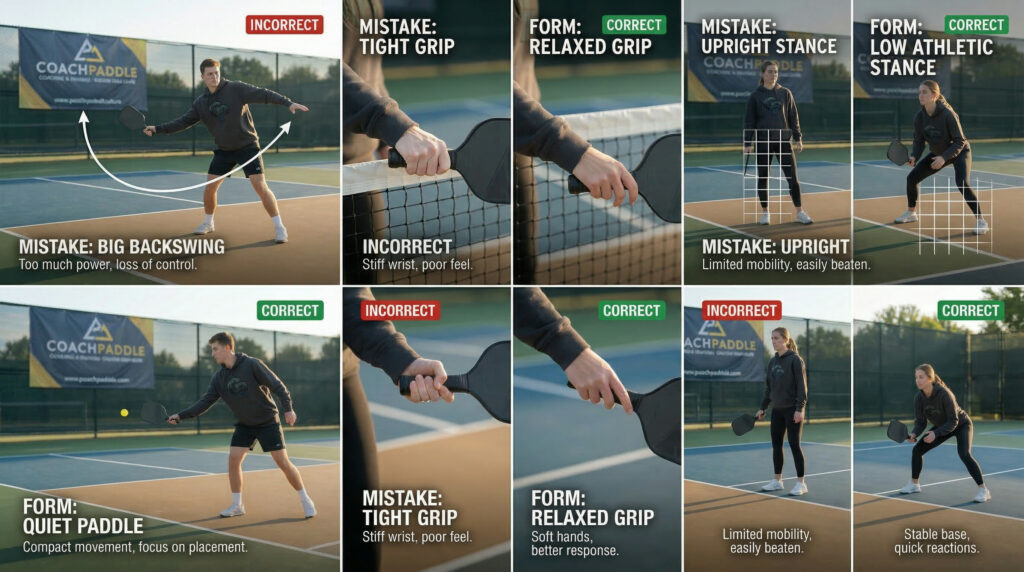
All of these pickleball reset drills for beginners translate directly into better control at the kitchen line.
If you’re still working on your fundamentals, our Pickleball Swing breakdown is a great place to start.
Practicing Pickleball Reset Drills for Beginners in Game Situations
It’s really important to weave reset practice into actual play because drills only go so far on their own. During recreational games or practice matches, challenge yourself to reset hard shots instead of going for risky counters. Playing out scenarios where you’re backed up or getting peppered at the net is a great way to build real confidence.
Pickleball professionals like Ben Johns and Tyson McGuffin talk a lot about mastering the “transition zone,” the space between the baseline and kitchen line. Practicing resets in this area gets you ready for tough rallies. For inspiration, you can check out pro match replays and see how often the best players reset the point before taking over the rally.
FAQ: Answers to Beginner Reset Questions
Here are a few of the most common beginner questions I hear about reset drills:
Q: How long does it take to get good at resets?
A: Most players start seeing solid progress after a few weeks of focused practice. Consistency is key, and building soft hands just takes repetition.
Q: Should I always reset, or just in certain situations?
A: Resets work best when you’re under pressure or out of position. If you’re balanced and set at the kitchen line, feel free to play more aggressive shots.
Q: What if I keep popping the ball up?
A: Try loosening your grip a little more and resist the urge to swing. Sometimes adjusting your paddle angle or body position also helps keep the ball low.
According to Pickleball Canada, developing consistent swing mechanics early helps beginners build long‑term control.
Building a Stronger All Around Game
Practicing reset drills doesn’t just make you better at defense. It helps you stay confident and composed in tough rallies. As you get more comfortable resetting, you’ll notice your touch improves in other areas too, like dinking and volleying. Many beginners find that a little extra focus on resets gives them an edge in games against more experienced opponents.
Getting the feel for resets early on is a super good move for any new pickleball player. Start with these drills, be patient with yourself, and remember to track your progress. Pretty soon, you’ll be handling hard shots at the kitchen with way more confidence and control, which can make pickleball even more fun and satisfying as your abilities grow.



Leave a Reply