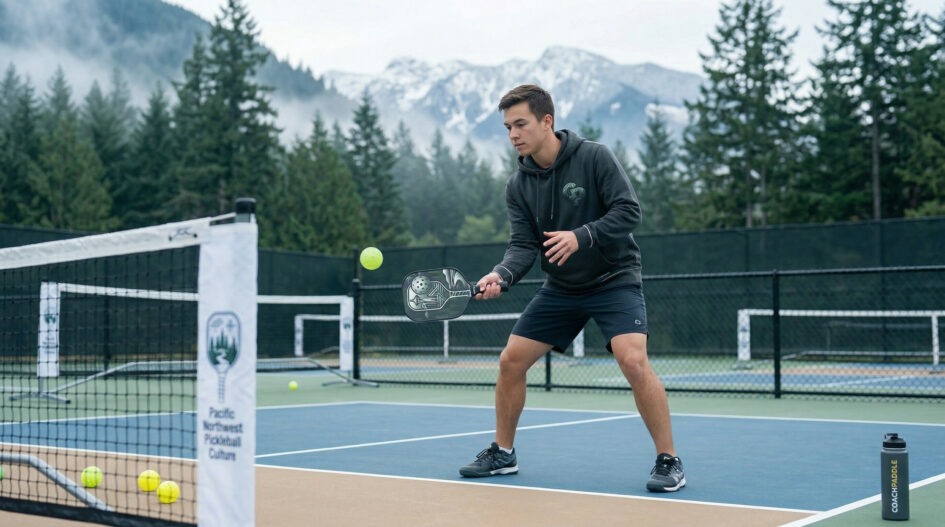
Pickleball Block Volleys are one of the most important defensive skills you can develop at the kitchen line. When opponents fire fast drives or speed‑ups, a solid block volley helps you absorb the pace, reset the rally, and regain control. In this guide, you’ll learn how to stay balanced, soften your hands, and turn hard shots into easy resets.
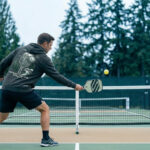
When you practice Pickleball Block Volleys consistently, you build softer hands and better touch at the kitchen line.
What Is a Block Volley in Pickleball?
In pickleball, a block volley is a soft, controlled shot. I hold my paddle steady and let the ball rebound. I don’t swing or punch at it. The goal is to absorb speed and place the ball near the kitchen.
Block volleys help neutralize fast attacks, especially when opponents pressure me at close range.
This move matters at higher levels, but it also helps beginners. It removes the fear of handling hard or aggressive shots. Adding block volleys to my game helped me stay in rallies longer and set up better chances.
A solid block volley also keeps me calm during long points. It makes tough moments manageable and helps me turn defense into offense.
If you’re working on building a stronger foundation, check out my Pickleball Serving Tips For Beginners for simple ways to improve your serve mechanics.
Why Block Volleys Matter in Pickleball
Mastering the block volley isn’t just about defense. It’s also about strategy and positioning. There are a few clear reasons why the block volley becomes so valuable as part of my overall pickleball game:
- Neutralizing Power Shots: Quick, aggressive shots from my opponent can be tough to handle, but with a controlled block volley, I can return these without letting the rally get away from me.
- Maintaining the No volley Zone: Staying near the net gives me better angles and options, and block volleys let me hold my ground instead of retreating.
- Setting Up the Next Shot: A soft, well placed block volley can force my opponent to move or respond weakly, often turning defense into an offensive chance for me.
- Reducing Errors: Swinging too hard at the net can lead to mistakes. I find the consistency of a stable block volley helps me limit mishits, especially under pressure.
These benefits show up in both doubles and singles. No matter my style, this shot boosts my confidence during fast kitchen exchanges.
Using the block volley also improves teamwork. I cover my side better and stay calm when handling tough shots.
Getting Started: Learning the Proper Block Volley Technique
Picking up the block volley starts with learning some basics. While I don’t need a fancy or expensive paddle, I do need good form and focus. Here’s how I approach the technique step by step:
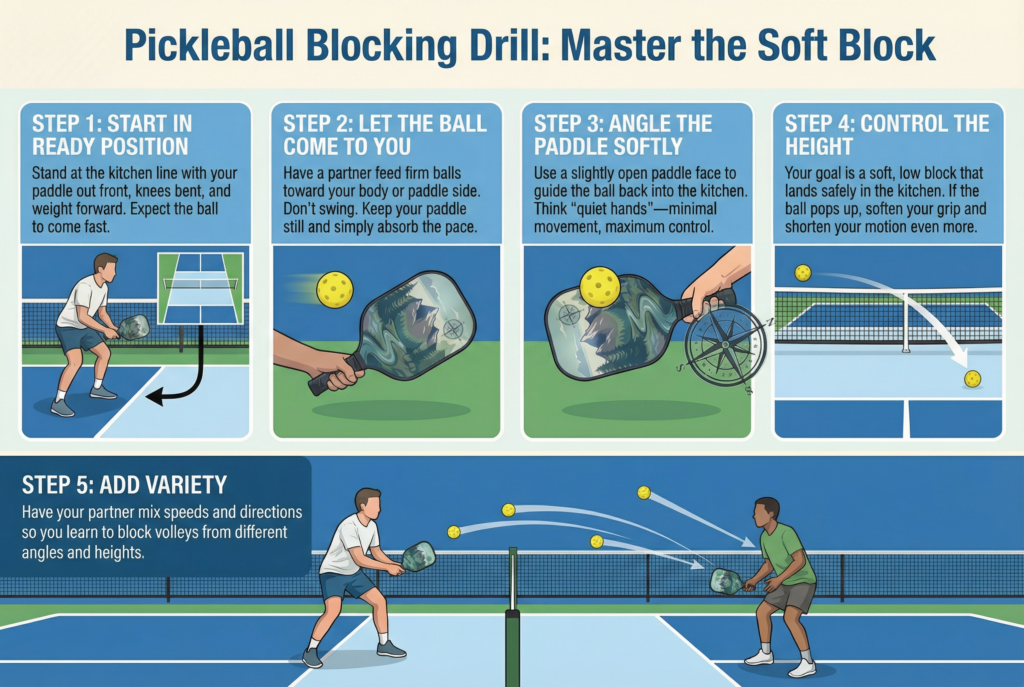
- Ready Position: I keep my knees lightly bent, my weight forward on my toes, and my paddle up in front of my body, waist to chest height. This lets me react quickly.
- Grip: I use a continental grip (sometimes called the “hammer” grip) so I can adjust to either forehand or backhand block volleys easily.
- Paddle Angle: I hold my paddle with a slight open face, angled up just a little if I want extra lift, but mostly flat for control. I focus on keeping my wrist firm and avoid swinging.
- Soft Hands: Relaxing my grip helps deaden the impact, taking pace off the ball rather than rebounding it fast. This way, I’m guiding the ball more than hitting it.
- Minimal Follow Through: Instead of a large swing, I only make the smallest, controlled movement as the ball connects, almost like I’m absorbing the ball’s energy.
Practicing this with a partner or even against a practice wall helps reinforce these habits. Over time, reading the ball and reacting with a steady paddle starts to feel a lot more natural.
An important tip I use is to keep my eye on the ball as it approaches, so I can anticipate changes in speed or direction and react with confidence.
If you want to sharpen your soft‑game control, check out my Pickleball Cross-court Dinking Guide for simple tips to build consistency and touch.
Troubleshooting Common Block Volley Mistakes
Even after plenty of practice, mistakes are pretty normal when learning block volleys. Here are a few things I’ve noticed, and how I get things back on track:
- Popping Up the Ball: This happens if I angle my paddle face up too much or grip too tightly. Adjusting the paddle angle closer to vertical and using looser hands helps me keep the ball low.
- Hitting into the Net: If my response is too soft or I drop my paddle below net level, the ball won’t clear the net. I try to maintain the paddle above my wrist and keep my contact point high.
- Poor Footwork: Standing flatfooted or lunging without control makes the volley unreliable. Staying balanced and taking small steps lets me handle shots on either side.
- Late Reactions: I sometimes find myself reacting late, especially against quick hitters. Keeping my paddle ready and eyes on the ball helps shave off those critical split seconds.
Knowing these pitfalls makes it easier to correct my form and trust my technique, even under pressure or during quick rallies at the net. Staying aware of my foot positioning and grip strength also helps prevent bad habits from setting in over time.
Essential Pickleball Gear for Effective Block Volleys
While technique matters most, some gear choices do make things smoother. Here’s what has worked well for me when focusing on my block volley skills:
- Paddle Choice: Lightweight paddles with a soft, cushioned core (like those made of polymer or graphite) make it easier for me to absorb the ball’s pace and create softer shots. I avoid heavy paddles as they can be harder to maneuver at the net.
- Comfortable Shoes: Court shoes with good lateral support and grip help me move quickly and keep my balance during sudden changes in direction.
- Over grip Tape: Adding over grip allows me to keep a relaxed, nonslip hold. This helps reduce tension and keeps the paddle steady, especially during longer games.
For new players, a midrange paddle and good shoes are enough. As I played more, small gear tweaks helped shots like the block volley.
Even wearing a sweatband or wrist support can add to overall comfort and control during intense exchanges at the net.
Building Block Volley Confidence: Drills and Tips
Developing a great block volley happens with intention and targeted drilling. Here are a few things I like to practice regularly:
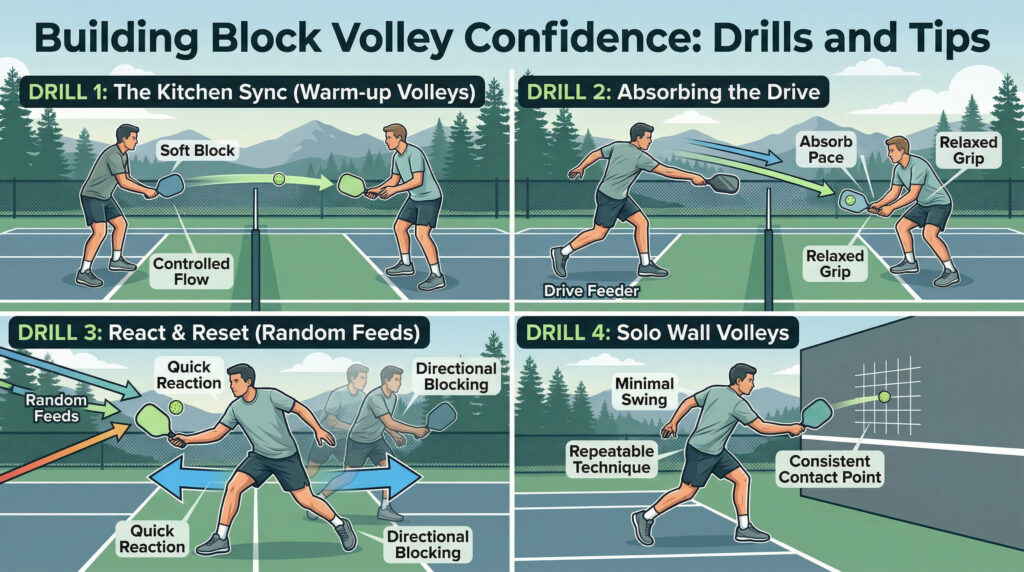
- Kitchen Line Volley Exchanges: With a partner, I stand at the non-volley zone line and trade block volleys back and forth, focusing on keeping the ball low over the net.
- Softening Power Shots: I ask my partner to drive hard shots at my paddle, and I try to deaden the pace, placing the ball short and controlled into the kitchen.
- Random Direction Drills: Having someone feed balls to both sides, I work on quick footwork and steady paddle position when the shot comes fast to my backhand or forehand.
- Solo Wall Practice: If I’m practicing alone, I hit shots against a wall, aiming for a consistent rebound with minimal swinging.
Mixing these drills into regular play builds the muscle memory I need for fast reactions at the net. Focusing on the basics makes everything feel more natural in real games.
Trying different drills keeps practice fun. It also helps me handle any shot that comes my way during play.
When to Use the Block Volley in a Game
Knowing when to use a block volley is as important as how. I look for cues like fast drives, opponents rushing the net, or when I’m forced into uncomfortable positions where swinging would cause more errors. Here are a few specific situations where I find the block volley super useful:
- Defending tough, low volleys at the kitchen line
- Returning smashes when pushed to react quickly
- Keeping dinks low and controlled under net pressure
- Changing the pace to upset aggressive opponents’ rhythm
Developing a habit of using the block volley at the right time keeps rallies alive and frustrates hard hitters. Many expect me to retreat or make a mistake.
Watching my opponents’ patterns helps me read the play. It also shows me when a quick block volley can shift the point in my favor.
If you want to sharpen your soft‑game control, take a look at The Dink Shot: Tips And Tricks for simple ways to build touch and consistency.
Frequently Asked Questions About Pickleball Block Volleys
Below are a few popular questions I hear from newer players about block volleys:
Question: Can I use a block volley on both forehand and backhand sides?
Answer: Yes, the block volley works on either side. The key is to keep the paddle steady and adjust the angle slightly depending on which side the ball is coming to.
Question: Should I grip the paddle firmly during a block volley?
Answer: Not too tightly. A relaxed grip helps soften the ball and adds touch. Gripping too hard will often send the shot too long or high.
Question: What’s the difference between a block volley and a punch volley?
Answer: A punch volley involves a forward motion, adding pace to the ball, while a block volley focuses on using the paddle as a “wall” to take pace off and control the shot.
Question: Is the block volley only for advanced players?
Answer: Not at all! Learning this early helps players at any stage handle tougher shots and maintain composure during fast net exchanges.
For official guidance on rules and standards, you can always check the USA Pickleball Official Rules
Putting It All Together
Mastering the block volley in pickleball can make me a much more rounded and confident player, especially in those intense exchanges up at the net. Focusing on the right form, using the paddle’s surface for control rather than force, and practicing targeted drills have made this shot feel like second nature over time.
Whether defending a quick drive or keeping opponents off balance, I find the block volley to be one of the most valuable shots in my game.
Building this skill has helped me enjoy pickleball more, and made me tougher to beat during high speed rallies. Anyone wanting to improve at pickleball should give real attention to this shot, because it pays off in matches and makes the game even more fun.
The next time you’re on the pickleball court, try to work block volleys into your practice—you’ll quickly realize just how much they add to your play and your confidence.



Leave a Reply