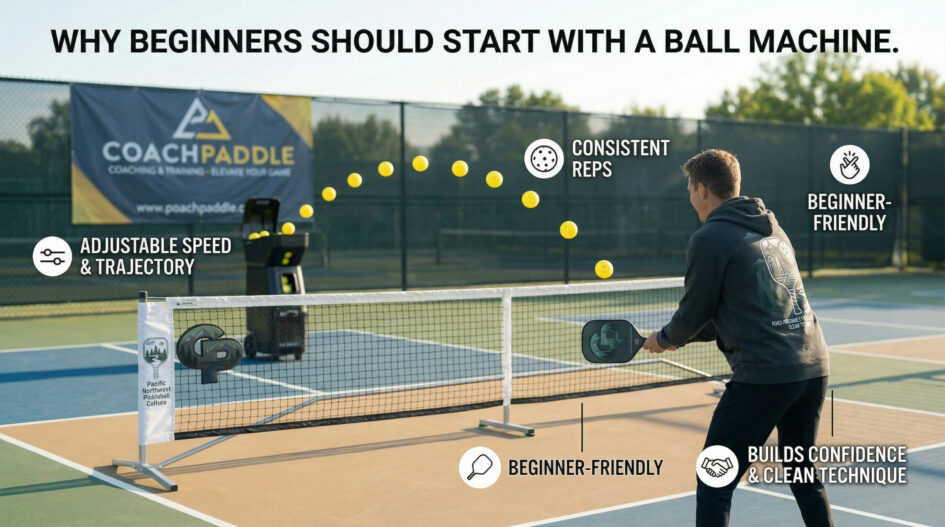
Pickleball Ball Machine Drills for Beginners are one of the fastest ways to build consistency and confidence on the court. A ball machine gives new players predictable feeds, allowing them to focus on technique, footwork, and timing without the pressure of a live rally. This guide breaks down simple, effective drills that help beginners improve quickly.
Why Start Pickleball Practice with a Ball Machine for Beginner Training?
Pickleball Ball Machine Drills for Beginners are incredibly helpful for new players who want more consistent practice and extra court time. These drills let you work on your strokes without relying on a partner’s skill level, because the machine feeds the ball the same way every time.
With Pickleball Ball Machine Drills for Beginners, you get nonstop, repeatable reps that build confidence and clean technique.
A ball machine also lets you adjust speed, frequency, and trajectory, making it easy to focus on specific skills like returns, dinks, or volleys. When you use Pickleball Ball Machine Drills for Beginners, you can slow things down, isolate weaknesses, and practice without feeling rushed.
As pickleball continues to grow, having simple, structured drills from a ball machine helps beginners improve faster and enjoy the game more.
You need a ball that matches your playing environment, whether indoor or outdoor. This quick guide helps you choose the right Guide To Pickleball Ball Types
Easy Pickleball Beginner Drills to Build Fundamentals
If you’re just beginning, ball machine drills don’t have to be complicated. Drills should build your confidence, give your muscles some memory, and get you used to the feeling of real rallies. Here’s what has helped me and many others start strong with a ball machine:
- Basic Groundstrokes: Set the machine to deliver balls at a slow, steady pace to your forehand. Focus on making smooth contact and returning to a ready position after each shot. Switch to backhands after a few minutes.
- Dinking Practice: Move the machine near the net to fire low, slow balls. Practice your soft dinks, aiming just over the net. This will get you comfortable with how much force is needed (surprisingly gentle!).
- Volley Drills: Have the machine send balls flat and fast toward your midsection. Focus on keeping your paddle up and punching volleys without too much swing.
Rotating between these three simple drills can make a big difference in just a few sessions, building skills that carry over to real match play.
The Mechanics: How To Set Up Your Pickleball Ball Machine for Training
Getting the most out of your ball machine comes down to setup. Most beginner level machines are simple to use, but a good first step is to get familiar with the controls:
- Speed: Start slow. You want to actually hit the ball, not just flail at it. Turn the dial down until the balls are coming at a speed you’re comfortable with.
- Feed Rate: Slower feed rates give you time to reset and focus on form. Speed this up once you start getting the hang of it.
- Elevation (Ball Height): For groundstrokes, keep it low. For practicing lobs or high volleys, raise the elevation.
- Oscillation (Side to Side): Some machines send balls to just one spot, while others can send balls randomly to different spots. Beginners should start with one area, then try out oscillation to work on moving side to side.
Start every session by warming up your movements. I always suggest a few minutes of footwork drills without hitting balls, just to practice getting into position before shots. Good footwork makes every drill smoother and helps avoid injuries.
A quick look at how the Selkirk Evo Control Max Vs Other Brands pickleball paddle.
Popular Beginner Pickleball Ball Machine Drills (With Easy Tweaks)
While there are endless drills you can try, here are four beginner-friendly favorites that I go back to again and again:
1.The Consistent Pickleball Forehand Drill
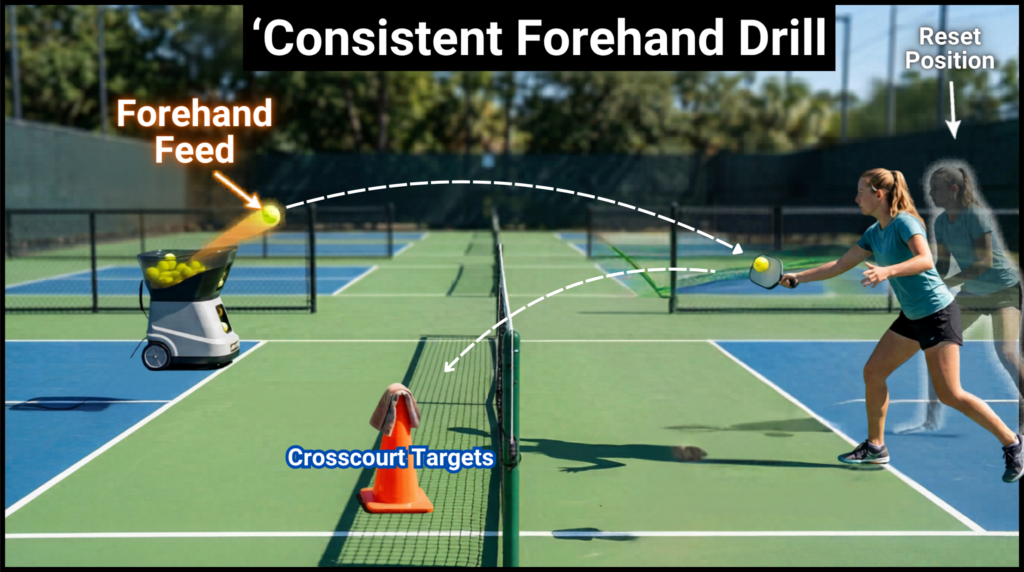
Set the machine to hit balls to your forehand side. Place a target (like a towel or cone) crosscourt and aim for it every time. After hitting the ball, reset to your athletic stance, ready for the next shot. Do this for five minutes, then switch to backhand.
2. Dink Rally Basics for Pickleball Beginners
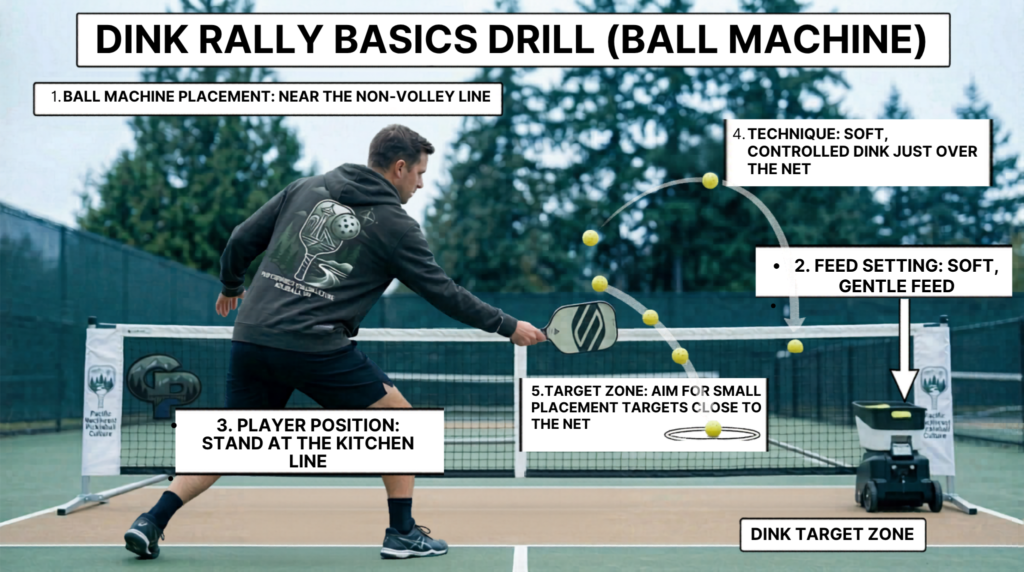
Move the machine near the non volley line and set it to feed gently. Stand at the kitchen line and focus on softly flicking the ball just over the net. Use targets to practice placement; the closer your balls land to the net, the harder it is for an opponent to attack.
A quick look at the Best Pickleball Paddle For Beginners so you can start with the right feel and control.
3. Split‑Step Pickleball Volley Drill
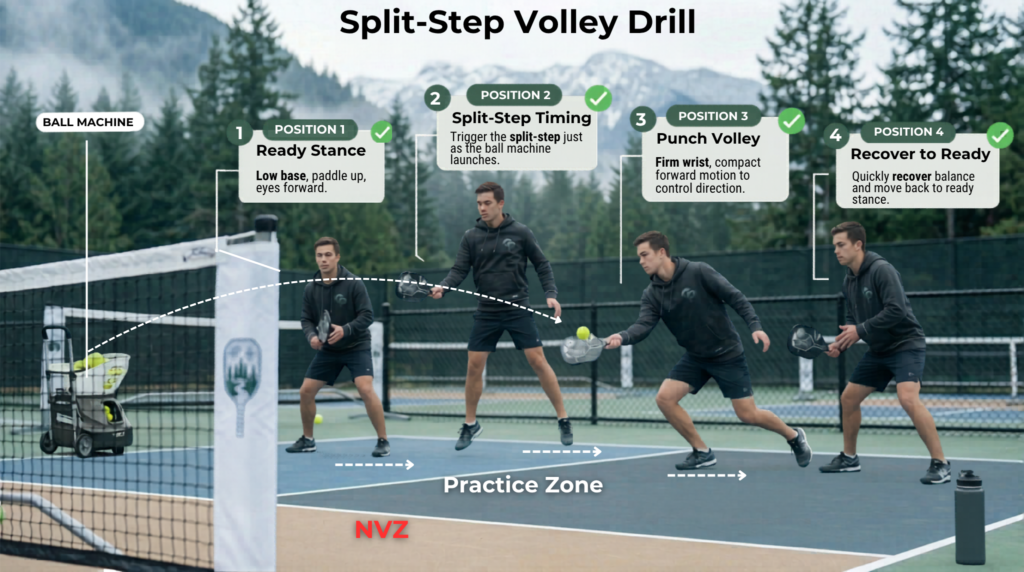
Set the machine for quick volleys at net height. Starting from your ready stance, practice your split-step as the ball launches, punch the volley, then return to ready. Building this timing helps you get those quick-exchange points under control.
4. Random Oscillation Movement
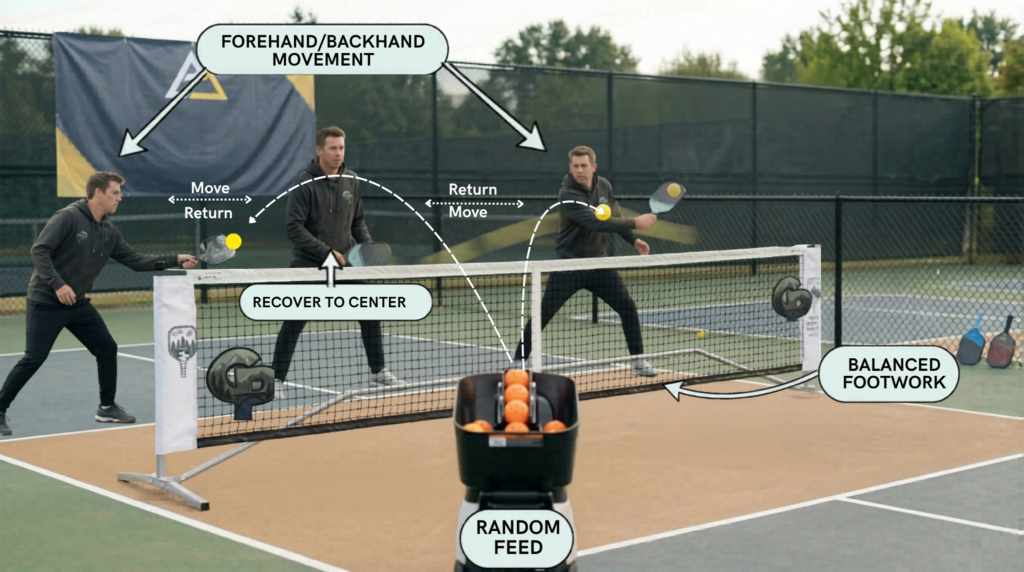
Set the machine to random if it has oscillation. Stand at the baseline and react to each ball, working forehand and backhand returns. Fun challenge: Try moving your feet while keeping balanced so you can control every swing instead of just reaching for the ball.
Mixing these up and keeping track of your stats (like how many in a row you hit into the target) is motivating as you see progress over time.
Learn the fundamentals in our full Pickleball Beginner Guide
Common Beginner Pickleball Mistakes (and How To Fix Them)
Getting used to a ball machine might feel strange at first! Here are some things I see new players do all the time and some quick fixes:
- Standing Flatfooted: Always keep your weight on the balls of your feet, ready to move. If you’re stiff, you’ll struggle to react quickly.
- Swinging Too Hard: Ball machines give you predictability, so ease up and focus on smooth, repeatable motions over power.
- Ignoring Reset Position: Don’t forget to get back to your ready stance after every shot, just like in a real game.
- Trying to Do Too Much: Stick to just one or two drills during a session so you build muscle memory. Mixing it up too soon turns into chaos.
Recovering From Mistakes
Don’t let errors get you down. Each mistake is a quick chance to learn. If you miss three in a row, slow everything down and focus on the basics: watch the ball, meet it out front, and relax your grip. The improvements come faster than you think as you get more repetitions in.
Things To Know Before Using a Pickleball Ball Machine
There’s a wide range of machines, and picking the right one can feel overwhelming. Here’s what I always keep in mind, based on my own experiences over the years:
- Weight and Portability: Smaller machines are easier to transport and set up, especially if you play on public courts.
- Ball Capacity: Bigger hoppers mean longer uninterrupted sessions. For a beginner, even a 60-ball machine is usually plenty.
- Battery Life: Look for machines that last at least 2 to 4 hours per charge, which is more than enough for single practice sessions.
- Programmable Features: Even basic machines often have adjustable speed and oscillation. If you plan to advance, check for upgrades like randomization or spin options.
Reading reviews and checking out video demos can clear up a lot of questions about which machine fits your skill level and local court situation.
Easy Advanced Pickleball Ball Machine Tips to Help You Step Up Faster
Once you’re feeling comfortable with basic drills, it’s fun to tweak things and push yourself a bit further. Here’s how I challenge myself (and others) using a ball machine:
Add Movement:Step and swing, don’t just stand and hit. Side shuffling or jogging in place between shots makes drills feel more like a real game.
Keep Score:Make it a game to hit a certain number in a row into your target before switching drills. This helps you focus under a bit of pressure and keeps things interesting.
Rotate Your Grip:Practice quick grip swaps from forehand to backhand while the machine keeps feeding balls. It gets your hands faster and your reactions snappier for rally play.
Try Spin Settings:Some machines can add topspin or backspin—experiment with these once you feel steady with flat shots. It’ll help you learn how different ball movement reacts off your paddle.
These tweaks give your practice a more authentic feel and get you used to those unpredictable shots that pop up in every match.
Here are the Best 6 Paddle Brands 2026 — exactly what you may be looking for.
Frequently Asked Questions
Here are some common questions I get from new pickleball players just starting out with ball machines:
How often should I practice with a ball machine?
If you’re new, two to three short (20–30 minute) sessions a week is plenty to see improvements without feeling burnt out. It’s better to do a little consistently than cram hours into one day.
Can I use indoor balls with a ball machine?
Most machines are made for outdoor balls since they’re heavier and shoot more predictably. Always check your machine’s manual, but generally, stick with outdoor balls when using a machine.
Is it okay to practice alone with a ball machine?
Absolutely! Just make sure you have plenty of balls and keep an eye on your surroundings for safety. Practicing alone is super useful to get your strokes grooved before joining group play.
You can also check the official USA Pickleball approved paddle list here to confirm which models are tournament‑legal.
Final Thoughts
Getting started with a pickleball ball machine makes practice straightforward and actually pretty fun. The right drills can help you build technique and confidence even as a total beginner. I’ve found that investing a bit of time on these focused sessions pays off big during live play, and it’s honestly motivating to see progress week after week. Keep tweaking your drills, celebrate the little wins, and you’ll find yourself improving a lot faster than you’d think.
Ready to practice? Grab a machine, set up your favorite drill, and get those reps in. Your future pickleball self will thank you.



Leave a Reply