Pickleball is a fast-growing sport with an easy learning curve, but even a simple game can develop bad habits if you’re not careful. Learning to recognize and avoid pickleball common mistakes can help you improve your technique, build stronger fundamentals, and play with more confidence.
Whether you play for fun or compete in tournaments, this guide covers the most frequent mistakes players make and provides practical tips to help you become a better pickleball player.
Want to improve your control and consistency at the kitchen? Check out our guide to Pickleball Dinking Drills for simple drills you can practice on the court.
Understanding Common Mistakes in Pickleball
Pickleball looks simple, but pickleball common mistakes can quickly hurt your game. Poor footwork, weak positioning, and rushing shots can affect your consistency and confidence. Learning how to avoid these mistakes can help you build better habits and play smarter on the court.
5 Pickleball Beginner’s Mistakes
For simple, beginner‑friendly recommendations, visit our Best Pickleball Paddle For Beginners roundup.
Getting Started: The Most Frequent Mistakes New Pickleball Players Make
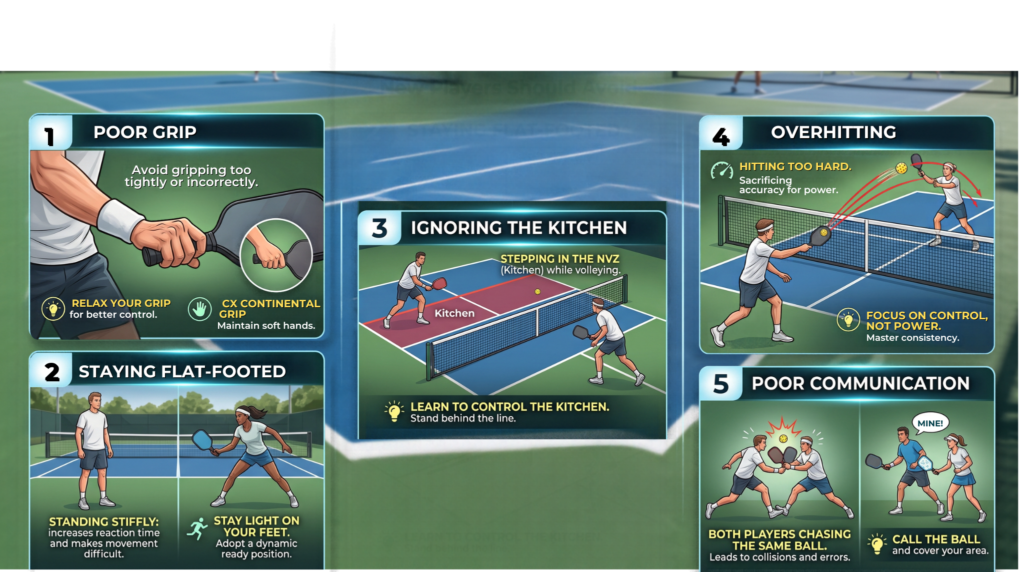
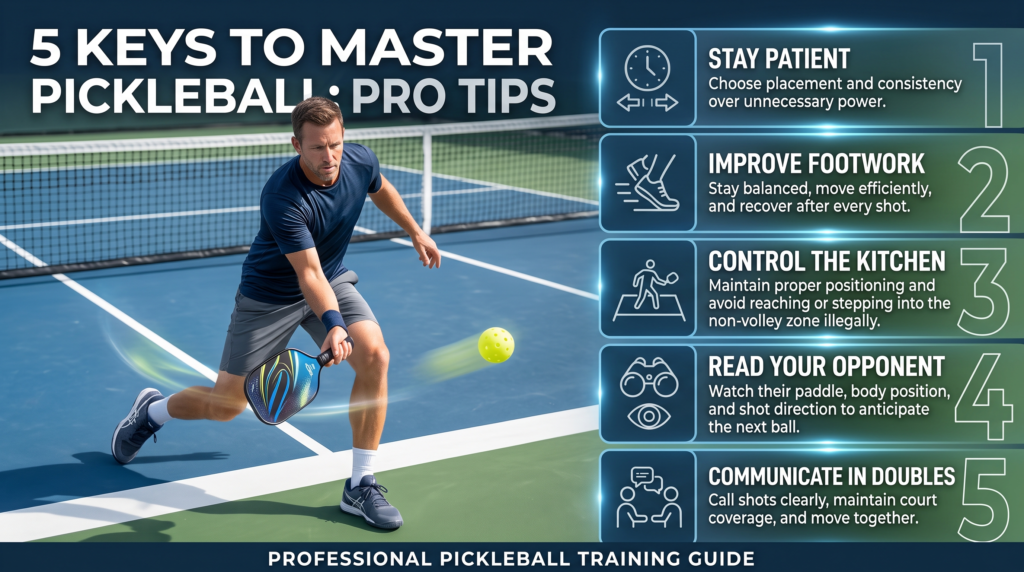
Every pickleball player starts somewhere. In my first games, I often overlooked the basics and tried to be too aggressive too soon. Here’s a list of mistakes I’ve seen from new players, along with how I handled them so I could start seeing better results on court:
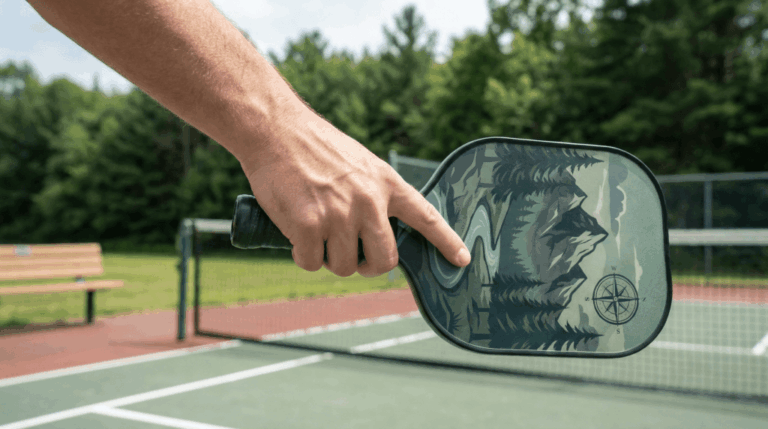
- Poor Grip: Holding the paddle incorrectly can throw off all my shots. If my grip’s too tight or I’m using the wrong angle, my accuracy and control both suffer.
- Staying Flatfooted: If I stand still or forget to stay on my toes, I can’t react fast enough, leading to lost points and increased risk of injury.
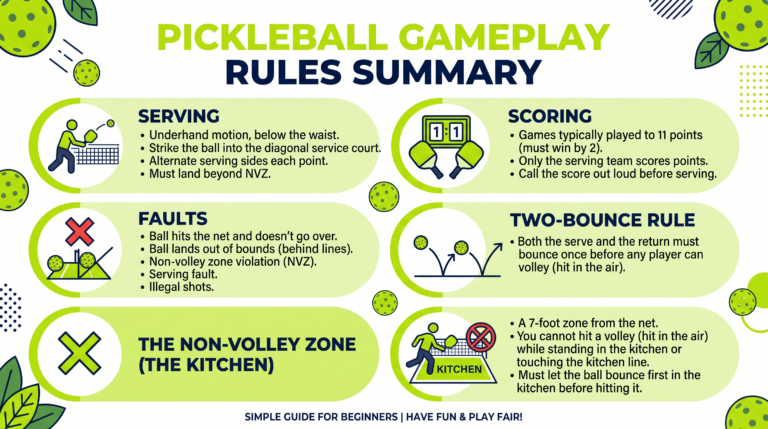
- Ignoring the NonVolley Zone (Kitchen): I used to avoid the kitchen, thinking it was just a risky area. But in reality, controlling this space puts a ton of pressure on my opponent.
- Overhitting: Trying to smash the ball every time usually sends it out or into the net. Better to focus on control than pure power.
- Lack of Communication (in Doubles): Misunderstandings with my partner lead to missed shots, especially when neither of us calls for the ball or covers specific areas.
In addition to these, sometimes new players forget about court etiquette, such as calling out the score or respecting the boundaries. Staying mindful of the rules and respecting fellow players adds to the enjoyment and smooth flow of the match.
Quick Guide: How I Corrected Common Pickleball Mistakes
Making small changes had a big effect on my performance. If I’m just starting out, here’s a straightforward approach that really made a difference for me:
- Check My Grip Frequently: I make sure it’s relaxed but controlled, not squeezed tight. The most common grip is the “continental grip,” which feels like holding a hammer.
- Keep Moving My Feet: Staying light and bouncing slightly lets me adjust quickly to fast shots or unexpected returns.
- Approach the Net Confidently: I work up to the nonvolley zone after my return or serve, then hold my ground there to take away angles from opponents.
- Focus on Placement, Not Power: A well-placed shot is much more effective than a hard hit. I try to aim near the sideline or target weak spots in my opponent’s court.
- Communicate Clearly: Whether I’m calling “mine” or giving my partner a heads-up, constant communication keeps rallies smooth and reduces confusion.
Consistently checking in on these basics builds habits that pay off in both casual games and serious matches. Over time, these habits become second nature, allowing me to focus on strategy and anticipation rather than worrying about the basics.
Key Areas to Watch for Ongoing Improvement
Once I have the basics covered, I keep an eye out for a few other trouble spots that tend to slow down progress. These mistakes show up even after weeks or months of play, and they can be stubborn if I don’t pay attention:
- Poor Serve Technique: Weak or inconsistent serves make it really hard to start points strong.
- Standing Too Far Back: Hanging too far from the kitchen line means I’m forced to play defense instead of taking control.
- Ignoring Opponent Weaknesses: If I don’t watch for patterns in my opponents’ play, I miss out on easy scoring chances.
- Paddle Waving at Fast Shots: Flinging my paddle out on reflex usually results in bad contact or errors.
- Not Recovering Fast Enough: After hitting, waiting too long to get back in position opens the court to opponents.
Poor Serve Technique
Missing serves gives away easy points and can hurt my rhythm and confidence. I used to rush my serve or grip the paddle incorrectly. Now, I focus on a calm, consistent motion and aim deep into the service court. Practicing accuracy and different spins has helped me become more consistent.
Footwork and Court Positioning
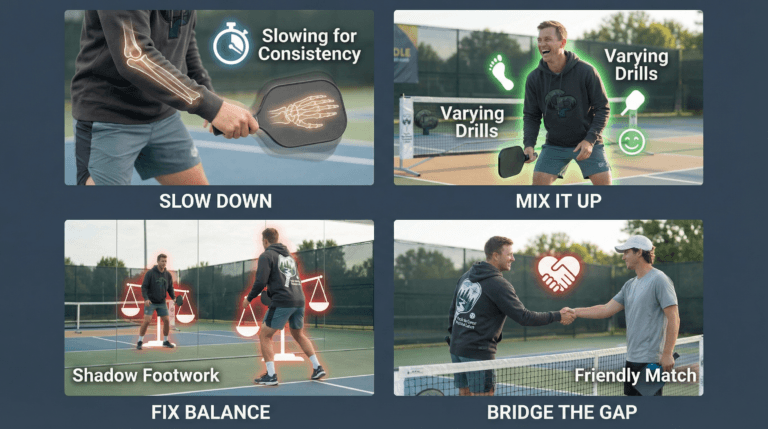
Staying too far from the kitchen or getting stuck in “no man’s land” makes it harder to reach returns. I focus on getting back into a ready position after each shot and anticipating the next ball. Footwork and shadow drills have helped me improve my positioning, movement, and reaction time.
Reading the Opponent
Early on, I would just react to every shot with the same type of return. Over time, I realized how helpful it is to watch my opponent’s body language and habits. If they avoid using their backhand or struggle with low shots near their feet, I aim there more often.
Observing these details helps me create opportunities for winning points, even if I’m still new to the game. Some experienced players even keep mental notes during matches to spot patterns and make smarter shot selections.
Level up your soft‑game control with our full guide on Topspin Dinks Drills to add spin, shape, and pressure at the kitchen line.
Advanced Tips for Avoiding Pickleball Mistakes
After getting past initial mistakes, I started looking for ways to sharpen my play even further. Here are some practical strategies that have worked for me and other players I’ve played with:
Work on Consistency First: Instead of aiming for “highlight reel” shots, I focus on hitting several trouble-free shots in a row. This approach builds confidence and helps me outlast opponents who make more errors.
Use the Third Shot Drop: When I serve and the ball comes back, using a soft, controlled drop shot into the kitchen gives me time to get to the net and set up stronger position. It’s one of the most reliable ways to build pressure without taking big risks.
Control My Emotions: Frustration or impatience often leads to bad decisions on court. Taking a breath and resetting my mind after mistakes helps me get back on track faster. I also remind myself to focus on one point at a time instead of dwelling on past errors. Developing a steady routine, like taking a deep breath or adjusting my paddle between points, keeps me calm and focused.
Watch and Learn from Others: Watching experienced players play on YouTube or in person gives me real insight into how to cover the court, when to reset a rally, and clever ways to use court angles. Picking up tips and tricks from top players adds new options to my own game and inspires me to keep learning. If possible, I also ask more advanced players for feedback after matches. This can quickly point out small things I might otherwise miss.
Essential Equipment for Pickleball Success
The gear I use also affects my play. A comfortable paddle that fits my grip and playing style can help me keep good habits going. Lightweight paddles with a solid grip reduce fatigue and give me better control over my shots. Wearing shoes with non-marking soles and good lateral support helps prevent slips and lets me move smoothly around the court.
- Paddles: Choose one that feels balanced and easy to control. Most beginners do well with midweight models. Investing in a paddle designed for control over power can provide better results for new and intermediate players alike.
- Balls: Use outdoor balls if I’m playing outside, and indoor balls for gym play. The bounce and speed feel different between the two, so I always match the ball to my playing surface for the best results.
- Court Shoes: These help protect my feet and give solid traction, which means I’m less likely to twist an ankle or slide on quick turns. I recommend trying a few brands to find the pair that fits best and lasts the longest.
Alongside equipment, making sure I stay hydrated and warm up before playing is just as important to prevent injuries and maintain good performance.
To sharpen your technique even further, check out our guide on Pickleball Backhand Strategies for power, control, and consistency.
Frequently Asked Questions
Pickleball can spark a lot of questions, especially for anyone learning on their own. Here are answers to some common ones I hear from friends and new players:
How do I keep from hitting balls into the net?
Answer: I focus on positioning my paddle slightly below the ball and follow through gently. Most net shots come from lifting my head or swinging too quickly.
What’s the best way to work on my serve?
Answer: Consistent tosses and slow, controlled serving motions make a big difference. I set aside time each week just to practice serves from different spots behind the baseline.
How hard should I grip my paddle?
Answer: Just tight enough to keep control. Squeezing too hard causes tension in my wrist and elbow, which affects my touch and can lead to soreness.
What gear do I need to avoid injury?
Answer: Supportive shoes and a paddle that isn’t too heavy help prevent both slips and strain injuries.
Everyone makes mistakes in pickleball, but recognizing common errors and staying focused on improvement helps me grow as a player. I always look for small ways to upgrade my game, have more fun, and keep my sessions injury-free. Playing mindfully and regularly checking in on my fundamentals is a sure way to see progress and enjoy all the great things pickleball has to offer.
For official paddle specifications, visit USA Pickleball’s equipment standards.