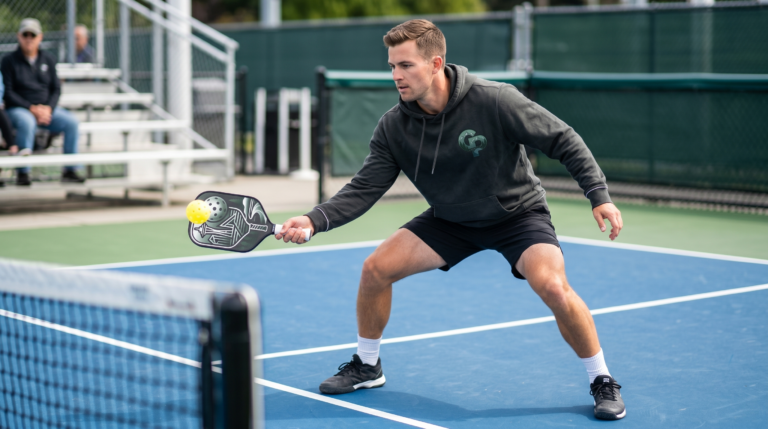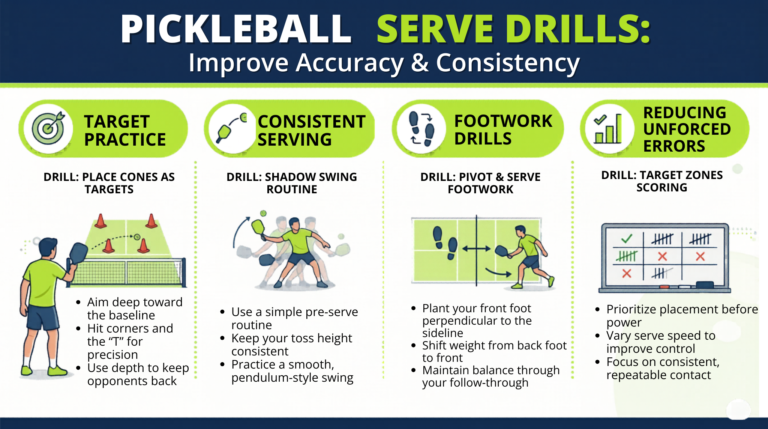
To start, Topspin Dinks Drills are essential for improving control, consistency, and pressure at the kitchen line, no matter your skill level. Additionally, it’s a super useful skill for controlling play, forcing errors, and keeping your shots low over the net. As a result, topspin dinks help you push your opponents off balance and create new openings in those soft, strategic battles at the kitchen line.
To help you get comfortable with the motion and the feel, I’m here to walk you through my top topspin dink drills and a few simple tweaks. With practice, you’ll see improvement in no time.
To improve your soft‑game control, check out our guide on
Pickleball Spin Guide: Learn How to Add Spin.
Why Practice Topspin Dinks in Pickleball?
To begin with, using topspin in your dinks brings a couple of next‑level advantages to the table. Because of the added spin, the curve and “dive” of the ball keep your shots low and make them tricky to return. As a result, your opponent gets less time to react and is more likely to pop up a ball you can put away.
Topspin dinks give a layer of disguise to your shot selection and let you roll the ball over the net with a little extra margin for error, thanks to the faster dip from the spin.
Putting controlled spin on your dinks might take a little time to learn, especially if you’re used to the classic soft, flat shots. Drills are the simplest way to build up muscle memory so you can trust your swing during live play. Players at all skill levels can use these topspin dinks to get the edge against tough opponents who know how to handle the basics.
Understanding the Basics of Topspin Dinks Drills
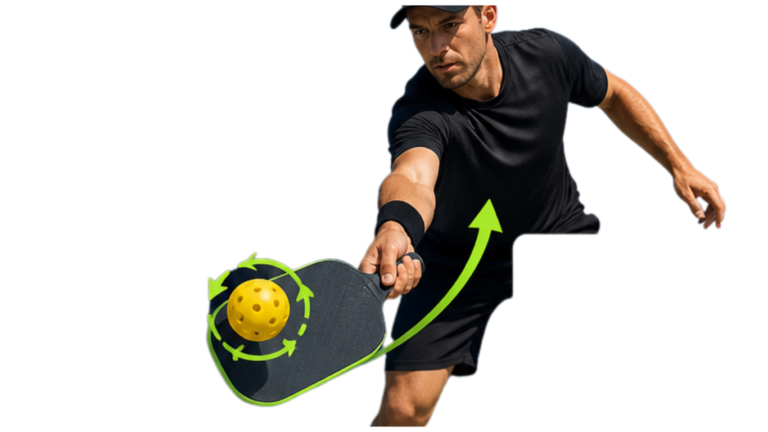
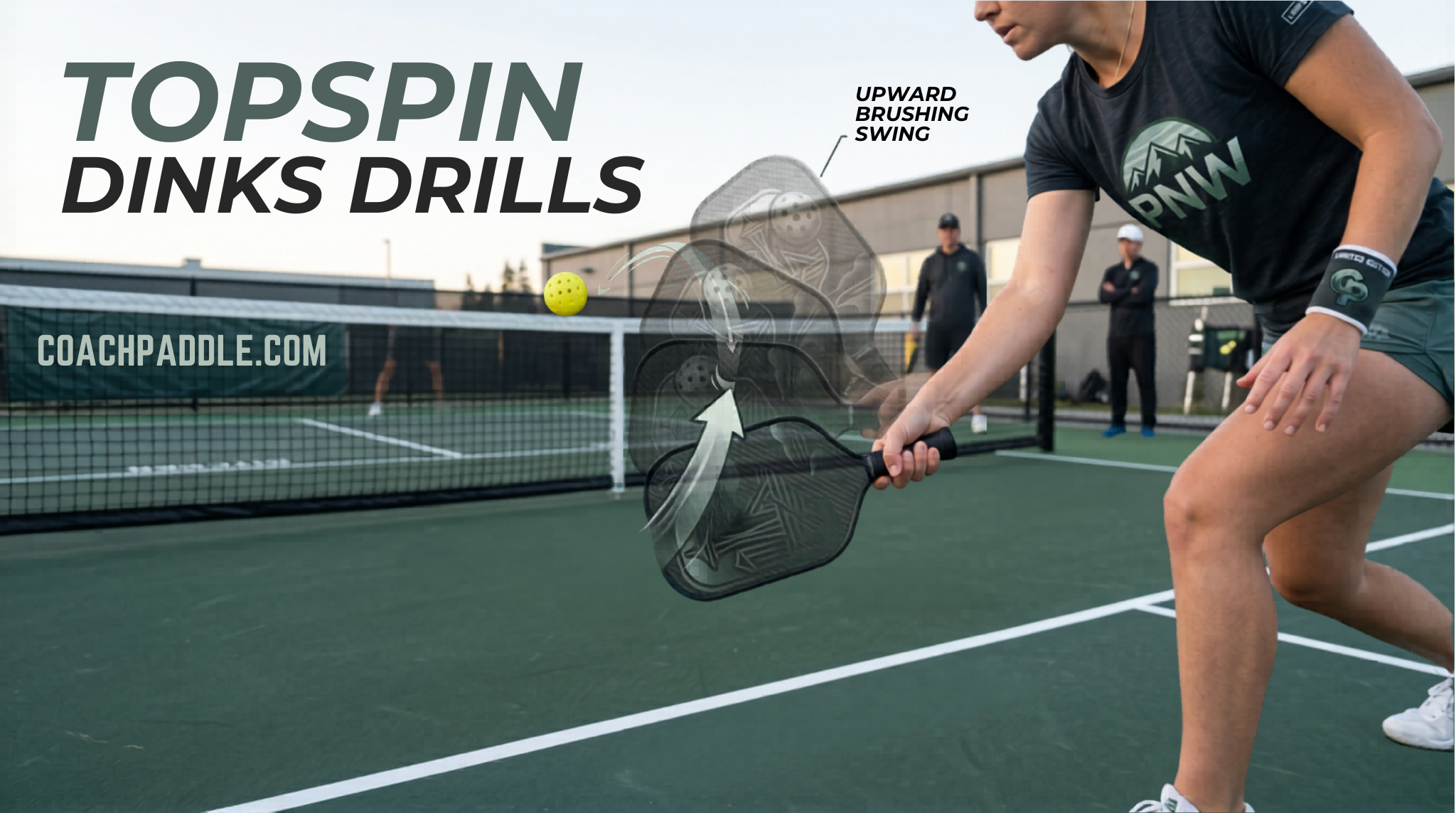
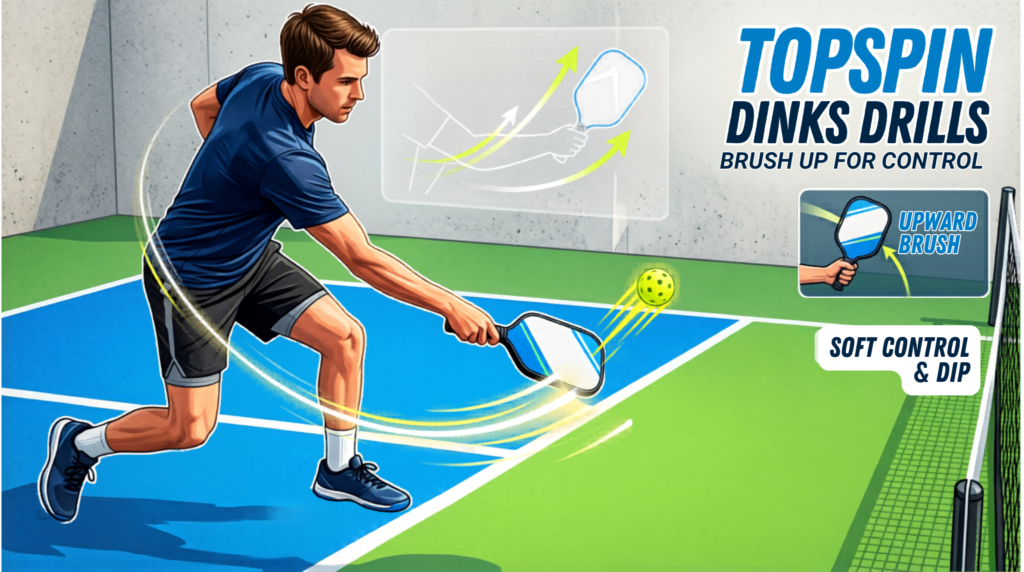
Before getting into drills, it helps to know what sets a dink with topspin apart. A typical dink is a soft, lofted shot played just over the net when you’re at the non-volley zone (the kitchen). When you add topspin, you brush up the back of the ball so it spins forward, causing the ball to dip faster as it crosses the net.
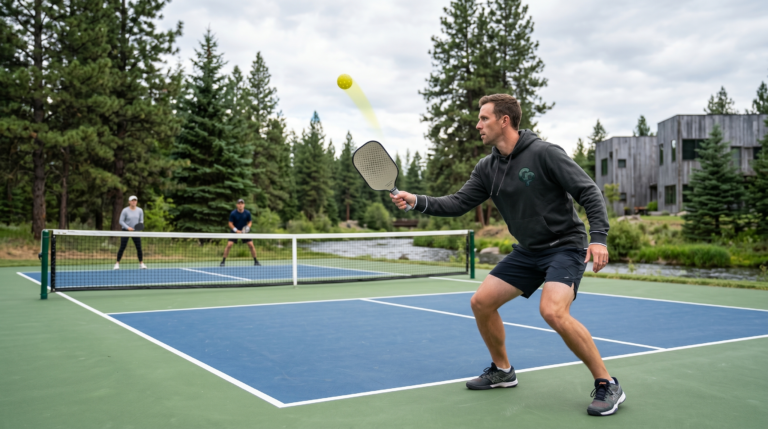
The motion starts with a gentle upward and forward swing of your paddle face, and as you begin, you want to start below the ball and finish above your waist. Additionally, don’t hold on too tightly—keep your grip relaxed for better feel. Because of that, your grip shouldn’t be tense, and the swing path needs to stay loose and controlled. For players still learning, a continental or eastern grip usually works best, since your knuckles roughly line up with the top of your paddle handle.
- Grip: Relaxed, more toward continental or eastern for control.
- Contact Point: Out in front of your body, brushing up on the ball.
- Swing Path: Start low, brush up and forward, finish above your waist.
Keeping these basics in mind will help you get more out of each drill below.
Warm-Up Drills for Building Topspin Feel
Jumping straight into intense topspin dinks can be a little jarring if your hands aren’t warmed up. I like to start with a couple of warmup drills to get my touch back and dial in the motion.
- Solo Shadow Swings: Without a ball, stand at the kitchen line and practice your topspin dink motion in slow motion. Focus on brushing up and finishing high.
- Wall Rally: Gently dink against a wall, emphasizing the low-to-high swing and feeling for that topspin. Try to keep the ball bouncing softly and see if you can make it drop quickly after it hits the wall.
These basics help you lock in the movement so when you add a partner, the motion comes naturally.
If you want more stability and cleaner contact, explore our guide on How To Improve Volley In Pickleball to sharpen your net play.
Partner Drills for Topspin Dinks
At this point, this is where you pick things up a bit. When you add a partner, working with a buddy helps recreate actual game situations and lets you check your depth, placement, and how much spin you’re creating. Because of that, your reps become more realistic and your progress speeds up.
1. Crosscourt Topspin Dink Rally
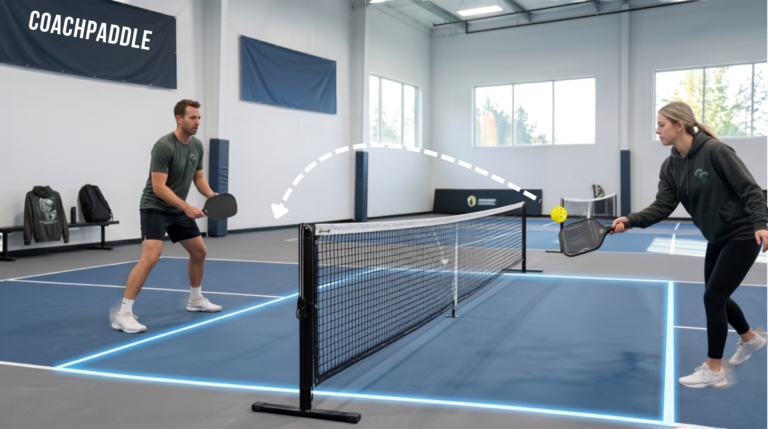
Stand at diagonal corners of the non-volley zone line (kitchen line). Both players focus on topspin dinks, brushing up the back of the ball. The crosscourt angle gives you more net to work with and a better feel for spin control.
- Try to keep balls low and dipping quickly.
- Aim for 20 in a row before adding pressure or moving on.
2. Straight On Topspin Dink Exchange
Stand directly across from your partner at the kitchen line. Both players hit only topspin dinks, aiming for consistency and accuracy. The focus here is on control and repeating the low to high motion without popping up the ball.
- Count successful topspin dinks in a row. Set small goals!
- Experiment with how much you brush up the back of the ball and adjust your paddle angle as needed.
3. Topspin to Flat Dink Alternating
One player uses exclusively topspin, and the other returns with flat dinks. Switch after five minutes. This drill helps you get a sense of how your topspin interacts with a classic dink and which adjustments work under pressure.
- Notice how the ball reacts off your paddle and the bounce when returning with the opposite spin.
- It’s great for learning defensive angles, too.
Topspin Dink Accuracy and Target Drills
Adding spin is great, but getting your shots to land exactly where you want is even better. Target-oriented drills build accuracy so your topspin dinks hit the right spot repeatedly.
- Kitchen Corner Targets: Place cones or water bottles at the corners of your opponent’s kitchen. Hit crosscourt topspin dinks aiming to brush the ball just inside the target area.
- Short Dink, Deep Dink: Alternate sending a topspin dink short (barely over the net) then deep (close to your opponent’s feet). This puts your opponent under extra movement pressure, forcing them to adjust and often pop the ball up.
Mixing topspin with pinpoint placement is how you create real trouble for strong defenders.
Common Challenges and Quick Fixes
Even with lots of practice, topspin dinks sometimes misfire. Here are a few problems I’ve seen (and felt myself), plus how to fix them:
- Ball popping up too high: Check your paddle angle. Remember to start with the face slightly closed and avoid flicking your wrist too much.
- No topspin happening: Exaggerate the brushing motion. Move the paddle up and forward through contact. Picture yourself “rolling” the ball over the net.
- Missing the kitchen entirely: Slow down and shorten your backswing. The topspin helps drop the ball, but you don’t need to hit harder.
If you can’t feel the topspin, record your swing or ask a friend to watch. It’s easy to think you’re brushing up when maybe you aren’t.
Advanced Topspin Dink Drills for Match Play
If you’re feeling comfortable, try ramping up your drills to add some variety:
- Pressure Dink Challenge: Start points with each player only allowed topspin dinks. Whoever misses first loses the point. It’s a great way to simulate match tension.
- Random Topspin Drop In: During a dink rally, randomly throw in an extra topspin flick to disguise your pace and placement. Try to wrong-foot your partner and get them to cough up a weaker return.
- Moving Topspin Dinks: Move side to side along the kitchen line, hitting topspin dinks as you go. This mimics real rally movement and lets you develop a better touch on the move.
Variations like these push your skills and prep you for game scenarios where improvising is key.
Players looking to improve accuracy can follow our Pickleball Target Box Training guide to build better ball placement and control.
Topspin Dink Drills FAQ
Here are some common questions I get from players learning these drills:
How do I know if I’m actually adding topspin?
You’ll often see the ball drop quickly and bounce lower on the other side. Ask a partner to watch your paddle motion or film yourself for a quick check.
Which paddle grip works best for topspin dinks?
A continental or eastern grip feels best for most people. These help keep the paddle face slightly closed and make the brushing action for topspin natural.
Do I need to use topspin dinks every time?
Not at all! Break them out when you want to attack, disguise a shot, or add some variety to your patterns. Alternating flat and topspin dinks keeps your opponent on their toes.
Why These Drills Are Worth the Effort
Practicing topspin dinks helps you develop touch, timing, and confidence, especially in high pressure rallies where keeping the ball low is super important. Switching from a flat dink to a topspin dink lets you adapt to tricky opponents and find new ways to end points or reset tough rallies.
Mix these exercises into your normal practice routine for a few weeks, and you’ll notice your dinks feeling sharper, deeper, and a lot tougher for your opponents to handle. Consistency and spin are the twin secrets to winning those kitchen exchanges. Stick with it and watch your play go to the next level.
For official paddle specifications, visit USA Pickleball’s equipment standards.