Most paddle owners who reach for pickleball paddle lead tape want one of two things: a little more pop on drives, or a steadier face on off-center contact. The tape can deliver either, but the result depends almost entirely on where it goes. A strip at the tip and a strip at the handle push the paddle in opposite directions.
This guide covers tuning a paddle you already like. It maps each tape position to its effect and gives you a routine for testing one change at a time. Pickleball paddle lead tape is cheap and reversible, which makes it a good tool for tuning as long as you change one variable per session.
Why Static Weight and Swing Weight Are Not the Same Thing
Static weight is what the paddle reads on a scale. Swing weight describes how heavy the paddle feels when you swing it, and it depends on where the mass sits relative to your hand. Weight placed far from the handle takes more effort to accelerate than the same weight placed near it.
Two paddles with identical scale weights can feel very different in the hand. One has mass concentrated in the head, so it swings slowly but drives through the ball. The other has mass closer to the grip, so it whips around quickly and feels light at the net. This is why a paddle’s listed weight tells you less than players expect.
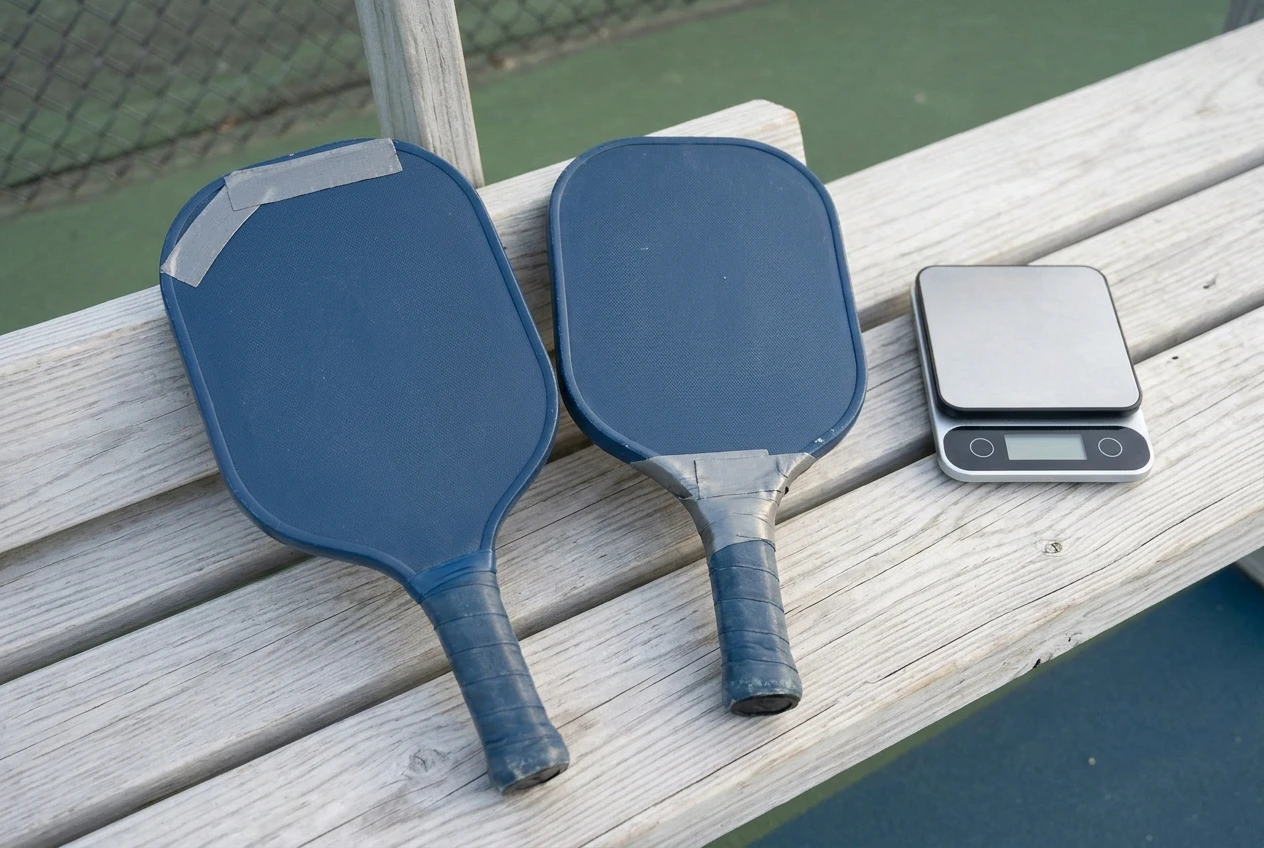
For tuning, this means a few grams of tape can change the feel more than the scale suggests, depending on position. Three grams at the tip changes swing weight far more than three grams at the handle. Plan your tape by the effect you want on the swing, and treat the total weight as a secondary number.
Balance point is a related idea. A head-heavy paddle has its balance point toward the tip, and a head-light paddle has it toward the handle. Tape moves the balance point, and you can feel the shift before you take a single swing: hold the paddle by the handle and notice how much the head wants to drop.
What Lead Tape Actually Changes: Power, Control, and Hand Speed
Adding mass changes three things at once, and they trade against each other.
- Power and plow-through. A heavier head carries more momentum into the ball, so drives and serves can go deeper with the same swing speed. Balls hit well off the paddle’s heavy part also lose less speed on contact.
- Stability. More mass, especially toward the edges, resists twisting when you hit off-center. Mishits stay closer to your intended line and lose less pace.
- Hand speed and maneuverability. The more swing weight you add, the slower the paddle moves from a ready position to contact. At the kitchen line, where exchanges are fast, slower hands cost you.
Control is where players get confused. A heavier paddle can feel more controlled on slower shots, because it absorbs pace and does not flutter. The same paddle can feel less controlled in quick hands battles, because you arrive at the ball late. The right answer depends on which shots decide your matches.
No tape position is free. Every gram added for stability or power takes something from maneuverability, and your job is to find the trade that suits your game.
Where to Put the Tape: Tip, Sides, Throat, and Handle
Think of the paddle face as a clock, with 12 o’clock at the tip and 6 o’clock at the throat. Each position does something different.
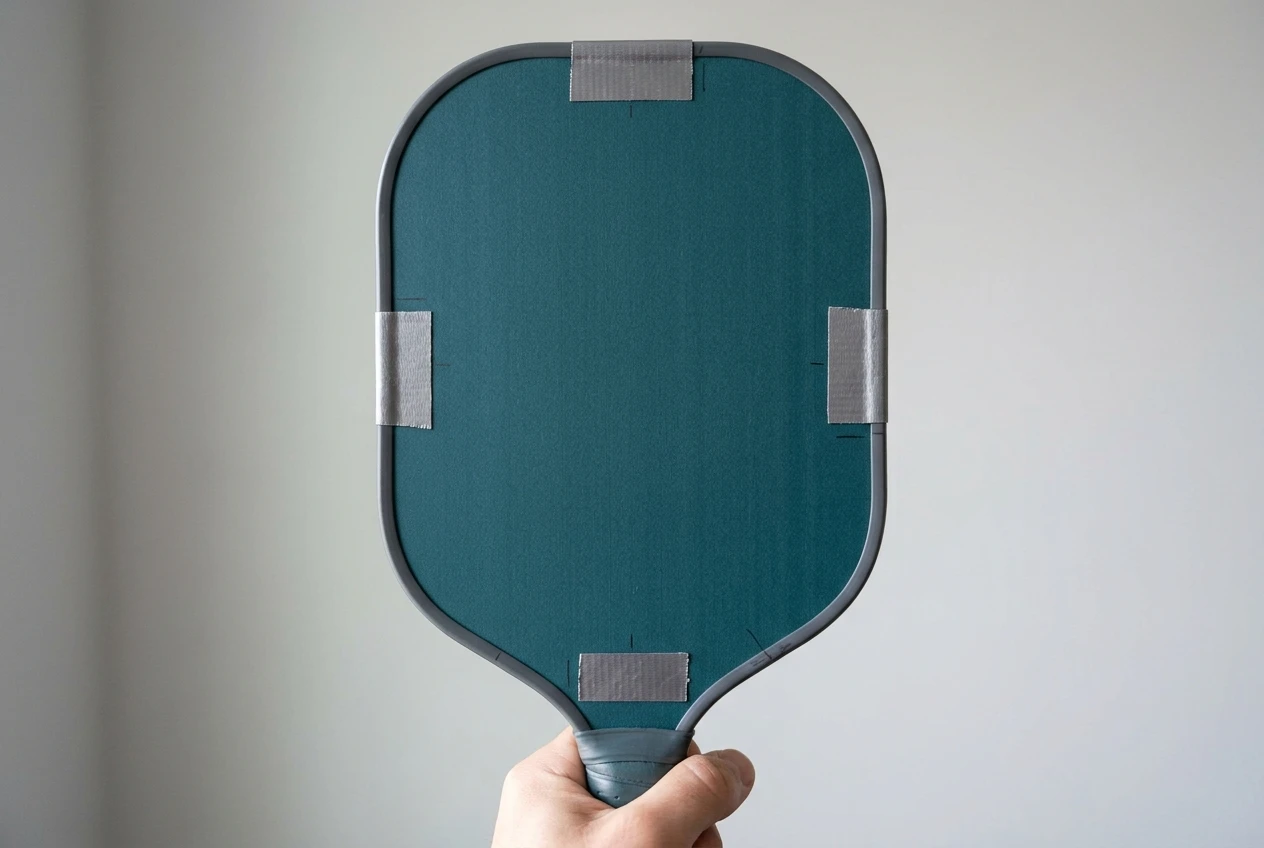
The tip (12 o’clock)
Tape at the top of the head raises swing weight the most per gram. It adds the most plow-through on drives, serves, and overheads, and it makes the paddle feel noticeably head-heavy. It also slows your hands and makes the paddle harder to flick at the kitchen. Use the smallest strip you can and judge it carefully.
The sides (3 and 9 o’clock)
Tape on both edges at the widest part of the face increases twist resistance. When the ball lands toward the edge of the sweet spot, the paddle rotates less in your hand. Swing weight rises more modestly than with tip tape, so this is a common first choice for players who want forgiveness without a big change in feel. Always apply the same amount to both sides, or the paddle will feel lopsided and the face may open or close at contact.
The throat (6 o’clock)
The throat is the narrow section just above the handle. Tape here adds static weight with little effect on swing weight, because the mass sits close to your hand. It can make the paddle feel more solid without making it feel sluggish, and it moves the balance point only slightly toward the head. Players who want a touch more mass but fear losing hand speed often start here.
The handle
Tape under the grip or on the butt end lowers swing weight relative to the added static weight and makes the paddle more head-light. This helps players who already like a heavy paddle but want faster hands, and it can counterbalance tape you added to the head. Be careful not to create lumps under the over-grip, which change how the handle sits in your palm.
How to Apply It Cleanly So It Stays Put and Stays Legal
Preparation takes a few minutes and prevents most problems.
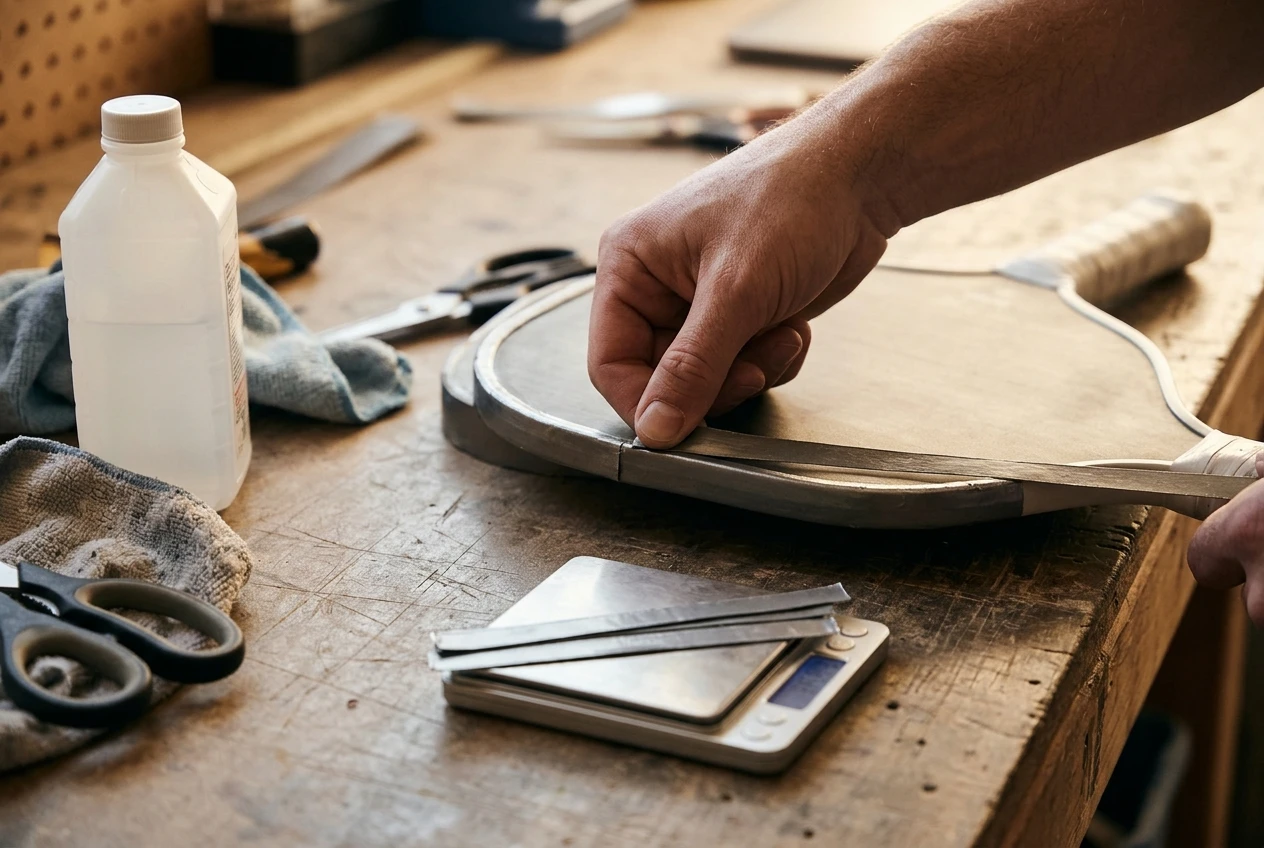
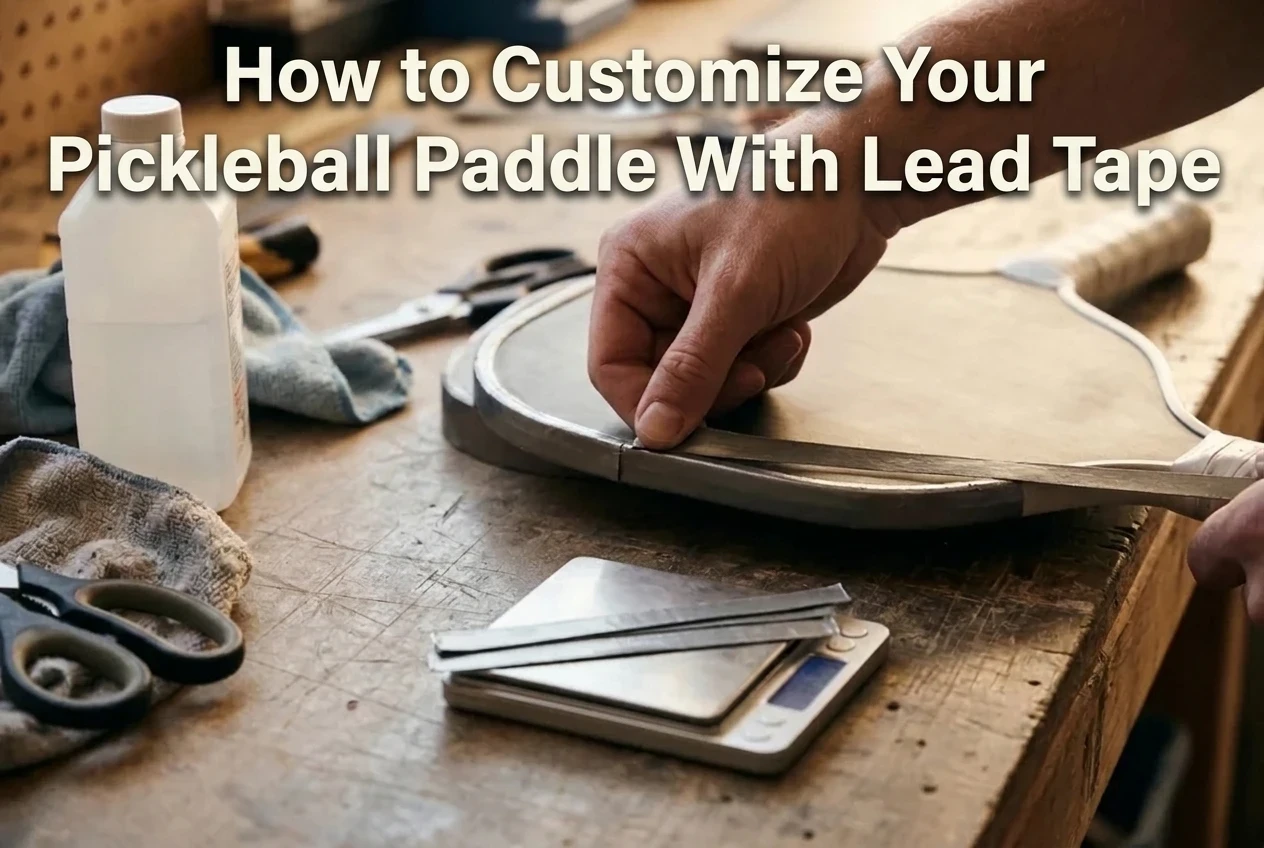
- Clean the surface. Wipe the area with rubbing alcohol and let it dry. Dust, sweat, and sunscreen keep the adhesive from bonding.
- Measure first. Cut strips to a set length and weigh them on a kitchen scale if you can. Write down the weight of each strip so your notes mean something later.
- Mark the positions. Use a pencil or a small piece of masking tape to mark where the strip starts and stops. For side placement, mark both edges at matching points.
- Press and smooth. Lay the strip down flat, pressing from one end to the other to push out air bubbles. Rub the edges with a fingertip so they do not lift.
- Seal if needed. A thin layer of clear tape over the lead keeps the edges from peeling during play and protects the lead from wear.
Keep the tape off the hitting surface. Tape on the face changes how the ball contacts the paddle and is not something event officials will accept. Stick to the edge, the throat, or the handle area.
Rules on paddle modifications can differ by event and can change over time. If you play sanctioned tournaments, read the current USA Pickleball equipment rules and the specific event’s rules before you compete. If you are unsure whether your setup passes, ask the tournament director before the match instead of after it.
A One-Strip-at-a-Time Test Routine for Dinks, Drives, and Volleys
Guesswork is the main way players ruin a good paddle’s feel. They add four strips because someone at the club recommended it, play badly, and cannot tell which strip caused the problem. A slower approach gives you data.
Before you start, play a normal session with the untouched paddle and note how it performs. Use the same kind of ball each time, and test in similar conditions. Wind, heat, and ball wear all change the results.
Then follow this loop:
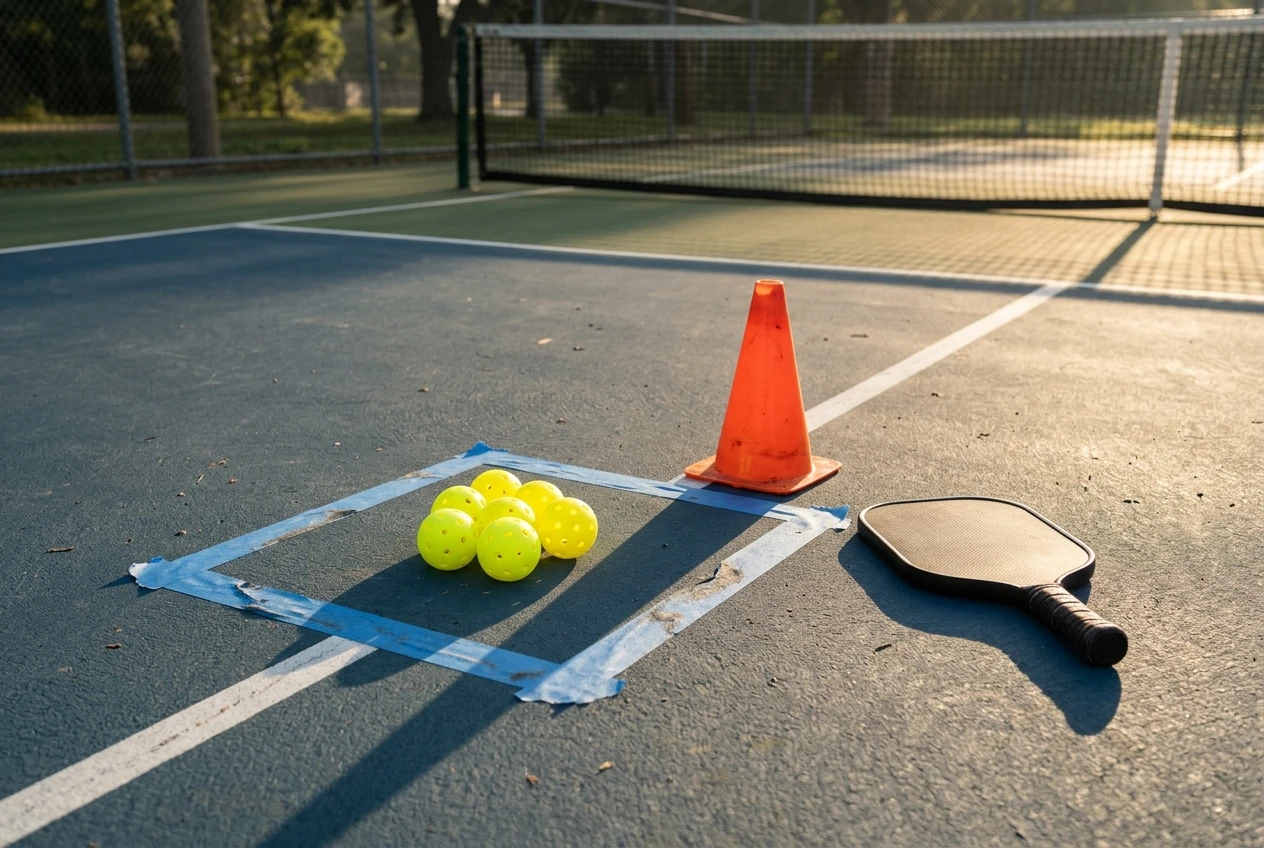
- Add one strip in one position. Record the position and the strip’s weight.
- Warm up with 10 minutes of dinks. Aim for a target such as a taped square or a cone near the kitchen line, and count how many of your dinks land in it out of a set number.
- Hit a set of drives and third shots from the baseline. Note depth and how often the ball sits up.
- Play fast volley exchanges at the net with a partner. Note how often you are late or the paddle feels slow. If volleys are your weak point, the volley improvement guide has drills that work well for this.
- Play at least one session of live games before you decide. Drills show you mechanics, and games show you whether the change helps under pressure.
- Write down what you felt in plain words: “tip strip: drives deeper, dinks floated long.”
Keep the change or remove it based on results, not on how the paddle feels in your hand while standing still. A paddle that feels powerful in a practice swing can produce worse results in a match.
Change only one thing per session. If you want to try a second strip, add it only after you have settled on the first.
Signs You Added Too Much (and How to Undo It)
Overloading a paddle shows up in predictable ways.
- Your volleys arrive late, or you find yourself pushing the ball instead of punching it.
- Dinks sail long because the heavier head carries more momentum than you intend.
- Your forearm, elbow, or shoulder feels tired or sore after sessions that were previously comfortable.
- Resets from the transition zone feel clumsy because the paddle will not settle quickly.
- Your swings feel like they take extra effort late in a long match, especially in the second or third game of a tournament day.
If you feel persistent pain in the elbow or shoulder, remove the tape and take a break. If the pain continues, see a medical professional.
To undo a change, peel the strip off slowly and keep it, since you may want to reuse it in a smaller amount or a different spot. Remove leftover adhesive with rubbing alcohol or a little adhesive remover, applied to a cloth and not directly to the paddle. Then go back to your baseline notes and compare.
Removing a strip is usually less work than finding the right position, so do not be reluctant to take one off. Many players find that the best setup is the lightest one that solves their specific problem.
Matching Your Setup to Your Game: Baseline Hitters vs Net Players
Your playing style should drive your tape plan. These are starting tendencies for your first tests, not fixed rules.
Baseline hitters and drivers usually benefit from more mass in the head. Tape at 3 and 9 o’clock can add stability on hard drives and returns, and a small strip at the tip can add depth if your drives tend to land short. Watch your dink control as you add weight, and use the dink and soft-game drills at pickleball dinking drills to check that your touch is intact.
Net players and counterpunchers usually need hand speed above everything else. A strip at the throat or the handle can add a little mass without slowing the paddle, and a head-light balance helps in rapid exchanges. Heavy tip tape tends to hurt this style, so keep it minimal or skip it.
All-court players often land on a small amount of side tape for stability and perhaps a small handle strip to keep the paddle quick. Doubles players who switch between aggressive and patient phases of a point value this balance.
Your paddle’s starting characteristics matter too. A paddle that is already head-heavy has less room for tip tape, and a very light paddle may gain a lot from a single strip. Start with whatever your paddle lacks, not with what you read works for someone else.
Tape can only refine a paddle that is close to right. If you run through the test routine and nothing improves your results, the paddle itself may be the wrong shape, weight, or core for your game. In that case the next step is the guide to choosing a tournament pickleball paddle, which explains how to narrow down a replacement.
Before you commit to a final setup, share your tape positions, strip weights, and test notes with your coach for a personalized review. A coach who has watched you play can tell you whether the changes show up in your swing, and can point out problems you cannot see yourself.