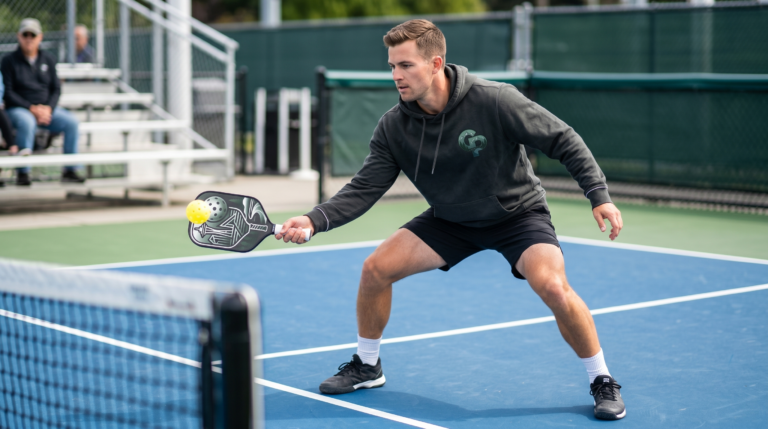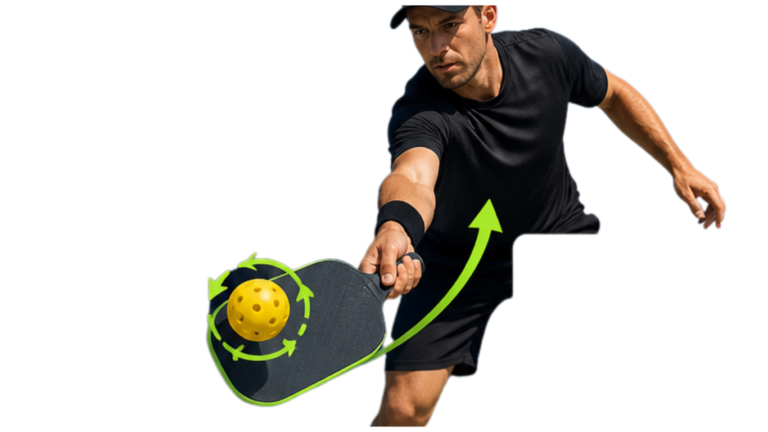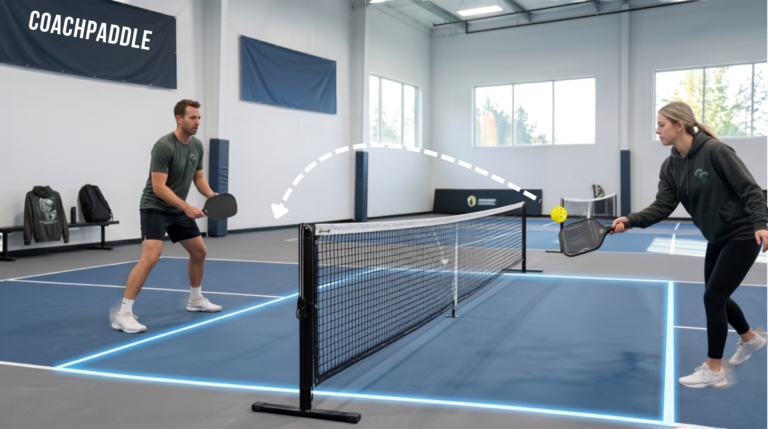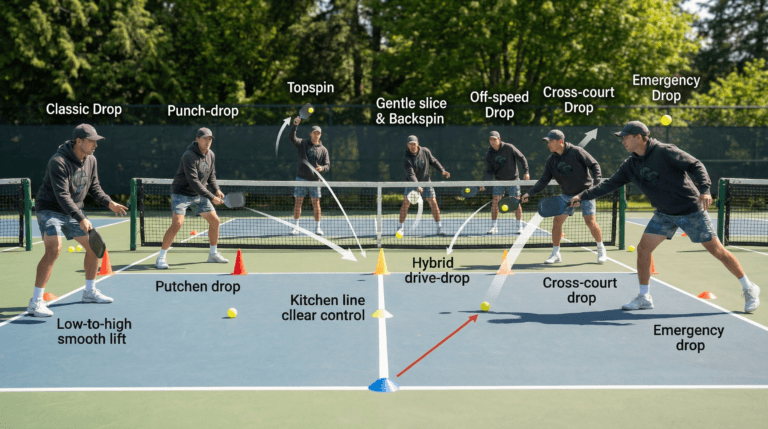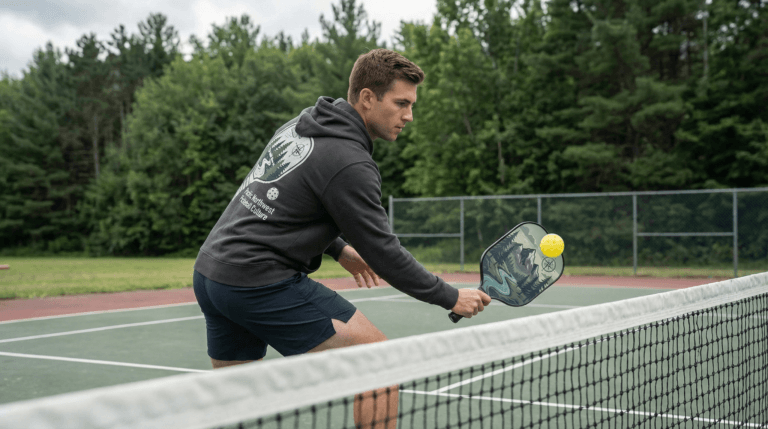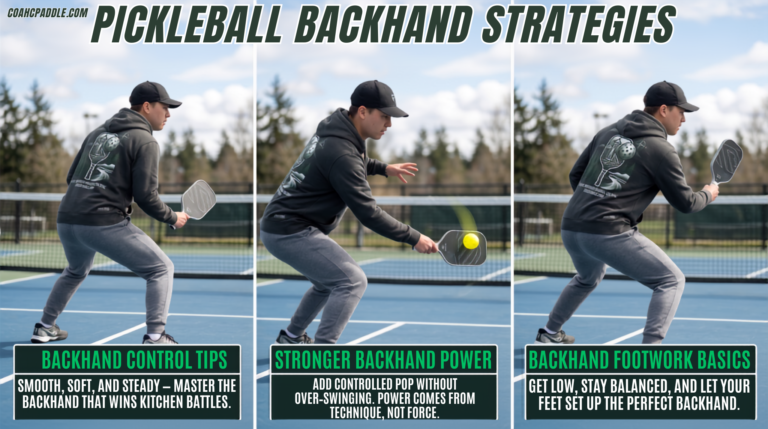
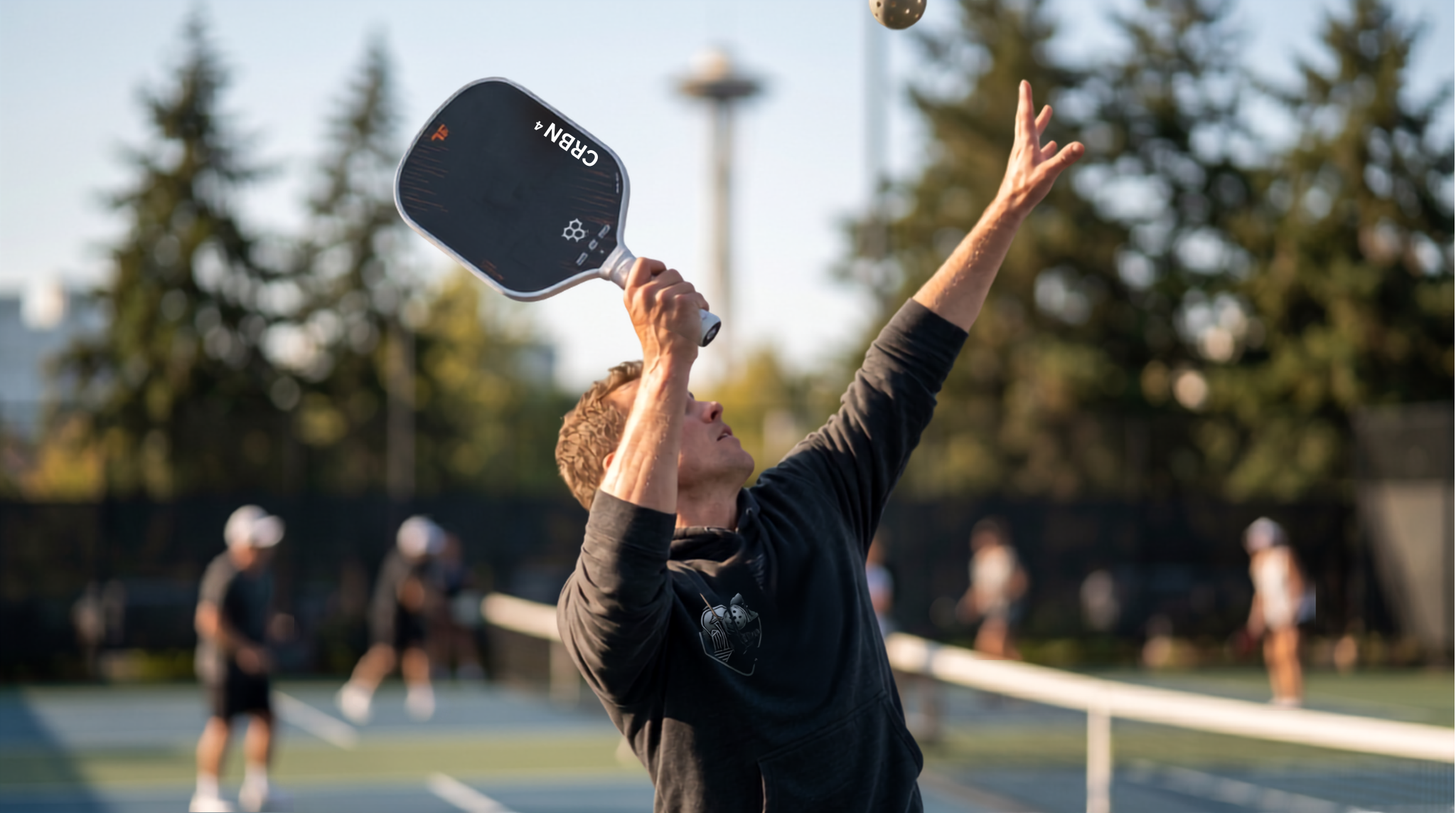
Pickleball Overhead Shot Drills are essential for developing power, timing, and accuracy when finishing points. Whether you’re punishing a high lob or attacking a weak reset, these drills help you stay balanced, generate clean power, and place the ball exactly where you want it. Add these Pickleball Overhead Shot Drills to your training routine to build a reliable, confident overhead.
Understanding the Overhead Shot in Pickleball
The overhead shot—often called the smash—is a core part of Pickleball Overhead Shot Drills because it lets you finish points with power and control. When opponents send up a high ball, a strong overhead helps you reset the rally or end it outright. These Pickleball Overhead Shot Drills build timing, precision, and confidence.
Unlike tennis smashes, pickleball overheads rely more on placement and technique. The smaller paddle and lighter ball reward accuracy over brute force. By practicing Pickleball Overhead Shot Drills consistently, you strengthen your defense, improve your net presence, and create more opportunities to attack.
Players who master the overhead usually dominate when a high ball comes their way. Their consistency forces opponents into defensive positions and shifts momentum instantly. Adding structured Pickleball Overhead Shot Drills to your routine helps you finish points, dictate rallies, and gain a real competitive edge—especially in tournament play.
For better footwork and stability, check out our guide on How To Choose Pickleball Shoes.
Pickleball Overhead Shot Mechanics Explained
Understanding the basics behind the overhead shot helps me build consistency and avoid errors. Here are the main points I keep in mind:
- Positioning: Staying light on my feet so I can quickly adjust to the ball’s trajectory.
- Paddle Preparation: I raise my paddle hand early, elbow up, and use my nondominant hand for balance.
- Contact Point: Striking the ball when it’s slightly in front of my body, aiming for a downward angle to keep the shot in play.
- Follow-through: A controlled, smooth finish for accuracy and to protect my shoulder.
A few minutes of basic footwork and shadow swings prepares me for live drills. Proper fundamentals limit mistakes and build real muscle memory. Using a mirror or quick video clips helps me break down my form and spot areas to improve.
Beginner Friendly Pickleball Overhead Shot Drills
If you’re just getting started, it’s really important to build a solid base. When I started with overhead drills, I focused on these straightforward approaches first:
- Self Feed Drill: I toss a ball above my head, then practice swinging through my overhead motion. This helps me work on timing and mechanics. I sometimes set up small targets or buckets to see how finely I can place each shot.
- Partner Lob Drill: My partner stands on the other side of the net and throws or gently lobs balls for me to smash. I focus on each shot, aiming for consistency rather than pure power.
- Target Practice: Placing cones or markers on the opposite court, I challenge myself to direct my overheads towards specific spots for better control.
Practicing these drills at a slow pace allows me to gradually build up speed and power while still hitting my targets. It pays off over time as my instincts sharpen and I gain the ability to react swiftly even under pressure.
Building a practice routine that’s engaging keeps you motivated. Sometimes I even challenge myself to beat my previous best—turning practice into a friendly competition against myself or a partner.
Level up your soft‑game control with our full guide on Topspin Dinks Drills to add spin, shape, and pressure at the kitchen line.
Intermediate and Advanced Overhead Shot Drills
Once the basics feel comfortable, progress to more challenging drills. These exercises test both your overhead ability and your game awareness:
- Randomized Lobs: A partner mixes up the placement and height of their lobs, forcing me to adjust quickly and read each shot under more real match pressure.
- Angle Smash Drill: I work on placing overheads sharply to the corners, which is useful to finish off points without giving my opponents a chance to respond easily.
- Two in a row Drill: My partner sends two lobs in quick succession. This helps build endurance and trains me not to drop my guard after the first overhead.
Practicing these drills with some intensity can simulate match conditions. I like to track my results so I can measure progress over time. Recording your sessions allows you to spot habits and pick up on areas where you can take your performance up a notch, such as directional control or faster recovery after a shot.
It can help to invite feedback from teammates or a coach, who might notice slight adjustments that can give your shots a boost. Don’t hesitate to ask club members for a quick tip or to run a drill together. Joining in helps you learn faster and brings some variety to your sessions.
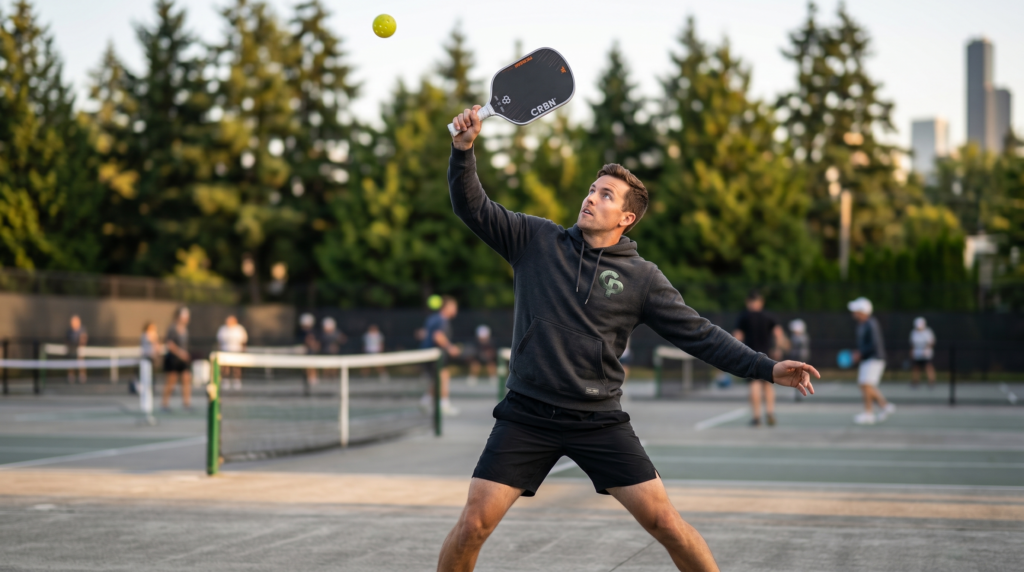
Effective Pickleball Overhead Shot Drills & Practice Tips
I’ve learned that a good practice session is more than just hitting the ball hard. Here are some tips that help me get the most out of each drill:
- Footwork Matters: Quick, small steps help me get under the ball efficiently, so I’m not reaching or off balance.
- Watch the Ball: Keeping my eyes on the ball at all times gives me better timing and helps avoid miss hits.
- Use Your Core: Engaging my core muscles gives extra stability and can add a bit of power without sacrificing control.
- Stay Relaxed: A tense arm or shoulder can throw off my shot. I remind myself not to grip the paddle too tightly.
It’s easy to want to work only on power at first, but precision in targeting and timing makes a bigger difference in matches. Focus on transitioning seamlessly from defensive to offensive positions—this flexibility often means the difference between getting stuck at the baseline and controlling the net game.
Challenges to Look Out For During Overhead Drills
When starting overhead drills, I ran into a few common obstacles:
- Not Reaching the Ball’s Highest Point: Swinging too soon or too late throws off my aim and power. I train myself to wait for the ball to reach its peak before swinging.
- Overhitting: Getting excited can cause me to hit the ball out of bounds. Practicing consistent placement before adding power helps a lot.
- Footwork Issues: Lifting my feet too much or not being set results in off-balance shots. Adding some focused footwork warmups before drills keeps me sharp.
- Shoulder Strain: Repeated overheads can tire the shoulder. I always warm up well and stop if I feel any pain.
Dealing with Nerves During Matches
Taking overhead shots in drills is one thing, but doing it in a match feels different. Nerves can get in the way. Practicing game‑like scenarios builds confidence fast. Have your partner try to win the point after your overhead. Visualizing the shot or counting breaths during setup helps me stay loose and focused in tense moments.
Advanced Pickleball Overhead Shot Techniques for Next‑Level Power
Once basic form feels automatic, there are a few advanced tweaks I use that can help take your overhead shot performance up a notch:
Add Spin: Using a slight wrist snap adds topspin or sidespin to the ball, making your smashes less predictable and harder to return.
Misdirection: Faking a straight shot but then angling to the side keeps my opponents guessing about my intent. Subtle changes in shoulders and eye focus cue this move.
Follow Through Forward: Driving my follow through down and towards my target adds power and keeps the ball lower, giving opponents less time to react.
Work Under Pressure: Drilling with a timer or seeing how many shots you can land in a minute turns practice into a fun challenge and simulates game tension. Turn practice into a game by mixing targets or competing with a partner to keep things fresh and motivating.
Using these advanced techniques has made a noticeable impact in competitive matches. Watching and studying top players’ overheads on video or during tournaments can provide inspiration and extra insights. Sometimes you can pick up subtle cues—like when and how to set up for the overhead—from just seeing what the pros do under pressure. Adapting a signature move after noticing it in action can make your own game more unique and difficult to read.
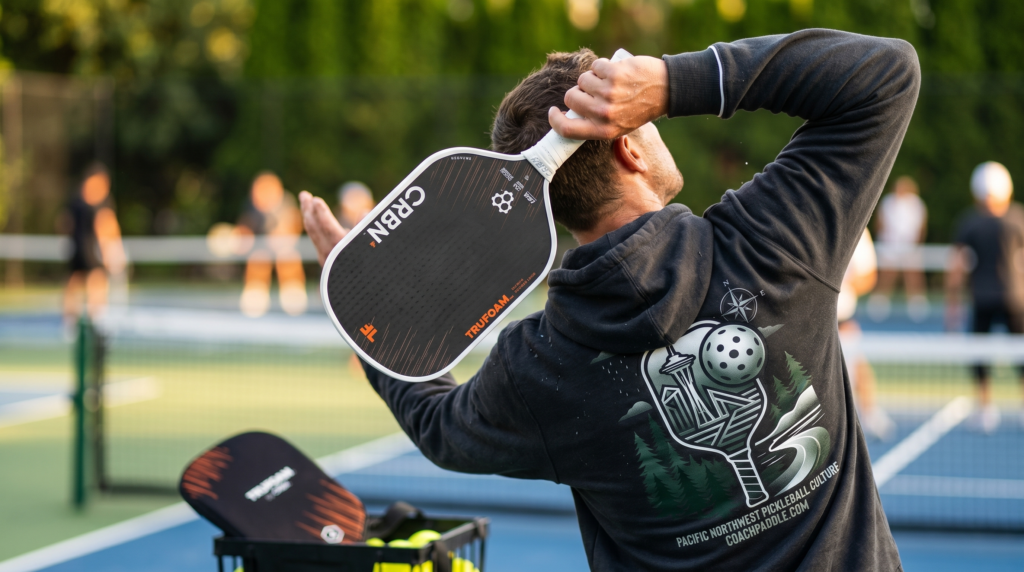
Equipment Setup and Safety
Good equipment habits keep my practice safe and efficient:
- Paddle Check: Make sure the paddle’s grip is solid and the face is clean. A slippery handle or worn-out surface can cause mistakes and discomfort.
- Plenty of Pickleballs: Having a bucket of balls close by means I can get in more repetitions and waste less time chasing stray balls.
- Court Awareness: Practicing at the net or near the baseline requires me to watch out for other players, especially during busy times at my local courts.
A good warmup is crucial, especially when you’re about to hit several overheads in succession. Stretching your shoulders and arms reduces the risk of injury and helps you swing freely. Start sessions with slow swings and gradually add power as you get more comfortable.
Sharpen your soft game with our quick guide on Pickleball Dinking Drills.
Frequently Asked Questions
Question: How do I avoid hitting overheads out of bounds?
Answer: Focusing on a downward swing path and keeping my eye on the ball helps keep most overheads in. Practicing with targets really helps with consistent placement. Another approach is to slightly shorten your backswing when you notice yourself losing control—this way, you place accuracy ahead of brute force.
Question: Should I always use full power for overhead shots?
Answer: Not always. A controlled shot with good placement can often be more effective than just hitting hard. Using different amounts of power prevents opponents from predicting your shots and reduces mistakes. Mixing in a soft overhead from time to time can also throw your rivals off their rhythm and create openings for your next attack.
Question: What should I do if I struggle to get into position for overheads?
Answer: Practicing footwork drills, such as side shuffles or split steps, makes it easier to move quickly and get under lobs for strong overhead shots. It can also help to anticipate where your opponents are likely to hit, so you’re already on your toes and ready to move when the ball goes up.
Why Strong Pickleball Overhead Shots Matter in Real Matches
When I started working on my overhead shot, I noticed quick results during games. I finished points more quickly and felt more comfortable at the net, especially against opponents who used a lot of lobs. Reliable overheads also give me the confidence to move forward and play more aggressively. Watching successful club players, I’ve seen that those with steady overheads usually control the pace and direction of more rallies.
Good overheads can also change how your opponents play. If they know you have a dependable smash, they’re less likely to lob. This keeps more balls low, which can play to your strengths, especially if you have a solid dink or volley game, too. This strategic shift not only boosts your winning chances but also makes matches more dynamic and exciting.
Practicing overheads for ten minutes each session builds habits that show up in real matches. My experience matches what many coaches teach: effective overheads are worth the effort. Staying disciplined with technique, warming up, and celebrating small gains turns your overhead into a real weapon.
For full rule details and official standards, visit the USA Pickleball Official Rulebook.