Pickleball looks gentle next to a lot of sports, which is why players who play four or five days a week are often surprised by how much they ache. The soreness is not random, and the right pickleball recovery tips start with understanding why. The game asks the same few body parts to do the same few jobs hundreds of times per session, and playing again before those areas have settled carries the stiffness from one session into the next.
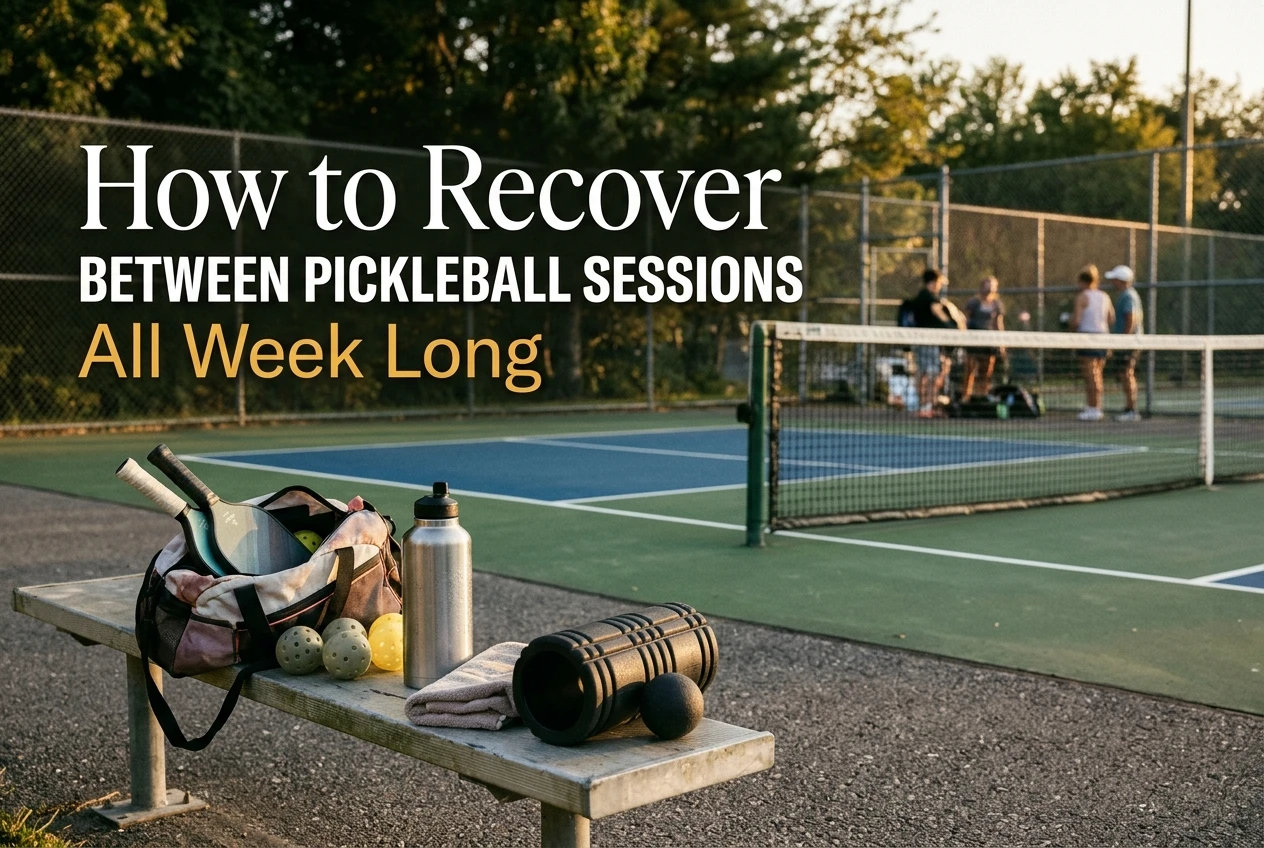
This guide covers pickleball recovery tips for the 24 to 48 hours between sessions: what to do for the calves, the shoulder and elbow, and the hips and lower back, a short evening routine, a quick way to decide whether to play, scale back or rest, and how to place recovery in a weekly schedule.
Why high-frequency pickleball leaves you sore in such predictable places
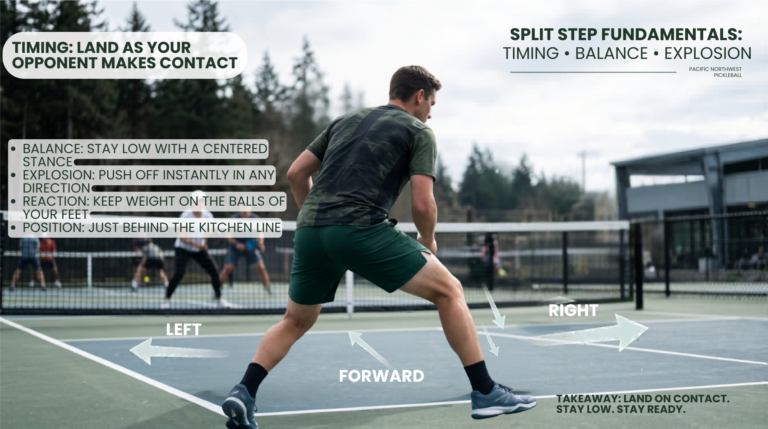
The court is small, and the movement on it is repetitive. You split-step, push off to reach a dink, stop, recover, and do it again, point after point. Between those bursts you hold a slightly bent, forward-leaning ready position. When you hit overheads, drives and resets, the same arm swings through nearly the same arc each time.
That repetition sets up three groups of tissue to take most of the load:
- Calves, Achilles tendons and feet, which absorb the stops and starts.
- Shoulder, elbow and forearm, which produce and control the swing.
- Hips and lower back, which hold the low ready stance for long stretches.
Soreness in these places after a long session is common. Soreness that never clears before the next session is a sign that your recovery is not keeping up with your playing. The sections below take each area in turn and give you something specific to do.
Calves, Achilles and feet: recovering from all that stop-start movement
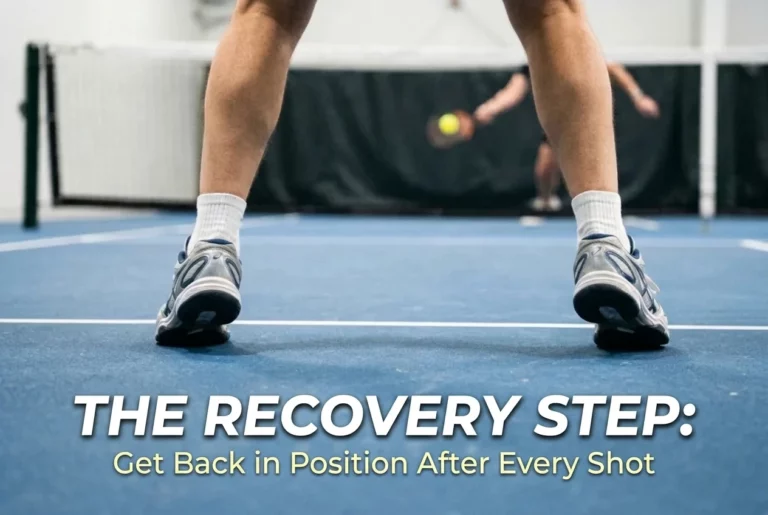
Every lunge for a short ball and every quick retreat from the kitchen line loads the calf muscles, and the Achilles tendon passes that load to the heel. On a hard court, with several days of play in a row, the calves tend to tighten and the bottoms of the feet can feel tender in the morning.
Your aim between sessions is to keep the calf muscles long and the ankle moving through its full range. A few approaches work well:
- Easy walking. Ten to fifteen minutes at a relaxed pace on the evening after you play keeps blood moving through the legs without adding stress.
- Calf stretches in two positions. Press your hands against a wall, step one foot back, keep that knee straight and the heel down, and hold for 30 seconds. Then bend the back knee slightly, keeping the heel down, to reach the lower calf. Do both on each leg.
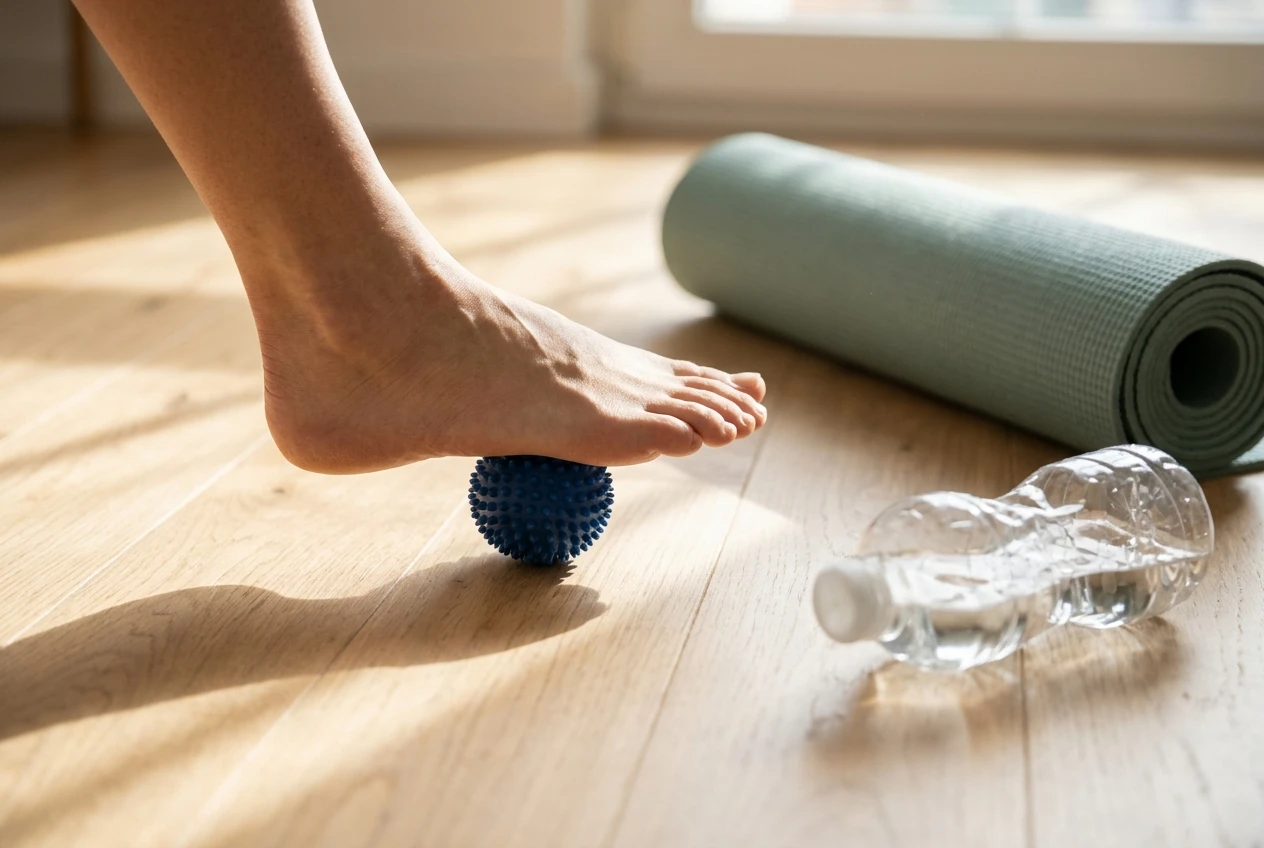
- Foot rolling. Roll the bottom of your foot over a ball or a water bottle for a minute per side. Use light to moderate pressure, and ease off if it feels sharp.
- Ankle circles and alphabet tracing. Sit and draw the letters of the alphabet in the air with your toes. It takes a minute and warms the joint gently.
Tight calves are usually the first thing you notice on a second or third day of play, and they are easy to address. Pain that sits in the tendon just above the heel, especially pain that is sharp or gets worse as you keep moving, is different. Do not stretch it harder. Skip to the section on warning signs below.
Shoulder and elbow: undoing the damage from overheads, drives and resets
The shoulder does a lot in pickleball. It lifts the arm for overheads, rotates for drives, and stabilizes the paddle during fast hand battles at the kitchen. The elbow and forearm grip the paddle through every shot, so the muscles on the outside and inside of the forearm get used constantly, even in a soft dinking exchange.
Recovery here is mostly about gentle mobility and avoiding extra load:
- Cross-body shoulder stretch. Bring one arm across your chest and hold it with the other hand for 30 seconds. Repeat on both sides.
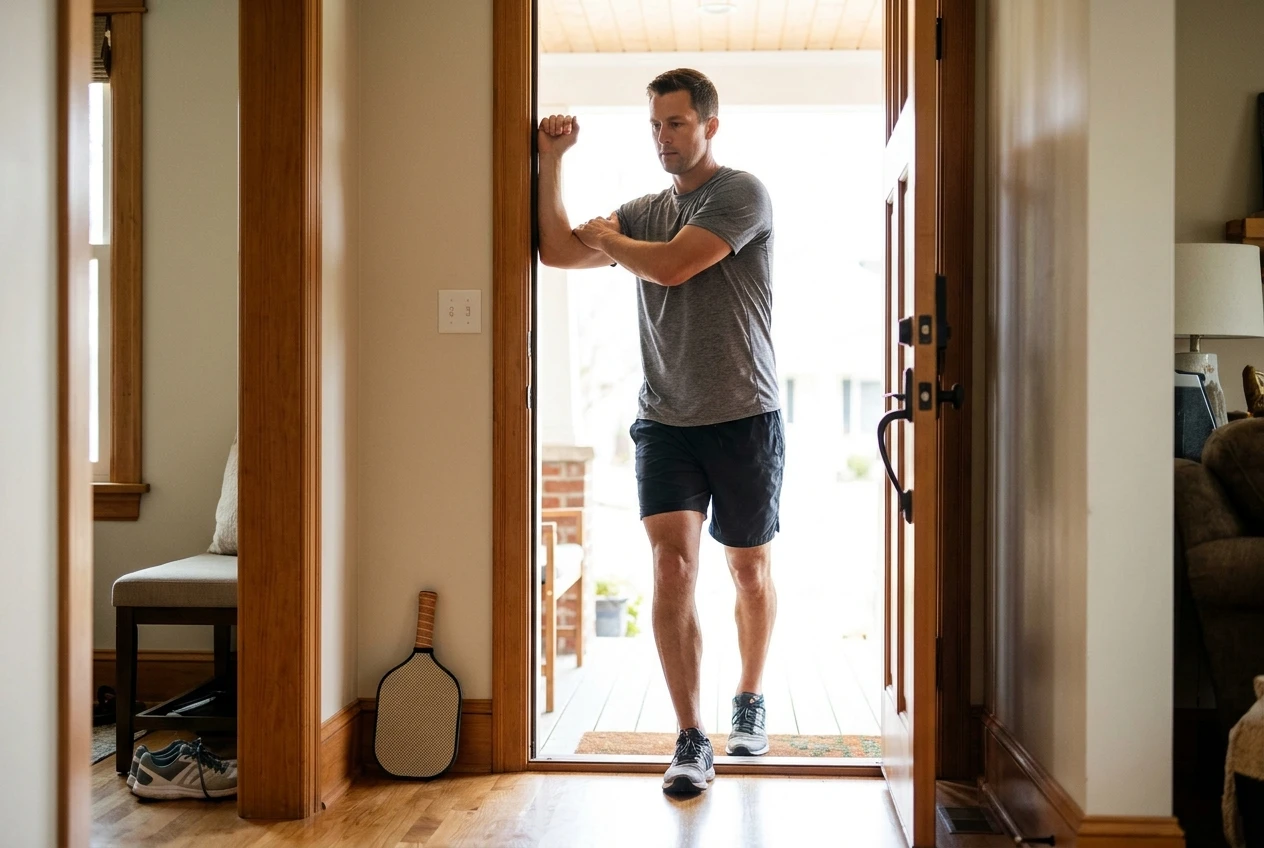
- Doorway chest stretch. Place your forearm on a door frame with the elbow bent at about shoulder height and step through until you feel a stretch across the front of the chest. Players who spend hours with the arms in front of the body often feel tight here.
- Wrist flexor and extensor stretches. With the elbow straight and the arm in front of you, gently pull the fingers back toward you, then press the back of the hand down. Hold each for 20 to 30 seconds.
- Light arm circles and shoulder rolls. Small, easy movements that loosen the joint without strain.
Technique also affects how much your shoulder and elbow take in. A swing that relies on the arm instead of the legs and trunk puts more work on the smaller joints. If overheads are a particular source of soreness, working through the pickleball overhead shot drills can help you hit the shot with better mechanics and fewer repetitions of a bad one.
Hips and lower back: unwinding the low ready stance
Staying low is good pickleball. It is also a position that keeps the hip flexors shortened and the muscles along the spine working for the length of a match. After a few days of that, many players feel tightness in the front of the hips, in the glutes, and across the lower back, especially when they stand up after sitting.
The most useful recovery work here opens the hips and moves the spine gently:
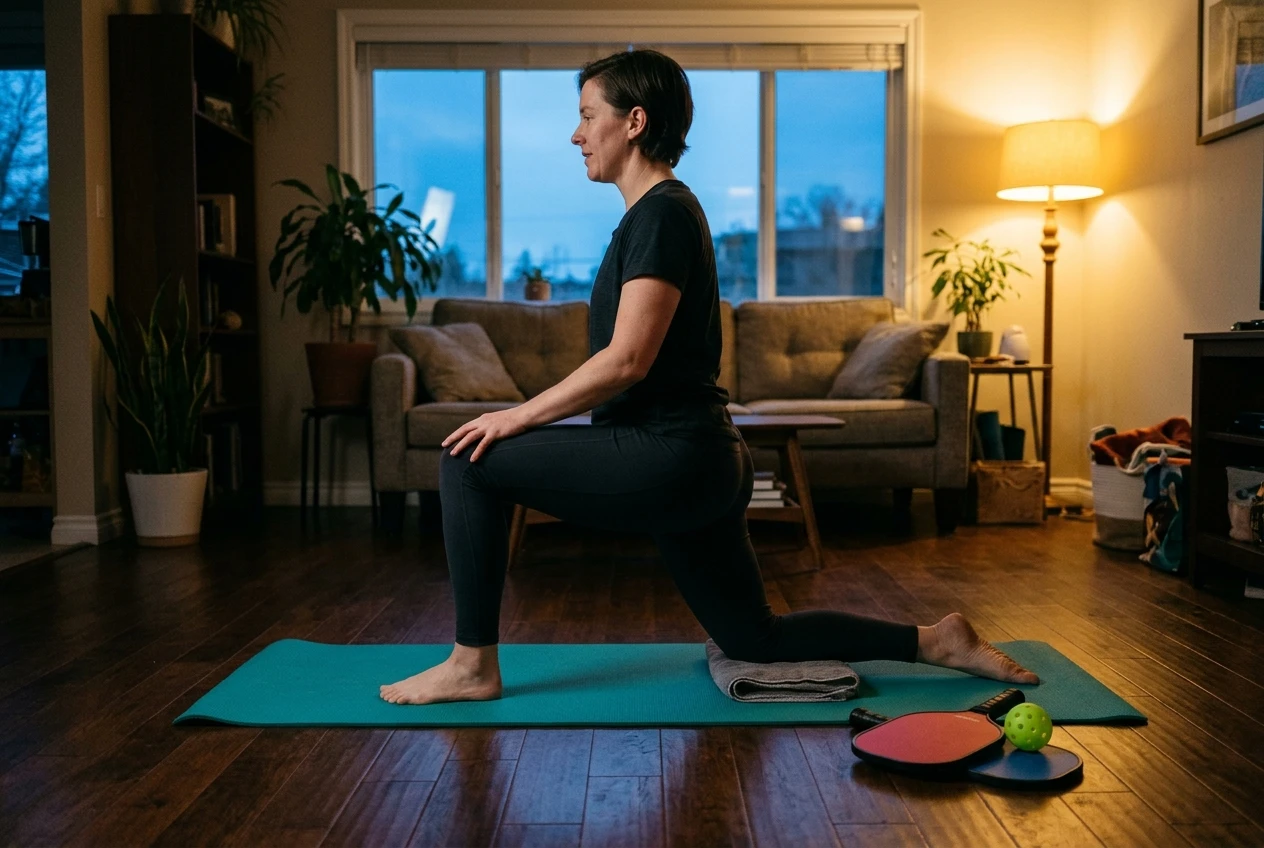
- Half-kneeling hip flexor stretch. Kneel on one knee, tuck the pelvis slightly, and shift your weight forward until you feel a stretch at the front of the back leg’s hip. Hold for 30 to 45 seconds per side.
- Figure-four stretch. Lie on your back, cross one ankle over the opposite knee, and pull the lower leg toward your chest. This reaches the glutes and outer hip.
- Cat-cow. On hands and knees, slowly round and arch your back for about a minute. The movement should feel easy.
- Child’s pose. Sit back on your heels with the arms stretched forward and breathe slowly for 30 to 60 seconds.
Walking helps here too. If your day involves a lot of sitting, stand and move for a few minutes every hour or so on the days between sessions. Stiff hips that spend eight hours in a chair are not in good shape for your next session.
A 10-minute active recovery routine for the evening after you play
You do not need a long program. A single sequence that touches each area, done consistently, is more useful than an ambitious one you skip. Do this routine the evening after you play, or on the morning of a rest day. Move slowly and stop any stretch that causes sharp pain.
- Easy walk, 2 minutes. Walk around the house or outdoors at a relaxed pace to warm up the legs.
- Calf stretches, 2 minutes. Straight-knee and bent-knee versions on each leg, about 30 seconds each.
- Half-kneeling hip flexor stretch, 1.5 minutes. About 45 seconds per side.
- Figure-four stretch, 1.5 minutes. About 45 seconds per side.
- Cat-cow and child’s pose, 1.5 minutes. Slow, with steady breathing.
- Shoulder and chest stretches, 1 minute. Cross-body stretch and doorway chest stretch, a few seconds each way as time allows.
- Wrist and forearm stretches, 30 seconds. One quick pass on the paddle arm, plus the other arm if you like.
Stretches should feel like mild tension, never pain. Breathe out as you settle into each position. If you have more time, add a longer walk, since gentle movement is a good addition to any of this.
Rest day or light day? A simple check before you step on court
Before a session, run through these checks. Do them in the morning and again after a five-minute warm-up of walking and easy movement.
Play as planned if:
- Soreness is general and muscular, like a mild ache or stiffness.
- It eases noticeably as you warm up.
- You move normally, with no limp and no change in how you swing.
Scale back to a light day if:
- Stiffness is still present after the warm-up but does not change how you move.
- One area feels heavy or tired, such as the calves or the paddle shoulder.
- You slept poorly or your legs feel flat.
On a light day, play drills or dinking games at a low intensity, keep sessions shorter, avoid hard overheads and long rallies, and skip tournament-style points. You can also swap court time for a walk and the evening routine.
Take a full rest day if:
- The pain is sharp, pinpoint, or in a joint or tendon rather than the muscle belly.
- It gets worse as you warm up.
- It changes how you walk or swing.
- You notice swelling, or the area is painful at rest or at night.
If a rest-day signal repeats over several days, move on to the next section.
When soreness is a warning sign and it’s time to see a professional
General soreness fades. Pain that does not fade needs someone qualified to look at it. Contact a doctor, physical therapist or sports medicine professional if you notice any of the following:
- Pain that persists or keeps coming back despite a few days of rest.
- Pain that comes on suddenly during play, especially with a pop or a sensation of something giving way.
- Swelling, visible bruising, or a joint that feels unstable.
- Numbness, tingling, or weakness in the arm, hand or leg.
- Pain in the Achilles area, elbow or lower back that gets worse with continued play.
- Pain that wakes you at night.
This guide covers movement-based recovery for ordinary muscle soreness. It cannot diagnose what is happening in your body, and playing through a persistent problem can keep you off the court longer than resting would have. A professional can tell you what is going on and which activities are safe in the meantime.
How to build recovery into your weekly training schedule
Recovery works best when it is planned along with the sessions. Here is one way to lay out a week for a player on court four or five days.
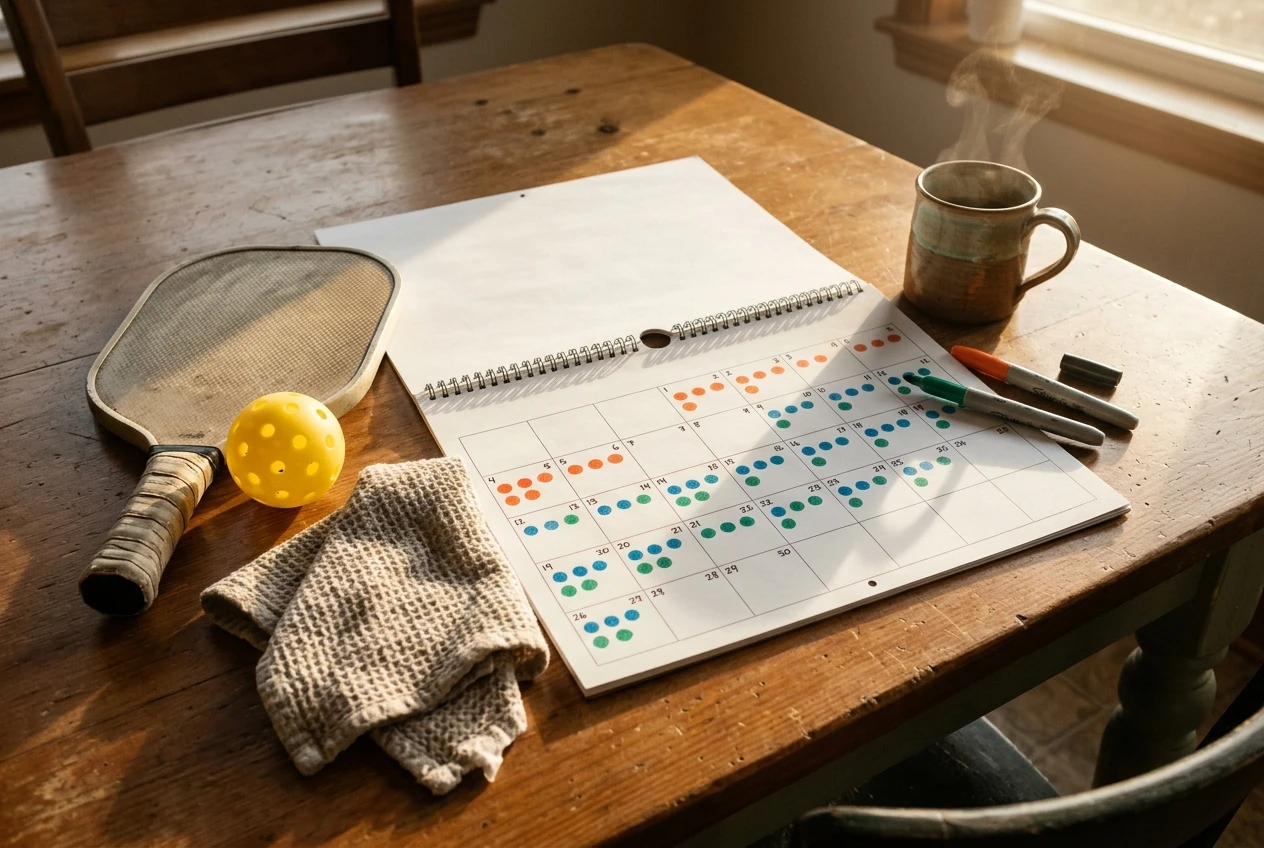
- Alternate hard and easy days. If you play competitive sets on Monday, make Tuesday a drills or dinking day with lower intensity. Avoid stacking three hard-hitting days in a row.
- Do the evening routine after your hardest sessions. You do not need it after every light session, but make it a habit after tournament play, long rounds of open play, or any day your legs and shoulder feel the effort.
- Keep one full rest day each week. Walk, stretch, or do nothing at all. A fixed day is easier to keep than one you decide on week by week.
- Space out overheads and heavy drives. If you practice power shots, spread them over the week rather than packing them into consecutive days.
- Run the check each morning. The play, scale back or rest check takes two minutes and keeps the week flexible.
- Plan lighter weeks around tournaments. Ease off in the days before an event so you arrive with fresh legs and a calm shoulder, and give yourself an easy day or two afterward.
A schedule like this lets you keep playing often without accumulating soreness that slows you down. Footwear also affects how much stress your feet, calves and ankles take on during all that lateral movement, so if you have been putting off a shoe upgrade, read our guide on how to choose pickleball shoes that protect your ankles.