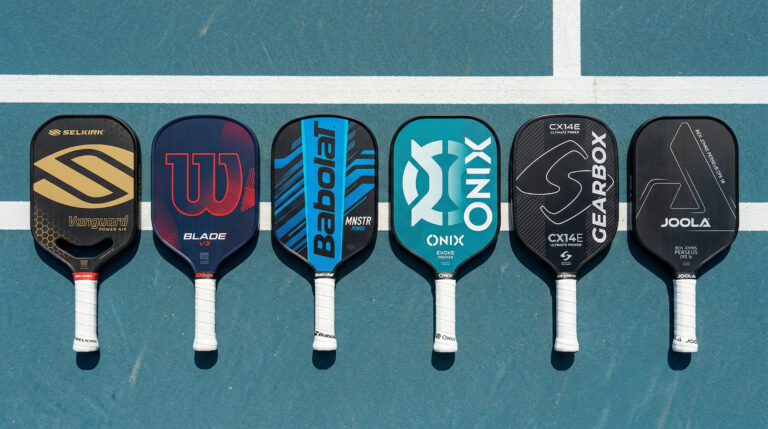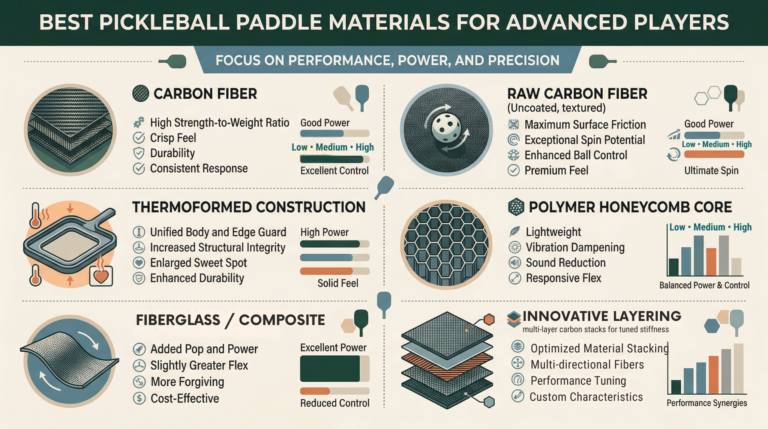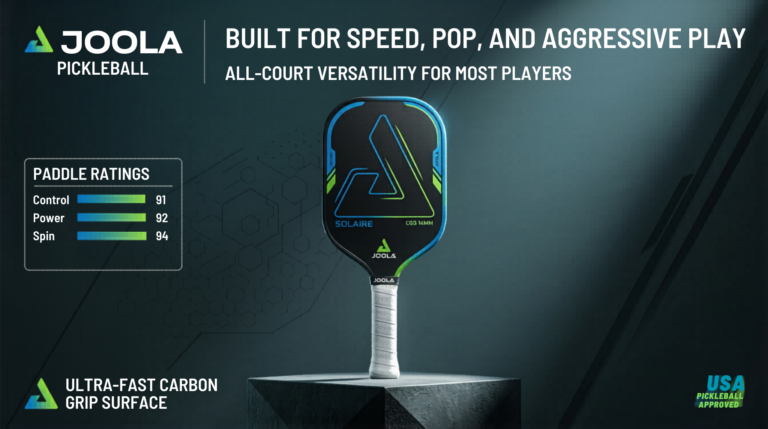
Choosing the right Selkirk paddle can completely change your game. In this guide, you’ll learn how to choose Selkirk pickleball paddles based on your skill level, play style, and the differences between Selkirk’s most popular series.
Why Selkirk Is So Popular in Pickleball
If you’re browsing pickleball paddles, odds are you’ve heard about Selkirk. Selkirk is a big name in the pickleball world, making paddles that show up at all levels of competition. I’ve spent years trying out different brands and talking with players, so I’ve seen how Selkirk paddles hold up in actual games.
What Players Should Know Before Choosing Selkirk Pickleball Paddles
People often ask me why so many top players use them and how to pick the right Selkirk paddle for their own play style. Whether you’re just starting out or upgrading your gear, there’s a good chance Selkirk has something that fits.
What to Expect in This Guide
Here’s a quick look at Selkirk as a brand and what you should consider before making your pick; I’ll add some personal tips from my hands‑on experience.
Brand: Selkirk Sport
Website: Selkirk.com
Founded: 2014, Idaho, USA
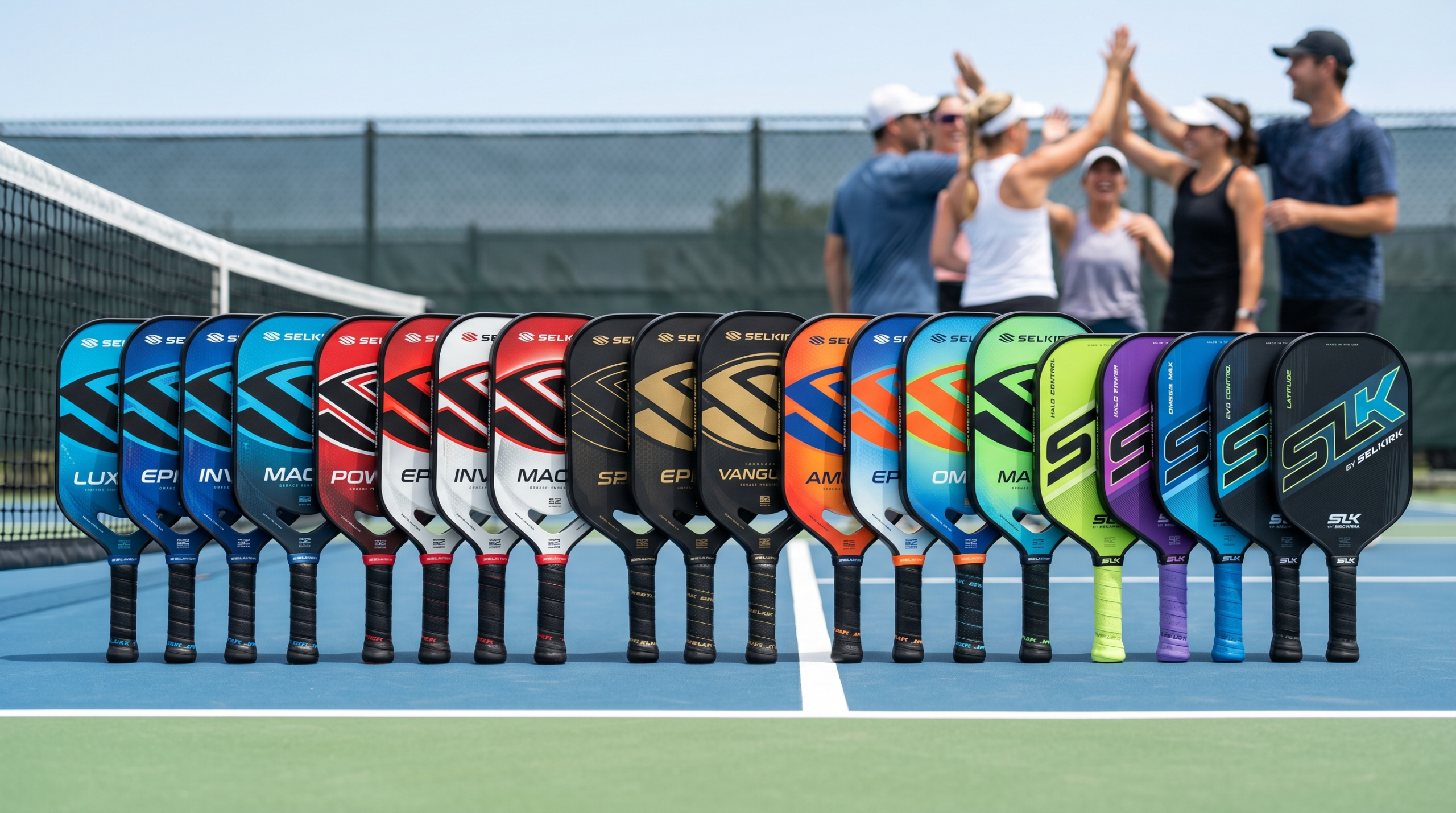
Main Paddle Lines: Amped, Vanguard, SLK, Power Air, Luxx Control Air
Target Player: Everyone from total beginners to elite tournament players
Warranty: Limited lifetime (covers manufacturer defects on most premium paddles)
Popular Models: Selkirk Vanguard Power Air, Amped Epic, SLK Evo
Average Price Range: $60-$250
Customer Support: 4.8/5 (quick email replies, easy returns in my experience)
Customization: Some colorways, grip sizes
Official Retailers: Selkirk.com, Amazon, Dick’s Sporting Goods, pro specialty stores
Selkirk puts a lot of focus on innovation and quality control. Their paddles show up in tournaments all the time and you’ll spot their logo on pro players. But what really stands out for me, and a lot of fellow players I talk to, is how many different paddle shapes, weights, and core types Selkirk now offers. Instead of a one size fits all approach, they have several lines tailored to different needs. That can make the decision process a bit overwhelming, especially when you’re new to paddle shopping.
So, let’s break down what you need to know to choose the right Selkirk pickleball paddle for your game.
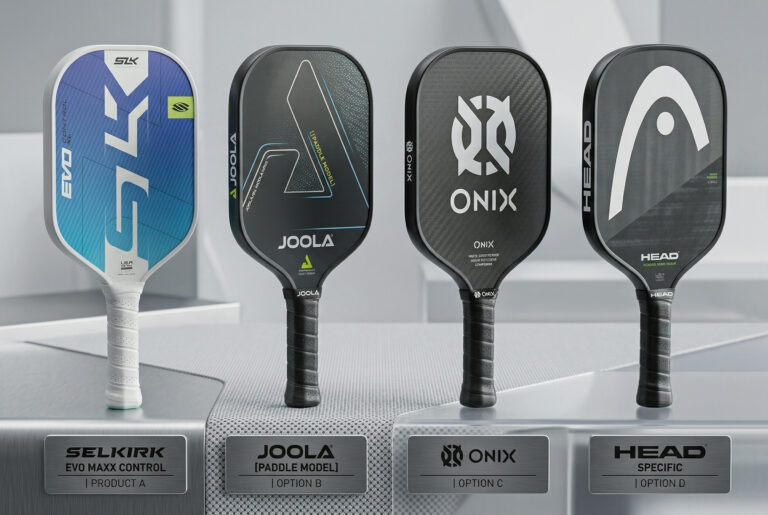
Before upgrading, check Selkirk Evo Control Max Vs Other Brands to see how the Evo compares to top competitors.
Why Selkirk Matters: Brand Philosophy and How to Choose Selkirk Pickleball Paddles
Selkirk started in Idaho, run by a family that’s obsessed with pickleball. They aimed to give players premium paddles without the cheap mass production feel you get from some other brands. What I like about Selkirk is that they keep their design and manufacturing in the USA, so quality standards are pretty darn high. Their customer feedback scores are strong, and they jump at warranty claims, which gives me some peace of mind recommending them.
I first got interested in Selkirk when I noticed how many paddles of theirs were being used at my local club. Folks who switched to Selkirk often stuck with their paddles for years, which says a lot. They seem to focus on staying current with paddle tech, tweaking the materials and faces each year. Whether you want high power, extra spin, or total control, they’re usually rolling out something new to match those needs.

How to Choose Selkirk Pickleball Paddles: Understanding Each Paddle Line
Selkirk’s lineup includes several main paddle families. I’ve had a chance to try almost all of them, and the differences are pretty easy to notice once you know what to look for. Here’s my take on each of their big categories:
Selkirk Amped Series
If you’ve been playing for a while, you’ve likely seen Amped paddles everywhere. This line is all about balance—a blend of power, control, and a smooth feel off the face. The core is thicker (Polymer X5 core), so you get a quiet, cushioned hit. I often recommend Amped paddles to intermediate players looking for a step up in performance without needing expert level touch.
Best For: All-around players who want both power and control.
Popular AMPED Models
| Model | Best For | Shape | Price Range |
|---|---|---|---|
| AMPED S2 | Max sweet spot, soft control, resets | Short + wide | $150–$180 |
| AMPED Epic | Balanced all‑around control | Classic | $150–$180 |
| AMPED Invikta | Reach + controlled drives | Elongated | $150–$180 |
| AMPED Omni | Singles players, reach, stability | Elongated | $150–$180 |
| AMPED Maxima | Control with added power | Longest shape | $150–$180 |
Selkirk Vanguard Series
The Vanguard line is one of Selkirk’s most popular high-end options. You’ll see these at tournaments a lot. These paddles feature a Quad Carbon face, which bumps up both power and spin potential. The feedback on the Vanguard is more responsive—you’ll feel the ball more on every hit, and the spin is noticeably higher than the Amped line, in my experience.
Best For: Competitive players or anyone looking to step up from an entry paddle to something with better spin and pop.
Selkirk Vanguard Series
| Model | Best For | Shape | Price Range |
|---|---|---|---|
| Vanguard S2 | Max sweet spot, control + spin | Short + wide | $200–$250 |
| Vanguard Epic | Balanced all‑court play | Classic | $200–$250 |
| Vanguard Invikta | Reach + spin + control | Elongated | $200–$250 |
| Vanguard Mach6 | Two‑handed backhands, stability | Long handle | $200–$250 |
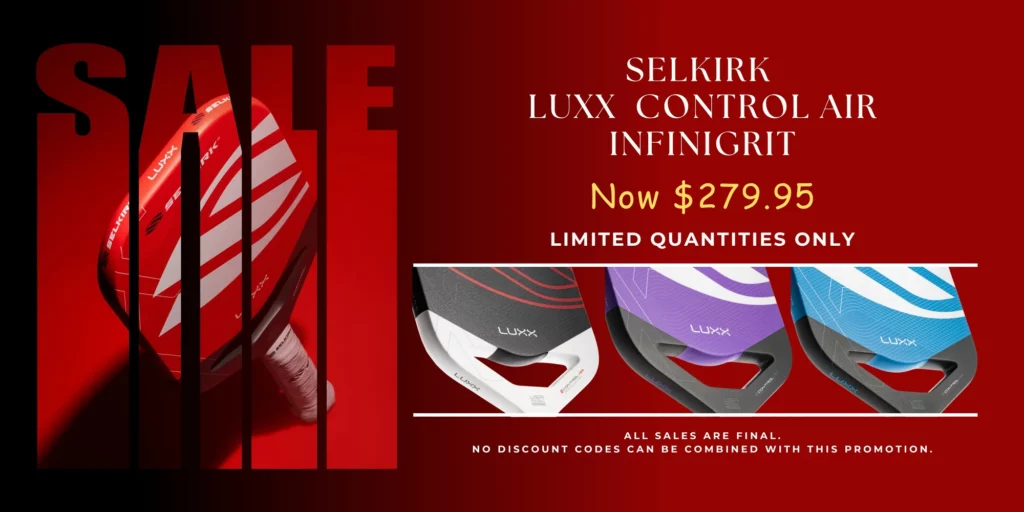
Selkirk Luxx Control Air
This is a newer line designed with maximum control in mind, using an improved polymer core and carbon face tech. It feels soft, quiet, and very forgiving on mishits. The Luxx Control Air series is a hit with players who want pinpoint dinks, resets, and drops—so if you prefer a steady style and like soft hands, this is worth a look.
Best For: Point construction, advanced strategy, minimizing errors on touch shots.
Luxx Control Air Models
| Model | Best For | Shape | Price Range |
|---|---|---|---|
| Luxx Control Air S2 | Max sweet spot, elite control, soft resets | Short + wide | $250–$280 |
| Luxx Control Air Epic | Balanced control + spin | Classic | $250–$280 |
| Luxx Control Air Invikta | Reach + precision + stability | Elongated | $250–$280 |
| Luxx Control Air Mach6 | Two‑handed backhands, control players | Long handle | $250–$280 |
Selkirk Power Air
Players who want to hit harder, serve deep, and drive aggressive shots should check out the Power Air line. These come with unique face textures and advanced hole patterns for extra swing speed. These paddles are stiffer, and you’ll get that faster pop right off the face. It’s good for putting away volleys, but they take a little getting used to if you’re coming from a softer paddle.
Best For: Power players, singles specialists, aggressive styles.
Selkirk Power Air Models
| Model | Best For | Shape | Price Range |
|---|---|---|---|
| Power Air S2 | Power + big sweet spot + fast counters | Short + wide | $230–$260 |
| Power Air Epic | Balanced power + spin + control | Classic | $230–$260 |
| Power Air Invikta | Max reach + power + aggressive drives | Elongated | $230–$260 |
| Power Air Mach6 | Two‑handed backhands + offensive play | Long handle | $230–$260 |
SLK Series (By Selkirk)
The SLK series is Selkirk’s answer for beginners or budget minded players. They run under $100 but still hold to decently high standards. The SLK Evo and Halo series offer lighter weights and softer hits, which are good for people still working on technique.
Best For: Beginners, casual players, people who want to try Selkirk without spending big.
SLK Series (By Selkirk) Models
| Model | Best For | Shape | Price Range |
|---|---|---|---|
| SLK Halo Control | Budget raw‑carbon control, soft touch | Elongated / XL | $100–$140 |
| SLK Halo Power | Budget raw‑carbon power + spin | Elongated / XL | $100–$140 |
| SLK Omega Max | Affordable power + pop | Hybrid | $90–$120 |
| SLK Evo Control | Beginner control, soft feel | Classic | $60–$100 |
| SLK Evo Power | Beginner power + pop | Classic | $60–$100 |
| SLK Latitude | Lightweight beginner paddle, easy use | Widebody | $50–$70 |
So, here’s my quick take: If you’re just starting out, the SLK line is plenty and gives you an easy, affordable entry point. As you progress, intermediate and advanced players will get more out of the Amped or Vanguard lines, since they offer better control and stability.
From there, picking the right shape becomes even more important. For example, the Power Air is great for players who want explosive power, while the Luxx Control Air is ideal for those who rely on finesse and precision. Overall, both are fun to use and really shine once your mechanics improve.
For simple, beginner‑friendly recommendations, visit our Best Pickleball Paddle For Beginners roundup.
Paddle Shapes: How to Choose Selkirk Pickleball Paddles Based on Shape
Selkirk doesn’t just change the graphics. They actually offer paddles in different shapes and lengths. I’ve realized over the years that the right shape can do more for your game than anything else. Here’s how to think about each option:
- Epic (Classic Shape): This is the most balanced; medium handle, medium face. It’s easy to adapt to. I think most newbies and classic style players enjoy the Epic shape best for its versatility.
- S2 (Short Handle, Squared Off Face): Giving you maximum face size and sweet spot for dinks and control oriented play. If you use a twohanded backhand, the short handle isn’t great, but the forgiveness on blocks is noticeable.
- Invikta (Elongated): Long face and handle give extra reach and bigger serving leverage. These paddles are popular with singles players, and advanced doubles players who want to snap power shots or add wild spin.
- Max/XL: These are newer experiment shapes with extended face/handles. I find them situational but some folks really fall in love with the unique reach or grip.
If you’re unsure, grabbing a demo paddle or trying a friend’s paddle helps a lot here. When I switched from a traditional paddle to an elongated one, my overheads and drive shots improved pretty quickly, but my touch game took a few weeks to adjust.
Paddle Weights and How to Choose Yours
Choose Selkirk pickleball paddles weight is often overlooked, but it completely changes how a paddle feels. Selkirk usually lists their paddles in two or three weight ranges: Light, Midweight, and (for some shapes) Heavy.
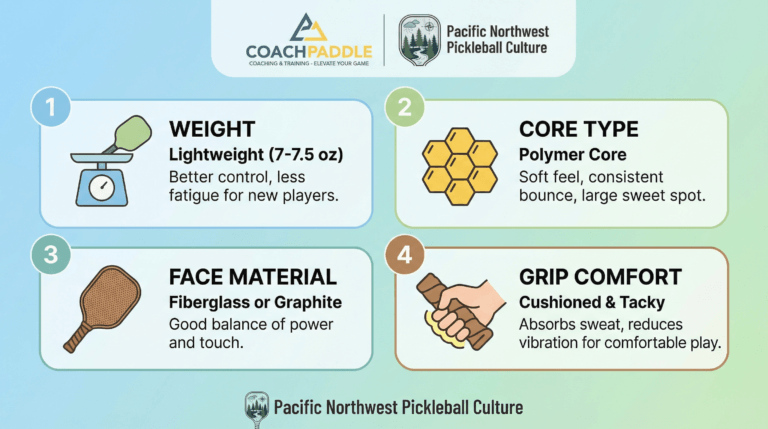
- Lightweight (approx. 7.2–7.6 oz): Easier on the shoulder and wrist, quicker to move at the net, great for folks who volley a lot or have arm concerns. They lack some power on baseline shots, though. I notice this every time I go below 7.6 ounces.
- Midweight (approx. 7.7–8.2 oz): Most popular among advanced players. The sweet spot of easy maneuvering and good power. I usually stick to mid for my own play.
- Heavyweight (8.3 oz and up): Big on power, ideal for strong singles players or people who just like to drive the heck out of the ball. The downside is that control and soft hand play can get trickier, and after a two-hour game, my arm has definitely felt it with heavier paddles.
A lot of players add lead tape to fine tune the weight, especially if they’re chasing a perfect sweet spot. I recommend starting with midweight unless you know you have specific preferences. If you have a tennis background or strong shoulders, a heavier model can add more punch to your shots. On the other hand, if you’ve had tennis elbow or wrist issues, don’t be shy about going lighter.
Core Materials & Face Tech: What They Mean for How to Choose Selkirk Pickleball Paddles
With Selkirk, the core and the face materials make a big impact on play. Here’s what you’ll find:
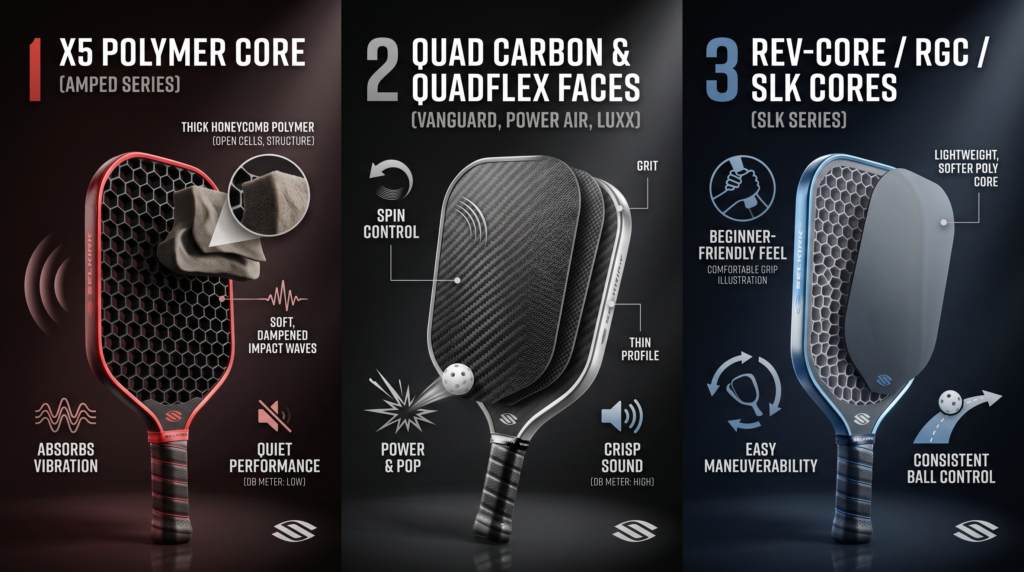
X5 Polymer Core (Amped Series)
This is a honeycomb polymer core, thicker than most. It absorbs vibration well and is quiet (important if you play at sound sensitive facilities). It offers a soft, cushioned feel—great for learning touch.
Quad Carbon & Quad Flex Faces (Vanguard/Power Air/Luxx)
Selkirk uses advanced carbon materials on their higher end lines. The Quad Carbon face is stiff and bouncy, giving a springier feel and improving spin potential off the paddle’s rough texture. The sound is a little sharper, too. These paddles feel lively during hard rallies but still give control for resets and drops.
Rev-Core, RGC, and SLK Paddles
Selkirk tweaks the blend and thickness for their SLK and Evo models, making them a bit softer and lighter. You lose some pop, but it’s easier on beginners or folks who don’t need pro-level killing power.
If noise is a concern where you play, pump up the thickness and avoid the stiffest models. More advanced cores may perform better, but they can give a louder, crisper sound. For most rec centers, any Selkirk paddle is just fine, but check with your facility’s rules if they’re strict about noise.
How to Choose Selkirk Pickleball Paddles by Grip Size, Shape, and Overall Feel
Grip size isn’t the flashiest feature, but it may be the most important for long-term comfort. Selkirk generally offers two main grip circumferences (4.25” and 4.5”), plus different grip lengths to match paddle shapes. Here’s how I help people choose:
- Measure your hand: If your fingers wrap around and overlap, try a smaller grip; if there’s space, go bigger. For most adults, 4.25”–4.5” works just fine.
- Handle length matters for two-handers: If you want to hit a twohanded backhand, go for Invikta or Epic shapes (longer handles). The S2 is short and best for onehanded play.
You can easily build up a grip with over grip wrap, but it’s tough to shrink one down. I usually tell people to err a little on the small side if they’re not sure, since you can always add a wrap. Selkirk’s stock grip is tacky and absorbs sweat well, but some players swap it out right away for something softer or thicker. Don’t be afraid to personalize; it really impacts fatigue during long tournaments.
If you want to improve your soft game, start with How To Execute The Perfect Dink Shot for a simple step‑by‑step breakdown.
How to Match Your Play Style With a Selkirk Paddle
Every paddle brand talks up their flagship models, but matching the paddle to your style is what really gives you an upgrade. Here’s how I help friends decide what to choose Selkirk pickleball paddles, based on how they like to play:
- Defensive/Control Focused: If you prioritize dinks, resets, and patient points, the Luxx Control Air or Amped S2 work well. Big face, soft core, widest sweet spot.
- All Around “Balanced”: Players who want a blend of power and control usually land on Amped Epic, Vanguard 2.0 Epic, or any midweight Epic shape. These feel comfortable in most situations.
- Power/Attack Minded: If you like banging hard, drive shots, and heavy serves, you’ll want a Vanguard Power Air or Amped Invikta. The elongated handle boosts leverage and pop.
- Spin Lovers: Vanguard and Power Air lines take the cake here thanks to their carbon faces with grippy surfaces.
- Beginners/Developing Technique: Evo, SLK Halo, or lightweight Amped series paddles are the easiest to maneuver, helping newer players focus on mechanics before dialing in for tournaments.
Try to identify your strengths and what you like most about your current paddle. If you’re switching from something heavy and find yourself slow at the net, look for a lighter Selkirk. If you’re often missing put away shots, an elongated, heavier model could give you what you need.
Demoing Selkirk Paddles: Why It’s Worth It When Learning How to Choose Selkirk Pickleball Paddles
If you have a retailer nearby, asking to try their Selkirk paddles is super useful. Selkirk even runs a demo program in the US. I’ve watched people’s faces light up after hitting a few balls and realizing how different paddles actually feel in the hand. Reading reviews and specs only gets you so far. Nothing matches actually playing with the paddle.
Some pickleball clubs have Selkirk demo days occasionally, and it’s not uncommon for advanced players to happily let you try theirs if you ask nicely during rec play. The biggest thing you’ll notice right away is how the ball “jumps” off the face, the way the handle fits your grip, and how fast you can react at the non-volley zone.
Warranty, Support, and Longevity
Selkirk stands behind their paddles with a limited lifetime warranty against manufacturing defects for their premium lines. Because of this, issues like delamination, core breakdown, or handle separation are covered—although normal cosmetic wear is not. In my experience, their support process is smooth and surprisingly quick.
For example, I’ve submitted two claims myself: one for a rattle and another for a loose edge guard. In both cases, the steps were simple. You send them clear photos, a short description, and proof of purchase. After that, they usually reply within a couple of days. If the issue qualifies, they typically replace the paddle without any hassle.
Be aware: Warranty doesn’t cover simple chips, cracks from abuse, or natural fading of the graphics over time. That’s pretty standard across the industry. If you play four to five times a week, expect your paddle to last anywhere from eight months to two years before you see real drops in performance, depending on how hard you play.
Cost and Value: Are Selkirk Paddles Worth The Price?
Selkirk paddles range from $60 for the basic SLK models up to $250 for top of the line Vanguard and Power Air models. The big question I’m asked: are they worth it compared to other brands?
In my opinion, you pay a little more, but you get a higher production quality, more paddle choices, and a reliable warranty. I’ve had budget paddles from other brands go dead after six months; my first Amped paddle lasted almost two years before I noticed any real loss in pop. You’re also paying for better face textures—something that’s super useful for adding spin and controlling the ball.
If budget is your top concern, the SLK lineup will do fine until you’re ready to upgrade. If you’re clocking matches every week and care about competitive edges, spending extra on a Vanguard, Amped, or Power Air model usually pays off in performance, durability, and overall experience.
Accessories, Customization, and Caring for Your Paddle
A few quick notes from personal experience:
- Always use a paddle case or at least the cover Selkirk includes. This keeps your face from getting scratched on benches and keeps it out of the sun.
- If your courts are dusty or you play outside a lot, wipe the paddle face clean with a damp (not soaking) towel after matches. This keeps the texture grippy and spin friendly.
- Adding over grip or lead tape isn’t just for pros. Anyone can do this for extra comfort or to tweak the weight. There are dozens of YouTube videos on paddle customization and it’s really easy; it’s worth checking out if you want to experiment.
- Store your paddle somewhere temperature stable and dry. Hot cars or freezing garages can speed up wear and tear on the epoxy and edge guard glue.
Frequently Asked Questions About Choosing Selkirk Paddles
- Are Selkirk paddles USA Pickleball approved?
Yes, all the main models (Amped, Vanguard, Power Air, Luxx) are approved for tournament play in the US. - Do pro players actually use Selkirk, or is it just marketing?
Several top ranked pros like Tyson McGuffin use Selkirk paddles, and you’ll see Selkirk sponsored pros in both singles and doubles events on the pro tour. - What’s the best Selkirk paddle for beginners?
Most people start with the SLK Evo or the Amped Epic. Both are easy to adapt to and have a soft core for learning. - Can you add extra weight to a Selkirk paddle?
Yes, with lead tape around the edge. Start with a small strip at 3 and 9 o’clock for balance, test, and adjust as needed. - What’s the most durable Selkirk paddle?
My Amped Epic and Vanguard Power Air lasted the longest under heavy use. The new Luxx Control Air also feels built to last based on feedback from advanced players. - Should I buy a paddle instore or online?
Buying instore gives you a feel for paddle grip and weight, but online sellers like Selkirk’s website, Amazon, or Pickleball Central make returns pretty easy.
Comparing Selkirk to Other Popular Brands
I get this question a lot: Why not just pick up a paddle from Onix, Paddletek, or another top brand? Here’s my honest breakdown from years of switching around:
- Selkirk vs Onix: Onix’s most famous paddle is the Z5; great price and feel, but the sweet spot is smaller and it swings a touch heavier than most comparable Selkirk paddles. Selkirk gives you more shape choices and a softer feel, especially in the Amped series.
- Selkirk vs Paddletek: Paddletek is popular for control and touch, especially their Tempest line. I find Selkirk’s Vanguard line offers the same finesse with a bit livelier play.
- Selkirk vs Electrum: Electrum has a great carbon face and spin, but Selkirk holds up longer for players who are hard on their paddles.
- Selkirk vs Joola: Joola offers newer face tech and flashy graphics, but Selkirk’s shape variety, USA made quality, and warranty make a difference for a lot of players.
All that said, personal feel trumps brand marketing every time. I recommend trying out different brands and seeing which one works best for you before making a big investment.
My Step-by-step Tips for Picking a Selkirk Paddle
- Set your budget. Decide how much you want to spend, knowing that SLK and Evo run under $100 while Amped, Vanguard, Luxx, or Power Air cost $120–250.
- Pick your play style. Are you defensive, balanced, or aggressive? This filters which lines you’ll want to check out first.
- Choose your shape. Epic = balanced, Invikta = power, S2 = max control. If you like twohanded shots, look at longer handles.
- Decide on weight. Light = maneuverability, mid = balance, heavy = power. If in doubt, midweight fits most players best.
- Select grip size. Measure your hand or just go with standard (4.25”) unless you know your preference.
- Test before you buy. Experiment at your club, through Selkirk’s demo program, or borrow from friends. First impressions matter a lot!
- Register your paddle. If you go with Selkirk, register for warranty coverage right away through their website.
- Fine tune if needed. Add grip wraps, lead tape, or change your paddle shape later. Most players tweak their setup after a few weeks of playtime.
You can also check the official USA Pickleball approved paddle list here to confirm which models are tournament‑legal.
Final Thoughts on How to Choose Selkirk Pickleball Paddles
I keep coming back to Selkirk for new releases and serious matches because the paddles just work and hold up. For new players, Selkirk’s lineup is forgiving and super easy to adjust to. For experienced folks, the control, spin, and build quality are what makes them worth the extra cost. Keeping your style, comfort, and preferences in mind is key. It’s rare that one paddle is right for everyone, but Selkirk’s variety means there’s usually a paddle that feels like it was made for you.
If you’re not sure where to start, browse Selkirk’s comparison charts on their site, watch review videos, and, if possible, get your hands on a demo paddle. And don’t forget about warranty registration; nothing puts your mind at ease more than knowing you’re covered if anything weird pops up.
Still got paddle questions or have your own experience with Selkirk paddles? Drop your comments below and I’ll do my best to help. Pickleball’s popularity means gear is getting better every year, and choosing the right paddle is a big part of enjoying the game as much as possible.