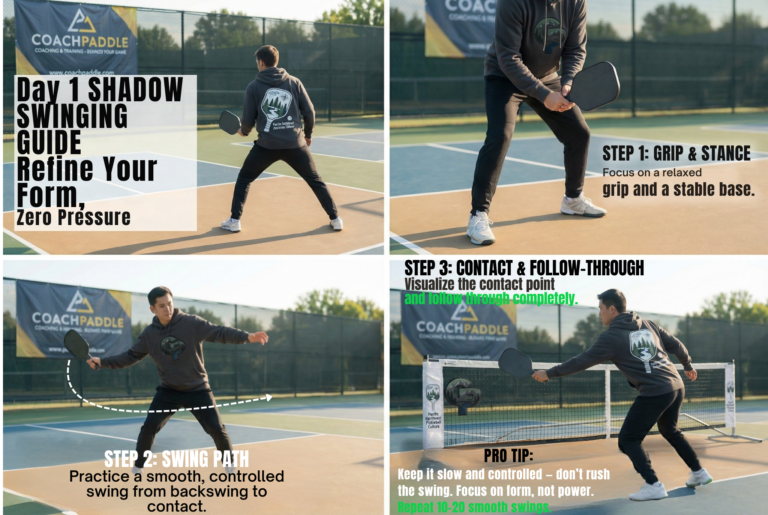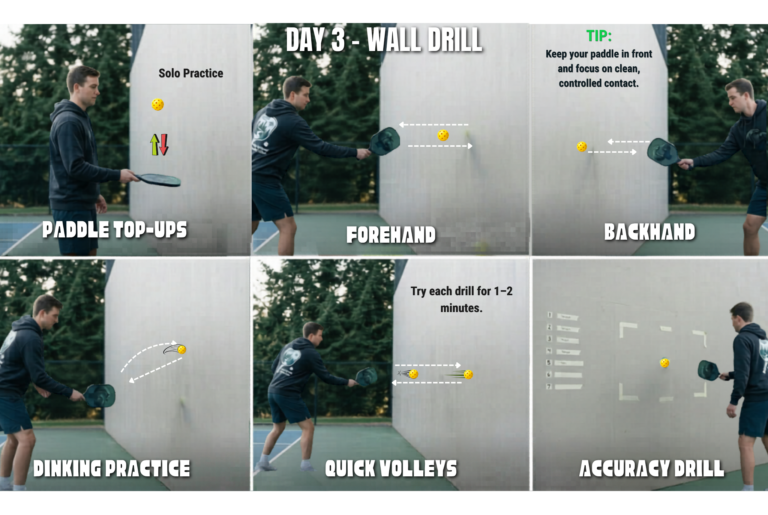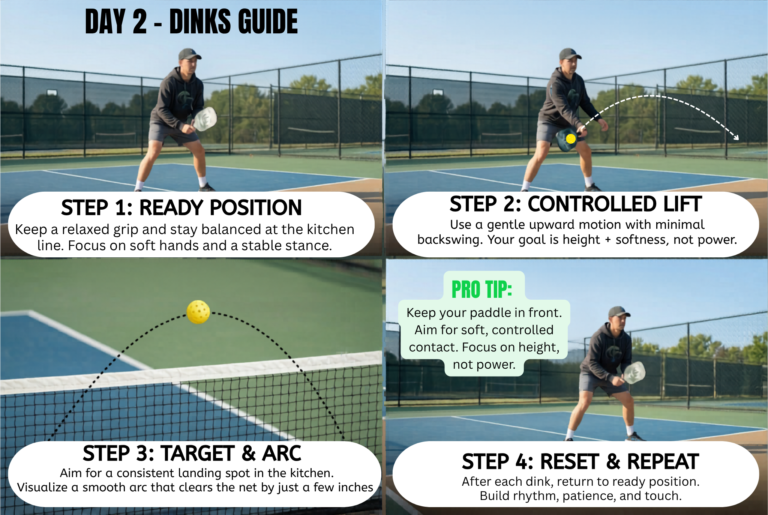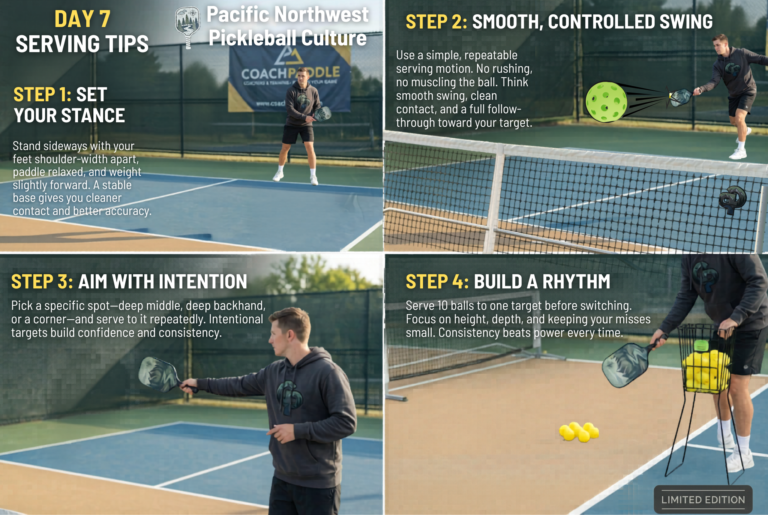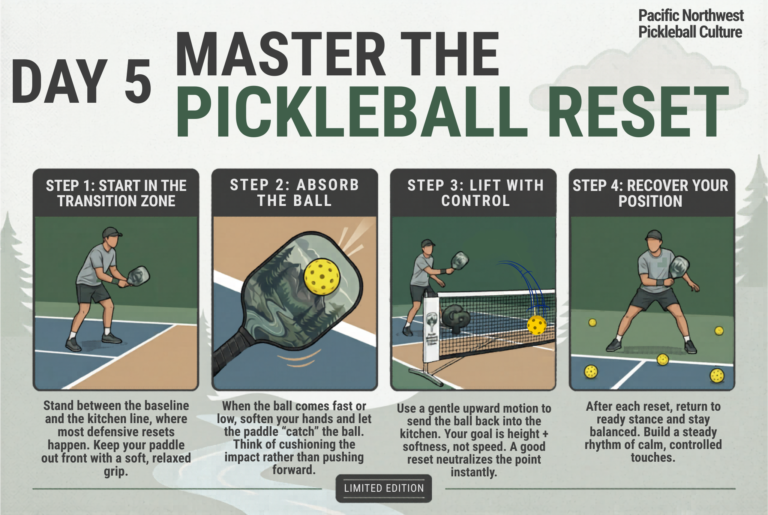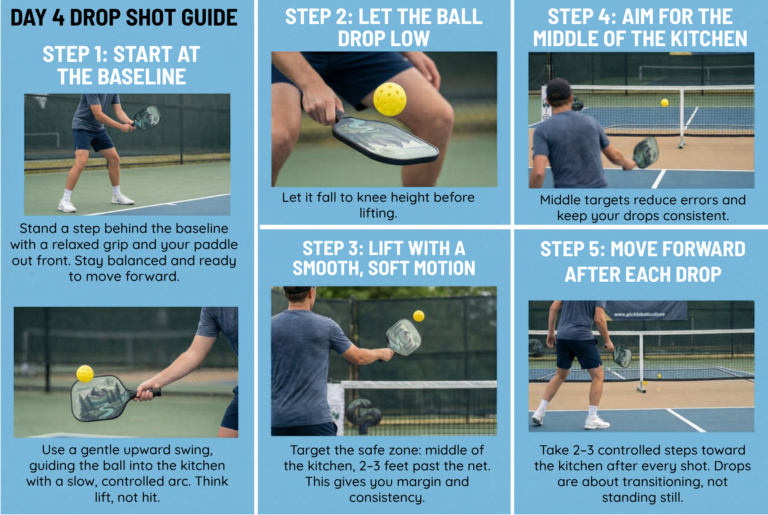
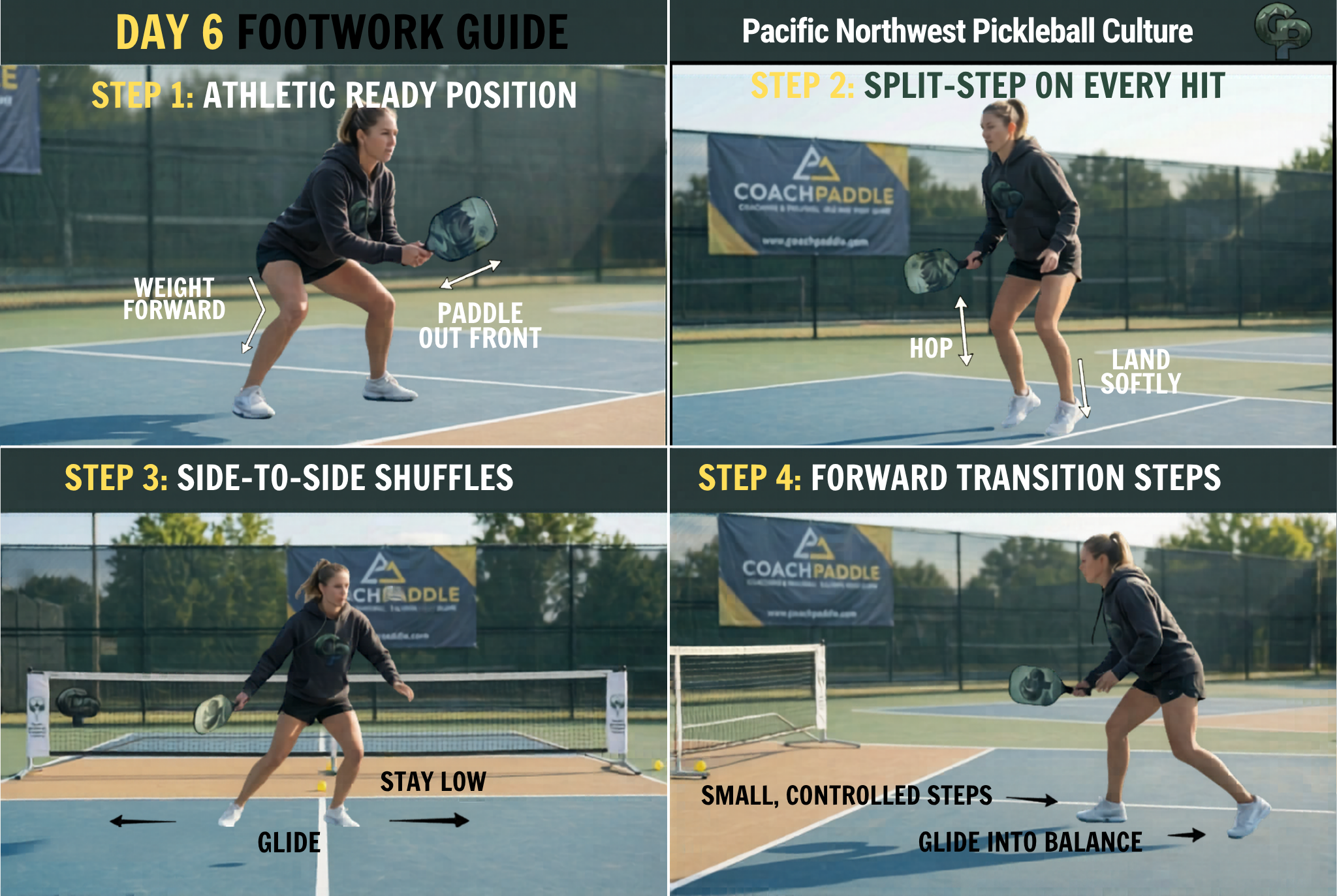
Good footwork is one of the biggest advantages a new player can build early, and this pickleball footwork for beginners guide walks you through the simple steps that help you move with balance, control, and confidence. Whether you’re learning how to approach the kitchen or trying to stay centered during rallies, these fundamentals make every shot easier.
Pickleball footwork guide for beginners: Quick Tips
I’ve seen players with decent swings lose points just because they aren’t in the right spot at the right time. In pickleball, getting your feet in the right position means you can react quicker, keep your balance, and reach those corners without scrambling. It’s not about being lightning fast. It’s about using the right moves to get into position, so you don’t have to stretch awkwardly or rush your shots.
This guide breaks down pickleball footwork for beginners so new players can move confidently.
For quick recommendations, explore our Best Pickleball Paddle For Beginners list.
Pickleball Footwork Guide for Beginners: Simple Steps to Move Better
Stepping onto the court for the first time can be a bit nerve-wracking. I was surprised at how just a few tweaks in footwork made a huge difference for me. Here are the basic moves every beginner should focus on first:
- Ready Position: Stand with feet a little wider than shoulder width, knees bent, and weight slightly forward on your feet. This lets you react quickly in any direction.
- Shuffle Steps: Instead of crossing your feet, use lateral shuffles to move side to side. This keeps you balanced and lowers the risk of tripping.
- Split Step: Just as your opponent hits the ball, take a little hop and land on both feet. This helps you push off in any direction and react fast.
- Recovery Steps: After you hit a shot, step back to your original spot or the next best position. Don’t stand still; always get ready for what comes next.
Simple Guide for Pickleball Footwork Drills for Beginners
Good pickleball footwork guide for beginners starts with balance and small, controlled steps.
- Warm Up Right: Start with a quick jog, some side shuffles, and light jumping jacks. Warming up your legs keeps you nimble on court.
- Practice the Ready Position: Hold the ready position and bounce lightly on the balls of your feet. Notice how much easier it is to move quickly from this stance.
- Side to Side Shuffles: Shuffle across the width of the court several times. Focus on staying low and not crossing your feet.
- Split Step Drills: Have someone toss a ball to different spots and practice split stepping just as they release the ball, then move toward where it lands.
- Recovery Drill: Hit a soft shot, move quickly back to your “home” in court, and repeat. This helps you avoid standing still after a shot and gets you in the habit of always returning to a good spot.

If you want to really give a boost to your progress, add in a few more drills each session. Try doing rapid foot taps on a step to build agility or put down markers and weave in and out of them. This mix of movement keeps things fresh and builds speed, helping transform your footwork in no time. Also, don’t be shy about asking experienced players for feedback; hearing what they spot in your movement can help you improve even quicker.
Common Footwork Mistakes New Players Make
Everyone’s made these mistakes at some point—I know I have. New players often:
- Stand flat-footed: If your heels are glued to the ground, you’re always going to react slower. Tip: Stay light and push off your toes.
- Overreach: Going for a ball with just your arm can throw you off balance. Tip: Use small steps to get into position instead of stretching as far as you can.
- Crossing feet while moving sideways: This messes with your balance. Tip: Stick with side shuffles so you’re always balanced.
- Skipping the split step: Missing that light hop will slow your reaction time. Tip: Remind yourself to split step any time your opponent is about to strike.
Fixing Habits with Mini Drills
Setting aside just five minutes a session for focused footwork makes a big difference. Try 30-second bouts of shuffling side to side, or challenge yourself to “reset” your ready position between every shot for a few minutes.
Repeating these basics builds muscle memory, so good habits stick without thinking too hard about them. To mix things up, add variations like hopping on one foot or quick backpedals, which simulate live play situations and prepare you for game-day movement.
As you build your gear setup, reviewing the latest Pickleball Protective Eyewear Options helps you choose frames that match your needs.
How to Move from Baseline to Kitchen
Mastering movement at the net and back at the baseline helps you play smarter. Here’s how I approach each:
Footwork at the Kitchen Line (aka Non-volley Zone)
The kitchen line is where the action is, so you want quick feet here. Instead of big movements, use tiny side shuffles to cover balls hit toward your sideline. Stay low, feet apart, and shuffle; never cross your legs. If you need to play a dink, step forward with one foot, push off, and quickly get back to your balanced ready position.
Baseline Movement
When you’re back at the baseline, you’ll need to be ready for deep balls, lobs, and fast drives. The same basic rules apply: Start from a ready position, adjust with quick side steps, and after hitting, use a crossover step if you need to cover lots of ground quickly.
For short balls, move forward with small steps; for lobs behind you, turn sideways and move using a crossover or running step when you’re outside the reach of shuffle steps. Sometimes, the game heats up and you might have to pivot quickly to defend a tough shot, so practicing those transitions can make handling pressure much easier.
Guide to Improve Pickleball Footwork for Beginners
- Watch the Ball: It sounds basic, but tracking the ball early helps you move before your opponent’s shot even lands.
- Shoes Matter: Wear court shoes with good grip and lateral support. Running shoes don’t cut it for good side to side movement.
- Keep Drills Short and Fun: Mixing footwork practice into games (like “Pickleball Simon Says” for movement) keeps things light. If you make practice enjoyable, you’ll stick with it and improve faster.
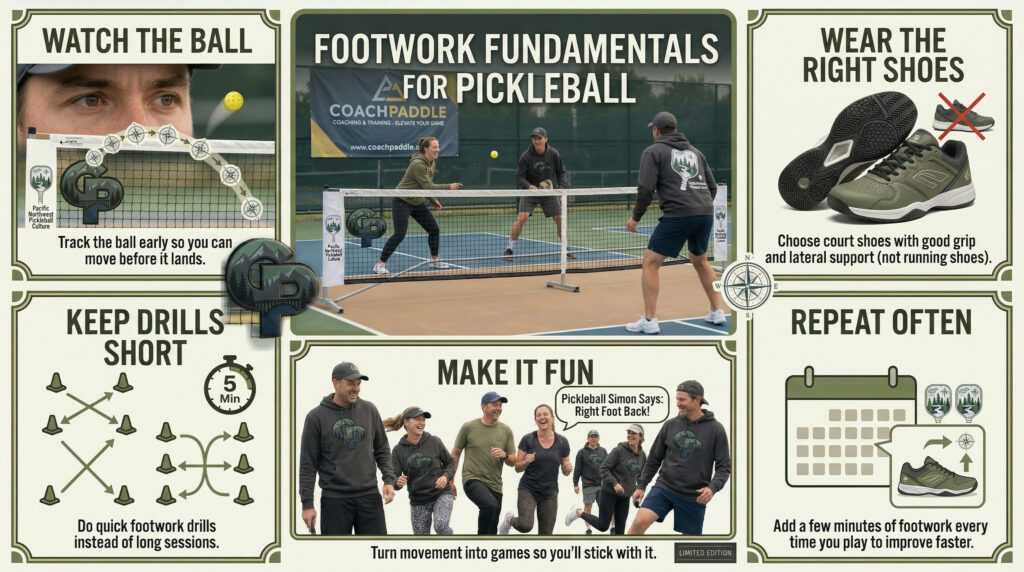
Consistency really pays off. A bit of footwork practice every time you play will have you moving more naturally in just a few games. Another tip: set small goals, like focusing on always getting into ready position or nailing quick shuffle steps for a whole match. Tracking your improvements helps keep motivation high.
Extra Advice: Footwork for Doubles vs. Singles
Whether you’re playing singles or doubles, the footwork basics remain similar, but your positioning changes:
- Doubles: Stay closer to your partner and move as a unit. Use side shuffles to keep an even distance, so you’re covering your half without leaving gaps.
- Singles: You’ll cover more ground yourself, so shuffle across the whole court and be ready to move up or back with speed. Crossover steps and sprints come into play more often here.
Communicate with your partner in doubles, calling “mine” or “yours” as needed. That helps you know who’s moving where, so you’re not both lunging for the same ball. It’s also smart to plan who covers certain areas in advance, which reduces confusion and helps your team play in sync.
Cool Features of Footwork to Make Life Easier
- Efficient Energy Use: Good footwork means you don’t waste energy scrambling or recovering from off balance shots. More energy left for longer rallies.
- Better Shot Selection: If you’re in position early, you see the court better and make smarter shot choices. You’re not just reacting. You’re planning ahead.
- Lower Risk of Injury: Proper footwork (with shoes and warmups) protects knees and ankles, reducing the chance of unexpected slips or twists.
- Mental Confidence: When your feet know what to do, you spend less time worrying about where to be and more time enjoying the game.
Improve transitions with the Resetting From Mid‑Court guide.
Frequently Asked Questions
Question: Do I need fancy shoes for good footwork?
Answer: Notfancy, but court shoes with firm soles and good grip help a lot. Running shoes might feel comfortable but don’t give the side to side support you need for pickleball.
Question: Should I jump to reach balls?
Answer: It’s rare to jump in pickleball. Small hops like the split step are helpful, but jumping for shots often leaves you out of position. Small, quick steps are safer and more helpful.
Question: How can I practice footwork if I’m not on a court?
Answer: Even at home, shuffling side to side, practicing split steps in place, or using a hallway for back and forth drills can help.
Question: Does footwork get easier as I improve?
Answer: Absolutely! The more you play and practice, the more natural those movements feel, and you won’t have to think as hard about each step.
If you’re looking for a great paddle, the Selkirk Evo Control Max Vs Other Brands is one of the most reliable options for players who value touch and consistency.
For official rules and warm-up recommendations, visit the USA Pickleball website.
Good footwork often gets overlooked, but it’s a huge part of enjoying pickleball; especially for beginners looking to build confidence and enjoy longer rallies. Focusing on small moves, staying balanced, and remembering to recover after every shot will really give a boost to your game.
Once you start putting these tips into your regular play, you’ll feel lighter on your feet and find that pickleball becomes even more addictive. Keep practicing, stay curious about new tips, and you’ll be moving with purpose every time you hit the court.