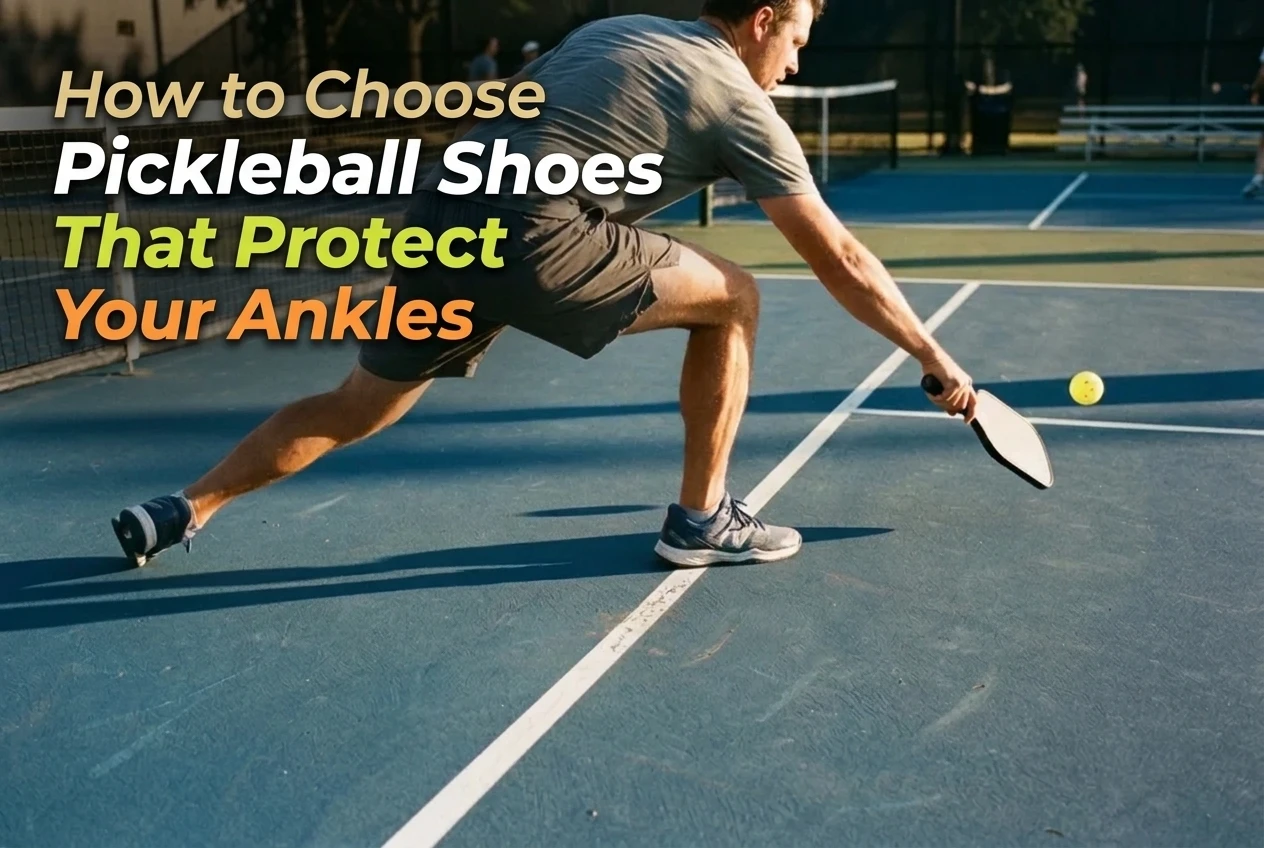
Choosing the best pickleball shoes for lateral support starts with knowing when ankles actually roll. Most pickleball ankle rolls happen in the same few moments: a quick step to the side at the kitchen line, a lunge for a wide dink, or a recovery step back toward the center. Your shoe is the only thing between your foot and the court during those moves, so its design decides how much of the side load your ankle absorbs. This article covers which design features resist that rolling and how to check for them before you buy. Those features matter more than the brand name on the box.
Why pickleball wrecks ankles: the lateral moves that load your shoe
Pickleball is played in a small space with constant direction changes. Three movements put the most sideways force through your shoe.
The split step. You land on both feet as your opponent hits, then push off sideways in whichever direction the ball goes. The landing is quick and the push-off follows immediately, so the shoe has to stay firm under you in both.
The lunge. A wide dink or a block volley pulls you onto the outside edge of one foot with your weight moving past it. If the shoe’s sole is narrow or its upper stretches, the foot tips over the edge of the sole.
The recovery step. After a lunge you push back toward the center, often on the same foot that just absorbed the stretch. The foot is already loaded and has to reverse direction.
On a hard court, none of this is cushioned by the surface. The court does not give, so the shoe’s structure and your own joints take the load. Hard courts also grip the sole firmly. If the shoe grips while your body keeps moving sideways, the force goes into the ankle and knee. A good lateral shoe keeps your foot flat and centered on the sole while that happens.
The five features that actually control lateral stability
Look for these five features. Together they decide how much the shoe resists side-to-side rolling.
1. A wide, flat base
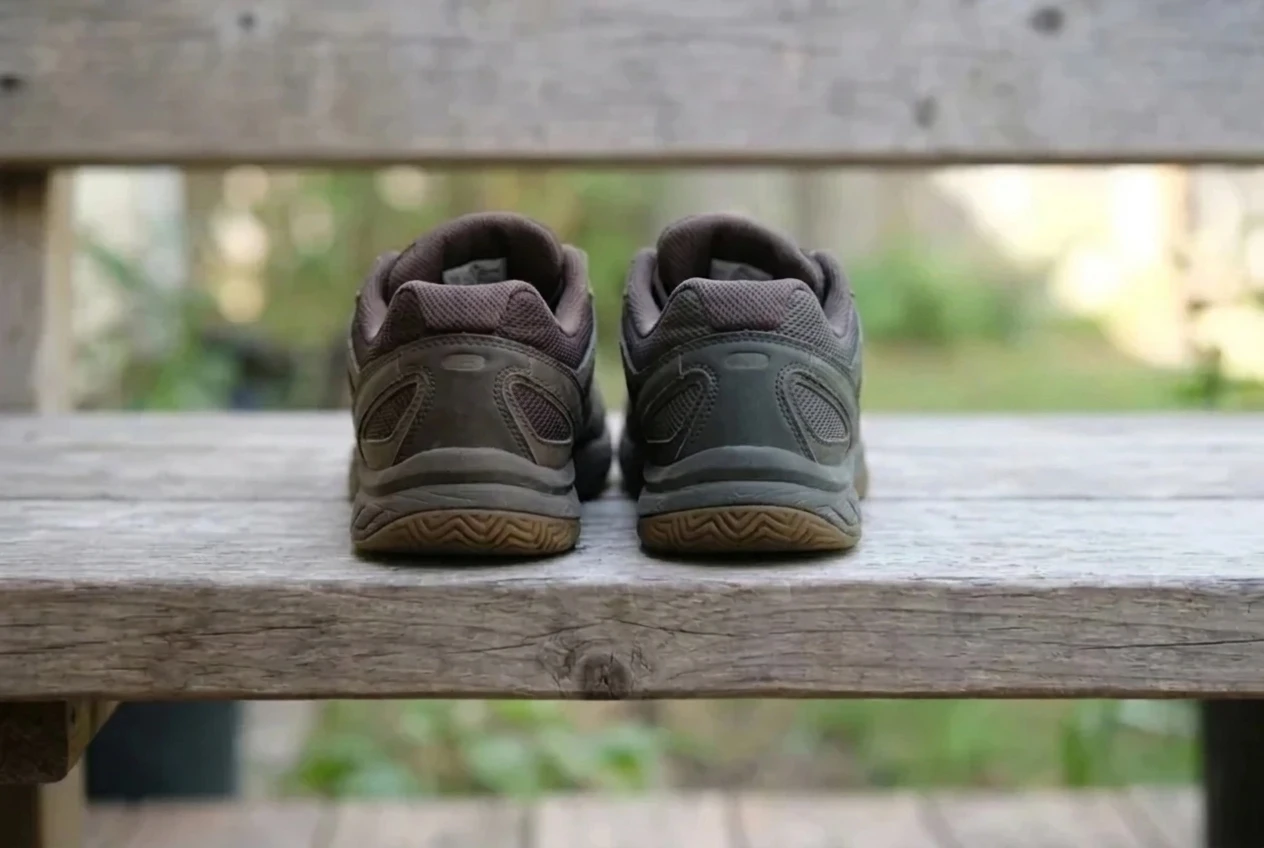
The sole should be at least as wide as your foot, and ideally slightly wider at the forefoot and heel. When you lunge, the sole’s outer edge is the pivot point. A narrow sole tips sooner, and a wider platform gives your foot more room before it starts to roll. Look at the shoe from behind and from the front: the sole should extend a little past the upper on both sides.
2. A lower, firmer midsole
Thick, soft midsole foam feels comfortable standing still but compresses unevenly when you land on one side. The foam squashes on the outside edge and the shoe tilts. A lower and firmer midsole keeps your foot closer to the court and compresses more evenly. This is a trade-off, since a firmer shoe gives less cushioning for your joints, but for lateral stability less stack height generally means more control.
3. A structured heel counter
The heel counter is the stiff cup around the back of your heel. A firm one holds the heel in place so it cannot tip sideways inside the shoe. Squeeze it with your fingers. If it folds in easily, it will not control your heel during a recovery step.
4. Midfoot torsion support
Many court shoes have a shank or torsion plate in the arch area. This part lets the forefoot bend where your toes bend while keeping the middle of the shoe from twisting. A shoe that twists freely in the middle will let your foot twist with it when you land on the side of the sole.
5. A secure upper and lacing system
The upper is the part that stops your foot from sliding over the sole’s edge. Look for side overlays or reinforced panels along the sides of the forefoot, and a lacing system that lets you lock the midfoot and heel down. A stretchy or mesh-only upper may be breathable, but if it bulges outward when you shift your weight, the foot is leaving the platform.
Pickleball, tennis or running shoes: what each does to your side-to-side grip
Shoes are designed around the movement of a particular sport, and the difference matters most in the lateral direction.
Running shoes are built for forward motion. They usually have thick, soft midsoles and uppers designed to flex and breathe, with little structure along the sides. That works for a straight stride, but those soft midsoles can tilt when you push off sideways, which is the opposite of what you want at the kitchen line. Running shoes are generally the weakest choice for lateral movement.
Tennis shoes are designed for repeated side-to-side movement on hard courts. They tend to have reinforced sides, stiffer midfoot support and outsoles made for sliding and gripping on a hard surface. Many pickleball players on hard courts wear them for exactly these reasons, and they are a sound option when a dedicated pickleball shoe does not fit you well.
Pickleball-specific shoes are made for the sport’s small court and quick direction changes. Some are lighter than tennis shoes, and some are built with extra durability in areas where pickleball wears a sole. Because the category is newer and designs vary between brands, do not assume every shoe labeled “pickleball” has strong lateral support. Judge each pair on the five features above rather than the label.
Indoor court shoes, such as those designed for volleyball or basketball, are another category some players compare. Their design varies a lot, so evaluate them the same way you would any other shoe.
How to shortlist court shoes for stability and hard-court durability
You can narrow the choices before you try anything on. Work through these steps.
- Start with category. Limit your list to tennis shoes and pickleball-specific court shoes. Set running shoes aside unless a model clearly shows court-style support features.
- Read the product description for the five features. Look for mentions of a heel counter, a midfoot shank or torsion support, a stable or wide base, and reinforced side panels. If the listing never mentions support and only talks about cushioning and weight, treat that as a sign the shoe was designed around comfort first.
- Check the outsole description. Hard courts wear soles quickly, particularly at the toe and along the outer edges. Look for a durable rubber outsole and some form of reinforcement at the toe. Manufacturers often name this in the product description, and you should confirm it from their listing or the shoe itself rather than assume it.
- Compare the weight against the support. A very light shoe may feel quick but often has less structure. Decide whether you would trade some speed for more stability, and most players who roll ankles will.
- Check the return policy. You will only know how a shoe behaves in your own movement once you have worn it on a court, so buy from a seller that lets you return a pair tried on a clean indoor surface.
Aim for a shortlist of two or three pairs, not ten. Then put them through the test below. If you want the wider buying checklist, covering sizing, price and sole types, our full guide linked at the end covers it.
The 60-second lateral test to run before you commit
This test works in a store or on a court. Wear the socks you play in and lace the shoes fully, including the top eyelet.
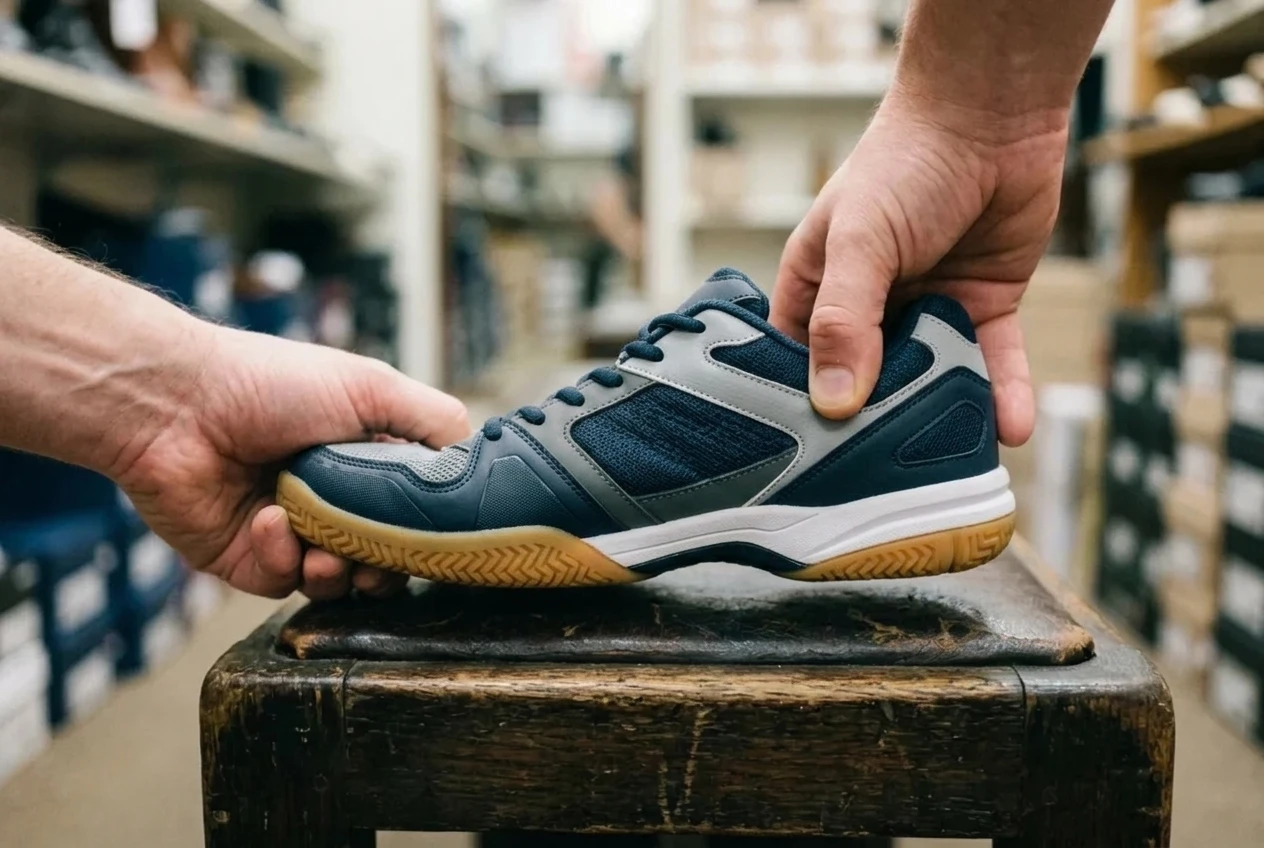
First 15 seconds: the hand check.
- Hold the shoe at the heel and toe and twist it. The forefoot should bend where your toes bend, and the middle should resist twisting.
- Squeeze the heel counter. It should push back against your fingers.
- Press the side of the upper near the ball of the foot. It should feel supported and not collapse inward.
Next 15 seconds: the stance check.
- Stand on one foot, then rock gently onto the outer edge of that foot. The shoe should feel like a steady platform, and your foot should not slide toward the outside wall.
- Look in a mirror or at your phone camera from behind. The heel should stay vertical and not lean as you shift your weight.
Final 30 seconds: the movement check.
- Do a small split step, landing on both feet and pushing off sideways.
- Take three or four quick side shuffles in each direction.
- Lunge to each side as if reaching for a wide dink, then push back to center.
Afterward, ask four questions. Did your foot slide inside the shoe? Did the upper bulge over the edge of the sole? Did your heel lift or wobble? Did the shoe feel like it tilted before your foot did? Any “yes” is a reason to cross that pair off. If a shoe passes all four on both feet, it is a strong candidate. On a court, repeat the shuffles on the actual surface, because grip feels different on hard court than on a store floor.
Fit mistakes that undo a stable shoe
A shoe with excellent lateral features still fails if it fits badly. These are the most common problems.
- Buying too large. Extra room lets your foot slide and your heel lift. You want about a thumb’s width of space in front of your longest toe, and no more. Your midfoot and heel should feel held.
- Trying shoes on in the wrong socks. Fit the shoe with the same sock thickness you play in. A thicker sock changes how the upper holds your foot.
- Skipping the top eyelet. Using every eyelet, including the one nearest the ankle, is what locks the heel against the counter. Leaving it unused is a common way to lose heel hold.
- Testing in the morning only. Feet tend to be larger later in the day, so try shoes on then, since that is closer to how they will fit after a session on court.
- Ignoring width. If the shoe is too narrow, your foot will spill over the sole’s edge. If it is too wide, the foot slides. Choose a width option when the brand offers one.
- Wearing orthotics without checking. If you use inserts, bring them. A thick insole can raise your foot in the shoe and weaken the heel hold. Try the shoe with the insert in place.
When to retire your shoes, and how to make a good pair last
Lateral support wears out before the shoe looks finished. Check for these signs every few weeks.
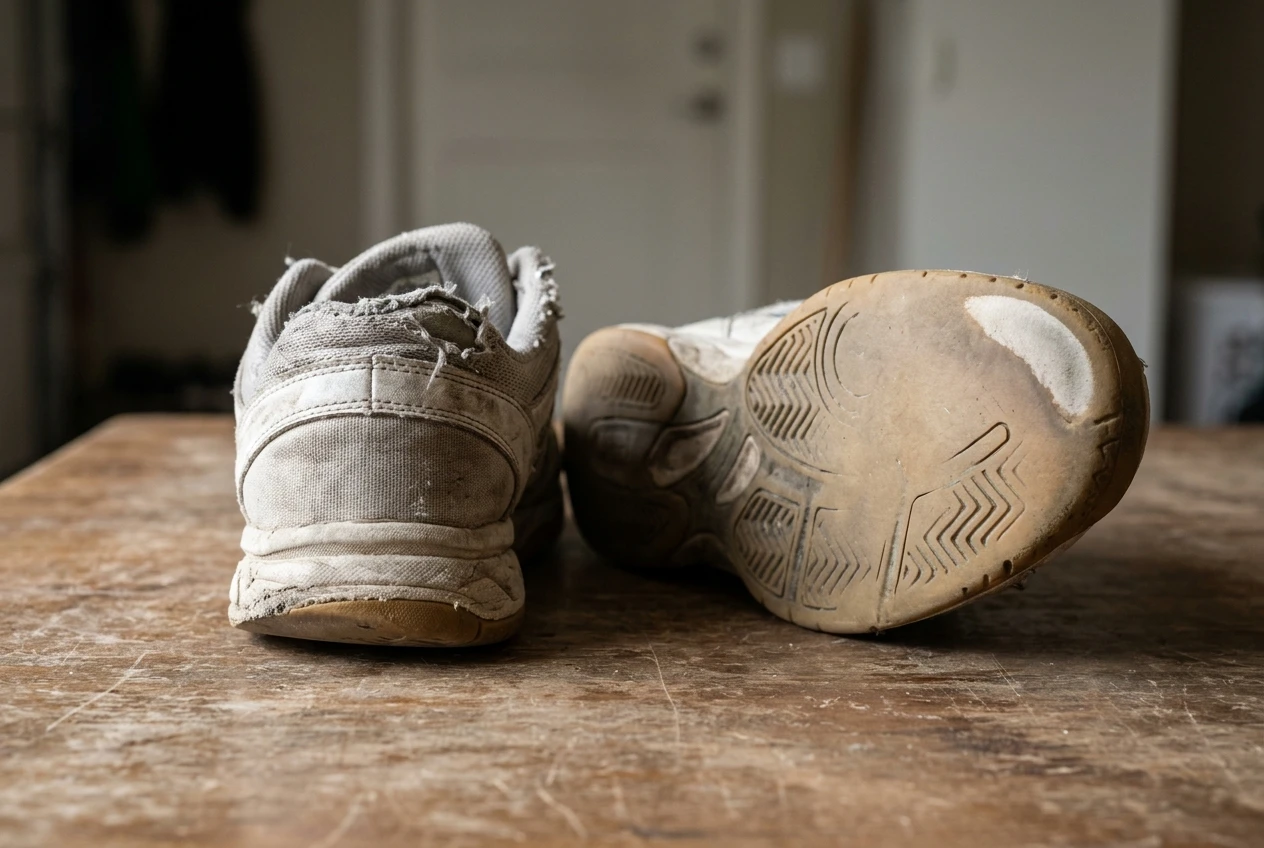
- Set the shoes on a flat table and view them from behind. If a heel or upper leans to one side, the midsole has compressed unevenly and the shoe is no longer stable.
- Look at the midsole sides. Deep creases or a flattened look on the outer edge mean the foam has lost its structure.
- Check the outsole. Smooth patches at the toe and the outer edge mean reduced grip, and bald spots are a reason to replace the shoes.
- Press the heel counter again. If it has softened or collapsed since you bought them, it can no longer hold your heel.
- Watch for separation. Any gap where the upper meets the sole is a failure point.
To get more life from a good pair:
- Keep your court shoes for the court. Walking on rough asphalt or concrete wears the outsole faster.
- Rotate between two pairs if you play often, so the midsole foam has time to recover between sessions.
- Let them dry after play, with the insoles pulled out if they are damp, and keep them away from direct heat.
- Avoid machine washing, which can weaken glue and structure. Wipe them clean instead.
- Limit toe dragging when you can, since it is one of the quickest ways to wear through the front of the sole.
Choosing shoes on structure, not only on looks, gives your ankles real protection on hard courts and gives you shoes that hold up under heavy play. Read our full guide on how to choose pickleball shoes, then pair your new shoes with the split step work in our advanced split step article.