
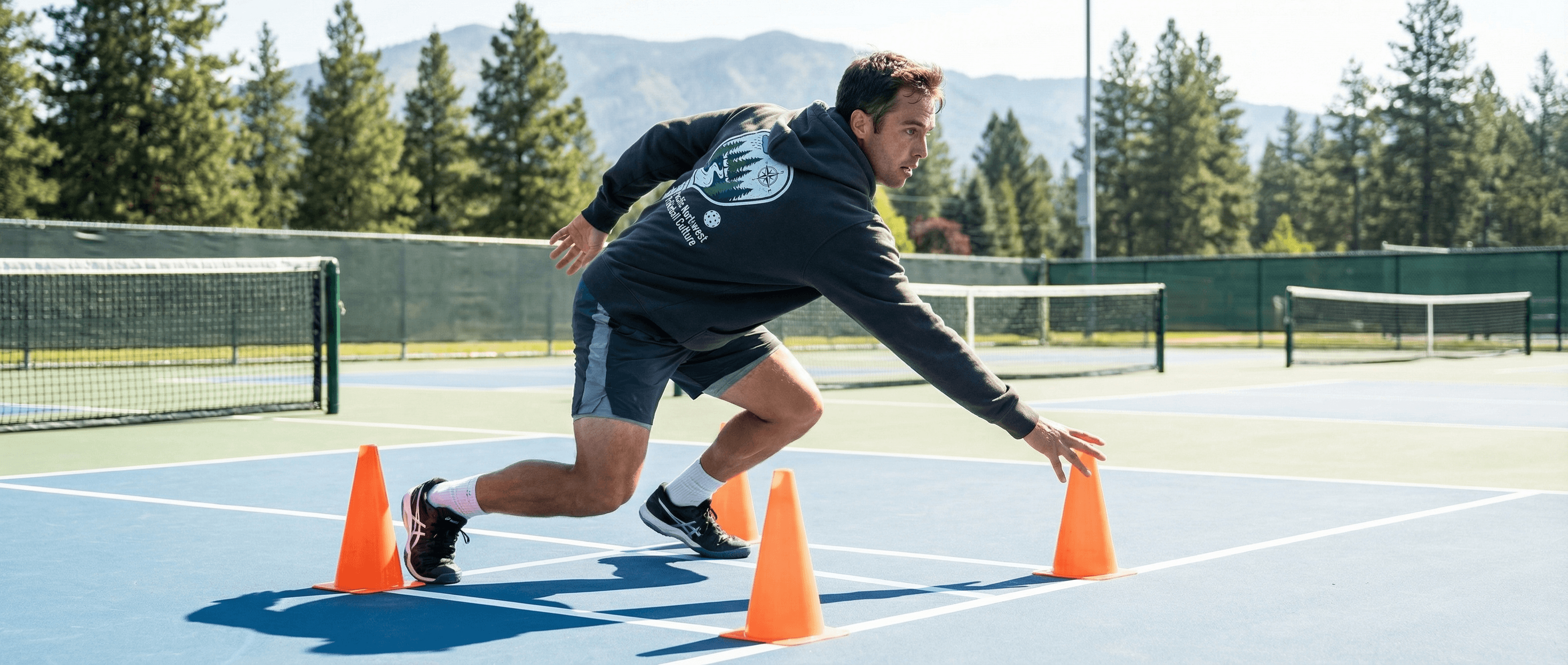
Pickleball agility drills help you move faster, stay balanced, and react with confidence during every point. As a result, strong strokes don’t matter if your feet can’t get you to the ball. Because of this, these drills build the speed, control, and footwork you need to win more rallies.
Why Agility Matters
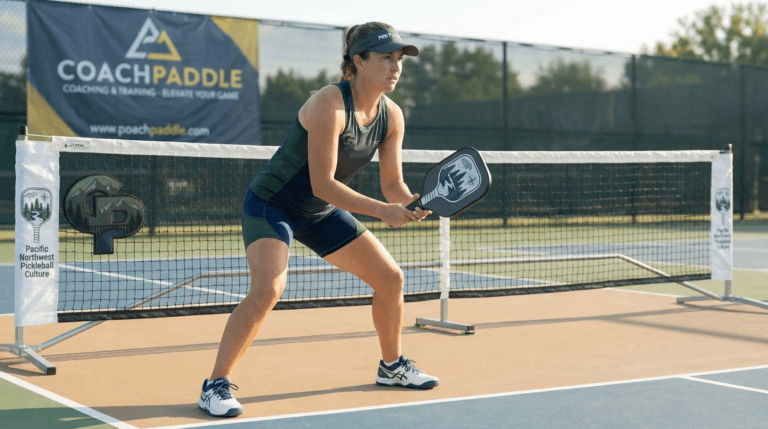
Mastering agility is vital for quick direction changes and balance. Because of this, even strong strokes won’t matter if your feet can’t reach the ball in time. Staying low and moving smoothly gives you an edge in every point. Sharp footwork often makes the difference in winning close matches.
For players focused on power‑to‑control balance, compare your options with our Best Paddle Materials For Advanced Players.
1. Side‑to‑Side Shuffle (Pickleball Agility Drill)
Start at the kitchen line in a low stance. Then, shuffle quickly to markers on your right and left without crossing your feet. After that, reset your balance and stay ready for the next movement.
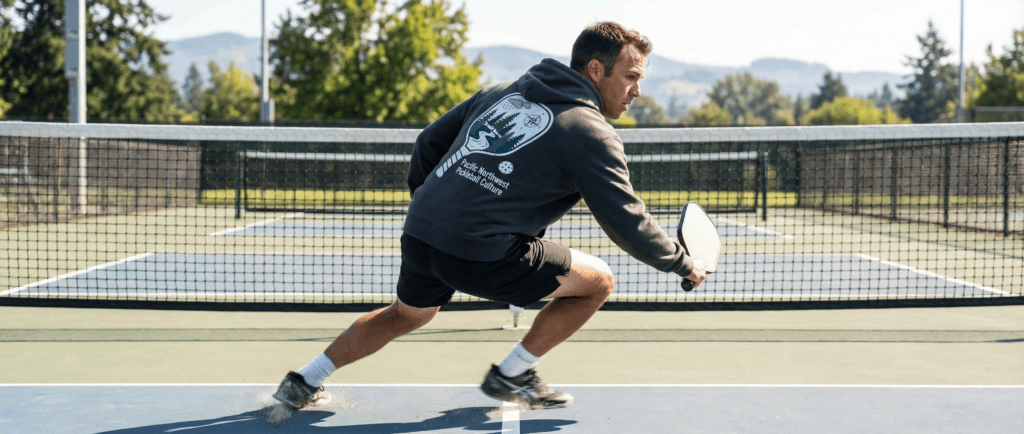
This pickleball agility drill builds lateral speed and helps you defend the kitchen more effectively.
2. Figure Eight Cone Drill for Pickleball Agility
Set up two cones and weave through them in a figure‑eight pattern. Then, stay low and light on your toes. After that, focus on smooth, controlled footwork.
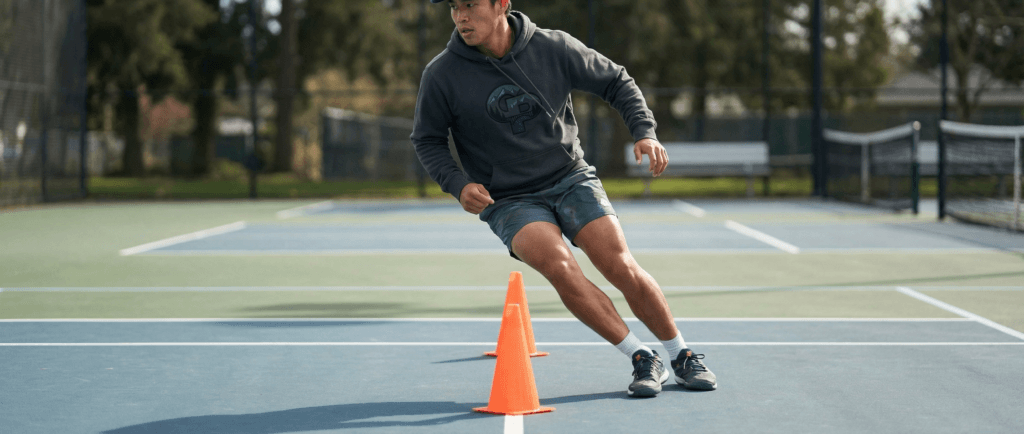
This drill improves smooth movement and fast recovery after chasing tough shots.
3. Drop Step Reaction Drill
Have a partner point in a random direction. Then, pivot and drop‑step immediately to simulate chasing a lob. After that, reset your stance and stay ready for the next cue.
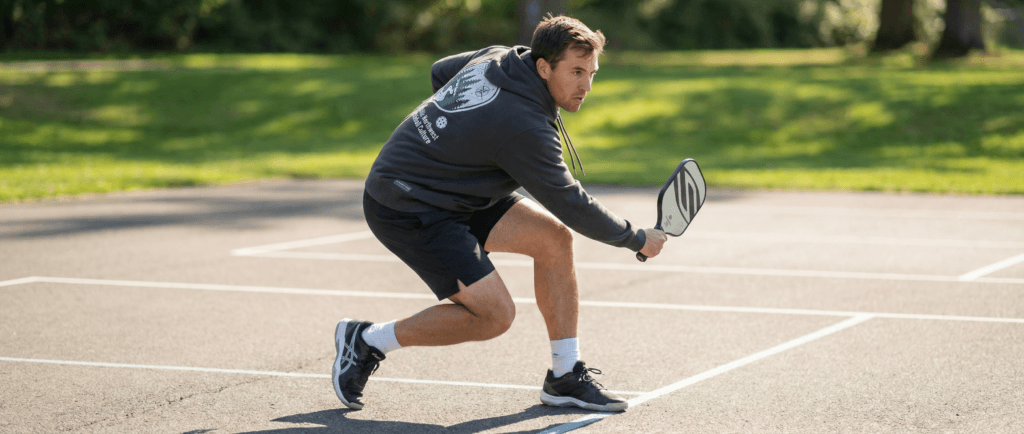
This builds reaction speed for deep balls and helps you maintain court position.
If you want to compare Joola’s lineup with other top performers, check out our guide on Top Joola Pickleball Paddles 2026.
4. Zigzag Sprint Drill for Pickleball Agility
Place 5–6 cones diagonally across the court. Then, sprint to each one, touching the cone and staying low through each turn. After that, drive your knees forward to stay quick and controlled.
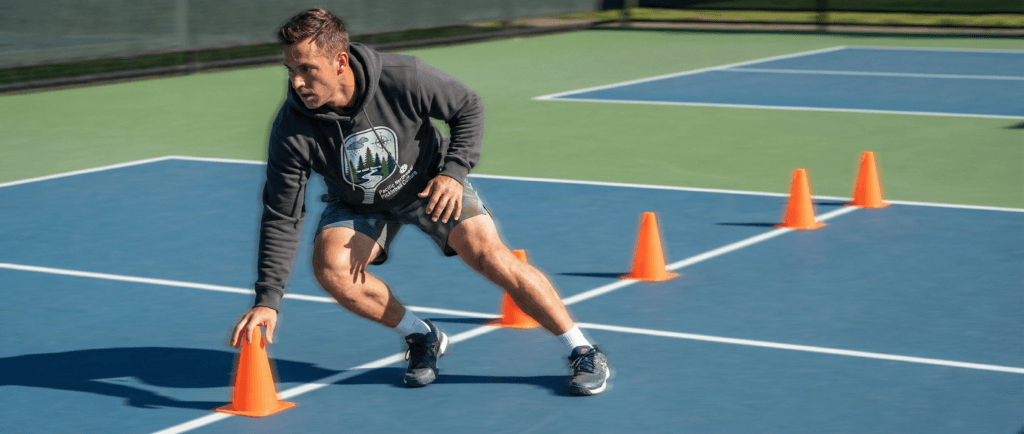
This sharpens your ability to cut sharply and reach difficult angles.
5. Fast Feet Ladder (Pickleball Footwork Drill)
Use an agility ladder or tape lines. Then, practice “in‑and‑out” steps and sideways shuffles. After that, keep your feet light and your hips square.
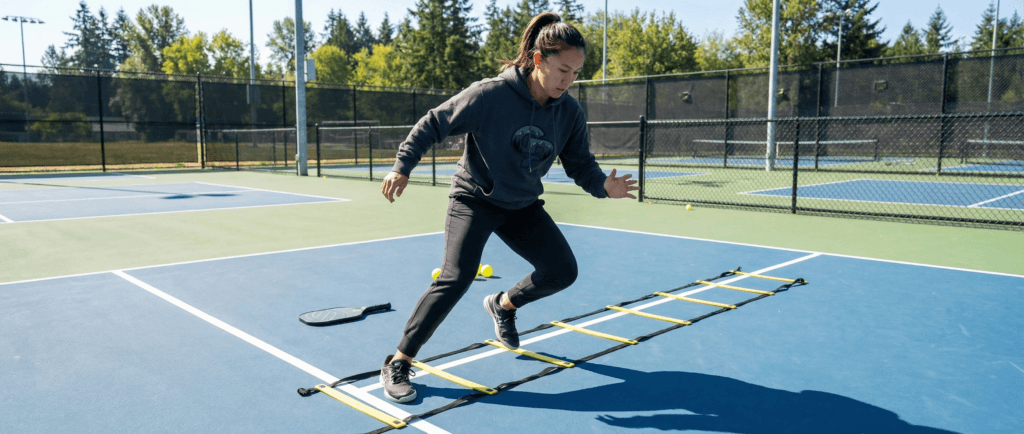
These pickleball agility drills build fast feet for intense rallies and quick transitions.
6. Box Drill for Pickleball Court Coverage
Set up four cones in a square. Then, sprint to each corner and touch the outside of each cone. After that, change direction quickly to build sharp footwork.
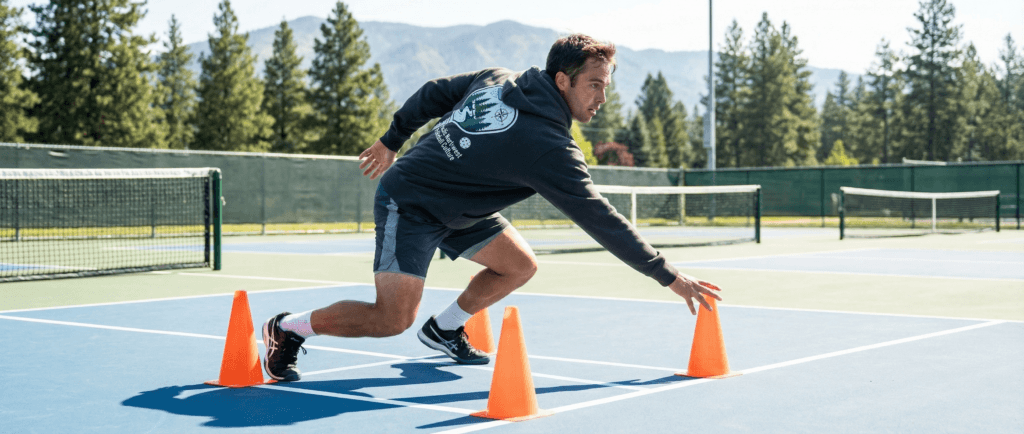
This improves endurance and full‑court movement.
7. Quick Response Paddle Drops
Drop a ball from your hand and tap it up before it bounces twice. Vary the drop location.
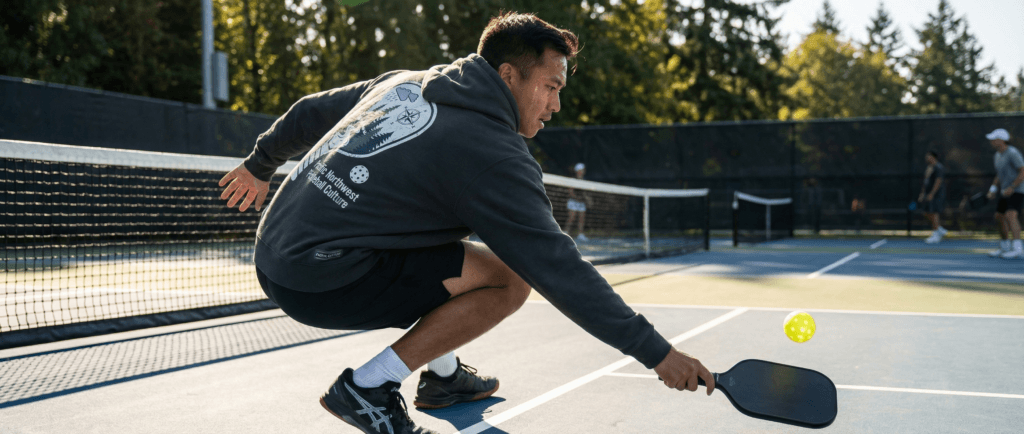
This improves reflexes, timing, and hand‑eye coordination.
If you want a stronger foundation, check out my Pickleball Serving Tips For Beginners for simple ways to improve your serve.
8. Shadow Pickleball Movement
Move around the court as if playing a real point—no ball needed. Then, sidestep, lunge, and recover for 60‑second bursts. After that, reset your stance and stay ready for the next movement cycle.
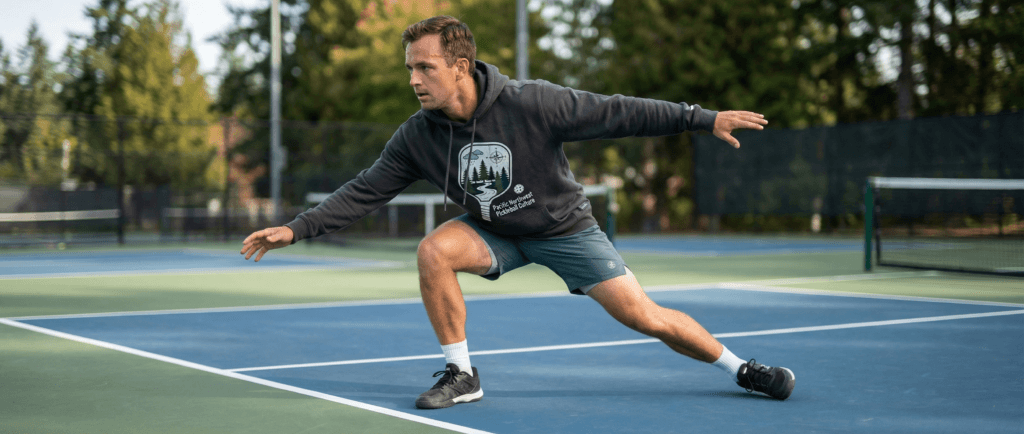
This builds muscle memory for efficient movement patterns.
9. Traffic Cone Triangle (Pickleball Agility Drill)
Set three cones in a triangle. Then, sprint to the top cone. After that, shuffle across and backpedal to the start.
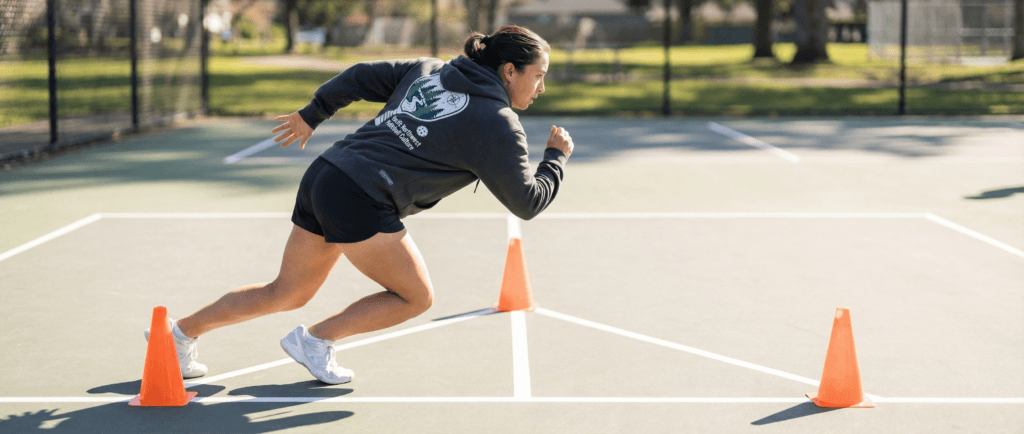
This helps you transition smoothly between the baseline and the kitchen.
10. Kitchen Line Volleys with Agility Focus
Volley quickly with a partner at the kitchen line. Then, use tiny split steps between every hit. After that, stay balanced and ready for the next ball.
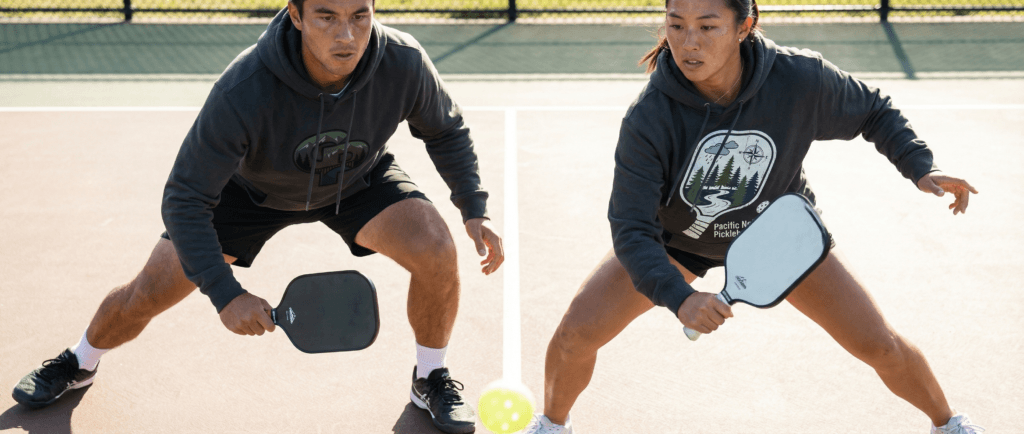
This combines footwork, balance, and fast reactions—key elements of pickleball agility drills.
How to Train
Practice these 2–3 times a week for the best results. Focus on quality movement and sharp form. Over time, your speed and control will improve naturally.
Which agility drill are you going to try first? Let me know in the comments!
FAQs for Pickleball Agility Drills
Why are agility drills important for pickleball?
Agility drills improve your ability to move quickly, change direction, and stay balanced during fast rallies. Better agility means better court coverage, faster reactions, and more confidence at the kitchen line — all essential for leveling up your game.
How often should I practice pickleball agility drills?
For noticeable improvement, aim for 10–15 minutes, 3–4 times per week. Short, consistent sessions build footwork speed, stability, and endurance without overwhelming your body. Quality matters more than quantity.
What are the best agility drills for beginners?
Start with simple, effective drills that build foundational movement:
- Lateral shuffle steps (for kitchen movement)
- Split‑step timing practice (for reaction speed)
- Cone zig‑zag footwork (for directional changes) These drills improve your footwork fast and translate directly into better gameplay.
For official guidance on rules and standards, you can always check the USA Pickleball Official Rules.

Spot on with the Shadow Swinging drill for agility. It’s so easy to focus on the ball and forget that our feet are what actually get us into position. Even when I’m huddled in my hoodie between sets because of the ‘cold’ 70°F air, I’m trying to visualize that split-step.