As you start learning How To Choose Pickleball Shoes, you’ll notice that pickleball has absolutely exploded in popularity lately, and if you’re like me, you’ve quickly discovered that the right pair of shoes makes a huge difference on the court. Because of that, there’s a lot more to think about than just grabbing your old running shoes.
When you’re learning How To Choose Pickleball Shoes, I’m going to walk you through everything I wish I’d known when first picking out pickleball shoes, from fit and grip to specific features that work well for both indoor and outdoor play. Because of that, your footwear choice, surprisingly, ends up changing your whole experience.
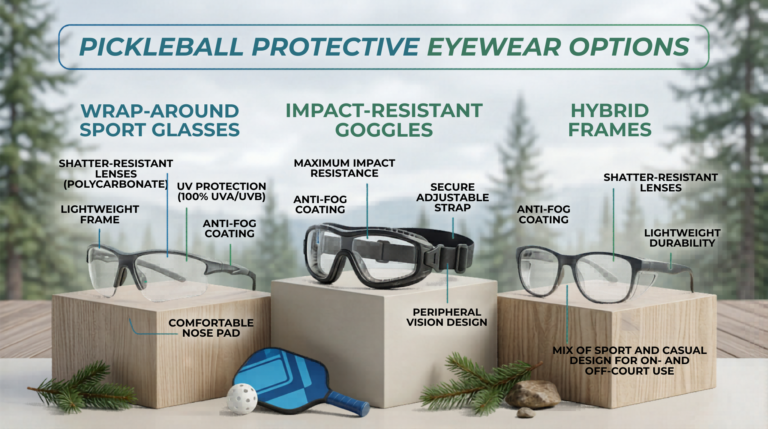
For players looking to boost their on‑court safety, our guide to Pickleball Protective Eyewear Options breaks down the best choices.
Why Pickleball Shoes Are a Game Changer
When you understand How To Choose Pickleball Shoes, you realize that playing pickleball with proper footwear gives you more stability, better traction, and helps prevent injuries. As the sport keeps growing, more brands are creating shoes specifically designed for pickleball. If you’ve ever tried moving in basic sneakers, you probably noticed yourself sliding everywhere. That’s exactly why the right shoes step in and completely change your experience.
A lot of people start with tennis or court shoes, and they can work well for a while. But as your game improves and you find yourself playing more often, the small differences really start to matter. Serious pickleball players almost always recommend investing in court shoes designed with pickleball, racquetball, or tennis in mind.
These shoes handle the stop-and-go moves and constant side-to-side action much better. Plus, they feel more supportive over longer sessions. Even after a long game, your feet will thank you.
Understanding Key Features of Pickleball Shoes
There are a few features that really matter when picking out a pair. Here are the big ones to look for:
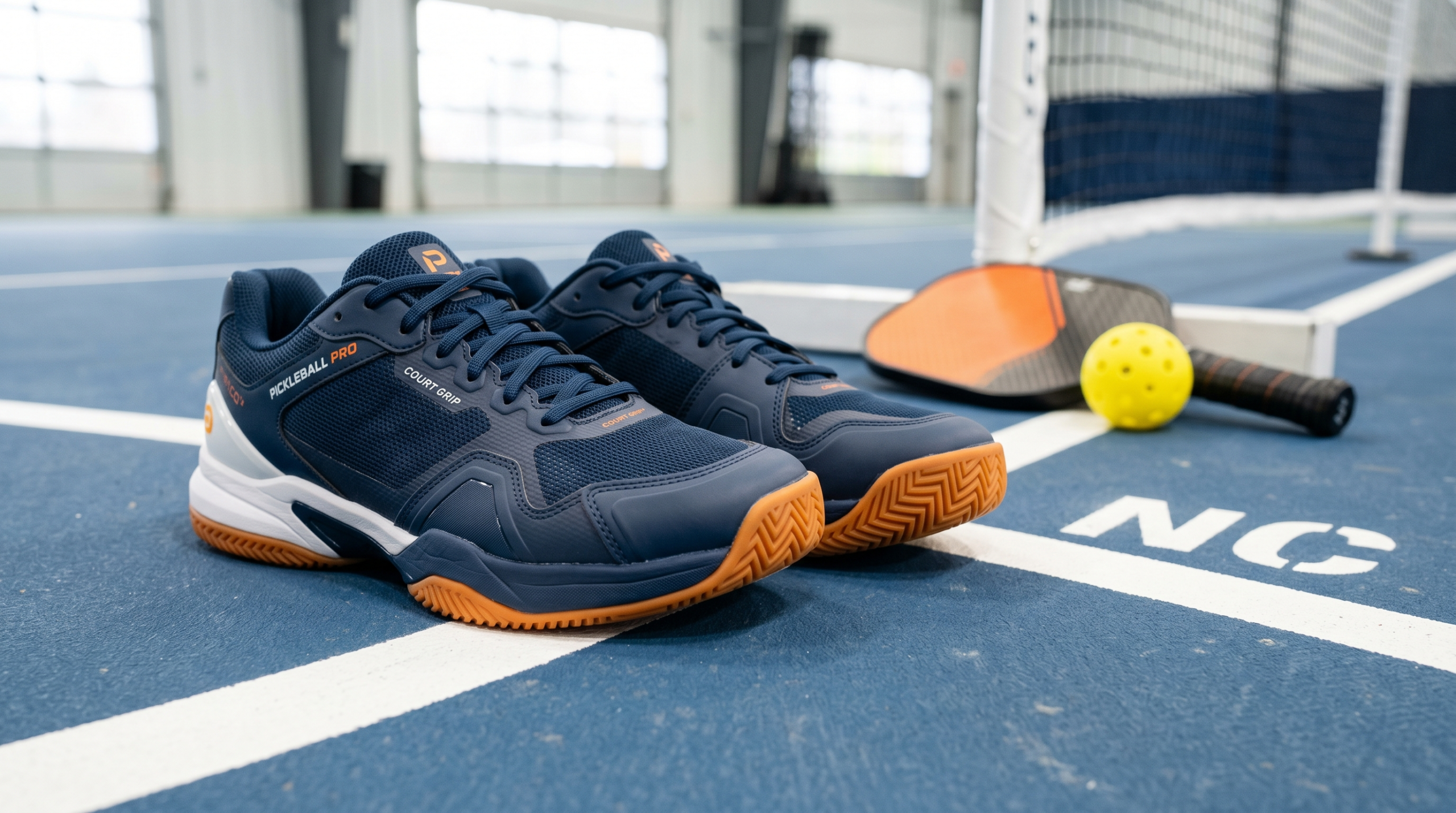
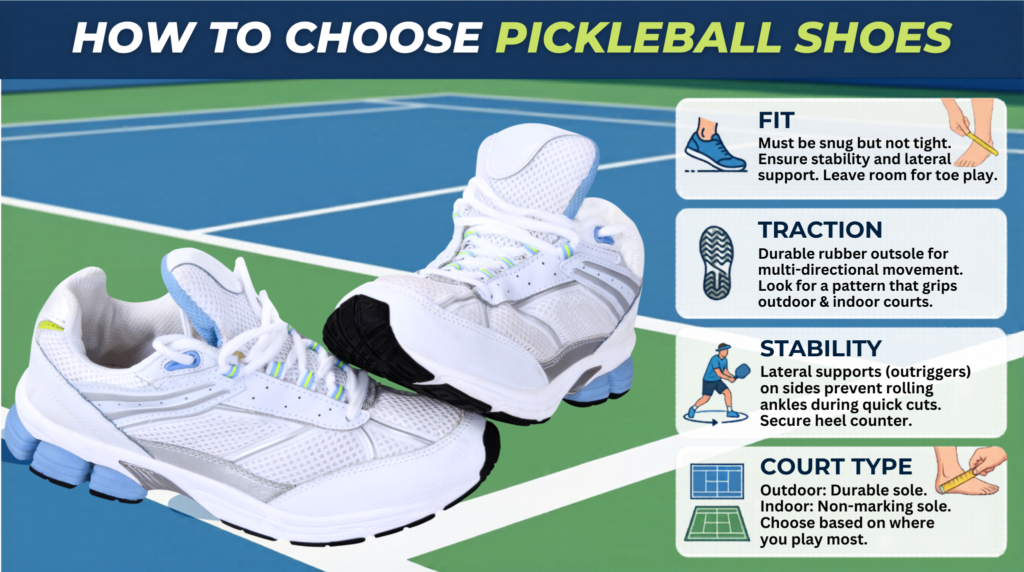
- Grip: The shoe should have a sole that grips the playing surface. Pickleball shoes courts are often a bit slick, especially inside, so you don’t want to be sliding around. Outsoles with a herringbone or modified herringbone pattern provide a lot of traction on different surfaces.
- Cushioning: There’s a lot of jumping, lunging, and sudden stops in pickleball. Extra cushioning, especially at the heel and ball of the foot, helps absorb shock and keeps things comfortable through long matches.
- Support: Lateral support is super important. Unlike running shoes, which mostly support forward movement, court shoes give you that side-to-side stability you need on the pickleball court. Look for reinforced sides or a wider base that wraps your foot.
- Durability: Pickleball can seriously wear out shoes, especially near the toe and sides. Materials like synthetic leather, reinforced mesh, or extra overlays make your shoes last longer, especially if you’re playing often.
- Weight: Lighter shoes keep you quick on your feet, but they shouldn’t skimp on support or durability. Try finding that balance that feels right when you move. Sometimes just a few ounces less makes a big difference during a long session.
Pickleball Court Surfaces: What Matters For Shoes
Pickleball can be played inside on gym floors or on outdoor courts with rough, textured surfaces. Some shoes are better suited to specific court types, so your regular gym sneakers might not cut it everywhere.
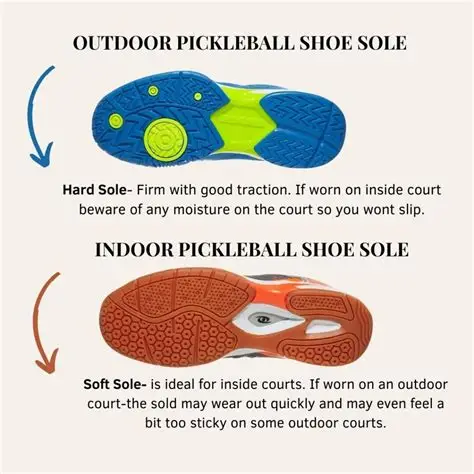
- Indoor Courts: These usually have smooth, wooden, or synthetic surfaces. Shoes with gum rubber soles deliver great grip indoors. Basketball or volleyball shoes sometimes work, but shoes made for racquet sports usually perform best.
- Outdoor Courts: These courts are often surfaced with concrete or asphalt. Outsoles need to be made of hard rubber to stand up to abrasion. Make sure the tread is deep enough to give traction, but not so deep that you catch and trip. The sole should feel just as stable when you dart sideways as when you run forward.
When you’re figuring out How To Choose Pickleball Shoes, you’ll notice that if you play both indoors and out, having different shoes for each setup is pretty handy. Because of that, the grip and comfort feel a lot better when the shoe actually matches the court. Not only does this help prevent slips, but it also keeps your shoes lasting longer too.
Quick Buying Tips: How To Find The Right Fit
- Try Shoes On At The End of The Day: Your feet swell a bit throughout the day. Shopping late makes it easier to find a fit that’s comfortable all day long and helps you avoid shoes that are too tight after hours of play.
- Wear Your Court Socks: Bring the same socks you’ll wear in games. Thicker or thinner socks completely change the fit and feel. Don’t forget, a seamless, moisture wicking sock can also prevent blisters.
- Test For Enough Toe Room: A thumb’s width between your longest toe and the end of the shoe prevents bruised nails and blisters. If you feel your toes hitting the front, try a half size up.
- Walk, Run, and Move Side to Side: Move around the store or at home if ordering online. Make sure your heel doesn’t slip and the shoe feels stable in every direction. If you notice rubbing or pinching, try another brand or size.
Common Mistakes When Choosing Pickleball Shoes
- Wearing Old Running Shoes: Running shoes don’t give you the stability or side-to-side grip needed for the sport. Using them increases your risk of rolling an ankle or getting hurt.
- Not Checking The Weight: Heavy shoes can tire you out fast, putting unnecessary strain on your legs and back. That extra fatigue adds up over a long day of play.
- Overlooking Breathability: On hot days, good ventilation keeps your feet cool. Shoes with mesh panels or breathable uppers are worth checking out to prevent sweaty discomfort.
- Ignoring Durability Features: Some people focus only on looks or brand. Shoes with extra toe reinforcement and strong stitching hold up way better in the long run, especially for frequent players.
If you want to sharpen your soft‑game control, check out our full breakdown of Topspin Dinks Drills for spin, shape, and consistency.
Popular Types: Comparing Court Shoes, Tennis Shoes, and Pickleball Shoes
I’ve tried out a few different types of court shoes so you don’t have to waste time or money. Here’s what I learned after countless matches and asking fellow players:
- Pickleball Specific Shoes: Brands like KSwiss, Skechers, and FILA now make shoes just for this sport. They blend lightweight construction with grippy soles and reinforced sides, plus specialized cushioning to match pickleball’s play style.
- Tennis Shoes: These have great lateral support and solid soles, perfect for outdoor play. They work well on pickleball courts too, especially if you prefer an overall tougher, more responsive feel. Many advanced players like the extra support.
- Indoor Court Shoes: Like what you’d use for squash or badminton. They deliver on the grippy gum rubber sole and low to the ground stability, which is ideal for quick footwork on gym floors. I reach for these for indoor matches every time and recommend them for anyone starting indoors.
If possible, read reviews and ask other players what works for them. Personal preference still counts for a lot here; even within one brand, models can feel totally different.
Extra Features Worth Looking For
- Ankle Support: Some shoes have higher collars and extra padding. These work well for players prone to ankle twists, offering more peace of mind during intense games.
- Removable Insoles: This feature lets you add custom orthotics or change out the included footbeds for extra comfort and support, especially if you have foot issues or want a bit more cushion.
- Wide Sizes: A few brands offer wide width options. Super useful if your feet aren’t comfortable in regular sizing, and they help prevent pinching during play.
- Toe Guards: Pickleball players sometimes drag their toes during certain moves, so a reinforced toe box is really important. This adds extra protection and prevents early blowouts.
Real World Example: My Experience Upgrading My Shoes
Once you start learning How To Choose Pickleball Shoes, you’ll understand why playing multiple times a week made my feet ache and why the tread on my running shoes wore out fast. Because of that, switching to tennis shoes with extra lateral support completely changed my game. Instead of sliding everywhere, there’s now much less movement loss and no more blisters or sore arches.
As you dial in How To Choose Pickleball Shoes, you’ll notice how a grippy sole keeps you feeling confident when making quick cuts and dashes across the court. Friends who made the same switch all noticed the difference in comfort and support, especially during tournaments or long weekend sessions. Because of that, upgrading your footwear not only saves you pain over time but also gives a real boost to your overall play.
FAQs About Pickleball Shoes
Question: Can I use my regular gym shoes to play pickleball?
Answer: Gym or running shoes work for a little while, especially if you’re just starting. Over time, though, you’ll notice they don’t support the constant stops and lateral moves as well as true court shoes. For more comfort and injury prevention, court shoes are the better choice.
Question: How often do I need to replace my pickleball shoes?
Answer: How fast your shoes wear depends on how much you play and the types of courts. For regular players, swapping out shoes every 6–12 months helps prevent injuries and keeps your feet happy. Pay attention to loss of tread or support as warning signs it’s time for a fresh pair.
Question: Are expensive shoes always better for pickleball?
Answer: Not always! Pricey shoes sometimes come with fancy extras, but a midrange shoe with good grip and lateral support usually does the job really well. Focus on fit, comfort, and features, not just price or brand name.
Recap: Getting Set Up With The Right Shoes
Finding the right pickleball shoes is all about grip, comfort, and side to side stability. With the right pair, you’ll feel more confident with every move and stay comfortable whether you’re playing indoors or out.
Take time to try a few options and check reviews from other players. Investing a little extra effort now saves your feet, and your game, down the road. It’s the easiest way to keep playing your best—and actually enjoying every match.
For official guidance on rules and standards, you can always check the USA Pickleball Official Rules