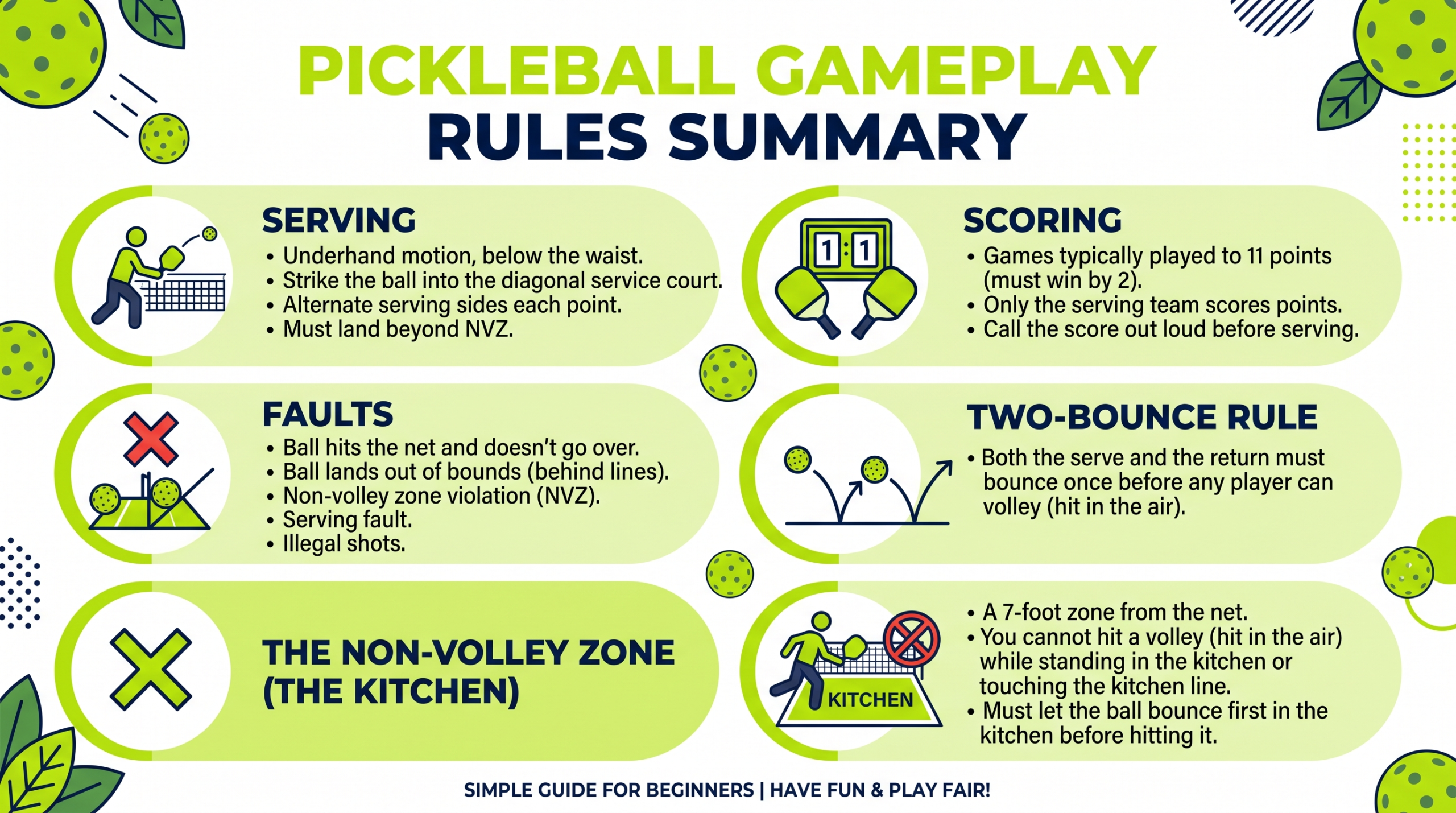
This Pickleball Gameplay Rules Summary gives beginners a simple, clear breakdown of how the game works — from serving and scoring to faults, the two‑bounce rule, and the non‑volley zone. If you’re new to pickleball, these core rules will help you start playing with confidence.
Understanding the Court and Gear in a Pickleball Gameplay Rules Summary
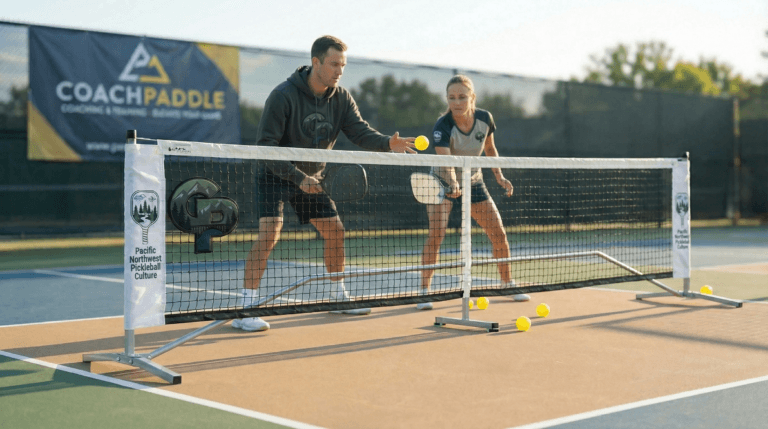
In this Pickleball Gameplay Rules Summary, it’s important to understand the layout of the court. Pickleball is played on a rectangular court measuring 20 feet wide and 44 feet long, similar to a badminton court. A net divides the court into two sides, standing 36 inches high at the ends and 34 inches in the middle.
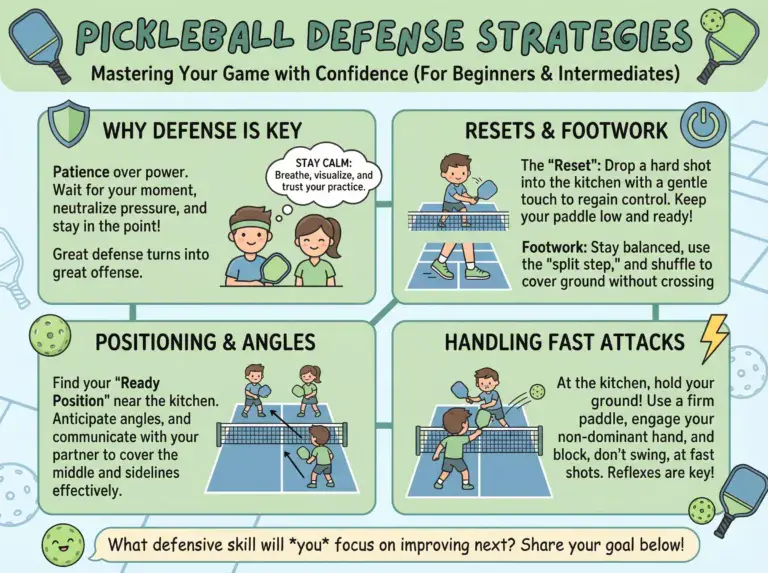
One key area is the Non‑Volley Zone, or Kitchen, which extends 7 feet from the net on both sides. This zone has special gameplay rules that play a major role in how points unfold.
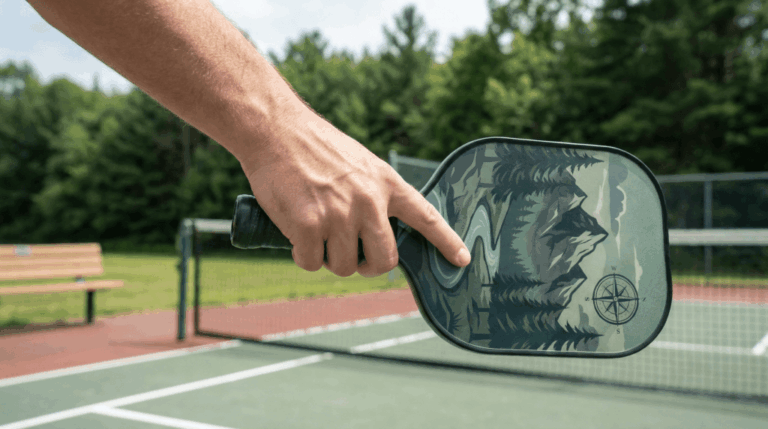
The gear is pretty straightforward: all you need is a perforated plastic ball (kind of like a wiffle ball, but more durable), a paddle that’s bigger than a Ping-Pong paddle, and shoes with good grip. While you can play singles or doubles, most people opt for doubles since it’s social and keeps everyone on their toes.
Games usually take place outdoors but there are plenty of indoor pickleball courts popping up, especially in cooler climates or for winter leagues. Playing inside can be a little different since indoor balls have smaller holes, but the rules don’t change.
You can learn more about Kitchen rules in my full How To Play Pickleball Kitchen Correctly guide on this site.
Pickleball Gameplay Rules Summary: Serving Rules and How to Start the Point
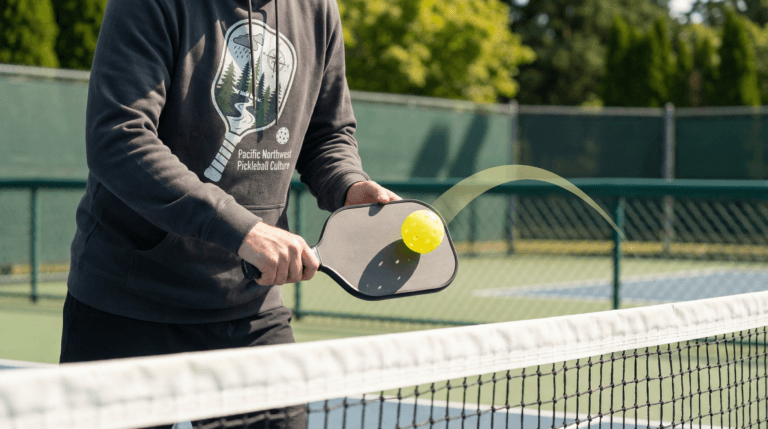
In this Pickleball Gameplay Rules Summary, serving is one of the most important fundamentals to understand. Serves in pickleball are different from tennis or badminton because the rules are designed to keep the game simple and fair. As explained in this Pickleball Gameplay Rules Summary, you must serve underhand, contacting the ball below the waist with your paddle moving in an upward motion.
The serve must travel diagonally and land in the opposite service box. Both feet must stay behind the baseline, and at least one foot must remain on the ground at the moment of contact. These serving rules are essential to any Pickleball Gameplay Rules Summary because they set the tone for how every rally begins.
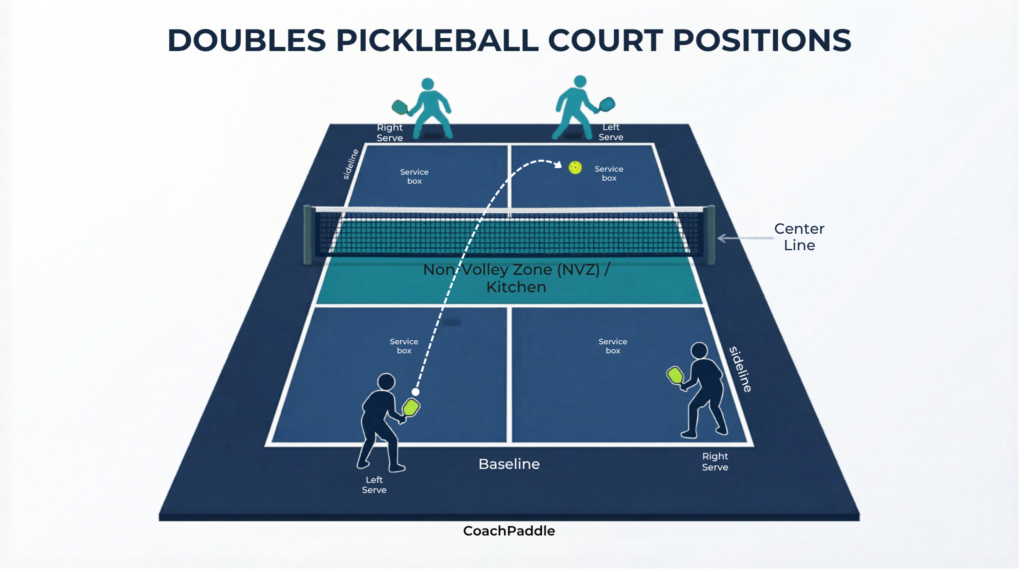
Only one serve attempt is allowed, unless there’s a let—if the ball clips the net and still drops in the right service box, you replay the serve. In doubles, both players get to serve before the other team gets a chance, except for the very first serve of the game, when only one player serves for that side.
Another rule that can confuse newcomers: when calling the score, the server’s score comes first, then the receiver’s, and in doubles, the server number (1 or 2) is given. For example: “4-2-1.” This keeps things organized, especially when games get competitive.
Traditional Side‑Out Scoring (Summary)
- Only the serving team scores. The receiving team cannot earn points — they can only win the right to serve.
- Games are typically played to 11, win by 2.
- Doubles uses a two‑server rotation. Each team gets two chances (Server 1 and Server 2) before the serve goes to the opponents — except at the start of the game, where only one server begins.
- Score is called as: Server Score – Receiver Score – Server Number (1 or 2).
- A “side‑out” happens when both players on the serving team lose their serve, and the serve switches to the other team.
Rally Scoring
- Each rally ends with a point, no matter which team serves. This scoring method rewards the team that wins the rally.
The Two-Bounce Rule
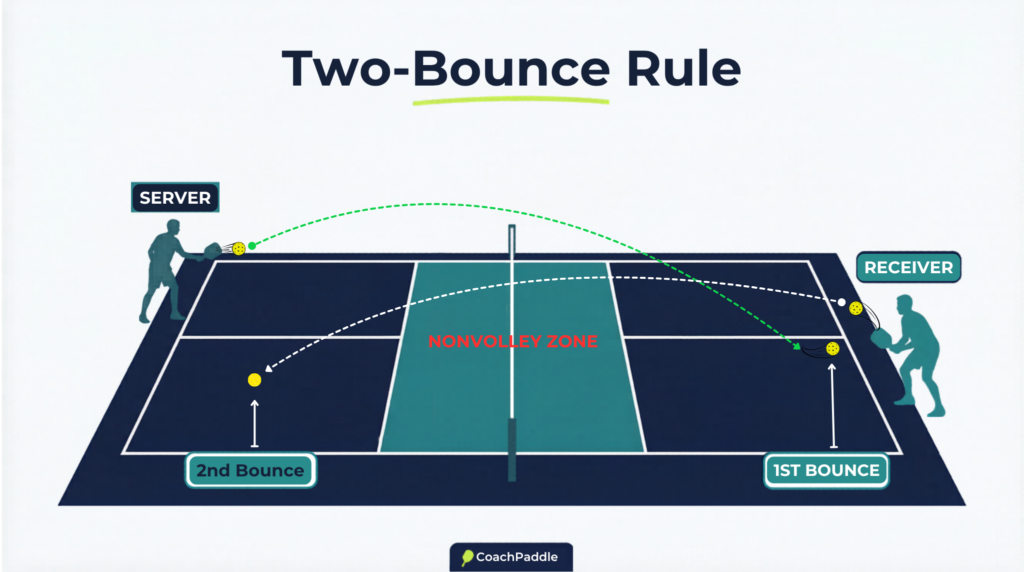
- Bounce 1: The returner must let the serve bounce.
- Bounce 2: The serving team must let the return‑of‑serve bounce.
- After that: Both teams may volley or play off the bounce.
The Non-volley Zone: Breaking Down the Kitchen
- No volleys allowed while standing in the NVZ. If any part of your body or paddle touches the NVZ during a volley, it’s a fault.
- Momentum counts. Even if you hit the volley outside the NVZ, if your momentum carries you into the Kitchen afterward, it’s still a fault.
- You can enter the NVZ to hit a ball after it bounces. You just must exit before volleying again.
- Lines count as the NVZ. If you’re touching the line, you’re considered inside the Kitchen.
.
Faults and Let Calls
Knowing what counts as a fault will save you headache midgame. Common faults include:
- The serve lands outside the correct service box or hits the net and doesn’t drop in the service area
- The serve is made overhand or contact is above the waist
- Volleys are struck from within the nonvolley zone (the kitchen)
- The ball bounces twice on one side before it’s hit back
- Sends the ball out of bounds
A let works a little differently—you replay the serve when your ball touches the net but still lands in the correct service box. In casual games, players might also call a “let” when something outside the court interrupts play, but in tournaments, the term applies only to a let serve.
Singles vs. Doubles: What Changes?
You can play pickleball as singles or doubles, and most rules stay the same. The difference comes in serving patterns and some movement on the court. In singles, you swap serving sides based on your score—if it’s even, serve from the right; if odd, serve from the left.
In doubles, both teammates serve before a side out, except at the very beginning of the game. This setup in doubles leads to more extended rallies and a stronger team strategy.
One thing you’ll notice: doubles often sparks more communication. Each player covers different parts of the court, making teamwork and clear calls super important.
Quick Tips for New Players
- Announce the score before every serve. This gets everyone on the same page and prevents any confusion.
- Watch the lines. If the ball touches any line (apart from the non-volley zone line on a serve), it’s in.
- Keep those feet behind the baseline. At least one foot should always be behind the line and on the ground as you serve.
- Stay aware of the kitchen. Get used to your location compared to the kitchen line to dodge those sneaky faults.
Want the quick version of how to stay safe out there? Jump over to my Pickleball Safety Tips for Players guide—I break it all down.
Gameplay Rules Summary: Strategy and Sportsmanship Tips
Playing by the rules and keeping a friendly spirit is what pickleball is all about. Announcing scores, being fair on close calls, and playing at a good pace ensure games flow without drama. When I started, I found experienced players were usually happy to clarify the rules or share quick reminders—which can really smooth the way for new folks.
Good strategy takes things up a notch. Try aiming at your opponent’s feet, picking moments for a finesse drop shot, or just keeping steady volleys going. In doubles, always talk with your teammate so you don’t crash paddles or miss shots you could have covered.
Pickleball Gameplay Rules Summary: Common Mistakes and How to Dodge Them
I’ve definitely made my share of rookie errors, from accidentally stepping in the kitchen to forgetting the two-bounce rule. Other common goofs include:
- Missing foot faults on the serve by not keeping an eye on where your feet are
- Mixing up the serve order and sides in doubles, especially after scoring or switching ends
- Hitting volleys from the kitchen area without realizing
If you get into pickleball, don’t stress perfection too early. Keep things light, and let the rules settle in as you play. Most players are patient and will help you get the hang of it as you go.
Real-World Example: Community Pickleball Games
At my local park, pickleball brings out people from all walks of life. Total beginners join in and can often learn the basics in just a single afternoon if someone is willing to walk them through the scoring and kitchen rules. I remember seeing a group of newbies play their first full game only minutes after their first demo—and by the end, they were chasing points with big smiles. A little patience and humor helps everyone enjoy those first few matches.
Regulars often rotate partners, especially to let new players gain confidence. This keeps community games relaxed and gives everyone a shot at improving their skills.
FAQs Included in This Pickleball Gameplay Rules Summary
Do you always have to serve diagonally?
Yes, serves always go diagonal to the opponent’s service court, both in singles and doubles.
Can I volley the ball as soon as it’s over the net?
Nope. The two-bounce rule means you need to let the ball bounce on each side after the serve before you can volley.
What happens if the ball lands on the line?
If any part of the ball lands on the line (except the non‑volley line on a serve), the referee or players call it in.
Do both players in doubles get to serve?
Yes, except for the very first service sequence. After that, both players on a team serve before a side out.
If you want to explore the complete rule set, check out the Official USA Pickleball rules published on the USAP website.
Wrapping Up: Making the Most of Pickleball
Knowing the main pickleball gameplay rules makes every match run smoother, whether you’re playing in an organized league or just meeting friends in the park. Once you’re familiar with the basics, you’ll spend less time worrying about rules and more time racking up points and sharing laughs.
Pickleball is the kind of game you can pick up at any age and keep playing for years. Clearing up the rules in your early games pays off big. If you’re ever stumped mid-match, don’t hesitate to ask others; most players love helping new folks fit right in and step up their game.
If you want a simple routine to get your body ready, take a look at my full Pickleball Essential Warm-up article on this site.