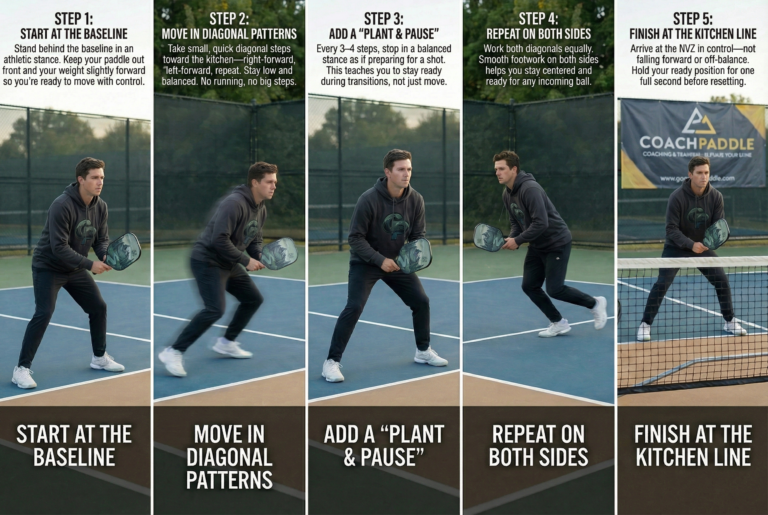
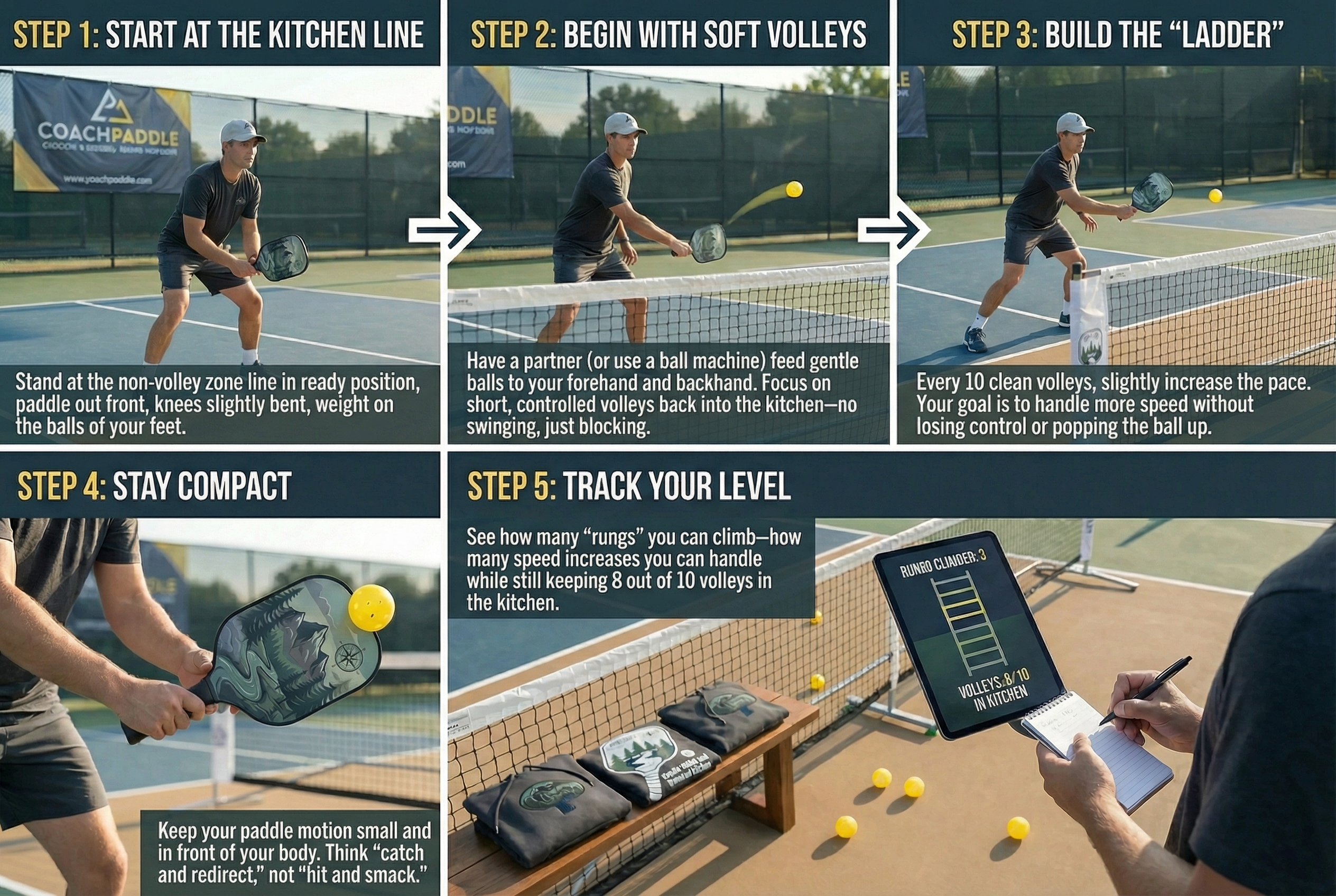
Pickleball volley control drills are one of the fastest ways for beginners to build soft hands, improve timing, and feel confident at the net. In this guide, you’ll learn simple, beginner‑friendly drills that help you control the ball, stay balanced, and win more points at the kitchen line.
Beginners improve fastest when they repeat simple pickleball volley control drills with intention.
Why Pickleball Volley Control Drills Matter for Beginners
Volley control means being able to stop the ball from flying long, bouncing off your paddle, or going into the net. It isn’t about power; often, it’s about touch. I learned early that being able to softly redirect a shot keeps the ball in play much longer and frustrates opponents who rely on mistakes.
Developing this skill can mean more extended rallies and less chasing down loose balls, making the game more fun for everyone on the court.
Pickleball has grown a lot in recent years, with millions taking up paddles. For new players, solid volley control is one of the first big steps towards better play. Focusing on control drills can help close the gap between new and experienced players fast.
Learn the fundamentals in our full Pickleball Beginner Guide
Getting Started: Volley Control Drill Basics
Starting with volley control doesn’t need a lot. To begin, I just make sure to have a paddle, a few balls, and access to any standard pickleball court. Additionally, these drills help beginners develop softer hands at the net. Although some extra items like cones or a training partner can make certain drills easier, they aren’t necessary for solo practice.
Paddle: Use any legal pickleball paddle. Moreover, a lighter paddle can help with quick reaction drills.
Pickleballs: For example, indoor or outdoor balls both work for these drills, though outdoor balls bounce a little lower and move faster.
Net or Wall: A net is ideal. However, if I can’t get one, any smooth wall will do for solo volley work.
Court Markings: Tape or cones can help define the kitchen line or target areas. In addition, they make accuracy drills easier to track.
Simple Pickleball Volley Control Drills
First, I started with only one or two drills per session and focused on repeating good habits. Doing these a few minutes at the start of any practice can make a real difference over time.
As your confidence grows, adding variety to your sessions—by switching up the drills or challenging yourself with new targets—keeps things fun and motivates improvement.
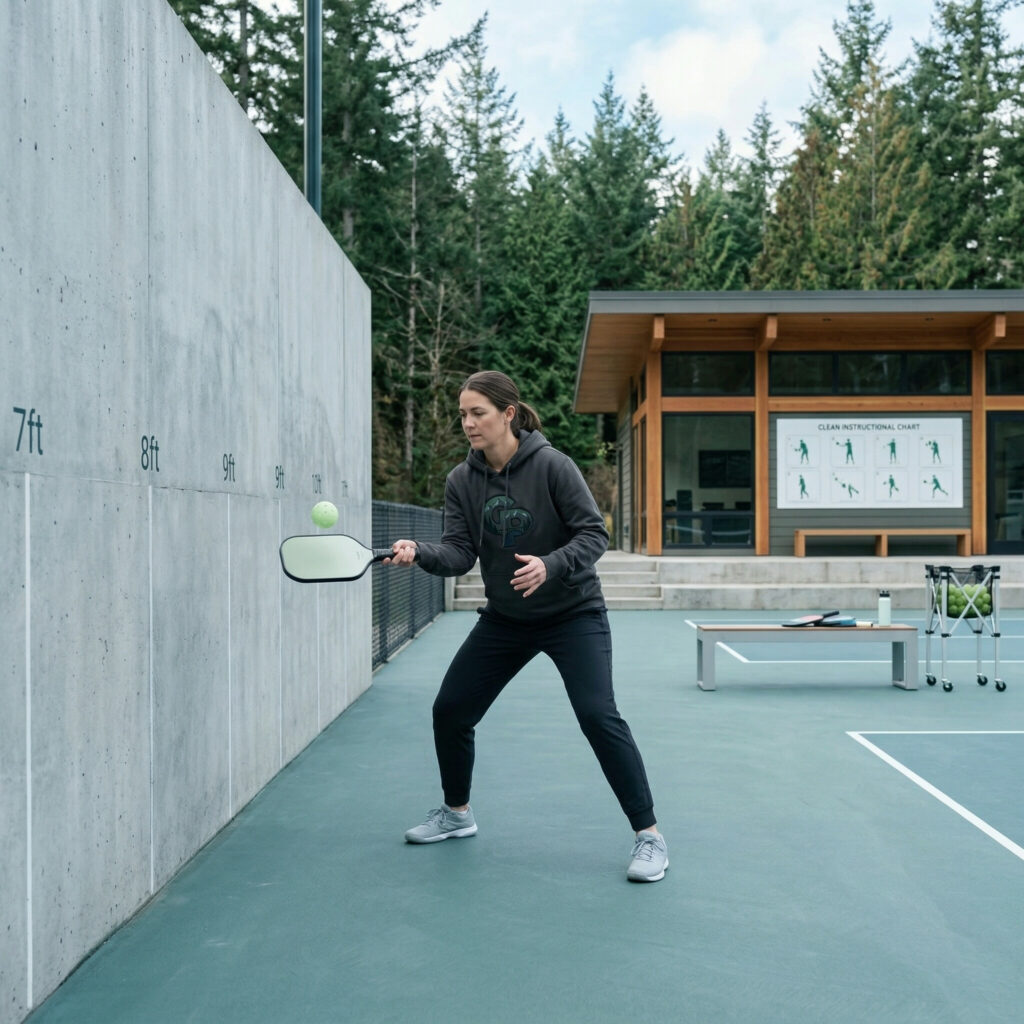
Beginner Wall Volley Control Drill
One of the easiest ways I practiced control at home is by hitting volleys against a wall. To start, the idea is to keep the ball up and under control for as long as possible. Next, stand about seven to ten feet from a smooth wall and try to volley softly, watching the ball’s rebound. As a result, you’ll quickly feel how small adjustments in paddle angle improve your touch.
This builds quick reflexes and teaches how different angles and paddle positions change the ball’s height and speed.
- Focus on short, controlled contacts; no big swings.
- Try for 10, 20, or even 50 consecutive volleys without letting the ball hit the ground.
- Switch between forehand and backhand volleys every few reps.
- Challenge yourself by changing the distance from the wall or aiming for marks on the wall to build even finer control.
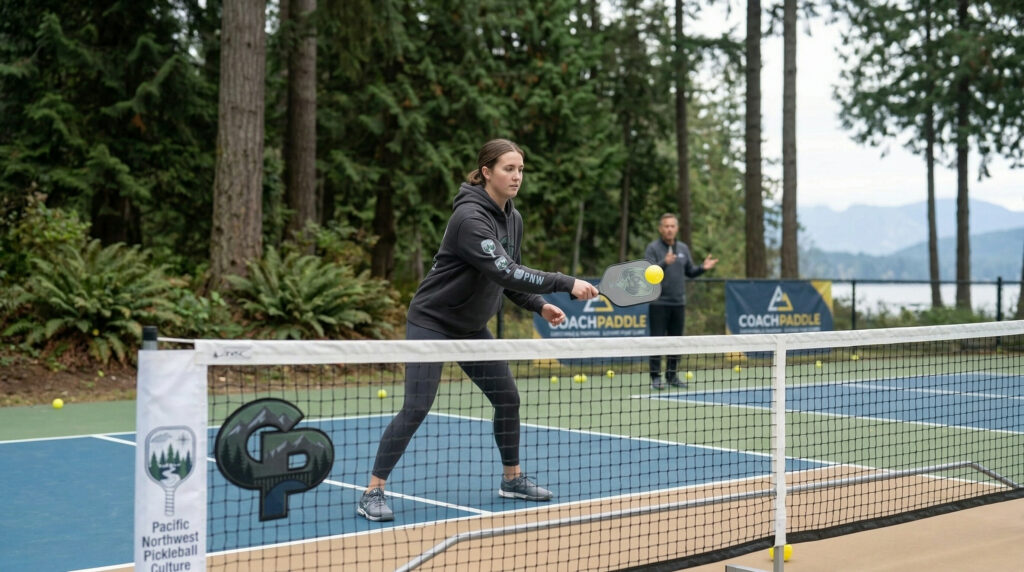
Learn the basics with our Pickleball Swing Drills For Beginners.
Pickleball Partner Soft Volley Drill
Practicing with a partner helps with timing and reacting to unpredictable shots. I found this drill super helpful for learning to absorb speed and “reset” aggressive shots. Additionally, these drills help beginners develop steadier hands at the kitchen line.
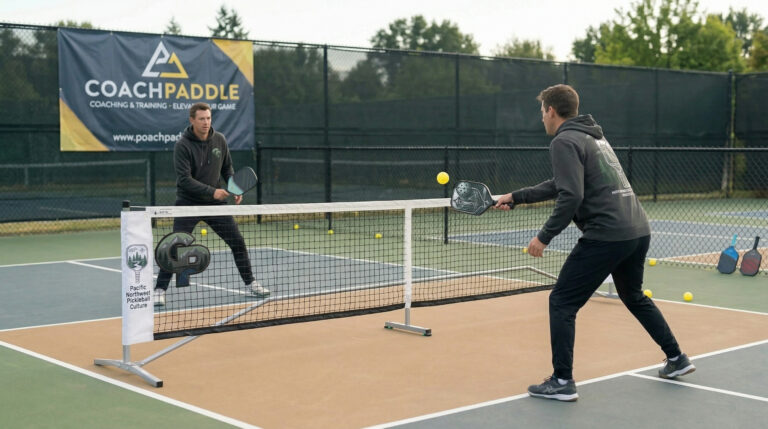
- Stand across the net from each other at the kitchen line.
- One player initiates a soft volley—try to keep the ball low and controlled, not smashing or lobbing.
- The other player returns it the same way, using minimal paddle motion, focusing on control.
- See how many volleys you two can sustain in a row.
- If one pushes the ball too hard, the other tries to soften it again, learning how to reset when things speed up.
- Mix in some crosscourt volleys to add some variety and make the drill more game-like.
Beginner Dink‑to‑Volley Control Drill
Dinks are soft shots that land in the kitchen, but learning to volley a dink without popping it up is tricky. For example, I use this drill to work on making gentle contact with a ball that barely clears the net. This skill gives you the chance to keep difficult rallies going and get into position for the next shot.
- Stand at the kitchen line with a partner on the other side.
- Have your partner send you dinks, then practice volleying them gently back, landing in their kitchen.
- Focus on paddle angle and moving your feet so you can meet the ball early, not after it drops too low.
- As you improve, add movement side to side to simulate covering the entire kitchen area.
Beginner Target Volley Drill
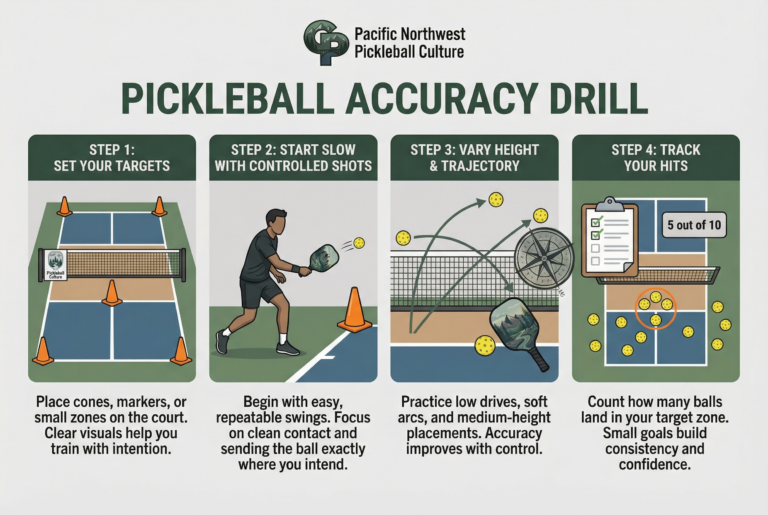
Using cones or some tape to mark target zones in the backcourt gives me a real goal. The challenge is to volley balls to a chosen target, maintaining accuracy under different feeds. As a result, target drills train not only your physical control but also your focus, an essential skill in pressure situations.
- Place a few cones or mark target spots at varying depths and locations across the court.
- Have someone toss balls to you at the net, and try to direct your volleys to land on the targets.
- If solo, use a wall and mark target areas with tape. Try to hit the same spot consistently.
- Increase the difficulty by shrinking the target area or changing your volley speed.
Build soft‑touch skills with our Pickleball Dinking Drills For Beginners.
Key Points and Tips for Pickleball Volley Control Drills
After plenty of missed volleys and wild swings, I came up with a few strategies that really helped me settle down and play more controlled shots:
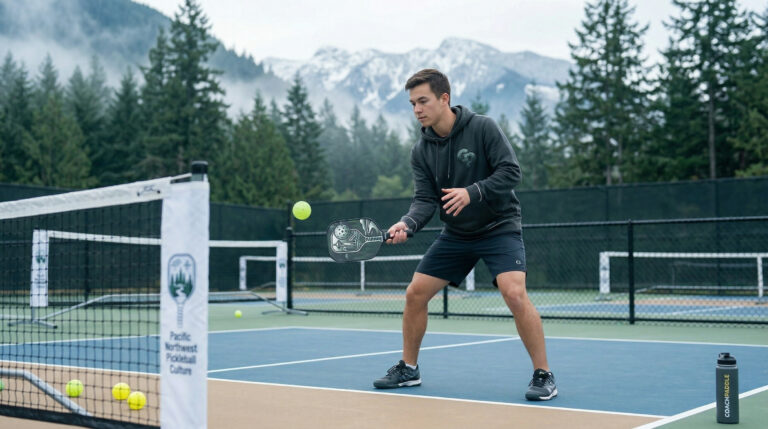
- Keep a loose grip: Holding the paddle softly helps absorb the ball’s energy and prevents sending it flying.
- Paddle up and ready: I keep my paddle in front of my body near chest height; this gives me more control, especially for quick exchanges.
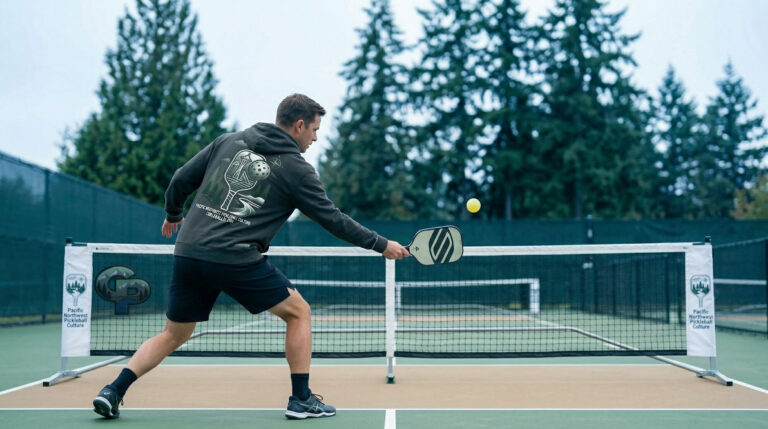
- Short backswings: The best volleys usually come from a very short, punch-like movement. Big swings lead to loss of control.
- Move your feet first: Good footwork puts me in position early, which allows for easier volleying.
- Watch the ball all the way to the paddle: I found that keeping my eyes on the ball reduces mishits.
- Stay balanced: Try not to lean onto your toes too much. Staying balanced helps with changing direction quickly.
Beginner Mistakes in Volley Control Drills
Small tweaks can save a lot of frustration. For example, rushing through the motion often leads to mishits. Here are some mistakes I see, and made myself, while working on volley control:
- Excessive force: Beginners often swing hard, causing balls to sail long. Focusing on soft hands brings better results.
- Paddle dropping after each shot: By keeping the paddle up, it’s much easier to react to the next volley.
- Standing too close to the net: It’s tempting to crowd the net, but standing a few inches behind the kitchen line lets me react faster and prevents foot faults.
- Neglecting the backhand: It took me a while to trust my backhand volley. Practicing both sides is really important.
- Flat feet: Staying on the balls of my feet keeps reactions lively, especially when the pace picks up.
- Inefficient recovery: Not getting back to ready position between volleys can leave you off-balance for the next shot. Prioritize resetting after each contact.
Skills That Improve with Volley Control Drills
Finally, repeat each drill with intention to build consistency. Focusing on volley control taught me more than just how to redirect balls at the net. Some new skills seemed to grow alongside:
- Faster hands: Quick exchanges at the net helped with overall reaction speed.
- Reading opponents: The better my volley control, the more time I had to see what opponents were preparing next.
- Consistent resets: When in trouble, I learned how to reset a heated rally by playing a soft volley that slows things down.
- Shot placement awareness: Targeted volley drills make you more aware of where you’re sending the ball, helping you keep opponents on their toes.
- Building patience: Practicing control rather than power means you can wait for the right moment instead of taking unnecessary risks.
“Sharpen your precision with our Pickleball Accuracy Workouts For Beginners.
Frequently Asked Questions
Question: How often should I practice these pickleball volley drills?
Answer: Practicing two or three times a week, even for just 10-15 minutes per session, can really speed up improvement. As a result, players gain better accuracy and confidence. Consistent short sessions are usually better than rarely playing long ones.
Question: Do I need a partner for volley drills?
Answer: Many drills work fine solo against a wall, but having a partner helps with realistic reactions and unpredictable feeds. Try a mix of both when possible.
Question: How long does it take to improve volley control?
Answer: Everyone learns at a different pace, but most beginners notice a difference within a couple of weeks. Improvement moves faster with regular, focused practice.
Stay connected to the sport’s growth through Pickleball Canada.
Where Volley Control Drills Fit in The Bigger Picture
Volley practice became a staple in my training routine and paid off not just in matches but in casual play too. My ability to control the ball at the net means more strategic options and fewer unforced errors. This skill also helps with patience; rather than going for flashy shots, I can build points slowly and wait for the right moment to finish.
Sticking with these basics and repeating them can help any beginner in pickleball take a big leap forward. Building better volley control opens the door to more advanced strategies with a solid foundation to keep learning and having fun.
Ultimately, these habits make your net play more reliable under pressure. If you stay consistent, volley drills will set you up for long-term improvement, greater enjoyment, and maybe even the confidence to teach others and become a role model on the court.