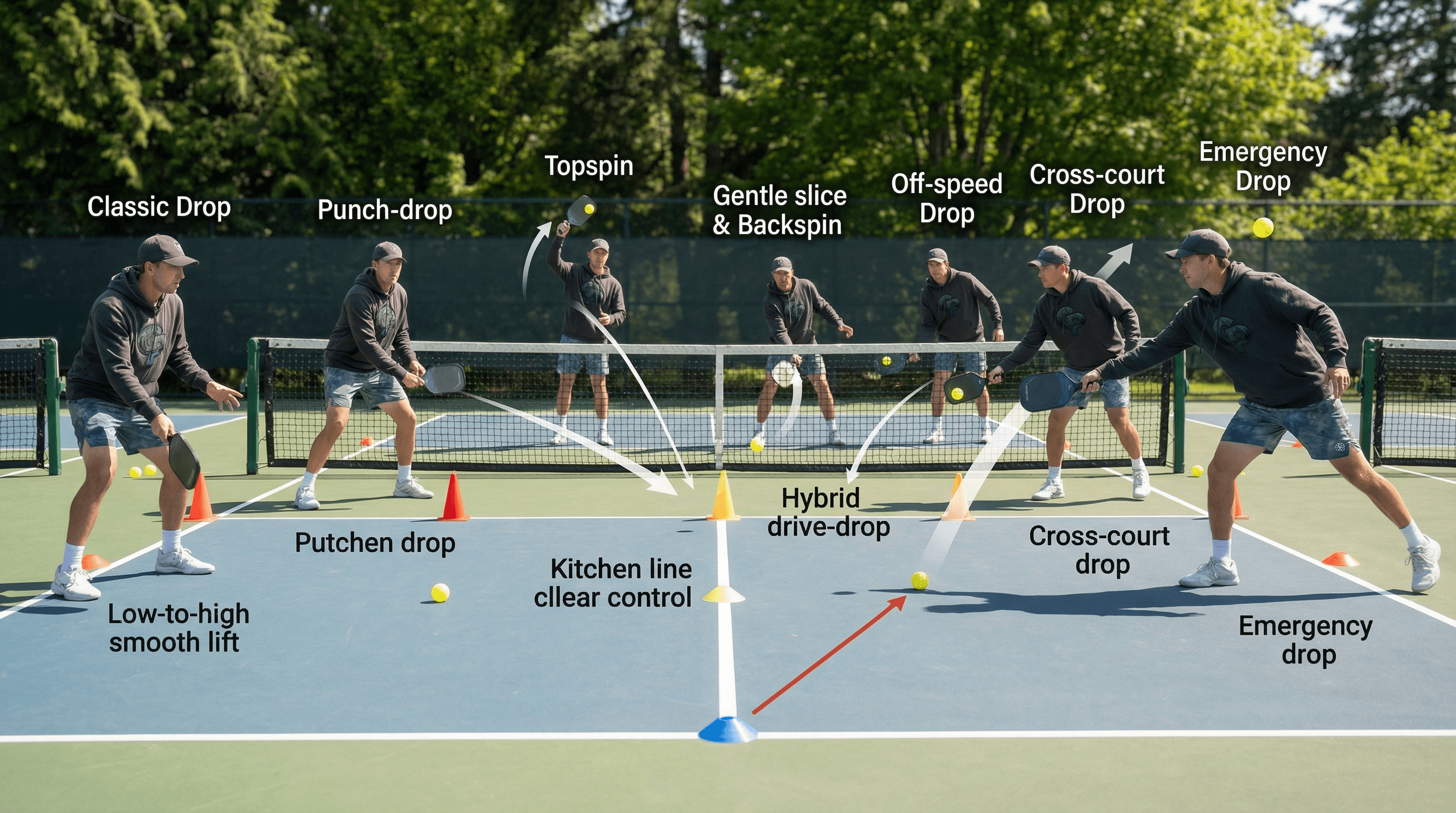
The third shot drop is more than a soft shot — it’s a strategic reset that helps you take control of the point. These Third Shot Drop Techniques are used by top players to neutralize pressure, slow the pace, and transition safely to the kitchen line.
These third shot drop techniques give you the tools to reset, slow the game, and move forward with confidence.
1. The Classic Lift Drop
The foundation of all drop shots. If you’re new to this, you may want to review the basics in the How to Play Pickleball guide:
- Use a smooth low‑to‑high motion.
- Keep the paddle face slightly open.
- Ideal when you have time to set your feet. Why it works: Reliable, consistent, and perfect for beginners learning touch.
2. The Punch‑Drop (Compact Push)
A favorite for fast returns.
- Short backswing, firm push.
- Great when rushed or off‑balance. Why it works: Reduces errors and keeps the ball soft and low.
3. The Topspin Drop
More advanced but extremely effective.
- Brush up the back of the ball.
- Creates a dipping trajectory. Why it works: Harder for opponents to attack because it falls sharply.
4. The Slice Drop
A controlled backspin option. If you’re still building fundamentals, check out the Pickleball Beginner Guide:
- Brush downward for gentle backspin.
- Best when pulled wide or receiving a higher ball. Why it works: Slows the ball on landing, making counterattacks difficult.
5. The Hybrid Drive‑Drop
Disguised and deceptive. Improve your mechanics with Pickleball Serve Drills:
- Start like a drive, finish like a drop.
- Loosen grip at contact. Why it works: Keeps opponents guessing and prevents them from camping at the net.
6. The Off‑Speed Drop
A timing disruptor. Mixing speeds is a common tactic recommended by many coaches and equipment experts at: https://pickleballcentral.com
- Use your normal motion but vary pace.
- Mix in floaty or quicker drops. Why it works: Breaks opponent rhythm and reduces attack opportunities.
7. The Cross‑Court Drop
High‑percentage and strategic.
- Aim diagonally into the kitchen.
- More margin for error due to longer distance. Why it works: Creates angles and buys time to advance.
8. The Emergency Drop
Your survival shot.
- High, looping arc.
- Prioritize height over precision. Why it works: Resets the point when you’re stretched or late.
What Is a Third Shot Drop?
A third shot drop is a soft, controlled shot that arcs over the net and lands in the kitchen, forcing opponents to hit upward. According to USA Pickleball, it’s one of the most important shots for transitioning to the non‑volley zone.
Key elements:
- Height: Clear the net by a small margin.
- Spin: Light topspin or backspin helps keep the ball low.
- Depth: Aim for the front of the kitchen to limit attack options.
Fundamental Third Shot Drop Techniques
To build consistency:
- Ready Position: Knees bent, paddle out front.
- Contact Point: Out in front, below waist height.
- Relaxed Grip: Soft hands = soft shot.
- Use Your Legs: Lift with your legs, not your arm.
- Follow Through: Smooth, upward finish.
Different Styles of Third Shot Drops
- Traditional Drop: Gentle scoop, open paddle face.
- Topspin Drop: Brush up for dipping trajectory.
- Slice Drop: Add backspin for a slower bounce.
- Cross‑Court Drop: More margin for error and better angles.
How to Improve Consistency and Placement
- Target Drills: Aim for cones along the kitchen line.
- Bounce Check: Keep bounce below knee height.
- Partner Feed Drills: Practice under pressure.
- Shadow Swings: Build muscle memory.
- Footwork: Move into the ball — don’t reach.
Common Third Shot Drop Mistakes (and Fixes)
- Too High: Slow your swing; contact earlier.
- Into the Net: Lift with legs, not arms.
- No Spin: Adjust paddle angle gradually.
- Poor Footwork: Stay balanced with small steps.
When to Use the Third Shot Drop
Do a drop when:
- Opponents are already at the kitchen.
- You need to slow the rally.
- You want to transition forward safely.
Use a drive when:
- The return is high or short.
- Opponents are out of position.
Use a lob occasionally to reset or surprise.
Advanced Third Shot Drop Tips
- Deception: Set up like a drive, then soften grip.
- Arc Control: Higher arc vs. tall opponents.
- Placement Variety: Mix corners and middle.
- Blend With Dinks: Smooth transitions create pressure.
Frequently Asked Questions
Do I need to learn drops on both sides?
Yes — deep returns often force you into backhand drops.
How do I practice at home?
Use a wall, rebounder, or tape targets on the floor.
Is the third shot drop always the best choice?
No — choose based on ball height, opponent position, and your confidence.
Official rules from USA Pickleball: https://usapickleball.org
Leave a Reply