Practicing these Pickleball Serve Drills consistently will help you build accuracy, confidence, and control. I’ve put together a practical guide to pickleball serve drills that will help you boost accuracy, control, and confidence on the court—even if you’re just getting started.
If you want to improve your overall game, check out our Pickleball Training Drills for All Levels
Why Pickleball Serve Drills Matter
Beginners and intermediates benefit greatly from focused Pickleball Serve Drills that improve timing and placement.
A solid serve sets the tone for every rally, whether you play recreationally with friends or compete in local tournaments. Serve drills will not only help you get the ball over the net, they’ll also sharpen your aim, give your shots more power, and help you develop a handful of different serves. Consistency here leads to more points, less stress, and a smoother game overall.
Starting Out: The Basics of Pickleball Serves
Here are a few important terms I wish I knew right away when I started:
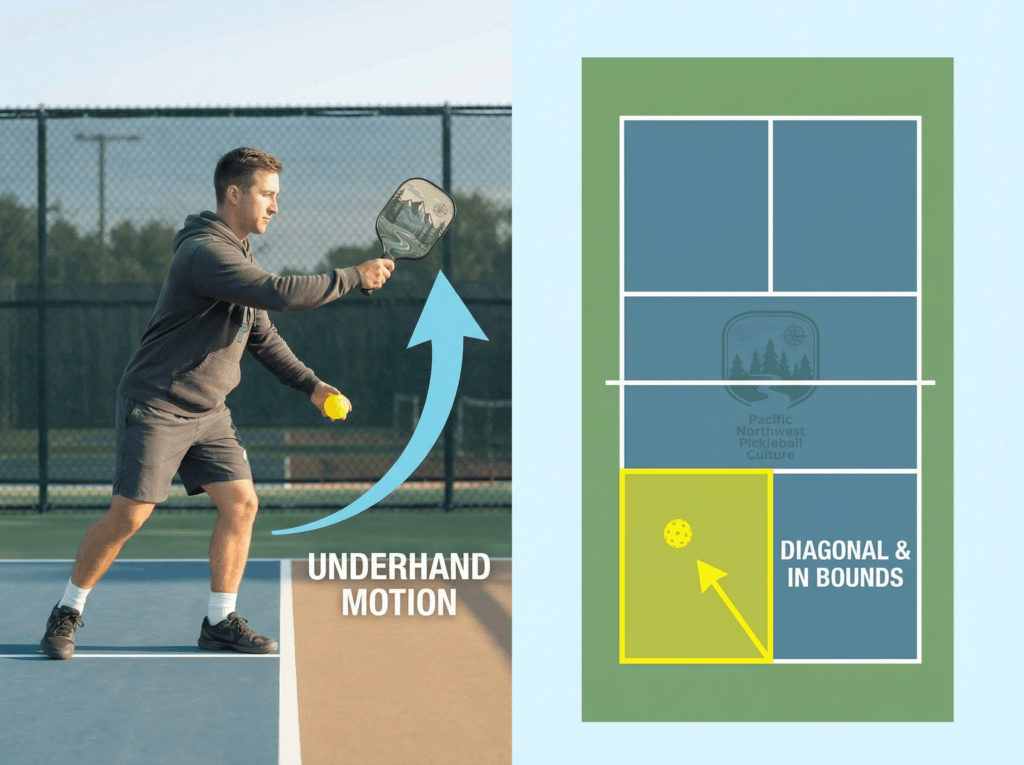
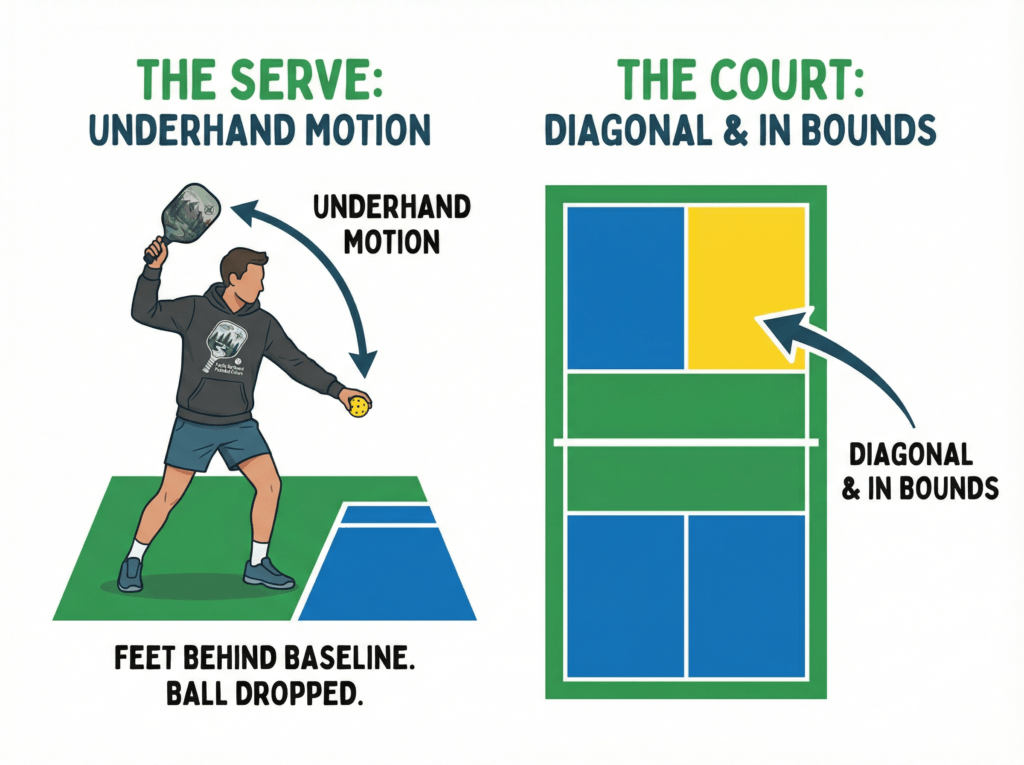
- Toss or Drop: Serving involves dropping the ball rather than tossing it upward. This helps ensure consistency and control.
- Underhand Motion: The paddle swings upward, not sidearm or overhead, making timing and body positioning super important.
- Target Zones: Landing the serve deep and near the baseline can challenge your opponent and set you up with an advantage right from the start.
To build a stronger soft game, explore our Dinking Drills Collection.
Quick Guide to Serve Drills for Beginners
Beginner Pickleball Serve Drills for Consistency
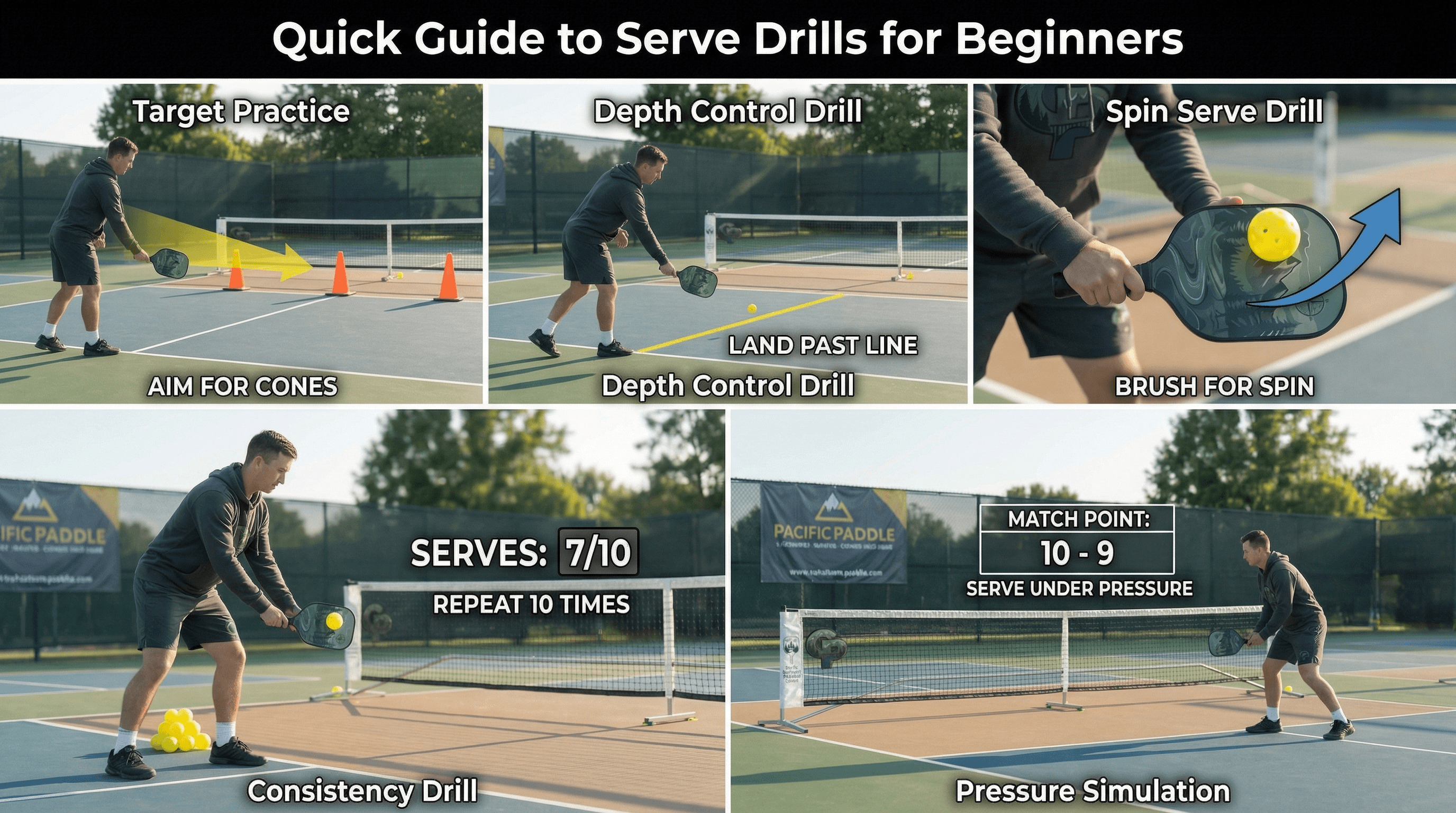
- Target Practice: Place cones or towels near the back corners of the diagonal service box. Aim to serve so the ball lands as close to the targets as possible. Try hitting each target 10 times in a row before switching to the opposite side for variety.
- Depth Control Drill: Draw or imagine lines in the service court: near the kitchen line, midcourt, and deep baseline. Alternate serving to each zone. This gets you comfortable controlling distance and helps develop a good sense of touch.
- Spin Serve Drill: If you want to develop a topspin or slice serve, practice brushing up or across the ball at contact. Focus on keeping your motion smooth while aiming for your target area, and notice how even slight wrist adjustments affect the ball’s movement.
- Consistency Drill: Set a goal (say, 20 serves in a row into the service court) and reset the count if you miss. It’s pretty motivating to try beating your own record! Over time, you’ll be surprised at how quickly this boosts your confidence and accuracy.
- Pressure Simulation: Mimic match conditions by serving “down a game point.” If you have a friend around, have them call the score and give you a “match-point serve,” or even just imagine it. This preps you mentally for tight situations so you feel less pressure on actual game days.
Once you master these serves, try our Third‑Shot Drop and Reset Drills to round out your skills
Challenges You Might Face with Serve Practice
Every player, especially new ones, hits a few bumps while working on their serve. Here are some typical challenges and suggestions for how to get through them:
- Foot Faults: Stepping on or over the baseline before making contact results in a fault. Practicing from a visual or taped marker keeps those feet honest and builds good muscle memory for legal serves.
- Low Confidence: It’s pretty normal to feel pressure when serving in a real match after missing in practice. The best way to shake this is to keep up your solo practice and remind yourself that even the best pros miss sometimes. Over time, this repetition builds up the kind of trust you need in your game when it matters most.
- Inconsistent Toss or Drop: If your ball drop is all over the place, practice dropping the ball from the same height every time. I usually focus on making my arm and grip motion the same with every rep, and I pay attention to how my stance or hand adjustments impact my follow through.
- Getting the Ball Deep: Weak serves that land short are easy to attack. Practicing deep serves, either by aiming for the baseline or placing a towel as a marker, helps build muscle memory for a stronger swing. It also helps prevent opponents from stepping in and taking control of the rally.
Dealing with Serve Nerves
Nerves are a real thing, especially during matches or open play. The best advice I can offer here is to stick to what you practiced. Take a deep breath, set your feet, focus on your target, and don’t stress about perfection. Feeling comfortable in practice builds up calmness for game days. Remember—one missed serve isn’t the end of the world; you’ll get another chance quickly.
Improving Power and Accuracy
If your serves feel weak or keep floating long, work on striking the ball with a relaxed but quick upward motion. Tight grip tension makes serves inconsistent, while looser hands lead to a more fluid swing. Adding wrist movement gently at impact can also make serves a bit tougher for your opponent to return, and over time this can turn your serve into a real threat on the court.
Weather and Court Conditions
Wind and outdoor conditions play a part in how your serve feels. Practicing in different settings, on various courts and in changing weather, makes your serve more reliable overall. If the wind is up, aim lower over the net and adjust how hard you swing for better results. Getting comfortable dealing with sun, wind, or even shadows in your practice sessions will make any match situation feel manageable.
Leveling Up: Advanced Serve Drills and Tips
After locking down the basics, having a few advanced drills under your belt helps you add some flair and unpredictability to your serve. Here are a few drills to check out:
Serve Placement Challenge: Divide the service box visually into four minizones: front left, front right, back left, back right. Randomly select a zone on each rep and serve specifically to that area. This creates muscle memory for changing up location so your opponent has no idea where the ball will go next.
Power Spin Combo: Alternate serves with heavy topspin and faster flat serves. This gets your paddle speed and angle under control, which comes in handy for surprising your opponent. Mixing spins and speeds not only sets up winning points, it keeps your own mechanics sharp and constantly adapting.
Game Simulation with Partner: Set up a mock rally starting with your serve, having your partner return, then play out the point. Focus not just on making the serve but also on following up your first shot. This type of drill mirrors what you’ll see in actual games, helping you get used to real rhythms and pressure.
Trying out different paddles or ball types in practice can also help you zero in on what works best for your style. Some players prefer lightweight paddles for a quicker swing, while others get more consistency from a slightly heavier paddle. There’s no perfect answer—just try a few things and track down what feels natural.
How Serve Drills Translate to Matches
Consistent serve drills don’t just make you better in practice; they show up big in live play. Pickleball often comes down to reliable serving, especially when playing against stronger competition. Serving deeper, with more variety, and with better accuracy increases your chances to control the rally and keeps your opponent off balance from the very first shot.
- Competitive Edge: Being confident in your serve routine sets a positive tone for each play, putting pressure on the receiver right away and showing you mean business.
- Adaptability: Regularly switching serve location, speed, or spin makes your game a lot less predictable, and that’s always good for earning free points.
- Mental Toughness: Facing high-pressure situations during drills leads to more composure when the score is tight and the match is on the line. Having the experience of performing under pretend pressure gives real game confidence.
Frequently Asked Questions
Here are some questions I get most often from new (and even intermediate) pickleball players about serve drills:
Question: How much time should I spend practicing serves each week?
Answer: Even just 15 minutes of focused serving practice two to three times a week delivers big results over time. Consistency matters more than total hours and helps you progress steadily at your own pace.
Question: What’s more important, serve accuracy or power?
Answer: Aim for accuracy first. A consistent, accurate serve is way more effective for beginners than sheer power. Power can be added as your technique and comfort with the game grow.
Question: Do all serve drills require a partner?
Answer: You don’t need a partner for most serve drills. Solo practice works great, but if you can add a partner for game simulations, that’s a plus and adds more match-like variety to your practice.
Bring It to the Court
Building a strong pickleball serve is all about regular, focused drills—nothing fancy, just real practice done often. Every time I spend a few extra minutes on serve drills, I notice better results in my matches and a lot more confidence when stepping up to the baseline. Over time, these drills stack up to bigger wins, more consistent play, and way more fun on the court. So grab a paddle and some balls, and start drilling. Your future self will be glad you did .For official serving rules and guidelines, visit USA Pickleball.https://usapickleball.org/serves/
Leave a Reply