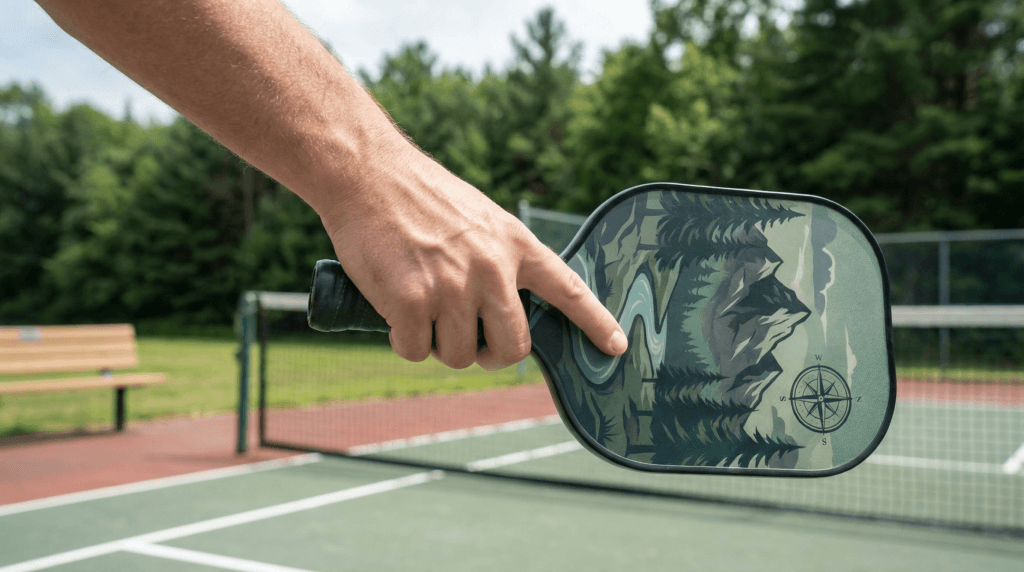
The Paddle Grip For Better Shots
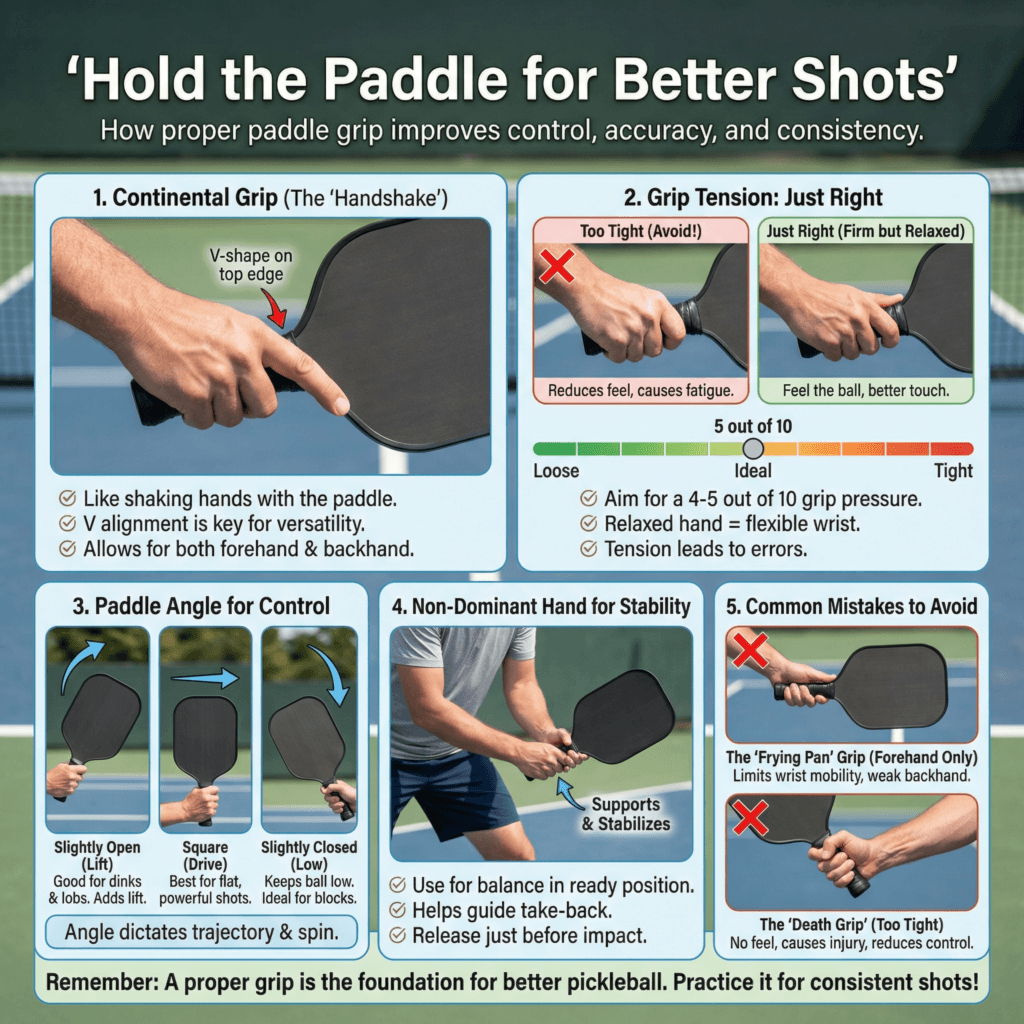
Pickleball paddle grip techniques are essential for improving control, accuracy, and consistency on the court.
Developing the right grip helps players stay relaxed, react faster, and make cleaner contact with the ball.
As your technique improves, you’ll reduce mishits, gain stability, and feel more confident during
Why Pickleball Paddle Grip Techniques Matter
Pickleball paddle grip control refers to how well you can hold, adjust, and stabilize your paddle during different shots. Better grip control leads to cleaner contact, fewer mishits, and more consistent play.
If you’re new to the game, you may also want to read our How to Play Pickleball guide and our Introduction to Pickleball page for more fundamentals.
Essential Pickleball Paddle Grip Techniques for Beginners
Pickleball paddle grip techniques are essential for improving control, accuracy, and consistency on the court.
Shake‑Hand Grip for Balanced Paddle Control
A natural, balanced grip that feels like shaking hands with the paddle. Great for beginners and all‑around play.
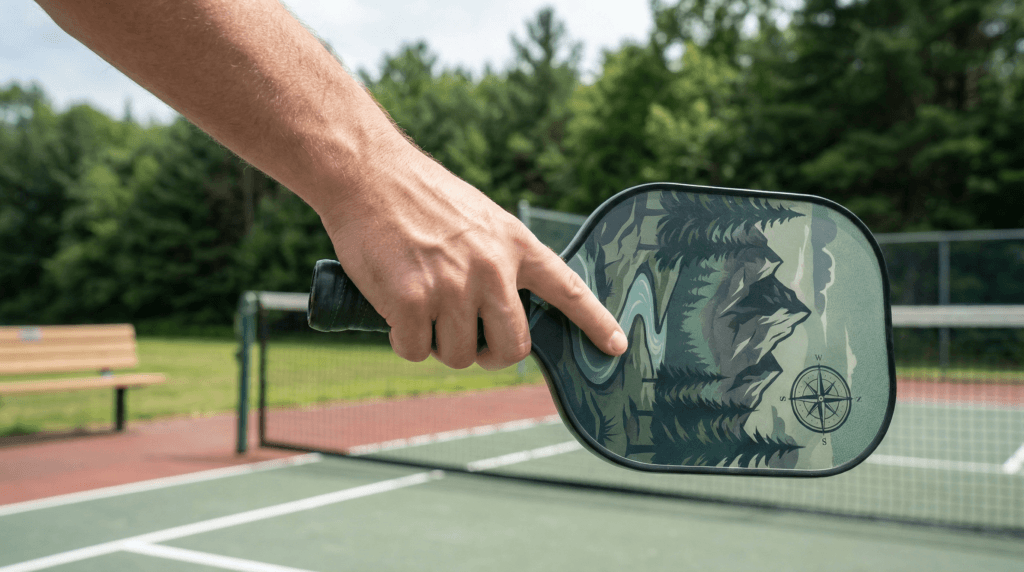
Eastern Grip for Strong Forehands & Backhands
A popular choice among competitive players. Keeps the paddle face neutral for strong forehands and backhands.
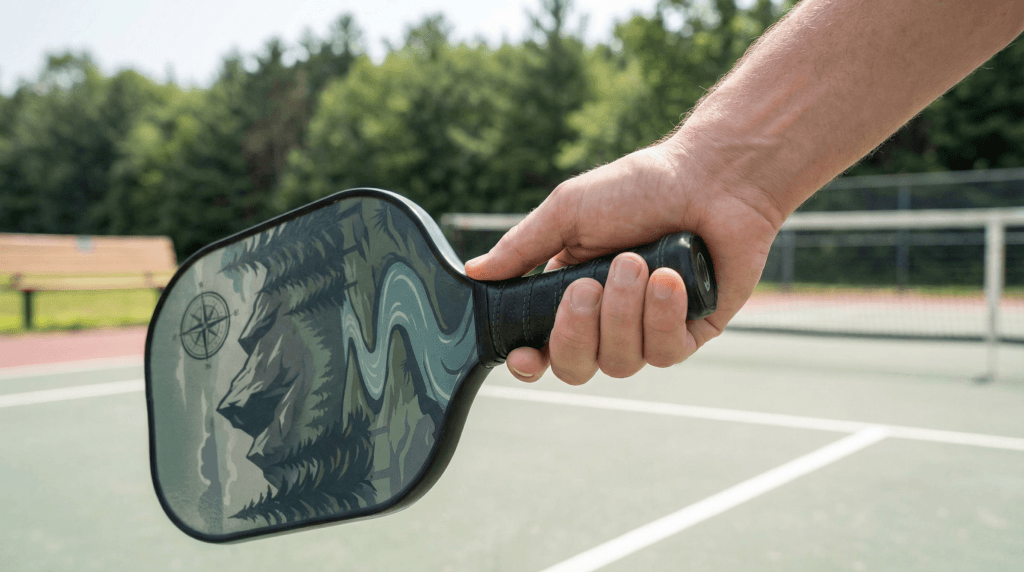
Continental Grip for Quick Kitchen Reactions
Held like a hammer. Ideal for volleys, blocks, and quick reactions at the kitchen.
Pencil Grip for Spin & Wrist Mobility
Allows quick wrist action for spins and flicks.
Why Pickleball Paddle Grip Techniques Matter
- Maintain better paddle stability
- Generate cleaner topspin and slice
- Improve accuracy on dinks, volleys, and drives
- Reduce mishits and unforced errors
- Stay relaxed instead of “death‑gripping” the paddle
Top Pickleball Paddle Grip Techniques for Better Control
Grip Relaxation Drill
Bounce the ball using only your wrist and fingers. Focus on staying loose instead of squeezing the handle.
Thumb‑Shake Drill
Hold the paddle lightly and shake it. This helps you find the ideal relaxed tension.
Forehand–Backhand Switch Drill
Alternate between forehand and backhand positions without over‑rotating your wrist. This builds quick grip adjustments.
Common Mistakes in Pickleball Paddle Grip Techniques
White‑Knuckle Grip
If your knuckles turn white, you’re gripping too hard. Aim for a tension level of 4–6 out of 10.
Grip Slipping
If the paddle rotates in your hand, your grip is too loose. Slightly tighten and adjust finger placement.
Incorrect Finger Position
Crowded fingers reduce control. Keep them naturally spaced for stability.
Adjusting Grip Tension for Better Pickleball Paddle Control
Different shots require different grip tension:
- Topspin Drives: Loosen grip slightly to allow wrist motion
- Defensive Blocks: Firm up grip for stability
- Kitchen Volleys: Use a compact, controlled grip for quick reactions
Learning when to adjust grip tension is a key part of pickleball paddle grip control.
Equipment That Improves Paddle Grip Control
Grip Tape
Adds texture and prevents slipping. Available in tacky, dry, or cushioned styles.
Handle Shape
Choose a handle that matches your hand size and comfort.
Paddle Weight
Heavier paddles offer stability; lighter paddles offer faster maneuverability.
Ready to Improve Your Grip?
Start practicing these simple drills and techniques to build better pickleball paddle grip control. With consistent practice, you’ll feel more confident, more stable, and more in control of every shot.
FAQs About Pickleball Paddle Grip Control
How tightly should I hold my paddle? Firm enough for control, loose enough for flexibility.
When should I change my grip mid‑game? Anytime you switch between volleys, drives, dinks, or defensive blocks.
Does handle thickness matter? Yes — it affects fatigue and stability.
Can I use tennis overgrips? Yes. Many players do for comfort and sweat control.
USA Pickleball also emphasizes grip fundamentals in their official rules and player development resources search: USA Pickleball Official Rules
Leave a Reply