Pickleball Defense Strategies
Mastering pickleball defensive strategies is essential for staying calm under pressure, controlling fast rallies, and turning difficult situations into winning opportunities. Whether you’re a beginner or an intermediate player, strong defense builds confidence and consistency in every match.
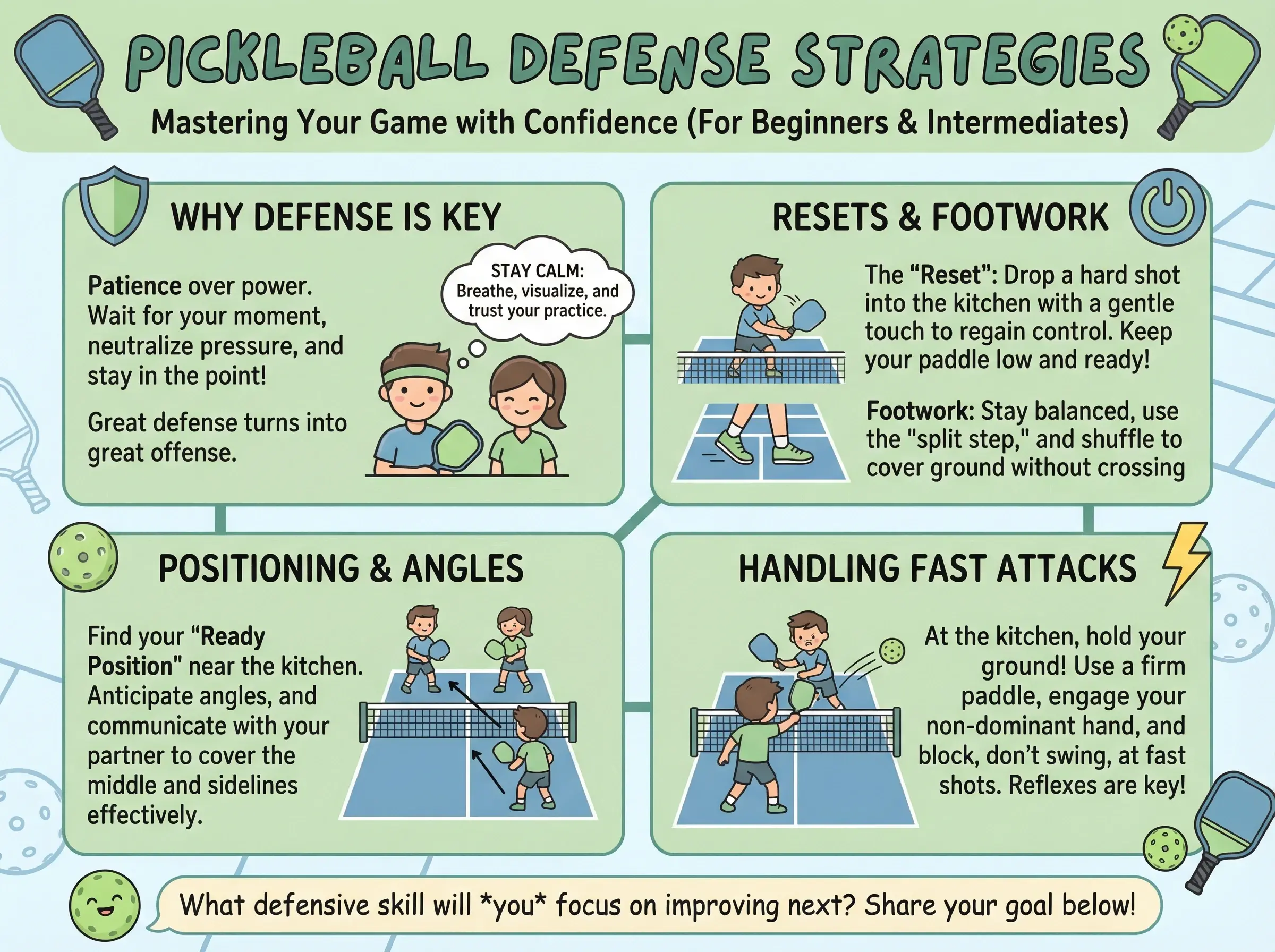
These pickleball defensive strategies help players stay balanced, anticipate attacks, and recover quickly during fast exchanges.
These Pickleball Defense Strategies give players the tools to survive fast attacks and extend rallies.
Why Pickleball Defense Strategies Matter
Practicing your Pickleball Defense Strategies regularly will improve your reaction time and consistency.
Pickleball tends to move quickly, with fast rallies and sharp shots. Having reliable defensive skills doesn’t just help you survive tough spots; it actually feeds right into your ability to turn defense into offense.
By tracking attacking shots and patiently resetting the ball, you create more chances for unforced errors from your opponents.
Defense involves more than just reflexes. It’s a blend of footwork, anticipation, shot selection, and communication (especially in doubles).
If you’re working on your overall game, check out our Pickleball Training Drills for All Levels.
Essential Pickleball Defensive Strategies for All Skill Levels
Strong Pickleball Defense Strategies help players stay calm under pressure and regain control of the point.
- Block Volleys: Instead of swinging, keep your paddle steady and let the ball bounce softly off your paddle face. This tones down errors against fast drives and keeps your responses low and controlled.
- Dinks and Soft Shots: A trustworthy soft game is essential to keeping points alive. Dinking at the net helps you reset fast points and force mistakes.
- Reset Shots: When you’re under pressure, play a reset by gently sending the ball into the kitchen (no volley zone) to slow things down. This buys time and gives you a chance to regain better court position.
- Using the Lob: A well-placed lob can get you out of trouble if you’re pinned at the baseline or jammed at the net. Just stay aware of the wind and your opponents’ ability to hit overheads.
To improve your soft game, explore our Dinking Drills Collection.
Key Principles for Strong Pickleball Defense
One of the most overlooked Pickleball Defense Strategies is learning how to reset the ball effectively.
- Stay Balanced: Keeping your weight distributed and staying on the balls of your feet gives you quick reactions for reaching wide shots or covering tips and drops.
- Patience: Instead of looking for a risky winner from a defensive spot, focus on getting the ball back. Let your opponents make the mistakes for you.
- Keep Paddle Up: A simple but often-forgotten habit: hold your paddle up and in front of your body. This shortens your reaction time and keeps you prepared for sudden quick hits or drop shots.
- Court Positioning: Just like in other racket sports, give yourself some space from the baseline when defending deep shots, but be ready to move up once you regain control.
Pickleball Defense Strategies for Common Attacks
These Pickleball Defense Strategies are essential for players who want to compete at higher levels.
Dealing with Hard Drives
When your opponents drive the ball hard, resist the urge to fire back just as fast. Use a blocking volley or dead paddle technique; soften the ball, send it back low, and cut off their angles. Stepping into the ball and using your body rather than your wrist helps keep the shot controlled.
Managing Dinks and Drop Shots
Good defenders handle dinks by keeping their paddle low and their knees bent, absorbing the ball with a gentle touch. If your opponents keep dropping balls into the kitchen, focus on moving together (in doubles) and taking balls early before they bounce twice.
Handling Lobs
Lobs can break up your rhythm, so it’s crucial to quickly decide whether to let it bounce or take it out of the air. Trust your footwork; turn and run, don’t backpedal. This way you stay balanced and ready for the next shot. When defending against a lob, a patient, high return can give you time to reset and be ready for the next rally.
If you struggle with resets, read our guide on Third‑Shot Drops and Reset Techniques.
Building a Defense Mindset: Anticipation and Positioning
Look for clues—grip changes, body angle, or where they’re looking—to predict their next move. By actively looking for those tells, you start reacting more quickly. Good defenders also pay attention to shot selection.
If you wait too long to move up to the no volley line after a deep return, you give away court space. Crowding the line too early makes you vulnerable to lobs or body shots, so timing is key.
Footwork drills, like small sidesteps and a split step just before you return a shot, help keep you prepared for sudden direction changes. Sometimes players spend too much time practicing shots and not enough on movement, but solid defense is built just as much on quick feet as good hands.
Good positioning supports your overall pickleball defensive strategies, especially when opponents target the sidelines or middle gaps.
Defensive Strategies for Doubles and Singles
Practicing your Pickleball Defense Strategies regularly will improve your reaction time and consistency.
Doubles Defense
- Communicate Constantly: Calling shots and warning each other about lobs or fastballs keeps the middle covered and avoids confusion.
- Move as a Unit: Stay roughly level with your partner to avoid big gaps. If one player moves to cover a wide shot, the other should slide over too.
- Focus on the Middle: Many errors in doubles happen when balls are allowed to bounce in the center. Being clear about who takes shots down the middle cuts down on these easy points for your opponents.
Singles Defense
- Recover After Each Shot: Always return quickly to a solid ready position, usually near the center baseline. This helps cut off passing shots and sharp angles.
- Vary Depth: Keep the ball deep when you’re on defense. Short balls set up easy attacks for opponents.
- Mix Up Returns: Throw in lobs or slices to change the tempo and keep your opponent from locking into a rhythm.
Common Pickleball Defensive Strategies Every Player Should Practice
Every player should understand basic Pickleball Defense Strategies to stay competitive at all levels.
- Getting Jammed at the Net: If you’re constantly getting handcuffed by fastballs near the net, take a step back after each volley, stay loose in the knees, and work on block volleys with a soft grip.
- Struggling with Deep Balls: Practice shuffling side-to-side behind the baseline and returning high defensive shots, rather than hard, mishit ones.
- Poor Communication: This shows up most in doubles. Setting clear signals (like “mine” or “yours”) and staying vocal keeps the team tight.
- Overcommitting to Shots: Staying patient and making disciplined resets works better than reaching out for risky passes or overhead smashes when you’re off balance.
Jammed at the Net: Drills and Solutions
Drills that focus on reaction speed, such as volley exchanges or playing with a partner close to the net, can really help. Keeping a loose grip and cushioning shots lets you control the point, even when under pressure.
Deep Balls: Movement Tips
Shadowing lines on the court and practicing the split step while shuffling helps you handle deep balls and fast returns. The aim is to make each return, even when stretched, controlled enough to let you reset the point.
Footwork is the foundation of all pickleball defensive strategies, allowing you to react efficiently and maintain control.
Advanced Pickleball Defensive Tactics
If you’re getting more comfortable with the basics, trying out some advanced strategies can be rewarding:
- Disguised Retrieve: Use the same motion to hit a short dink or a deep reset, keeping your opponent unsure of your shot choice.
- Angle Awareness: Direct your resets wide or deep into corners, making it tougher for your opponent to set up big attacks.
- Counterattack: When your opponent overreaches or floats a drive, turn defense into offense with a quick flick or passing shot. Looking for these moments is a good way to swing momentum back in your favor.
Defensive Equipment: Paddle Choices and Gear Tips
Picking the right paddle can give you an advantage in defense, too. Paddles with bigger sweet spots and softer faces help absorb power and add finesse. If you’re having trouble with hard-hit shots, a paddle with a thicker core and a textured surface might be worth a try.
Nonslip shoes and comfortable clothing also let you move quickly and stay low on the court. Gear isn’t a replacement for practice, but it can definitely make defensive play more comfortable and consistent.
For official rules and defensive guidelines, visit the USA Pickleball website.https://usapickleball.org/strategies/defensive
Frequently Asked Questions
Here are a few quick answers to common pickleball defense questions I hear on the courts:
How can I get better at blocking drives?
Holding your paddle steady and out in front, and meeting the ball softly rather than swinging through, helps absorb power and cuts down accidental pop-ups.
What should I do if I’m always getting lobbed over?
Stay ready with your paddle up at the net, and count on your footwork to chase down lobs. Practicing quick turn-and-run drills builds confidence here.
Is it better to play defensively or aggressively?
Mixing both keeps your game unpredictable. Defense gives you time to reset and look for attacking opportunities. Adapting based on your opponent’s approach is usually the smartest move.
Wrapping Up
Working on your pickleball defense isn’t just about limiting your errors; it’s about turning tough situations into points you can win. The more time you spend on these strategies and drills, the more confidence you’ll have when handling big attacks and tricky shots. With patience, practice, and some focus on the fundamentals, you’ll have a much easier time staying competitive in any pickleball match.
Once you master these Pickleball Defense Strategies, try our Footwork and Movement Drills to level up even further.
Good luck on the courts, and remember, defense can be your best asset out there!
Leave a Reply